11 november 2025, Flor Linckens
9 compelling artworks for under €1000
Did you know that GalleryViewer features more than 23,000 artworks from galleries in the Netherlands and Belgium? You can easily search by medium, such as photography, video art or sculpture, as well as by artists represented in collections of leading museums including Stedelijk Museum Amsterdam, M HKA or MoMA. It is also possible to filter by price. At the moment, over 3500 works on the platform are available for under €1000. In this selection, we highlight nine compelling artworks within that price range.

Romain Jacquet-Lagrèze (Blue Lotus Gallery) turns his lens towards the world above street level in Hong Kong, where bamboo scaffolding, façade vegetation and the flight paths of birds form a hidden layer of the city. For his series ‘Echoing Above’ he follows, over the course of three years, the people, trees and animals that move through this vertical environment. His images capture a disappearing craft and a rhythm of the city that is slowly fading as traditional bamboo scaffolding risks being replaced by more uniform alternatives. Read a previous article about his work here.

Yumiko Yoneda (Ramakers Gallery) creates quiet, rounded forms that look softly pressed, as if held under an internal tension. Her sculptural works, usually executed in white or light grey, respond strongly to the light, shifting in intensity and presence as you move around them. Despite their simplicity, the forms feel organic and human, as if they have just shifted position or might do so at any moment. Each work is carefully built by hand from lightweight materials. Yoneda’s practice revolves around focus, stillness and the search for a form that feels both restrained and alive.
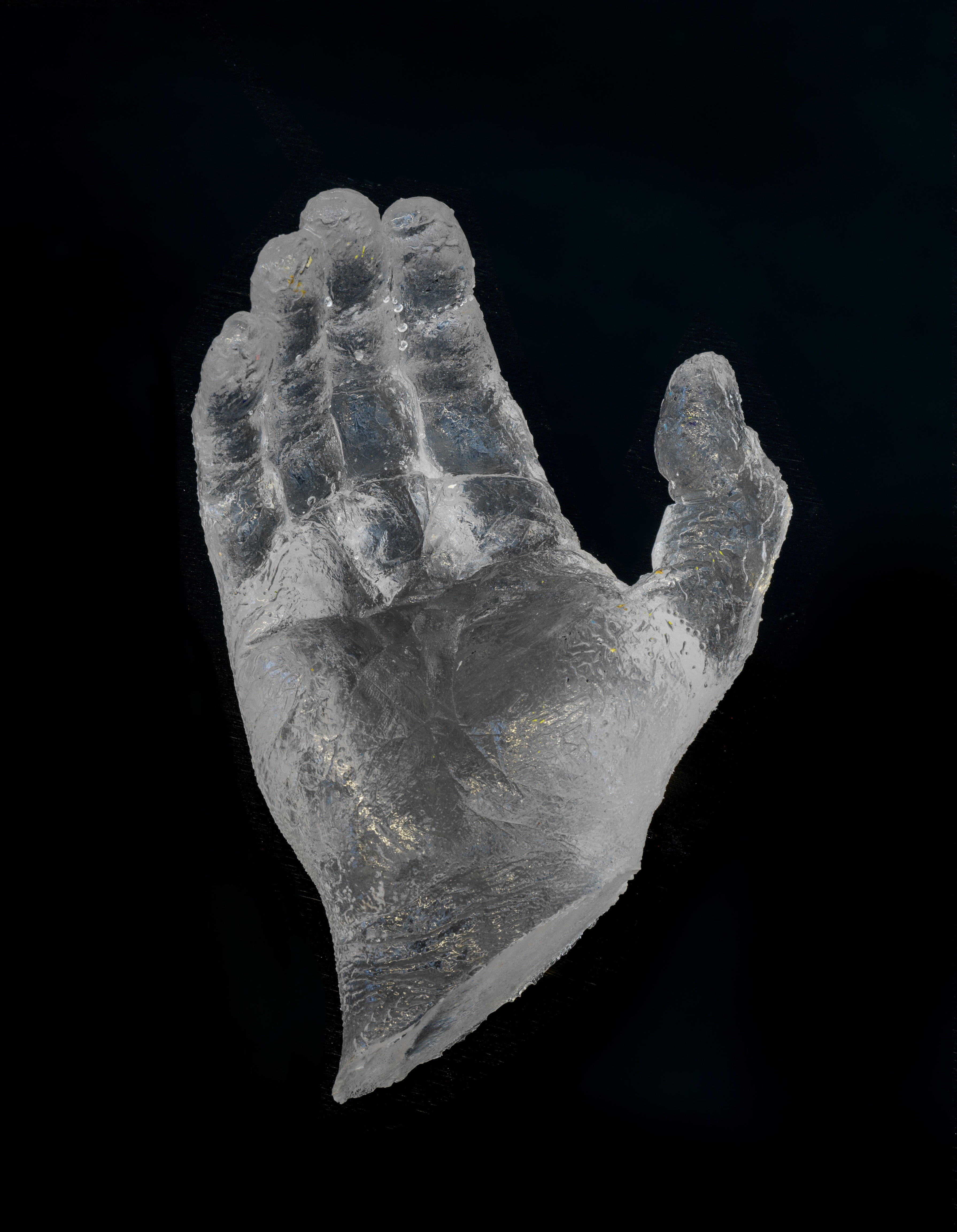
Alicia Framis (Upstream Gallery) examines how our relationships shift as technology becomes increasingly 'human'. Her starting point is Ailex, an AI-driven hologram whom she married in 2024. This transparent epoxy sculpture of a hand serves as a tangible manifestation of a partner who has no physical body. The tension between intimacy and intangibility aligns with Framis’s wider practice, in which she has long questioned womanhood, power, public space and the social structures that shape human behaviour. Her work points to broader questions about the future, autonomy and the limits between technology and the body.
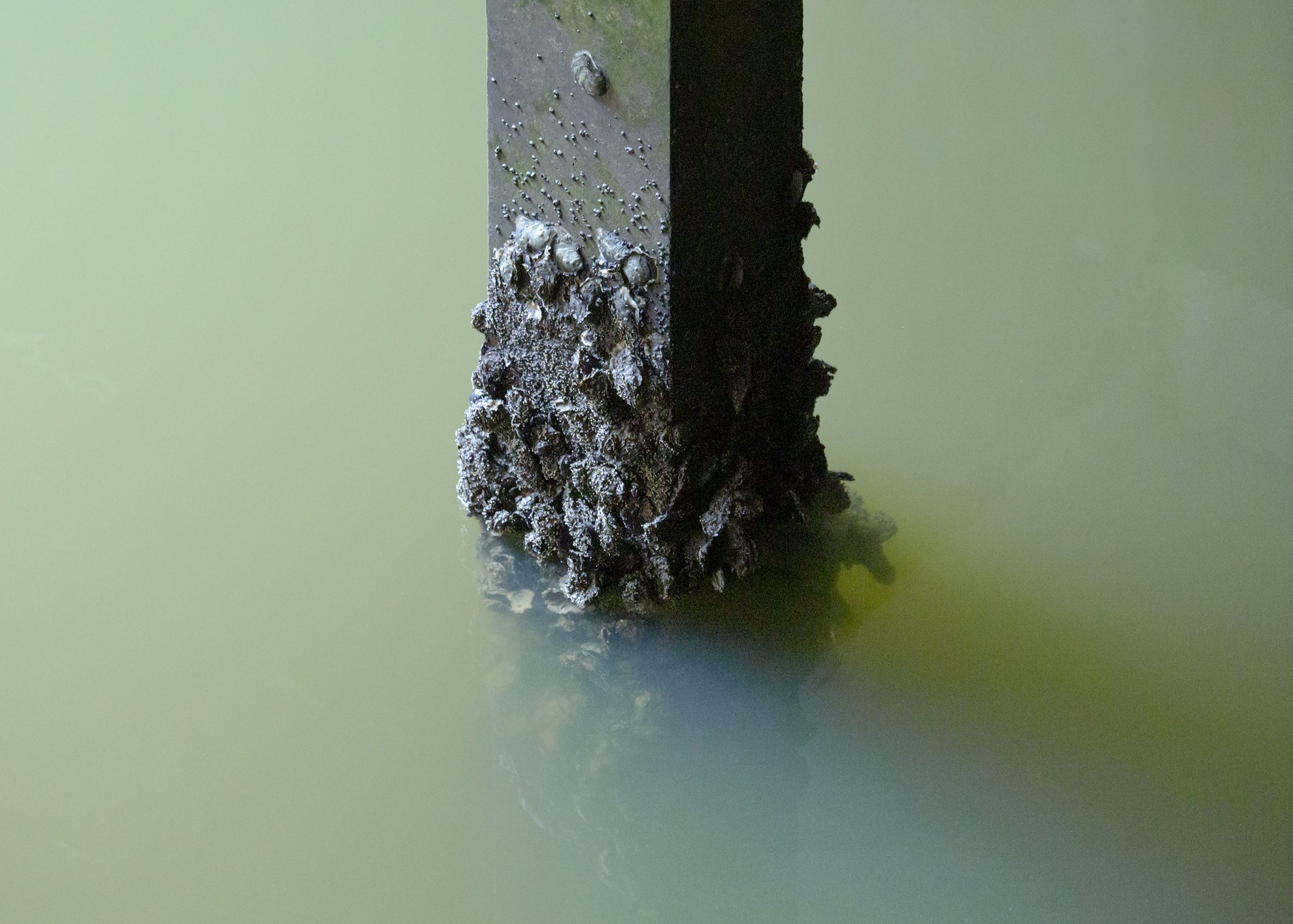
Natascha Libbert (Gallery Vriend van Bavink) photographs landscapes where human intervention is clearly inscribed, from chemically coloured lakes to coastlines taken over by imported oysters. In her images, beauty rubs against damage: what you see is visually striking yet reveals a world out of balance. She seeks situations in which nature and human influence collide or adapt to one another. Libbert works intuitively and documentarily, without staging, using the landscape to understand the people who have shaped it. The result is photography that first seduces the viewer before prompting deeper reflection on the traces we leave behind. Read an article about her work here.

Jo Delahaut (Callewaert Vanlangendonck Gallery) is regarded as a key figure within Belgian geometric abstraction. He belonged to the first generation of Belgian abstract artists after 1945 and created his first abstract work in 1946 within La Jeune Peinture Belge. In 1952, he co-founded the group Art Abstrait with Pol Bury, developing his distinctive visual language of half circles and rectangles with a blunt angle. He later founded the groups Formes and Art Construit and signed the manifesto Le spatialisme. His work evolved towards a simplified formal language aligned with American hard edge, complemented by three-dimensional projects and a marked interest in architecture.

In May 1984, Hans van der Meer (Galerie Wouter van Leeuwen) spent two weeks in Hungary as a guest of the Hungarian Ministry of Culture, as part of a cultural exchange programme between the Netherlands and Hungary. The invitation allowed him to work in Budapest for a longer period. At the time, the country was still hidden behind the Iron Curtain, and to be able to photograph freely in the streets was an exceptional situation. Van der Meer soon discovered that small, everyday gestures and postures formed a natural entry point to understanding the city and its inhabitants. His intention was not to document political reality, although his work unmistakably conveys the atmosphere of the late communist era without explicitly stating it. Later that year, he rented a flat in Budapest and photographed people daily in understated, sometimes slightly absurd poses. This imbued the works with an unexpected documentary value, capturing the everyday language of a society in transition. Read a previous article about his work here.

Jana Coorevits (FRED & FERRY) explores how landscapes, bodies and emotions mirror one another, often through subtle shifts in scale and perspective. She reduces large, almost mythical elements such as the moon, a mountain range or a desert to a format that feels tangible. Her work is slow and attentive, built around images that evoke silence, detail and the way time embeds itself in matter.

In her series ‘My Only Defense Against Fate Is Color’, Cuny Janssen (andriesse ~ eyck galerie) focuses on everyday fruit and vegetables, photographed with striking clarity and vivid colours. In these works, which recall contemporary still lifes, she shows how form, texture and colour can take on unexpected intensity when viewed with attention. Her approach remains faithful to her documentary background: no staging, no manipulation, only precise decisions regarding light, framing and composition. This lifts the everyday out of its context and gives it an almost sculptural presence. The series marks a surprising extension of her practice yet aligns with her ongoing interest in making visible what is often overlooked.

Kees de Vries (Galerie Franzis Engels) works with a striking and seemingly fragile material: salt crystals. Although the process may appear simple, the material itself is notoriously difficult to control. De Vries allows the salt to grow into wall works and sculptures that feel granular, light and almost snow-like. His interest lies both in the history and symbolism of salt and in its everyday presence. After years of experimentation, he developed a method to stabilise the inherently unstable material, often in combination with resin and other natural elements. In recent works, salt takes on a more personal meaning, for instance as a reference to the idea of covering something with love. Read an article about his work here.
