13 october 2025, Yves Joris
The surface holds no secrets: painting as living skin
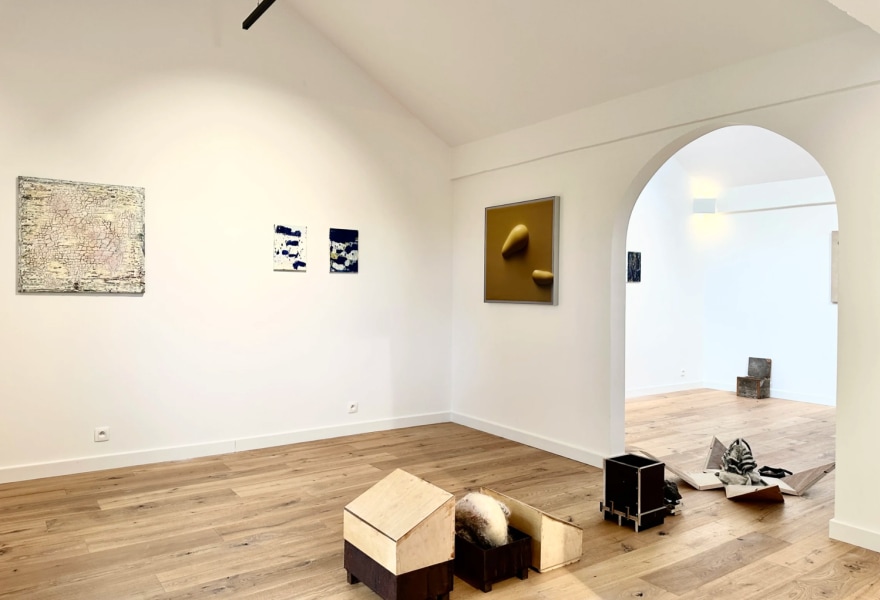
Some exhibitions show art. Others show the making of art. The Surface Holds No Secrets, curated by Wim Lambrecht at TaLe Art Gallery, belongs to the latter. Here, nothing is hidden behind the sheen of paint or illusion of image. The paintings speak through their ‘skin’, revealing their scars and history. In his introductory text, Lambrecht writes that the surface hides nothing, that the painting carries its own memory. This insight forms the core of the exhibition: painting as the result of what was once gesture.
What hangs here is alive. The paint is not a veil, but a skin that thinks, feels and reacts. Every brushstroke bears witness to both a decision and hesitation, to a new and better beginning. As you walk through the space, you notice that each canvas has its own breath. No image claims to hold the truth. Each painting poses a question. And therein lies the power of this exhibition, as it reminds us that painting is not merely a form of representation, but also of presence.
The skin of seeing
None of the five artists seek to create an illusion. Each explores what happens when paint reveals itself. What does it mean to paint in a time when the image is omnipresent and every form of meaning seems exhausted? The answer lies not in depiction, but in making the act itself visible.

Svelte Thys, Fietstocht in november/Hoornaar duel, 2022, TaLe Art Gallery
Svelte Thys opens this conversation with a series of canvases inspired by walks through gardens and landscapes. Not nature itself, but its echoes form the heart of her work. She paints not to record, but to remember. The paint lingers, moves, seeming to breathe with the light. What is visible remains half concealed, as if the image refuses to give itself away. In that refusal lies the beauty of her paintings, as they reveal the space between memory and appearance, between touch and distance.
In Lode Laperre's work, the surface has a different kind of intensity. His paintings are created layer by layer on canvases that seem shaped by erosion, like geological strata where pigment and time accumulate. The paint cracks, hardens, breaks open and reveals its own geological logic. Lambrecht describes Laperre’s work as nomadic, and rightly so. His painting travels, absorbing traces from other cultures and other times, returning again and again to the question of what a surface can preserve. To him, the canvas is not a carrier of illusion, but a terrain of sediment and memory. Each layer bears the echo of the previous one, like a landscape that carries its own history within it.
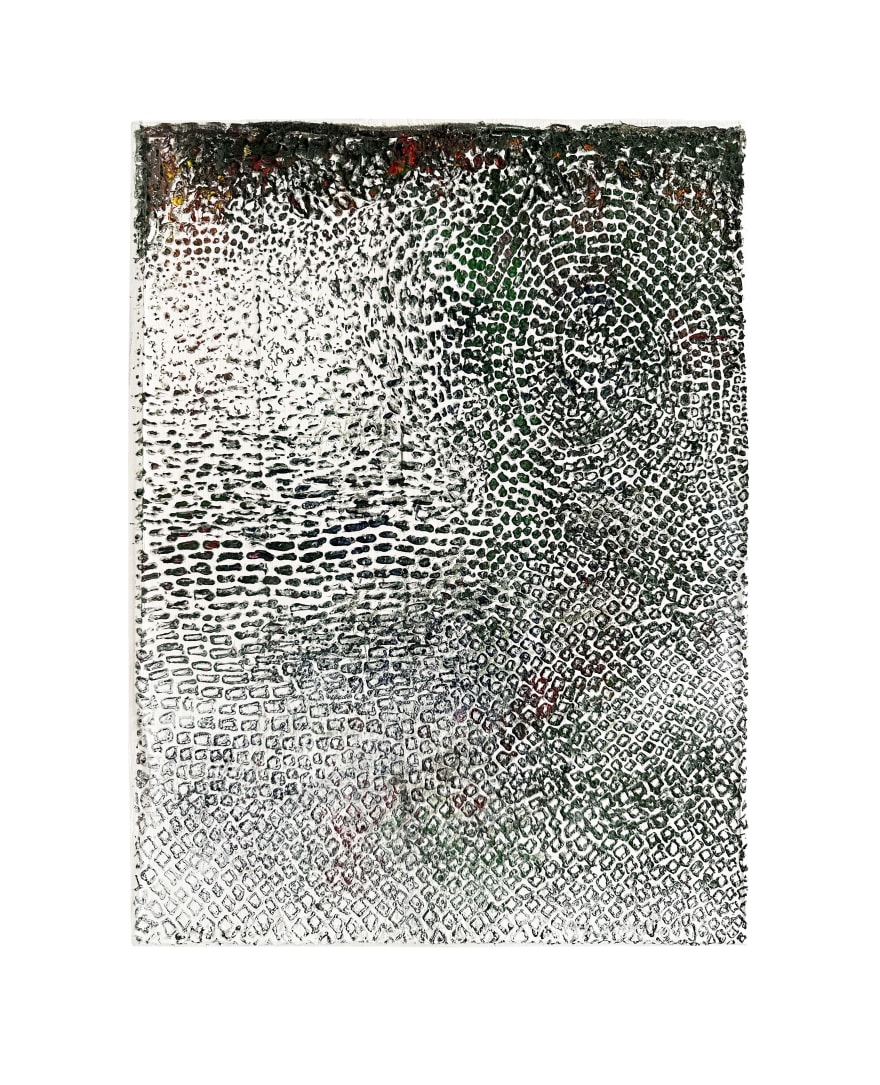
Lode Laperre Entomos, 2024, TaLe Art Gallery
Traces of movement
Daniel Mattarexplores the intersection between technology and painting. He starts with photography, but not as reproduction. His images are macro photographs of pigment, droplets, fibres, of mundane objects: packaging, cartridges, old photos. He enlarges these fragments into monumental images in which the microscopic gains a new scale. The paint becomes not only visible, but tangible. What his camera records is the material breath of the painting itself. In his work, the boundary between human and machine disappears: seeing becomes a technological experience that remains sensuous.
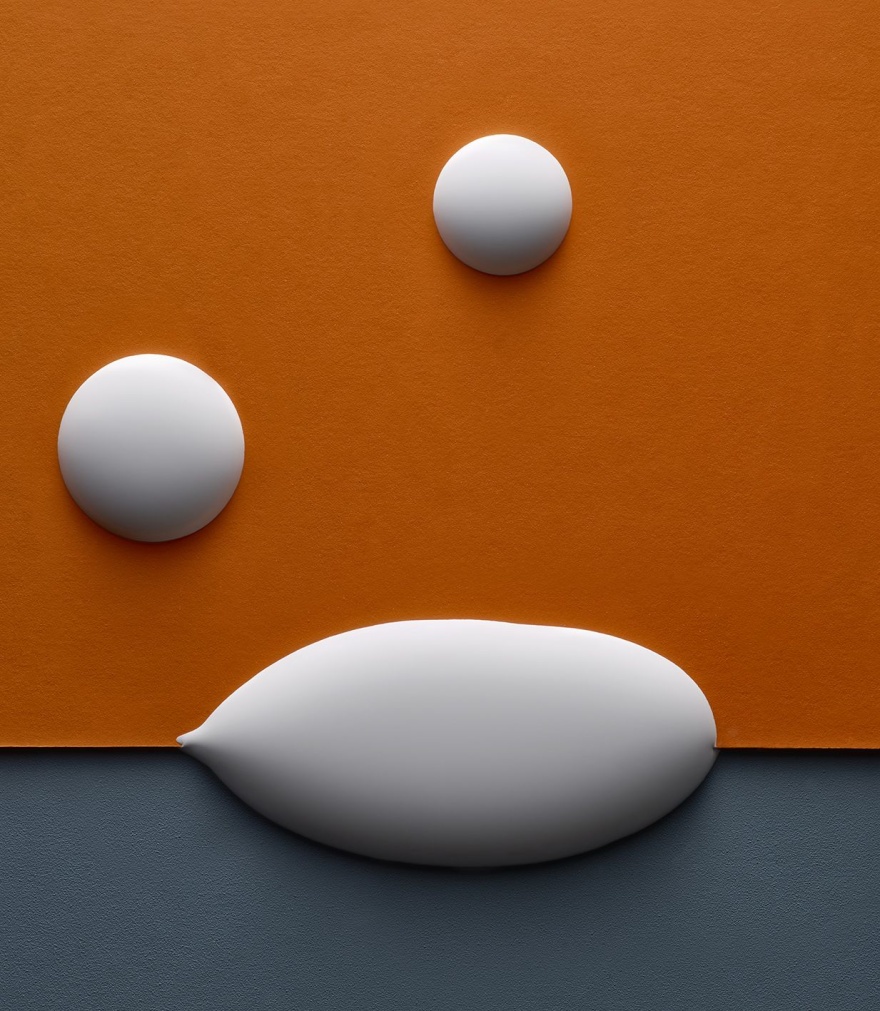
Daniel Mattar, Akemi, 2022, TaLe Art Gallery
For Marc Van Cauwenbergh everything revolves around rhythm. His brushstrokes intersect like musical notes. The paint glides, accelerates and slows down, searching for a tone. The painter performs like a musician improvising, guided by instinct, breath and focus. What remains is a score of movement, each line recalling the gesture that produced it. There is no silence in his paintings, only a constant vibration. The paint keeps moving, even after the canvas has dried. The surface remembers the painter’s breathing.
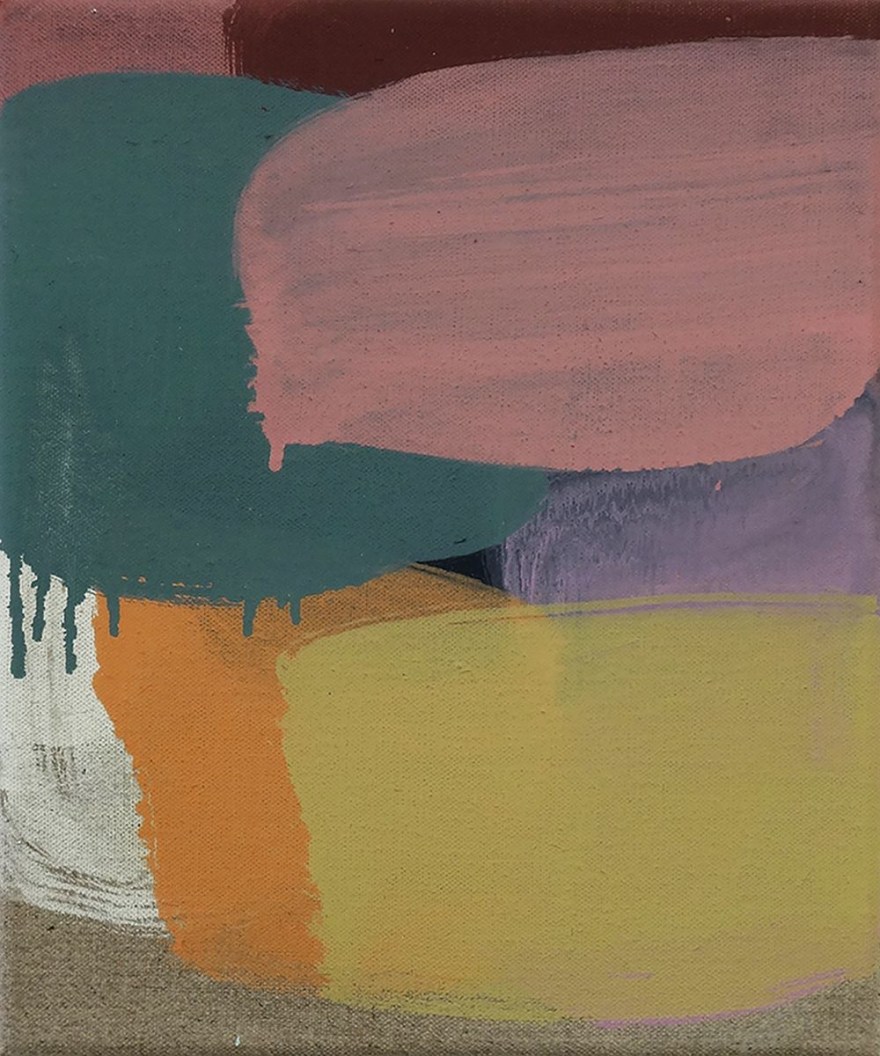
Marc Van Cauwenbergh, Slow Down, 2024, TaLe Art Gallery
And then there is Merel Van de Casteele, who pries open painting into a space where disciplines merge. Her work consists not only of images, but of constellations of objects, lines and shadows. She draws, constructs, shifts, dissolves. What she shows is not representation, but a space for thought. The boundary between image and sculpture fades. What remains is a trace of energy, the residue of an action that is constantly changing. Her work can be interpreted as an open system, where meaning is never fixed, but always emerging anew.
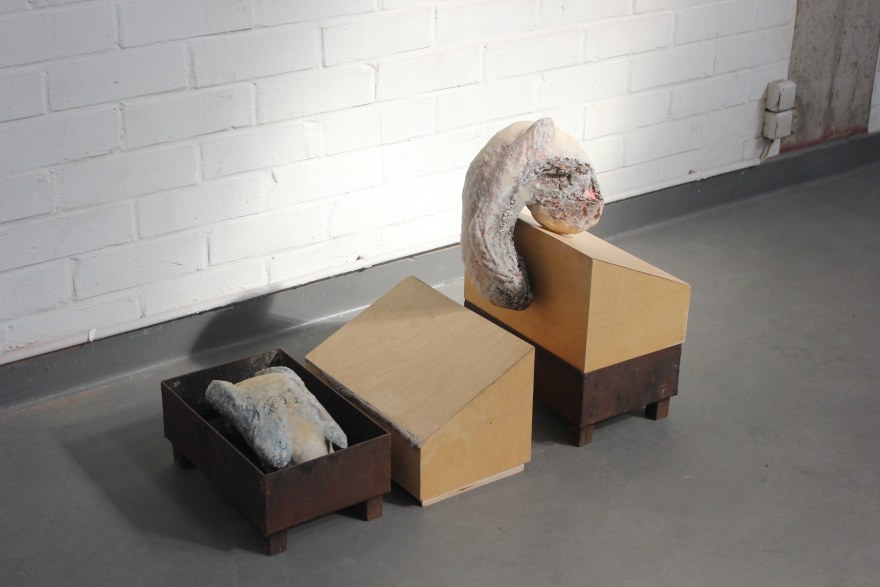
Merel Van de Casteele, Couple, 2021, TaLe Art Gallery
The memory of matter
Anyone viewing The Surface Holds No Secrets senses how painting reclaims its physical power. Here, paint is not used to conceal, but to reveal. The act itself becomes the bearer of meaning. The brushstroke is not a decorative gesture, but an act of remembrance.
Since the Abstract Expressionists of the 1950s freed paint from illusion, painting has increasingly become an arena of actions. Pollock, De Kooning, Hartung saw the canvas not as a window, but as a field. Lambrecht continues that legacy, but without heroics. Instead of gestures that seek to encompass the world, he presents artists who listen to what paint itself wants to become. Each work in this exhibition testifies to a different way of thinking through the hand.
At TaLe Art Gallery, that insight becomes tangible. The space is not a neutral backdrop, but a participant. The walls breathe with the canvases. Light moves softly across the skin of the paintings. There is no hierarchy among the artists. Their work enters into dialogue, complementing each other like voices in a polyphonic composition. Laperre’s geological paint structures echo in Mattar’s textures; Thys’s veiled images find a counterpoint in Van Cauwenbergh’s rhythm and Van de Casteele connects everything through her open approach to image creation. Together they form a landscape of traces.
When you leave the gallery space, what lingers is not the image, but the realisation that the paintings are very much alive. The Surface Holds No Secrets is not an exhibition about paint, but about truth, about the moment when matter acquires meaning and action becomes memory. Lambrecht does not present objects, but traces of presence—tangible evidence that painting, despite everything, can still speak.
What the eye sees here is only the beginning. The rest unfolds in the viewer’s gaze, in that slow, inner afterimage that continues to glow. The canvases fall silent, but their skin speaks. And if you listen closely, you’ll hear something rare: the voice of the paint itself.
