29 september 2026, Flor Linckens
Fan Ho in Milan: the human figure and the geometry of the city
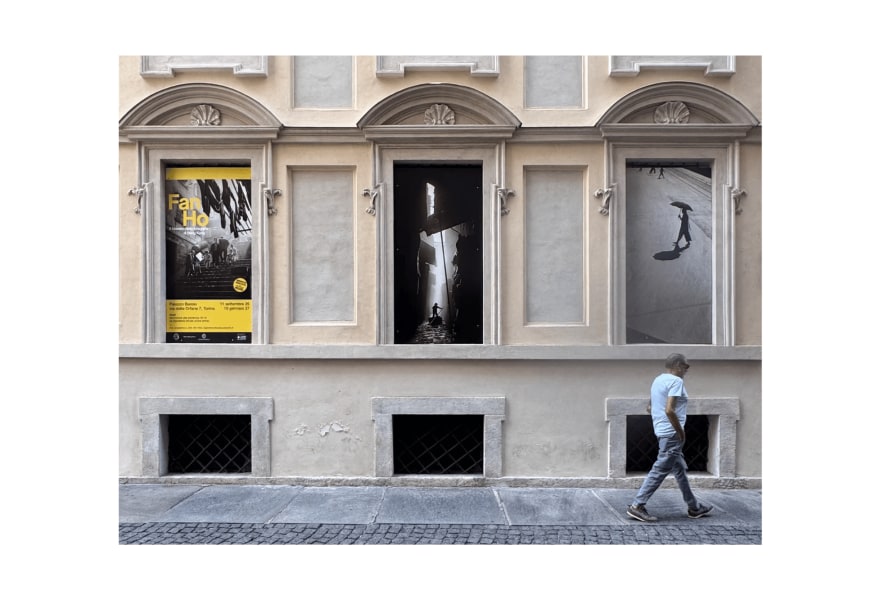
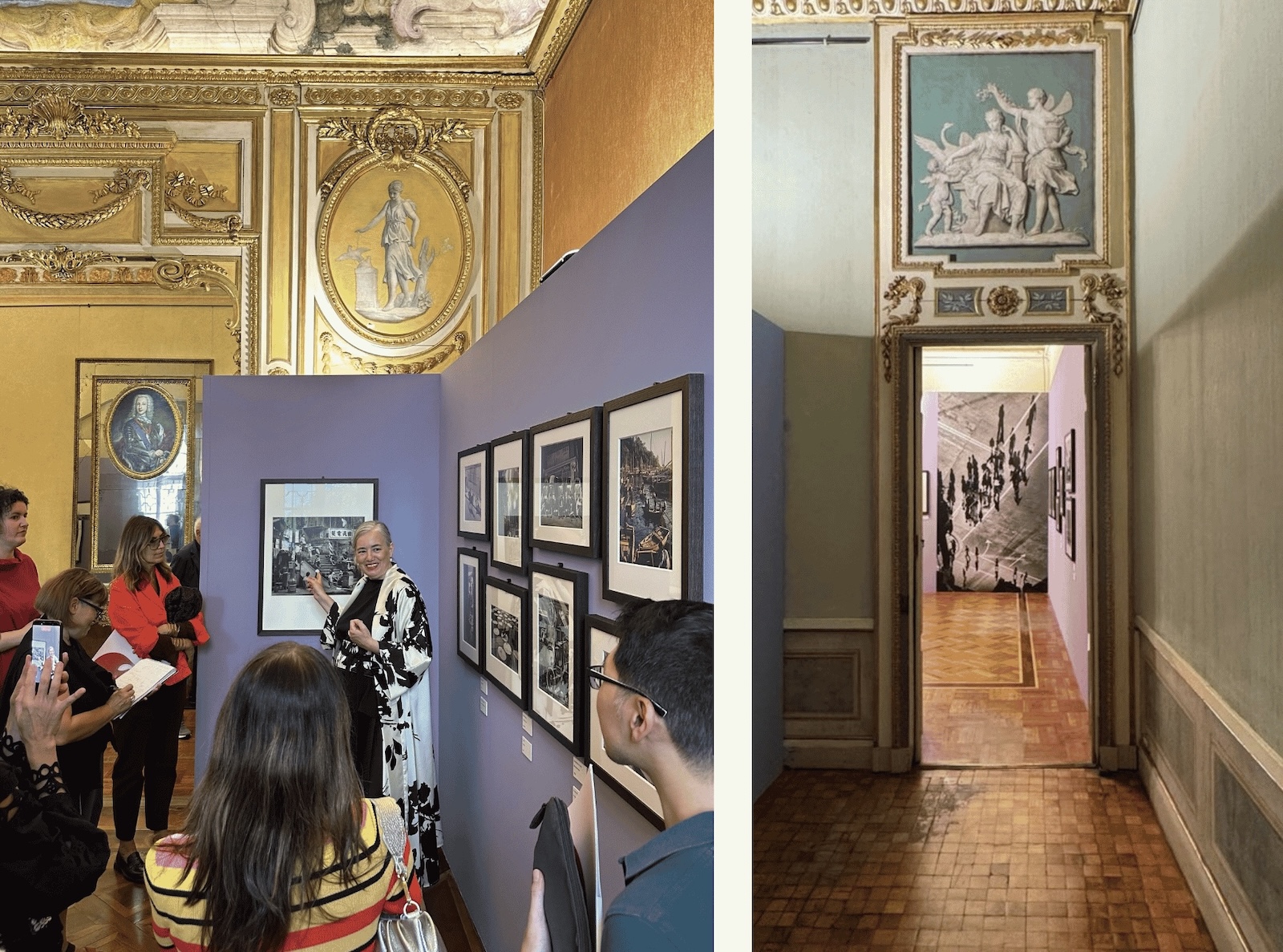
Blue Lotus Gallery is currently presenting an extensive exhibition of Fan Ho’s work at the seventeenth-century Baroque Palazzo Falletti di Barolo in Turin, in collaboration with Ares. Fan Ho was one of Asia’s most important street photographers and is best known for his atmospheric images of Hong Kong in the 1950s and 1960s. Looking at his photographs, we encounter a Hong Kong that has all but disappeared. Street vendors stand among their wares, children play outside and passers-by make their way through labyrinthine alleyways, past staircases and towering façades. The exhibition ‘Fan Ho. Il Maestro della Fotografia di Hong Kong’ brings together one hundred photographs from his practice. It is also the first major museum exhibition of his work in Europe.
Fan Ho was born in Shanghai in 1931 and started taking photographs at the age of fourteen, using the Kodak Brownie he had received for his birthday. When his family moved to Hong Kong in 1949, he began roaming the streets of his new home with his camera, gradually developing his own photographic language. The artist regularly suffered from migraines and his doctor advised him to take walks through the city. He brought along his twin-lens Rolleiflex 3.5.
Fan Ho produced most of his best-known photographic work before the age of twenty-eight. By the late 1960s, his attention was increasingly shifting towards filmmaking, and one of his films was recently screened at the ICA in London. It was only after his retirement that he actively returned to his photographic archive. He revisited old negatives, now through the eyes of a film director, and would occasionally combine them to create new images.
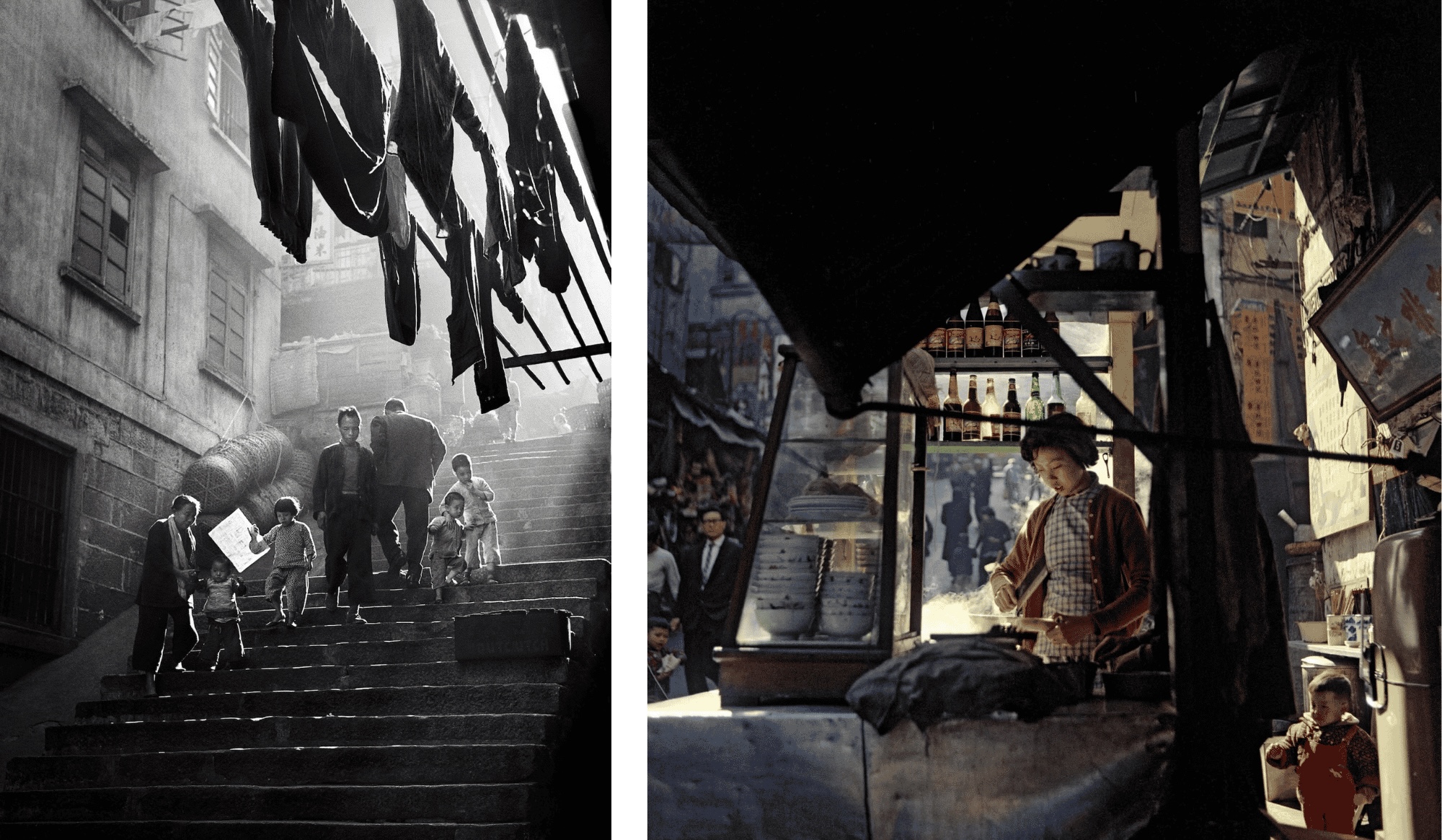
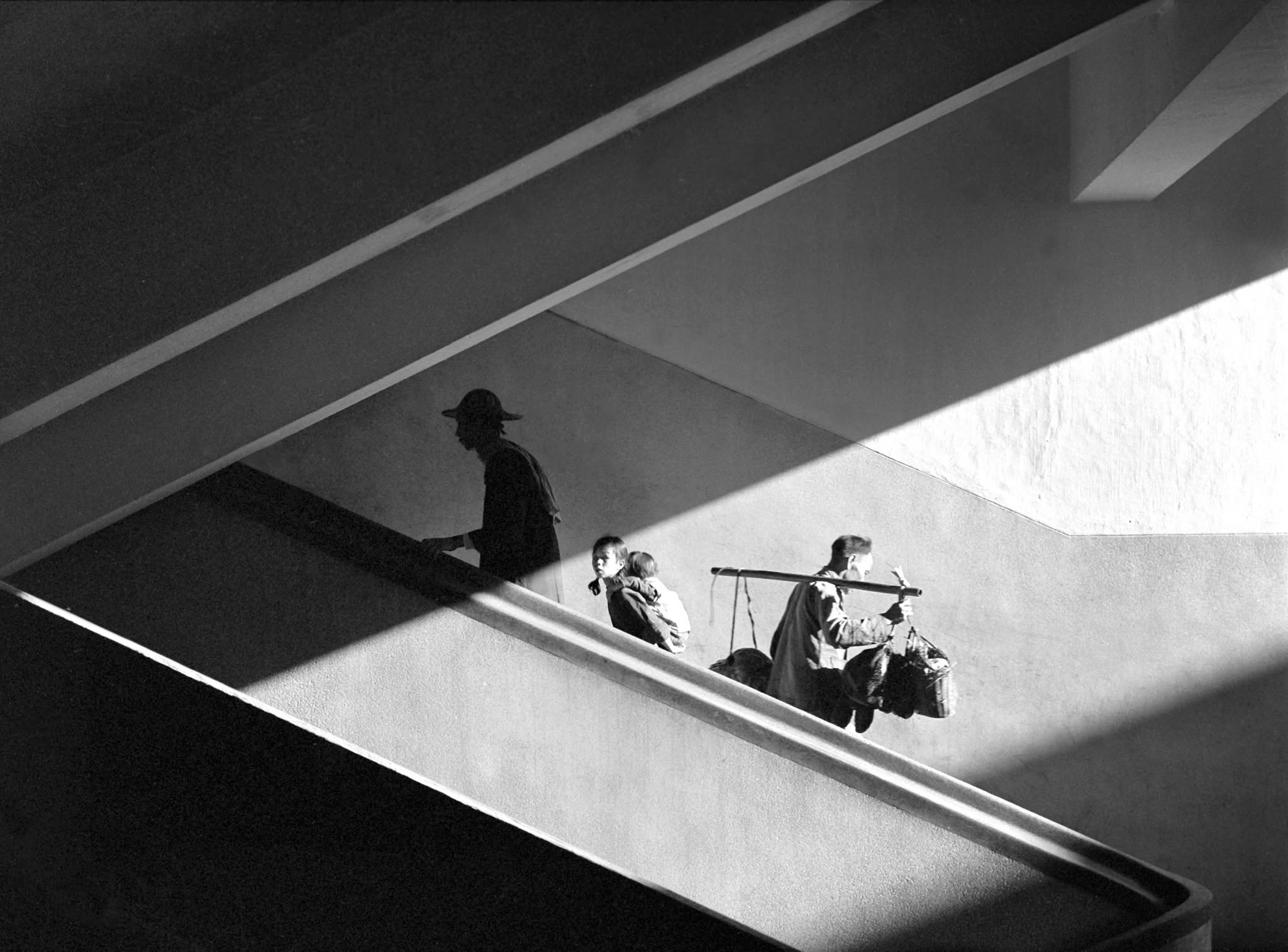
In his photographs, Fan Ho captured a metropolis undergoing rapid transformation as a result of industrialisation and profound social and political developments. Yet he was less interested in creating a historical record of Hong Kong. Instead, he turned his humanist gaze towards the people who collectively shaped the rhythm and soul of the city: workers and porters, market vendors, children and people on their way somewhere. Sometimes they find themselves in the midst of the crowds, while at other times a single figure seems to almost disappear into the surrounding architecture. In his work, Fan Ho creates a carefully orchestrated interplay of light, shadow, architecture and human figures. Sometimes caught by chance at precisely the right moment, sometimes deliberately staged.

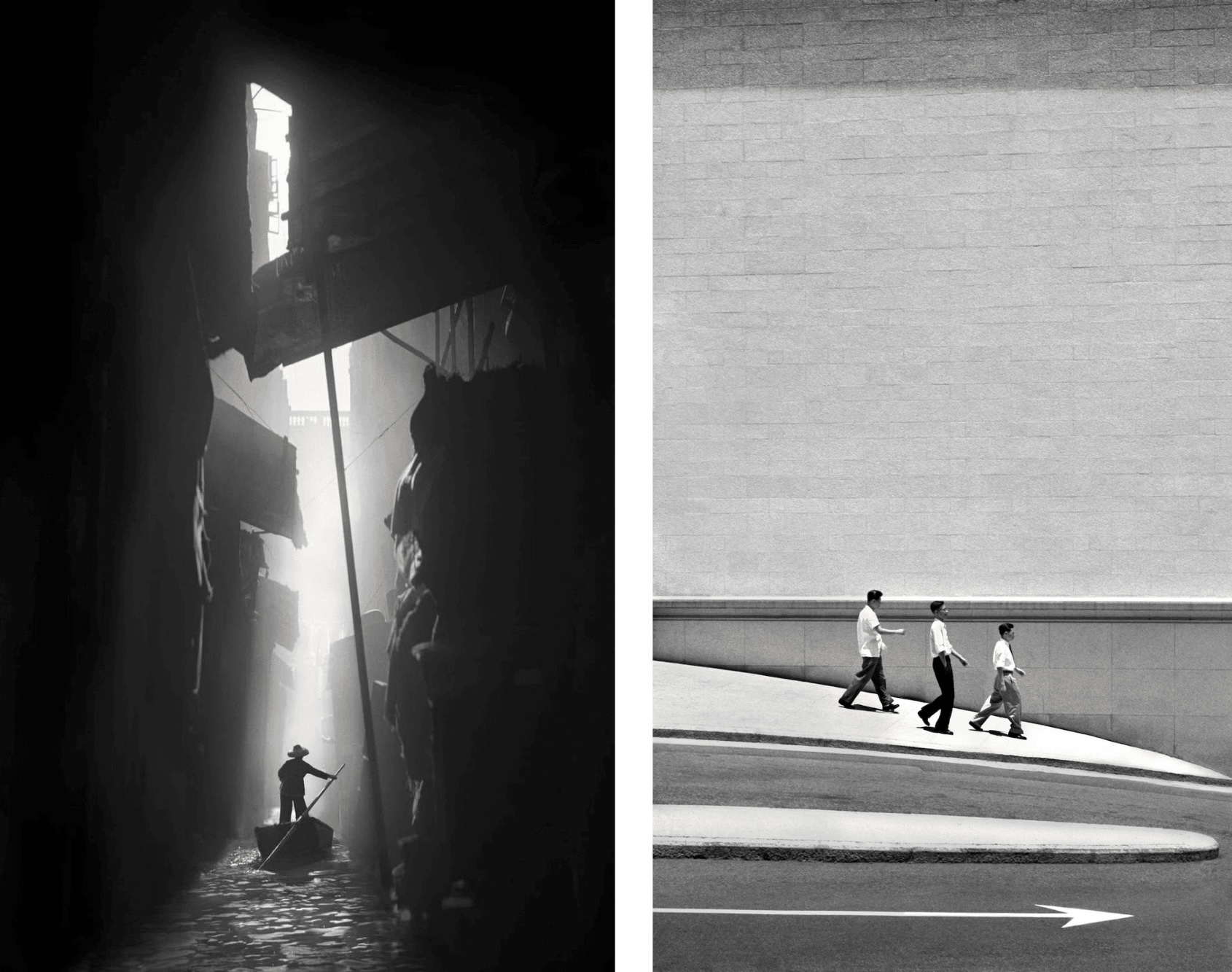
What is striking is just how graphic the world becomes through his eyes. Fan Ho had a keen sense of composition and used the existing architecture of the city as a kind of geometric framework, in which everyday life could unfold. He could wait patiently for someone to appear in exactly the right place, the so-called ‘decisive moment’ that we associate with Cartier-Bresson. But in Fan Ho’s work, a chance passer-by also becomes an element within a larger composition, one in which all the other lines and planes often seem to fall into place.
The artist uses light almost as a material. Mist, backlighting, smoke and deep shadows transform the city into a stage on which people are in some cases only visible as mysterious silhouettes. In other images, a single narrow beam of light falls across a body or face. The result is often strikingly cinematic, as though the real story was unfolding just beyond the frame. This creates an interesting tension between what you actually see and what your mind subsequently fills in.
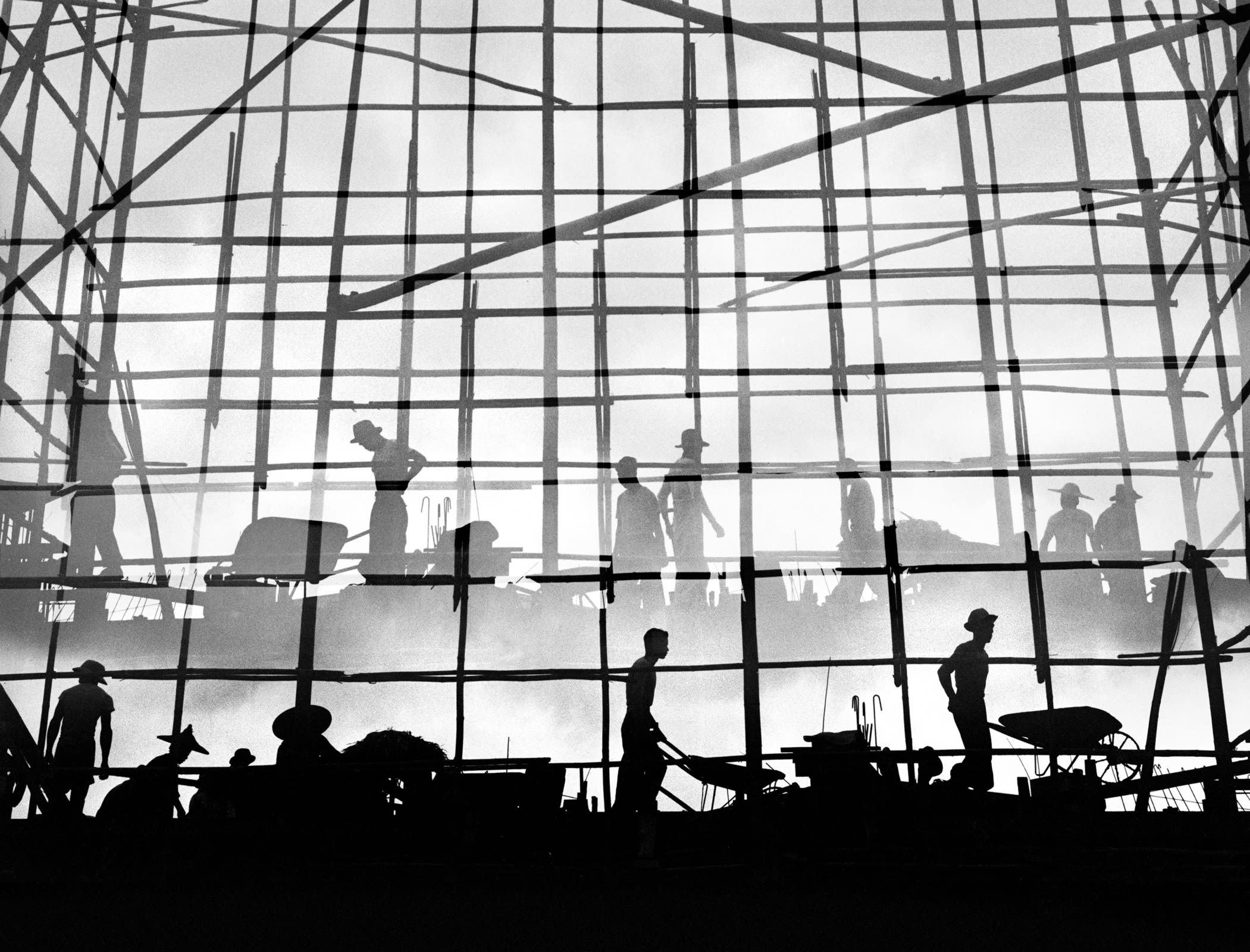
For Fan Ho, however, photography was not only about recognising the right moment, but also about reshaping that moment afterwards. The darkroom was an essential part of his creative process. He reframed his images, adjusted contrasts, added shadows or lightened and darkened certain areas to further refine particular lines, forms and proportions. At times, this lent his work a degree of abstraction, moving it increasingly further away from ‘reality’.
The photographer rarely used colour. In an interview with M+ Museum in Hong Kong, he explained: “I prefer black and white photographs. Colours do not fit well in my world, black and white offer me a distance. A kind of distance from real life, I think this distance is very important. Real-life is multicolour, black and white offers a sense of detachment. It allows audiences and viewers to develop their responses and offers the space and depth to ponder and contemplate my ideas.”
Fan Ho’s work is held in the collections of the M+ Museum in Hong Kong, the Hong Kong Heritage Museum, the Bibliothèque nationale de France, SFMOMA and the Santa Barbara Museum of Art. During his career, he received almost 300 awards and distinctions and was appointed a Fellow of both the UK’s Royal Photographic Society and the Photographic Society of America. The latter also ranked Ho among the world’s ten leading photographers on eight occasions. In addition, he was made an honorary member of photographic societies in Singapore, Argentina, Brazil, Germany, France, Italy and Belgium. Fan Ho died in California on 19 June 2016 at the age of 84.