25 september 2026, Flor Linckens
Too Much is Not Enough! Jan Henderikse and the ambiguity of abundance
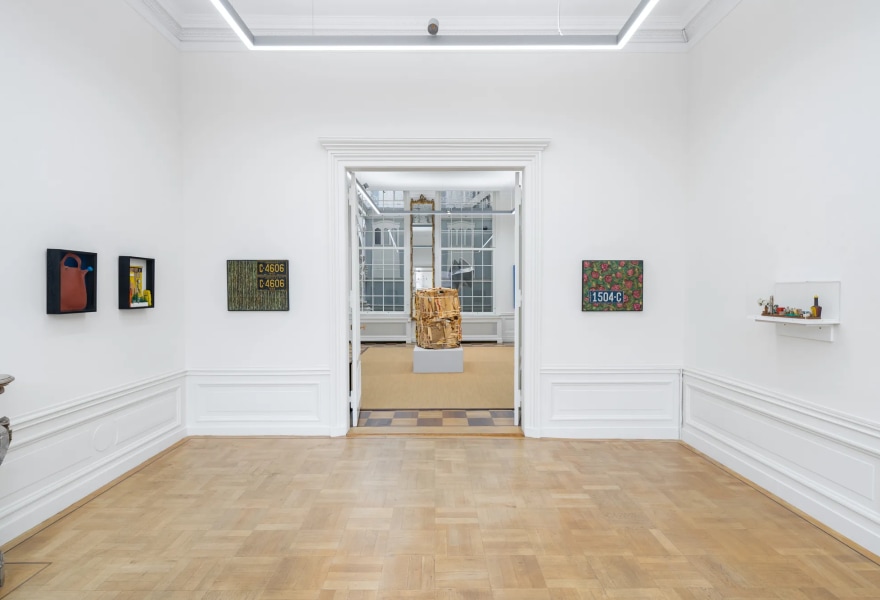
On 26 September, BorzoGallery in Amsterdam opens Jan Henderikse’s solo exhibition ‘Too Much is Not Enough!’. Bringing together works made from 1963 onwards, the exhibition reveals how certain ideas have remained a constant throughout his practice for over sixty years. Henderikse works with objects he finds around him: licence plates, coins and dollar bills, as well as toys, beer crates, corks and rejected photographic and film material. Materials that would ordinarily escape our attention are removed from their familiar context and rearranged by the artist.
Henderikse initially started out as a painter, but around 1960 he decided to put down his brush. Rather than creating an image from scratch, he increasingly began to work with existing materials. He collected found objects, waste and mass-produced goods, and incorporated them into a wide range of assemblages and installations. The act of making does not necessarily lie in producing the object itself, but rather in a way of looking, combining and presenting: for Henderikse, an idea can be more significant than the physical execution of an artwork.
This approach developed within the context of the Dutch Nul group, which emerged in the early 1960s and was closely related to movements such as ZERO in Germany and Nouveau Réalisme in France. These artists turned away from the individual gesture of the painter and instead focused on reality as they encountered it. Repetition and seriality played an important role, as did the use of a range of materials that were rarely associated with fine art at the time.
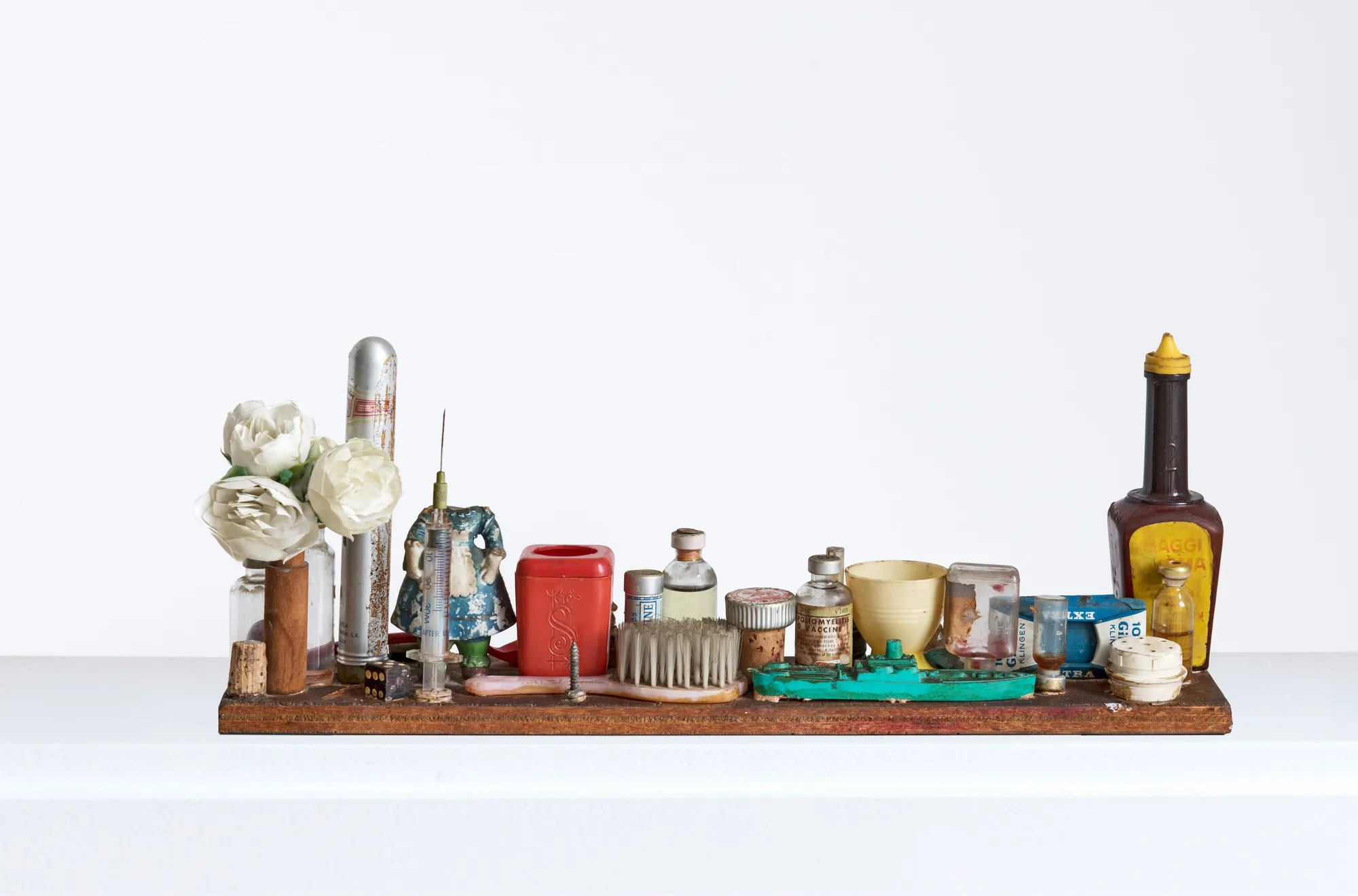
Within this context, Henderikse, the last surviving member of the Nul group, occupied a unique position. His work is more rebellious, less austere and less monochromatic than that of many of his peers. Instead, he is drawn to colour, disorder and abundance, finding value in discarded objects, kitsch, advertising images, souvenirs and other items that would not normally be considered to possess much artistic value. This interest also brought his work closer to Pop Art and Nouveau Réalisme.
Materials are rarely neutral in his work. Money, for instance, inevitably evokes notions of value, ownership and capitalism, and discarded packaging, advertising imagery and consumer goods also tell us something about the society in which they circulate. Henderikse’s accumulations are often appealing, absurd or humorous, but at the same time they reveal just how many things we produce and how easily we discard them. It is precisely this duality that the title ‘Too Much is Not Enough!’ seems to capture: the pleasure of abundance is difficult to separate from the critique embedded within it.
The exhibition title refers to a remark Henderikse made to art historian Antoon Melissen in 2010, touching on something fundamental to his practice. On 26 September, Melissen will present his new book Jan Henderikse. ¡SUPER! during the opening at BorzoGallery (15.00–17.00).
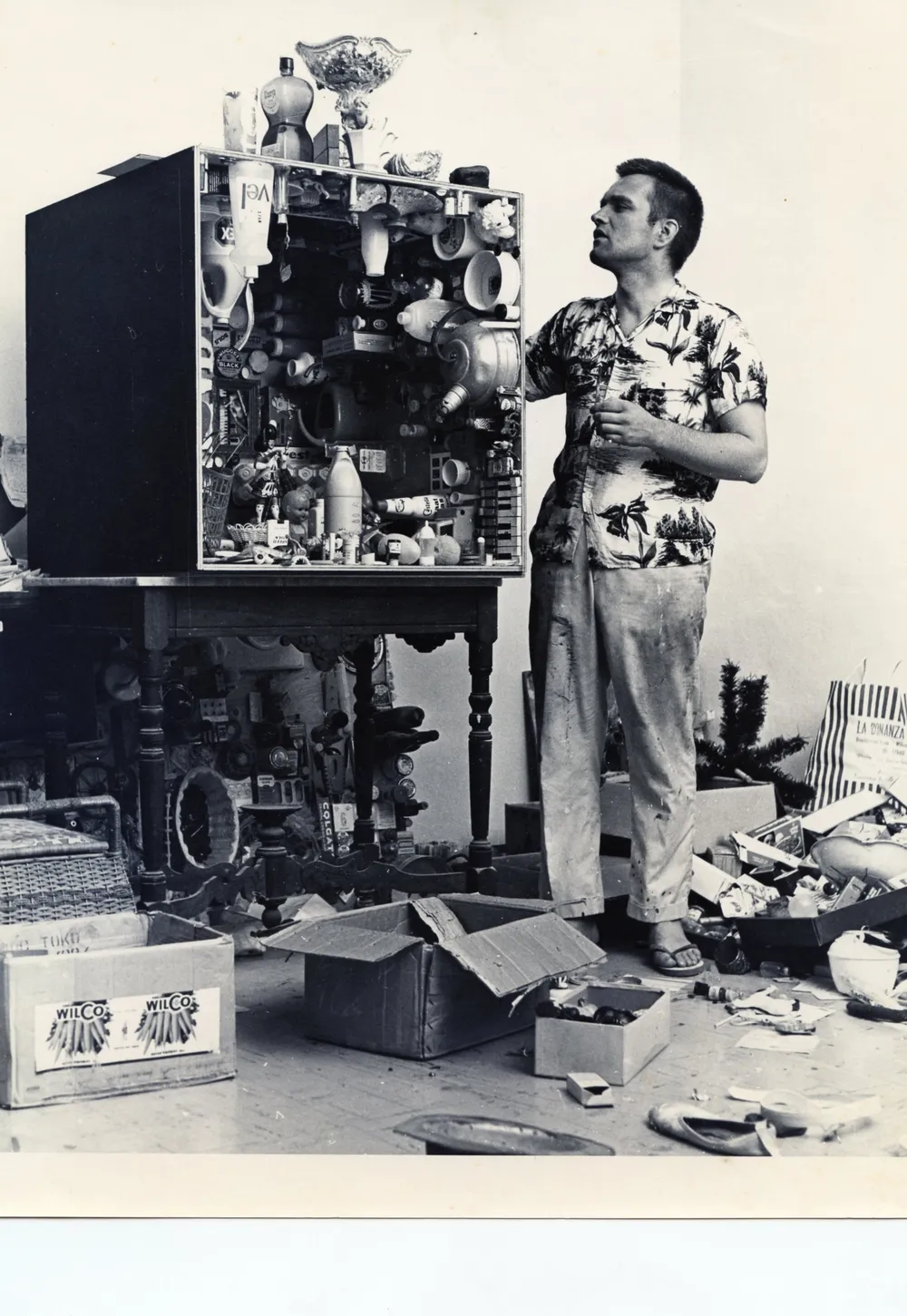
Although Henderikse is best known for his assemblages, his multifaceted practice also encompasses photography, experimental films, artists’ books, multiples, photo objects, readymades and neon works.
Jan Henderikse was born in Delft in 1937 and studied at the Vrije Academie in The Hague. He left the Netherlands in the late 1950s and has since worked in cities including Düsseldorf, Curaçao, New York, Berlin and Antwerp. His work was acquired by institutions including the Stedelijk Museum Amsterdam, Kröller-Müller Museum, Van Abbemuseum, Museum Boijmans Van Beuningen, Kunstmuseum Den Haag, Centraal Museum, M HKA, Museum Voorlinden, Tate, MoMA, Brooklyn Museum, The Art Institute of Chicago and the Walker Art Center. In 2018, Stedelijk Museum Schiedam presented a major retrospective of his work and this summer, his work was the subject of a retrospective at Museum EICAS in Deventer. Henderikse’s work is currently also included in the exhibition ‘Radical. Realities. Nouveau Réalisme and the Art of the 1960s’ at Kunsthalle Mannheim. In 2001, Sherman De Jesus made the documentary ‘Alles is Licht - Jan Henderikse’ about his work. Today, he divides his time between New York and Antwerp and, now 89, he continues to work with the same curiosity about the world around him.
