11 december 2025, Yves Joris
The Poet’s Garden at the NQ Gallery: engaging in dialogue with Van Gogh
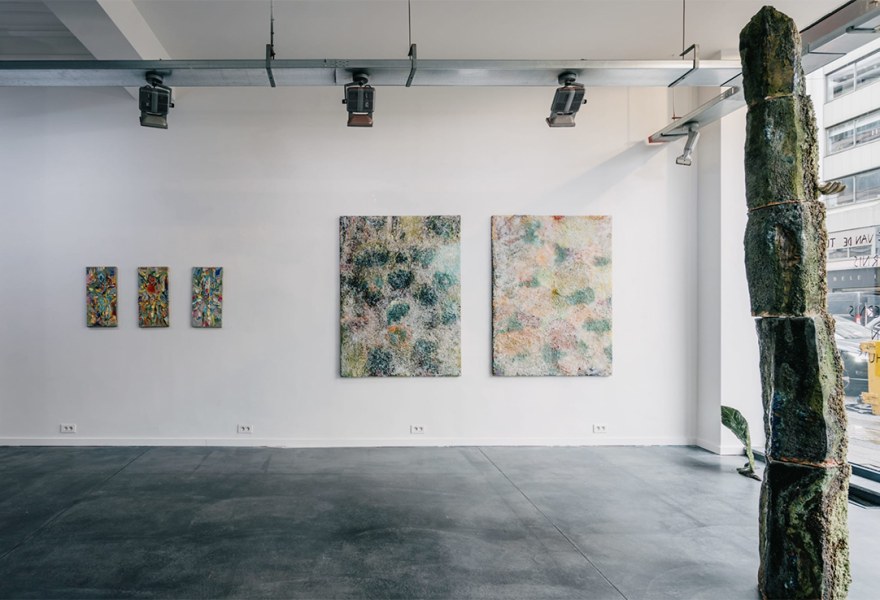
Exactly 140 years have passed since Vincent van Gogh arrived in Antwerp, a city that stretched before him like a jagged yet promising horizon. He came with high expectations of the academy, but soon discovered that the real learning took place elsewhere: in the alleys where light fell at an angle, at the docks where water and labour formed their own rhythm, in the cafés where people were themselves without embellishment, and… in the quiet gardens where his gaze finally found space.
In his letters to his brother Theo, he wrote about how this winter episode shook him to his senses. “Here I find the friction of thoughts I seek,” he noted, as if he understood that friction is a prerequisite for growth.
Today, in The Poet’s Garden at the NQ Gallery, that winter is not commemorated but relived. Thanks to the collaboration with the Van GoghHuis in Zundert, where the exhibition Winterkoers – Van Gogh in Antwerp highlights his stay once more, a diptych between past and present emerges. The spirit of those months in Antwerp is not placed in vitrines, but carried forward by contemporary voices working with the same uncertainty, curiosity and hunger for light.
Gallery owner Niqui Van Olphen deliberately chose the garden as the leading motif. A garden is not a backdrop, but an organism, a place where time does not run in a straight line, where growth and decay continuously alternate, where the gaze softens and the mind opens. Here, visitors are invited to look as Vincent looked: carefully, searching, receptive.
The legacy of a garden: Van Gogh as the point of departure
The academy garden in Antwerp was a breathing space for Van Gogh, an enclave where the formal framework of the academy briefly dissolved. Students exchanged ideas, experimented, observed. It was precisely the kind of environment Vincent needed to rebuild himself.
In Arles, the garden would take on even deeper meaning for him. Van Gogh’s The Poet’s Garden shows a landscape he saw as a space for thought, an inner stage where poets from world literature accompanied him. “It has an intimacy,” he wrote to Theo, “and to capture that more essential character, I paint the same place again.”
That renewed way of looking also forms the core of The Poet’s Garden. The garden does not reveal itself in a single image, but in repetition, variation, nuance. A garden is never one moment; it is a continuous creation.

Reinoud van Vught, No title, 2025, NQ Gallery
Strolling among trunks, voices and seasons
Niqui guides me through the exhibition as a gardener through a landscape she knows inside out. She does not describe, but listens. She does not show works-in-progress, but growth, vulnerability and seasons.
Reinoud van Vught offers another kind of vegetation: his granulate, vibrating skin of paint and matter creates an energetic surface that seems to be alive. His work shares a sensitivity to colour and light with Marc Mulders, but anchors it in a completely different tactility. “He is constantly changing,” Niqui says, “but his essence remains the same.”
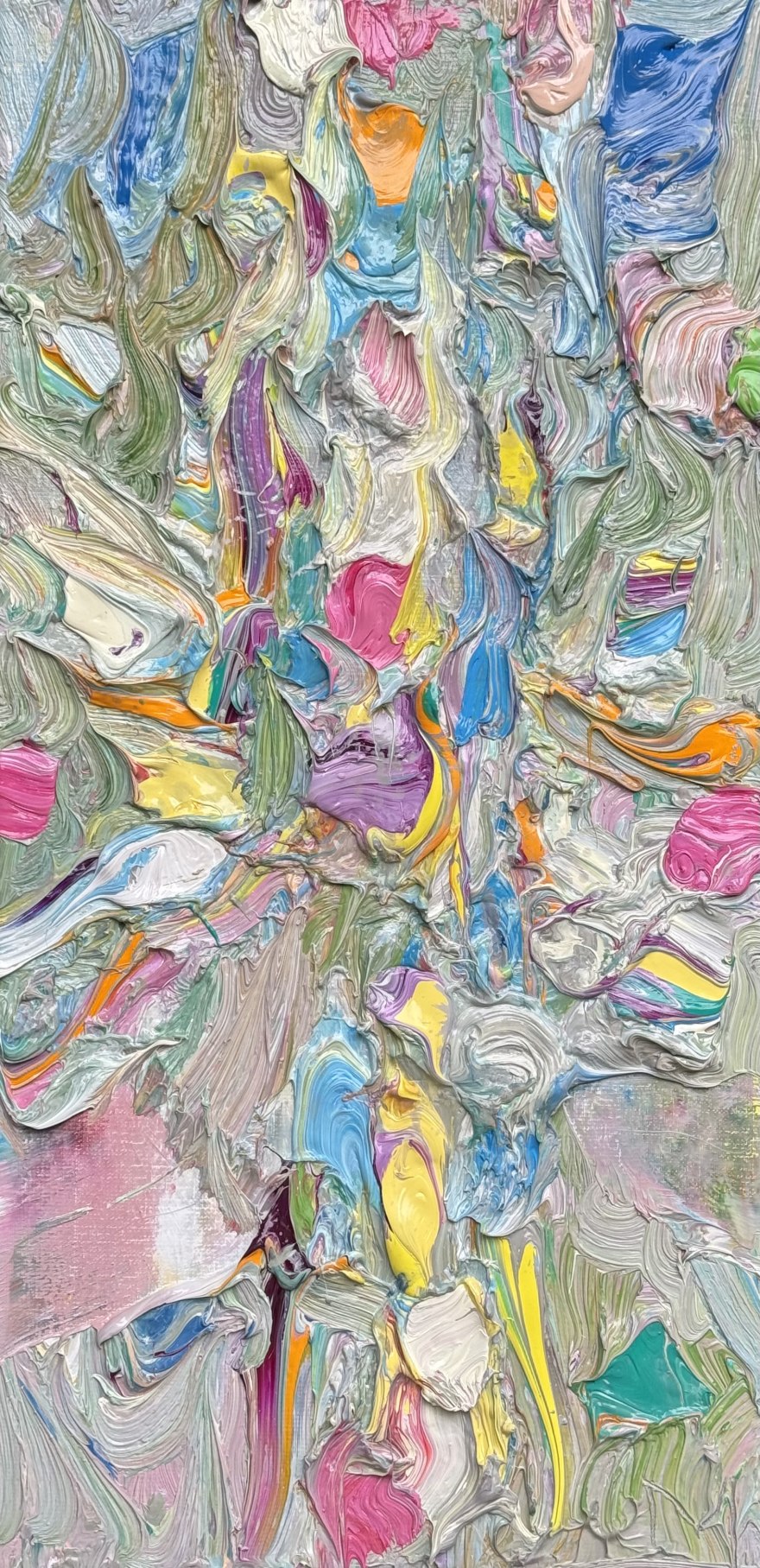
Marc Mulders, Flowering 23.08.25, 2025, NQ Gallery
In Marc Mulders’ work—he has explored flowers, light and spirituality for decades—the transition to ceramics is a surprising yet logical next step. His work carries the softness and clarity of someone who dares to embrace the fragile.
And then unfolds the universe of Ron Dirven, hidden for years in the seclusion of his studio. Here, his work forms an infinite tree, an archipelago of rhythms, crowns, roots, sketches and bark. An oeuvre not born from ambition, but from devotion.
Together, these artists form a garden in which each work embodies its own season.
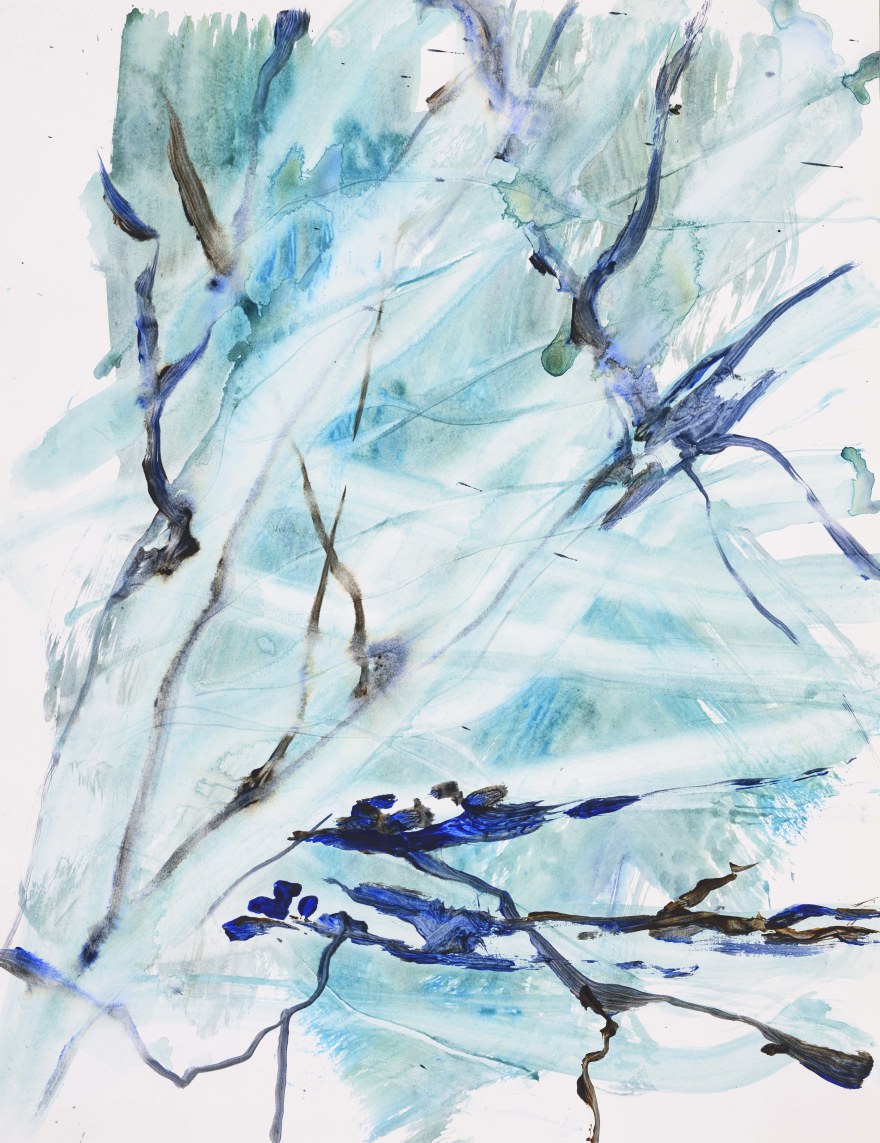
Ron Dirven, Study of nature, 2025, NQ Gallery
The forgetting that remembers: Tosja van Lieshout
On seeing Every Morning I Forget by Tosja van Lieshout, the viewer naturally falls silent. The painting does not ask for interpretation, but for presence.
At the bottom, an oval emptiness opens up, a place where nothing happens—and because of that, everything becomes palpable. A location that the poet Rutger Kopland once described in his verses as “an empty place to remain”. Around it unfolds a field of flowers in tones so vivid they seem to glow from within the paint itself, colours that breathe, tremble and settle just in time.
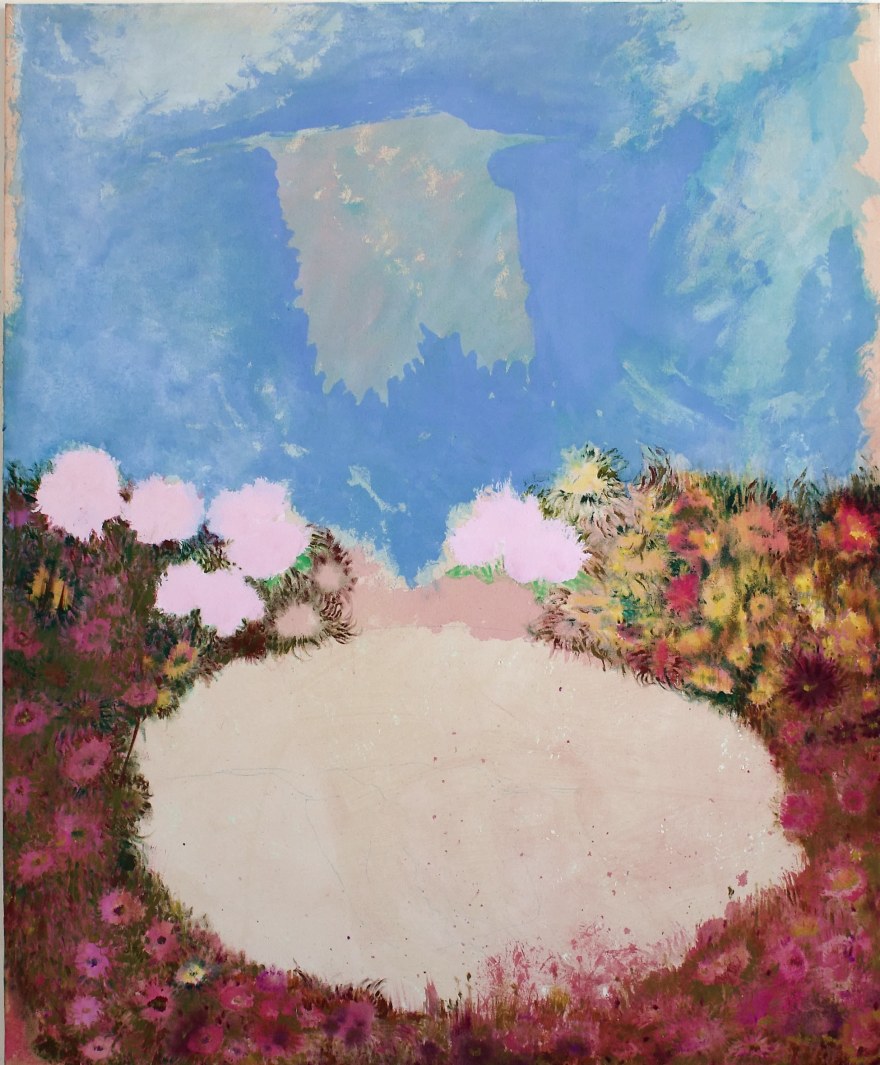
Tosja van Lieshout, Every morning I forget, 2025, NQ Gallery
At the top, the blue of the sky is self-forming: layer over layer, painted over, scraped back, a shape that refuses to be named. The title, Every Morning I Forget, is not a confession, but a method. Forgetting here is not loss, but a necessary shift, a space cleared for new light. In the context of the exhibition, this work becomes an inner chamber, a garden that does not grow outside, but behind the eyes.
Travelling, filming, writing: young voices in the garden
Further on, the video work of Marte de Jager and Eden Berger engages in dialogue. They travelled through Europe together, with Marte writing and Eden filming. Not to reconstruct Van Gogh’s journeys, but to explore a contemporary variant of the same inner movement: the desire to wander, to look, to listen.
Their video is not a report, but a breath: images that can be read like poetry, texts that flare up and fade again. The work will soon travel on to Zundert, where it will find a new context and a new kind of silence.


Marte de Jager & Eden Berger, We found nature, art and poetry, 2025, NQ Gallery
The Van GoghHuis link: Antwerp – Zundert
What makes The Poet’s Garden truly exceptional is the link created between Antwerp and Zundert. This exhibition does not stand alone, but is half of a diptych that is complemented and mirrored in Zundert.
At the Van GoghHuis, Flemish artists present work created during their residencies there. The selection and installation were composed by Nadia Naveau and Andrews, a duo that perfectly understands the sensitivities of these residencies. At Vincent’s birthplace, Belgian voices are confronted with the silence, light and intimacy that emanate from the location.
At the NQ Gallery in Antwerp, Dutch artists are showing their work, curated by Eva Geene from the Van GoghHuis. Zundert contributes Flemish artists, while Antwerp contributes Dutch ones: two perspectives that converge in the same way of thinking about nature, light and inner movement.
This exchange is not an administrative project, but a living trajectory. Some Dutch artists, such as Marthe and Eden, are continuing on to Zundert, where their work will be reread anew. Flemish artists are also returning to Antwerp after a residency in Zundert. In this way, it becomes clear that Zundert and Antwerp are not geographical points, but two rooms in one house: that of Van Gogh’s artistic practice, which today is still inhabited by those who have the courage to look differently.
