01 july 2025, Wouter van den Eijkel
The studio of... Giannina Urmeneta Ottiker
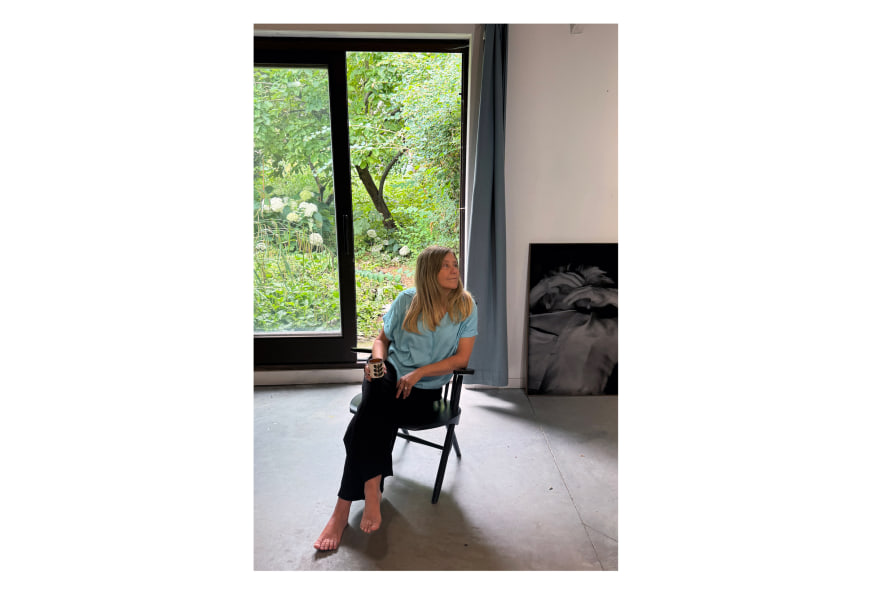
Giannina Urmeneta Ottiker’s solo exhibition is titled Imprints. In it, she alternates smaller photographs of bodily postures with large-scale landscape photography. The black-and-white images have a nostalgic quality and are deliberately layered, scratched, and seemingly damaged, as if they are echoes of altered or fragmented memories marked by the passage of time.
Imprints refers to the traces or impressions our memories leave on us. They slip beneath our skin and mark our bodies, leaving emotional and physical imprints that become part of who we are. In this exhibition, I propose a dialogue between our gestures – our physical choreography – and our surroundings. It is a continuous exchange, in which our movements resonate with the environment and vice versa.
Imprints by Giannina Urmeneta Ottiker is on view at Studio Seine in Rotterdam until 17 July.
Where is your studio and how would you describe this place?
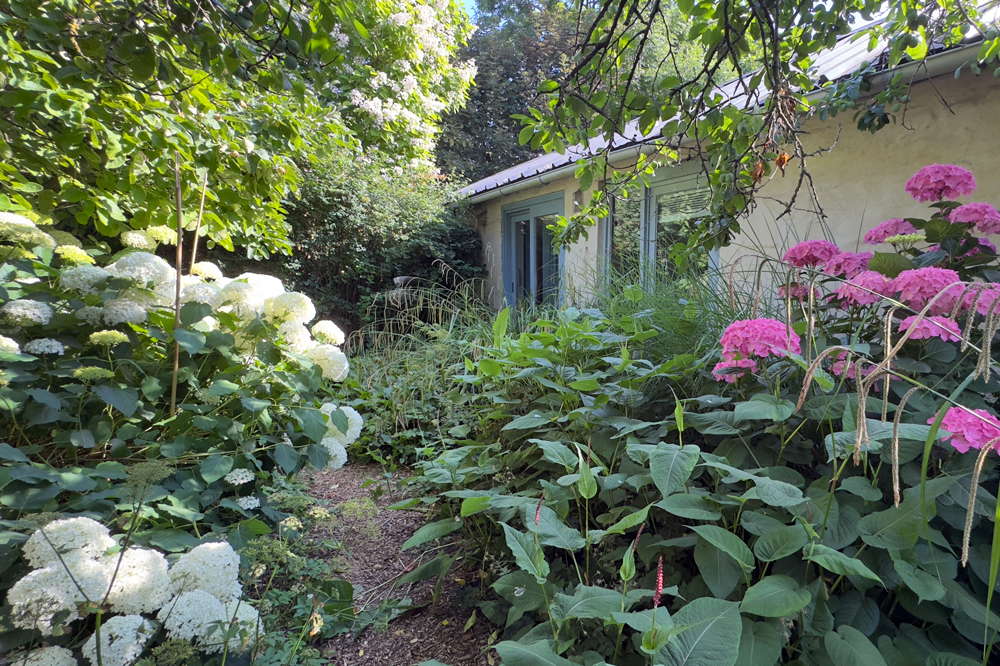
My studio is in Oostakker, in the outskirts of Ghent, Belgium. It is a space in a small oasis in a residential area. A walk through a narrow dirt path between wild plants, trees and two sheep leads to my front door. The building is as a long structure with four independent ateliers. Each artist has their own entrance. My space has two areas. One where I work and the second where I store my work and material. There are two big walls where I hang work and paint. There is a small kitchen area and a big sink with rainwater. My coffee machine and heating stove are part of my survival kit.
Painters swear by the Northern Lights, ceramists by a good kiln. What do you really need for a good studio?
Being surrounded by green really works for me. I have two glass doors which allow me to see the garden while working. I also like a sense of isolation, feeling secluded from the outside world.
Imagine: I am doing an internship with you, what would an average working day look like?
I mostly start at around 9:30. As soon as I arrive I prepare coffee. I usually work on more than one project at a time. If there is an upcoming exhibition I spend most of my time selecting work and making try-out prints. I hang these try-outs on the walls for some days and then start a final selection. I send my selection to the lab where they make more try- outs on the right paper and format before making the final prints. Once I have the pictures back from the lab I work on them further. I might also draw and write the same day. These activities cross each other. I take a couple of coffee brakes, eat something small, read, and chat with the two sheep in the garden. At around 16:30 I go back home and cook for the family.
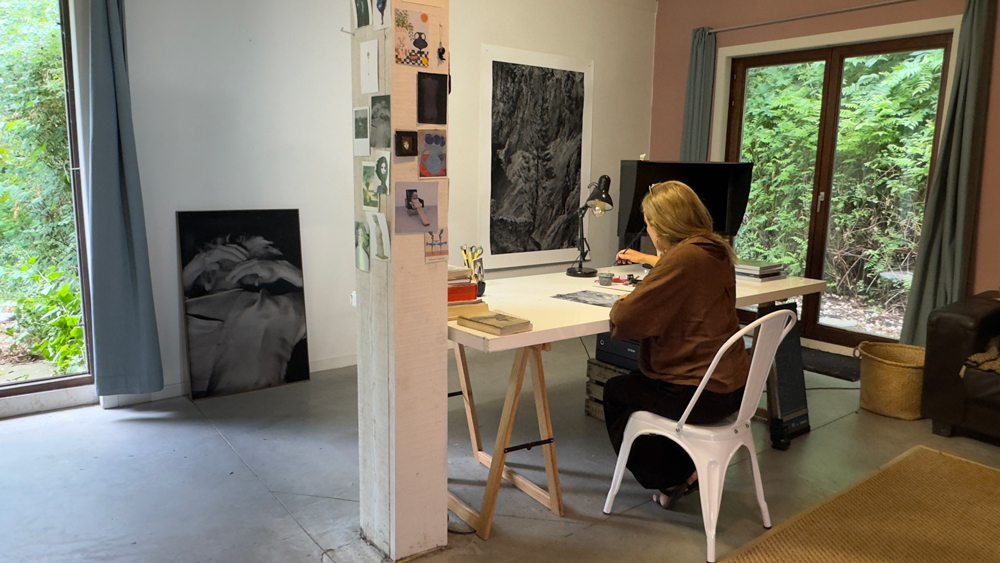
Giannina Urmeneta Ottiker at her studio ©LucaVandenweghe
At the moment, Studio Seine is showing Imprints, your solo exhibition. Can you explain what you mean by the title of your show.
Imprints refers to the marks or impressions left on us by our memories. These memories crawl beneath our skin and mark our bodies, carving out emotional and physical traces that become part of who we are. Leaving lasting impressions, often shaping our responses, our choices, and even how we carry ourselves in the world.
Your works are all in black and white and there seems to be a layer of grit or ash on top. I assume that was a conscious choice. Why did you choose that?
I use black and white as a reference to the past and as a way to minimize distractions, allowing viewers to focus on the textures and tonal gradations. I think this approach enhances the sense of timelessness and ambiguity. This monochromatic palette evokes what Roland Barthes refers to as the 'that-has-been' of photography, a temporal disjunction that situates the image in a space of spectral presence and loss. The pictures are intentionally layered, scratched and seemingly damaged - echoes of altered or fragmented memories, as if time has left its own imprint on them. Some of these scratches originate from old photographic negatives I inherited from my grandfather, which I incorporate as a subtle layer within the work. He was an amateur photographer whose influence has been deeply significant in my life.
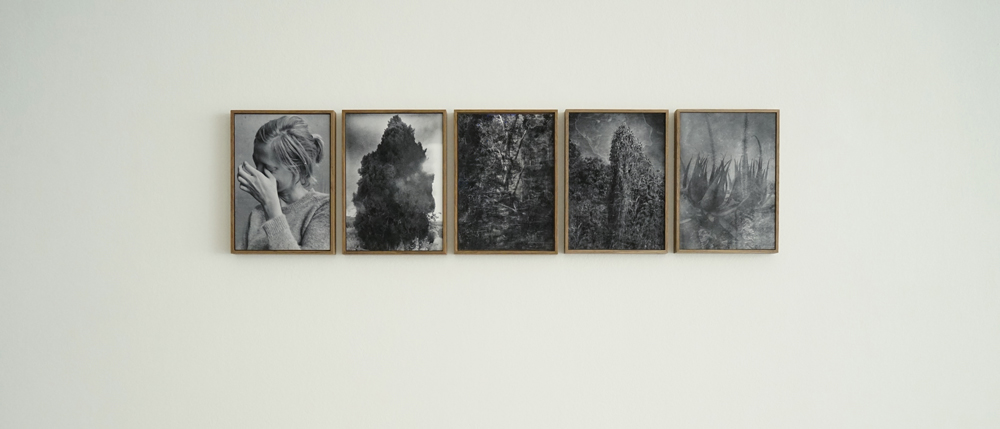
Girl I en Plants (2024) © Giannina Urmeneta Ottiker
In the exhibition, you alternate large landscapes with photos of body postures, for example we see a hunched back and somebody crying. That combination is not obvious. How did you know that would work for Imprints?
In this exhibition I suggest a dialogue between our gestures - our physical choreography - and our surroundings. It’s an ongoing exchange, where our movements resonate with the environment and vice versa.
Movement as a language. Just as our body language responds to the space it inhabits, the surroundings also shape the way we express ourselves.
Our bodies are in continuous negotiation with the world around it. The images in this exhibition don't only converse with each other; they also exist independently, each piece holding its own narrative and presence
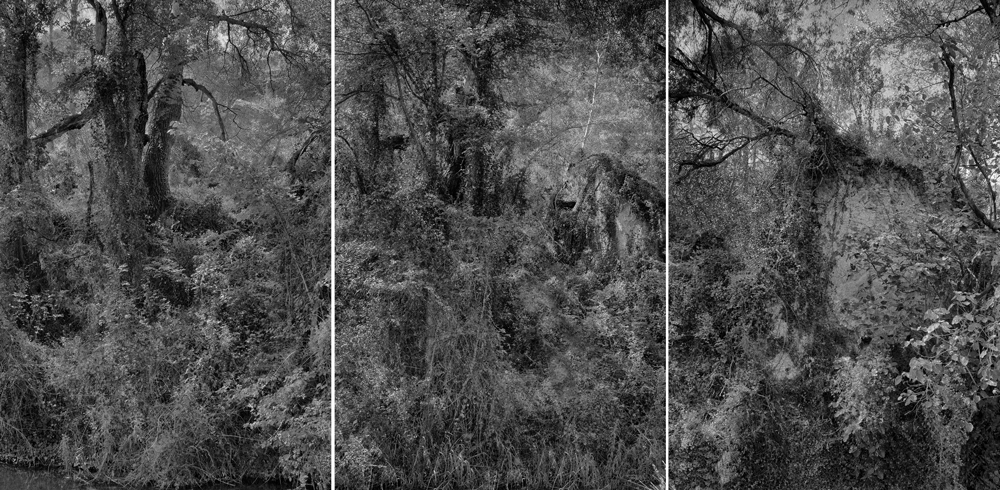
Triptych Ruins (2024) © Giannina Urmeneta Ottiker
The theme in your work is the effect of the past (and traumatic experiences) on the human body and our behavior and the unreliability of memory. Does your interest in these subjects emanate from your youth in Peru during the junta?
Leaving my country and being away from loved ones has made it important to understand my past and the experiences we had as kids where I grew up. This interest is not only related to traumatic experiences. I did grow up in a country that struggled with political issues, corruption and an unstable economy. Memories of tanks rolling down streets at night, military coups, earthquakes and terrorism where some of the stories and images of my past. But these memories are entangled with wonderful summer days, a caring family and the warmth of southern people. Memory constructs personal and collective identities and absence increases the importance of connection with the past.
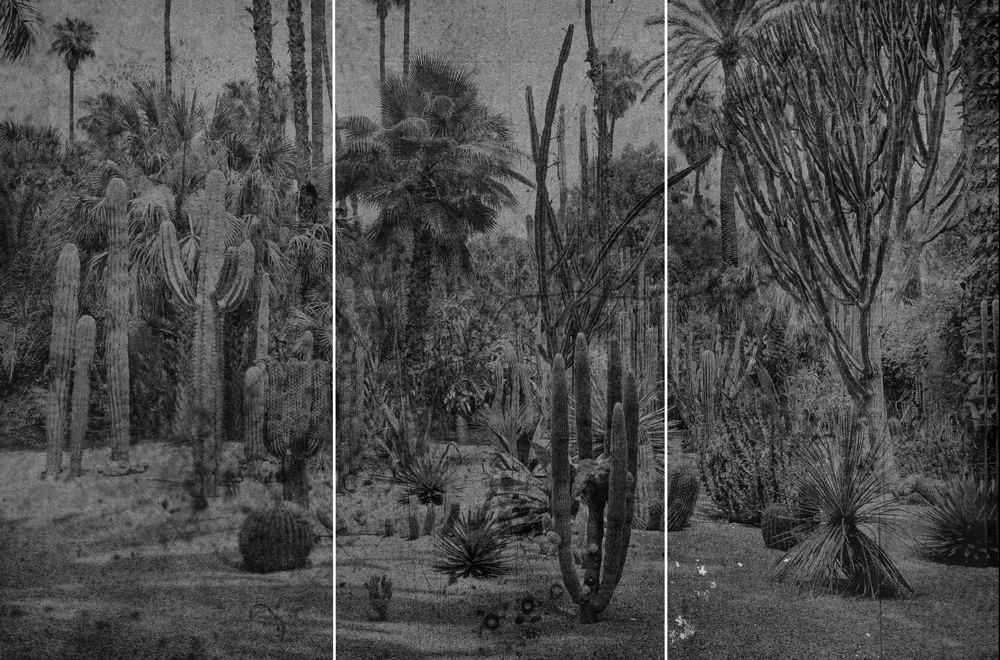
Triptych cactus and palm trees (2023) © Giannina Urmeneta Ottiker
I read that you are in a kind of in-between space in terms of identity, somewhere between Peru on the one hand and Belgium on the other. Does that make you an outsider emotionally or does it give you a lot of creative space?
It is not an outsider feeling. It is a very interesting in-between feeling.
A nuanced and compelling sense of being positioned in an intermediary or liminal space. Situated neither entirely in the place of origin nor wholly in the current context, yet inherently connected to both. This in-betweenness triggers me as an artist, shaping not only my conceptual framework and creative output but also influencing the reception and interpretation of my work.
Imagine I’d give you carte blanche and time and money play no role, is there something you would like to take on?
I would embark on an open-ended road trip, free from time constraints, during which I would photograph, sketch, and write along the journey. Afterward, I would settle for a month in a cabin in the desert - preferably a modest space with large windows that allow abundant natural light. There, I would dedicate my time to completing my book, spending days walking, writing, and drawing, and nights immersed in the expansive star-filled skies. Upon finishing my book, I would invest in printing and publishing a beautifully crafted book.
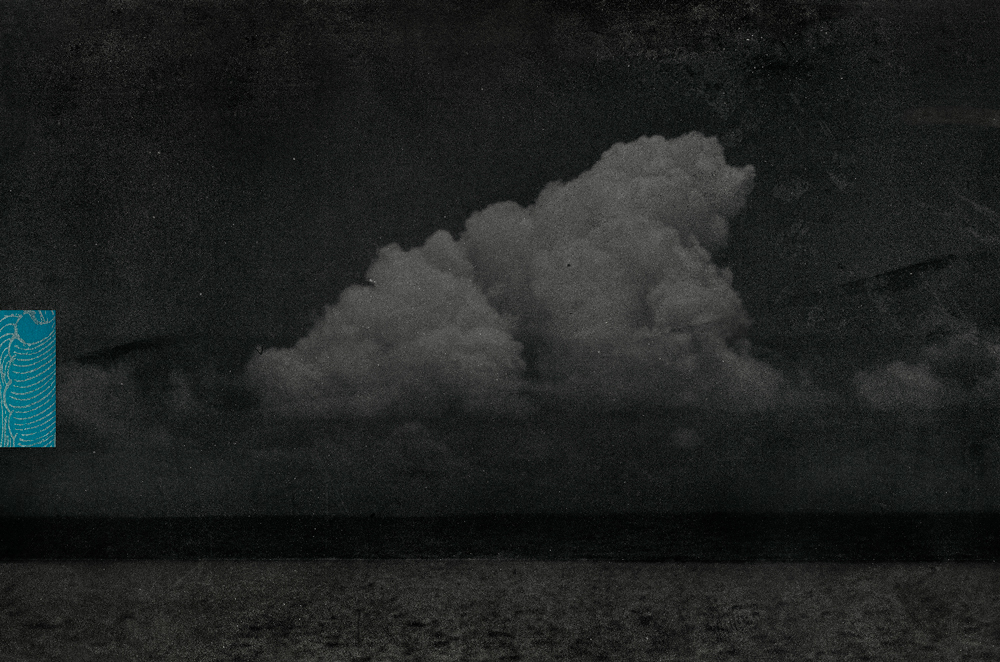
Cloud (2025) © Giannina Urmeneta Ottiker
What are you currently working on?
I am currently preparing for two upcoming exhibitions scheduled for after the summer: a duo exhibition at Cecilia Jaime Gallery in Ghent, and a group show at the Prinsenhof Biennale, which will take place across various locations within a historic neighbourhood in Ghent. For both exhibitions, I will present new works alongside selected pieces from my existing body of work. Recently, I completed an artist residency in Essaouira, Morocco, where I produced numerous texts, drawings, and photographs. I am presently reviewing this material and planning a return visit to further develop the project initiated there. During my time in Essaouira, I began a series entitled Where Do the Children Play, which resonates deeply with contemporary global issues. This work continues to explore themes of memory, the enduring impact of experiences, and their role in shaping identity.
In addition, I am working on a book titled We Kept on Dancing Like It Didn’t Matter, which combines photographs, drawings, and texts. The book is a semi-fictional compilation that intertwines visual and written narratives.
For my recent group exhibition in Paris, I collaborated with two other artists to create a series of flags. I intend to further explore and develop this concept in future work.
While I engage in new and diverse projects, they are all interconnected and form part of an ongoing research into consistent thematic concerns.
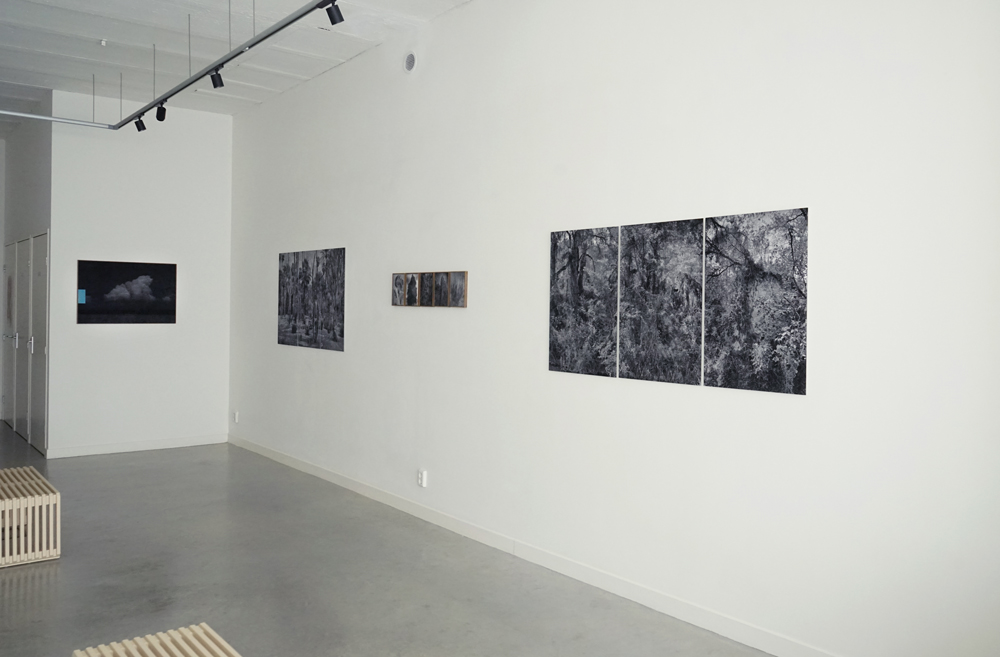
Imprints in Studio Seine, on show until July 17
