27 january 2026, Emily Van Driessen
The Double Skin of Micha Patiniott’s Work at Christian Ouwens Gallery in Rotterdam
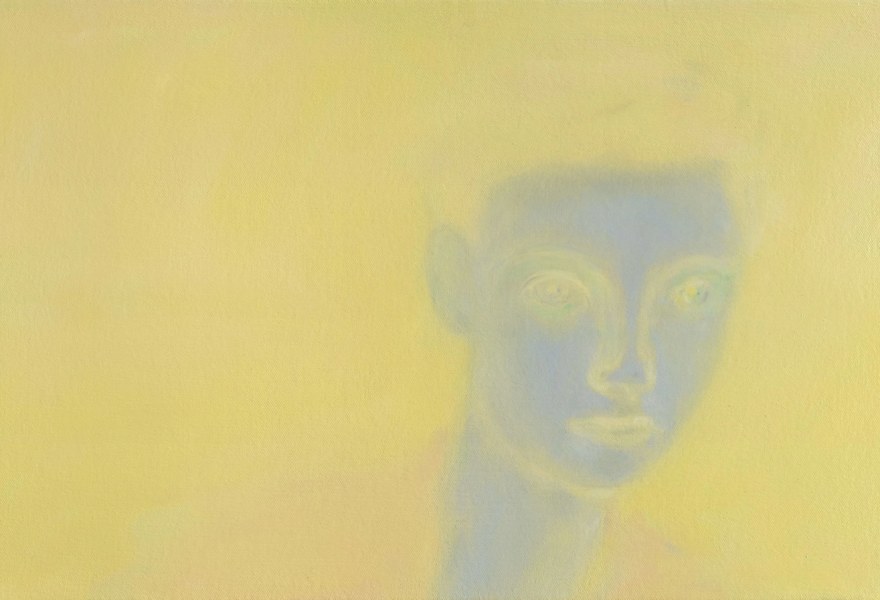
In a delicate, almost evaporative way, painter Micha Patiniott (°1972, The Netherlands) captures sensual repetitions in a tactile manner. His latest exhibition, Double Skin, is currently on view at Christian Ouwens Gallery in Rotterdam.
For Micha Patiniott, Double Skin is both a concrete and a conceptual title. “Conceptually, it connects to what my work continually seeks out: an image that rarely presents itself as singular. There is always a second state (an echo, an afterimage, another reading or a shift) as if something behind the surface keeps looking back without immediately revealing itself. This surface becomes ‘skin’, functioning at once as boundary and contact zone. It separates and encloses, shields and sensitises.”
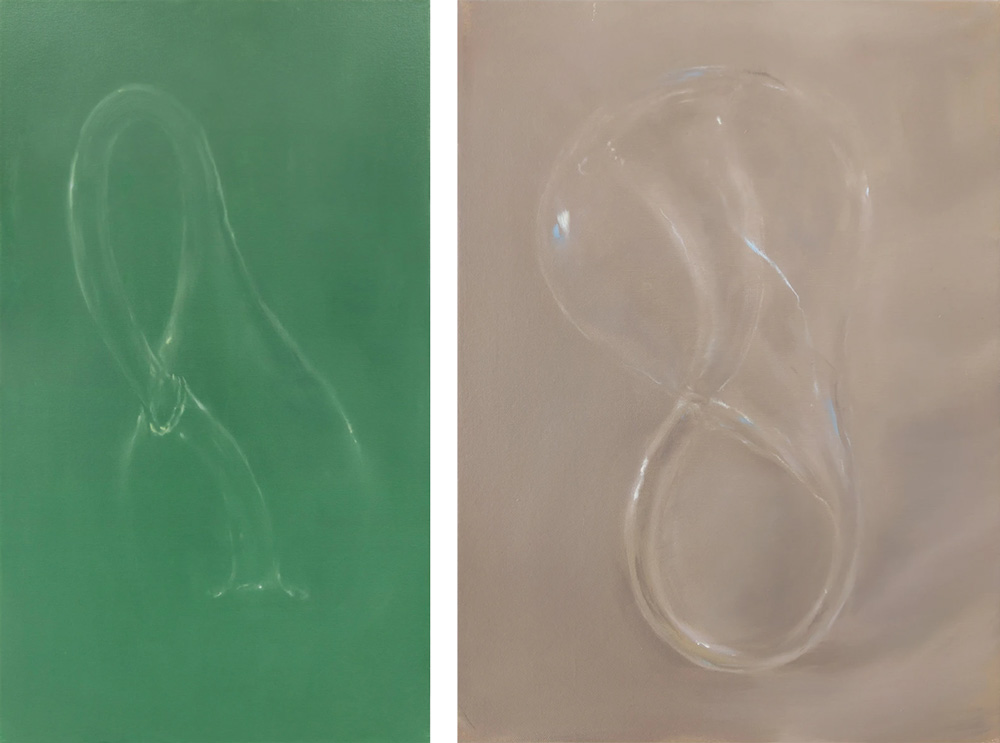
Micha Patiniott, Klein Bottle IV, 2024 & Klein Bottle I, 2023, Christian Ouwens Galerie
On a more concrete level, the title also relates to his working process. “Sometimes I rework an entire painting and give it a different structure,” the artist explains. “I am always very aware of the canvas as a taut, empty membrane before any paint is applied; painting turns it into a second skin. Through micro-differences within my repetitions, the viewer becomes more aware of nuances, and with that, of their own gaze. In the exhibition, the works are arranged in clusters and at varying heights, creating a rhythm. You move from painting to painting and notice how your gaze shifts, often in the fraction of a second before recognition, when the eye is still searching. In that sense, it is less a collection of individual works and more a single network, because you are searching for how they connect.”
Working from an earthy and ephemeral pastel palette, the artist builds his sensual paintings layer by layer. During the process, he enters a kind of twilight zone in which he plays with moments of instability. Just when something begins to appear recognisable, he deliberately dissolves it back into something else.
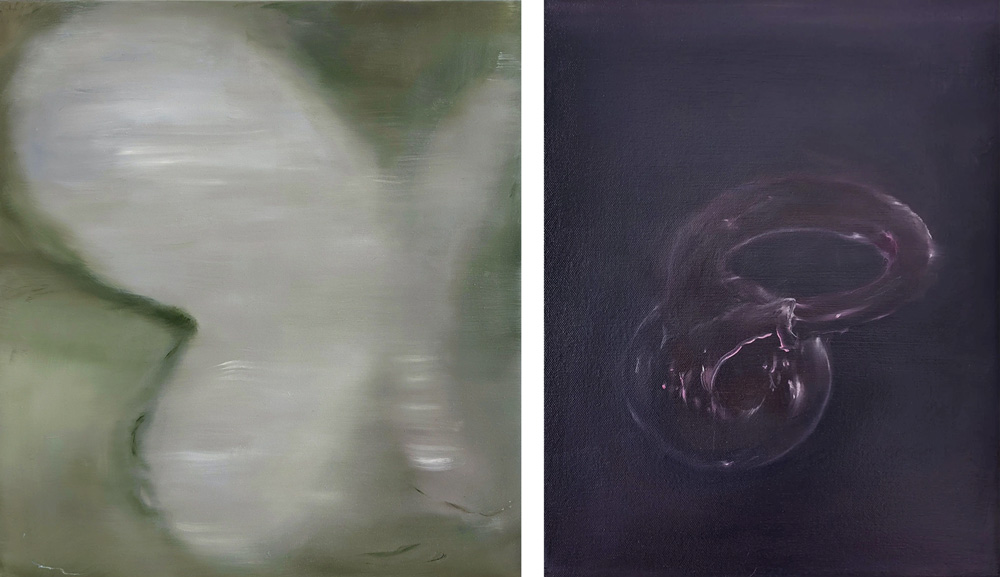
Micha Patiniott, Blink II, 2020 & Klein Bottle II, 2023, Christian Ouwens Galerie
“Glass-like loops, fractures and repetitions run through my work, causing the paintings to seem to fold back onto themselves,” Micha says. “There is almost an erotic charge to them, but it remains elusive, balancing between tenderness and discomfort. Sometimes skin turns into mist or into bands of stars, sometimes a navel becomes a black hole; a cut can simultaneously be a smile and a tear. A portrait may surface as an X-ray-like image, formed out of light, or vanitas reveals itself in the beat of a butterfly’s wing.”
His poetic and layered visual language emerges first and foremost from taking the time to look. During his residency at the Rijksakademie in Amsterdam (2006–2007), the question what is an image, really, became central, and Micha learned to trust that the construction of an image takes time and that doubt must be allowed. His working periods at the Fine Arts Work Center in Provincetown (2008–2009 and 2023–2024) were equally formative. There, he lived and worked alongside writers and poets whose presence subtly nourished his practice.
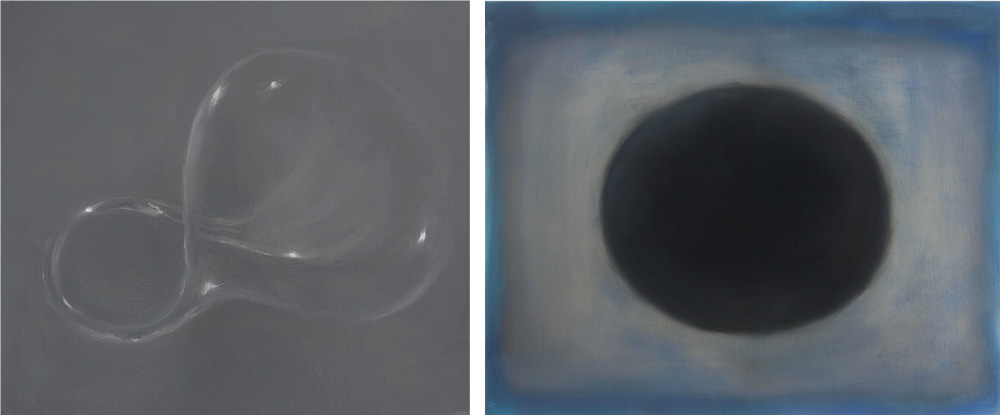
Micha Patiniott, Klein Bottle III, 2023 & Portal III - The Clearing, 2023, Christian Ouwens Galerie
Conceptually, Micha Patiniott is deeply drawn to a wide range of cultural references that generate tension between meaning and image. In the work of writer Gertrude Stein, he is fascinated by the repeated use of words that loosens meaning, as in rose is a rose is a rose. Zen koans appeal to him for the way the short statements playfully undermine meaning through seemingly simple ideas, such as What is the sound of one hand clapping? In a philosophical text from Taoism, the protagonist Zhuangzi wonders after a dream whether he was a butterfly, or whether the butterfly is Zhuangzi. This loop of undecidability returns formally in his paintings.
Alongside literary sources, Micha Patiniott also finds grounding in painting and film. “In painting, I return to images where seeing and touching are in tension with what the image leaves unresolved, such as Caravaggio’s The Incredulity of Saint Thomas (ca. 1601–1602) and the cuts of Lucio Fontana, which suggest a ‘back wall’ but primarily sharpen the surface itself. The films of Andrei Tarkovsky, such as Solaris (1972), Mirror (1975) and Stalker (1979), introduced me to a way of looking in which time itself becomes the subject. These are images that do not explain everything and place the responsibility on the viewer to complete them.”
