16 september 2025, Yves Joris
Bart Vandevijvere: between question and answer
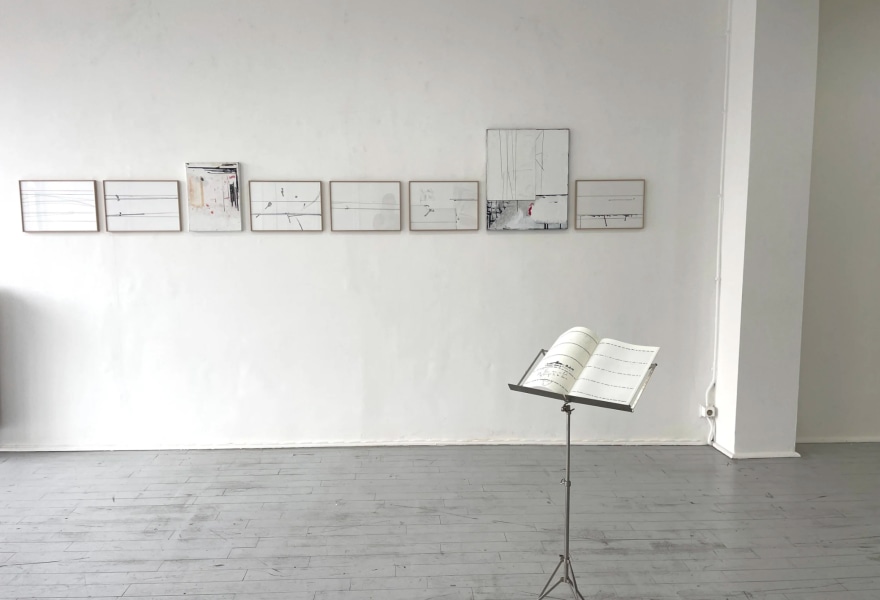
Some paintings behave like music. They don’t enter the room quietly, but shuffle in, fall silent and start again, as if following the breathing of an invisible melody. With Bart Vandevijvere, every canvas seems like such a score, not meant to be listened to only once, but to open a different register each time. His work carries the title Call & Response, a term taken directly from music in which one voice calls and another answers. For example, a saxophone asks a question and a trumpet replies with an answer that can be both affirmation and contradiction. A conversation in paint, an improvisation that refuses to fall silent. Until 27 September, his work will be on view in Gallery Sofie Van den Bussche.
The rhythm of the painter
Looking at Vandevijvere’s paintings, it is clear that they never quite come to a full stop. There is always a vibration left, an after-resonance of colour and form, as if the painting keeps thinking itself forward beyond the frame. Sometimes, the paint seems almost to rise, like smoke spiralling into the air. At other times, it plunges down, dark, heavy, like a double bass setting the tone.
This constant movement, this refusal to get stuck in itself, makes his oeuvre akin to improvisation. It is not virtuosity in itself that takes centre stage, but a willingness to set off in a direction without knowing the destination. Each brushstroke is a note, each touch of colour a chord that opens toward a possible counter-voice. The painter invites the viewer to listen along: what follows, what answer comes after this beginning? Rhythm lies not only in the visible paint, but also in the white spaces, the pauses, the silence surrounding the sound.

Bart Vandevijvere, And Another Small Piece for Sven-Ake Johansson, 2025, Gallery Sofie Van den Bussche
Echoes of Cy Twombly
Vandevijvere’s work occasionally shows an affinity with Cy Twombly, the master of lyrical script that did not want to be script. In Twombly, the lines are often gestures, delayed and resumed, a dance of repetition and erasure. In Vandevijvere’s work, there is also that alternation between appearing and disappearing, of brushstrokes that never fully reveal themselves, but leave a trail that remains unfinished.
Twombly wrote with paint as a poet works with silence, while Vandevijvere paints as if trying to capture a rhythm that slips between the measures. What binds them is the sense of incompleteness, of a continuous movement that refuses to freeze into completion. Yet Vandevijvere remains closer to the musical source, his paintings breathing the cadence of improvisation, while Twombly evokes more the echoes of ancient myths and lost words.
Improvisation as a way of life
Improvisation is never without commitment. It demands knowledge and a mastery of instrument or brush, precisely in order to wander freely. In Vandevijvere’s work, you sense that underlying discipline, the layering of an oeuvre that has been searching its way for decades. And from that knowledge grows the freedom to experiment, to play, to fail and to begin again.
This results in an artistic approach that does not pursue the illusion of a finished masterpiece, but shows the breath of a process. The canvas becomes a field of action and reaction, cause and effect, call and response. It is the pictorial counterpart to a jazz improvisation: every mistake is turned into an opportunity, every misstep opens a new path. And just as the drummer who comes in a fraction too early can create an opening, so too can the painter find at that very point a passage into something no one had foreseen.
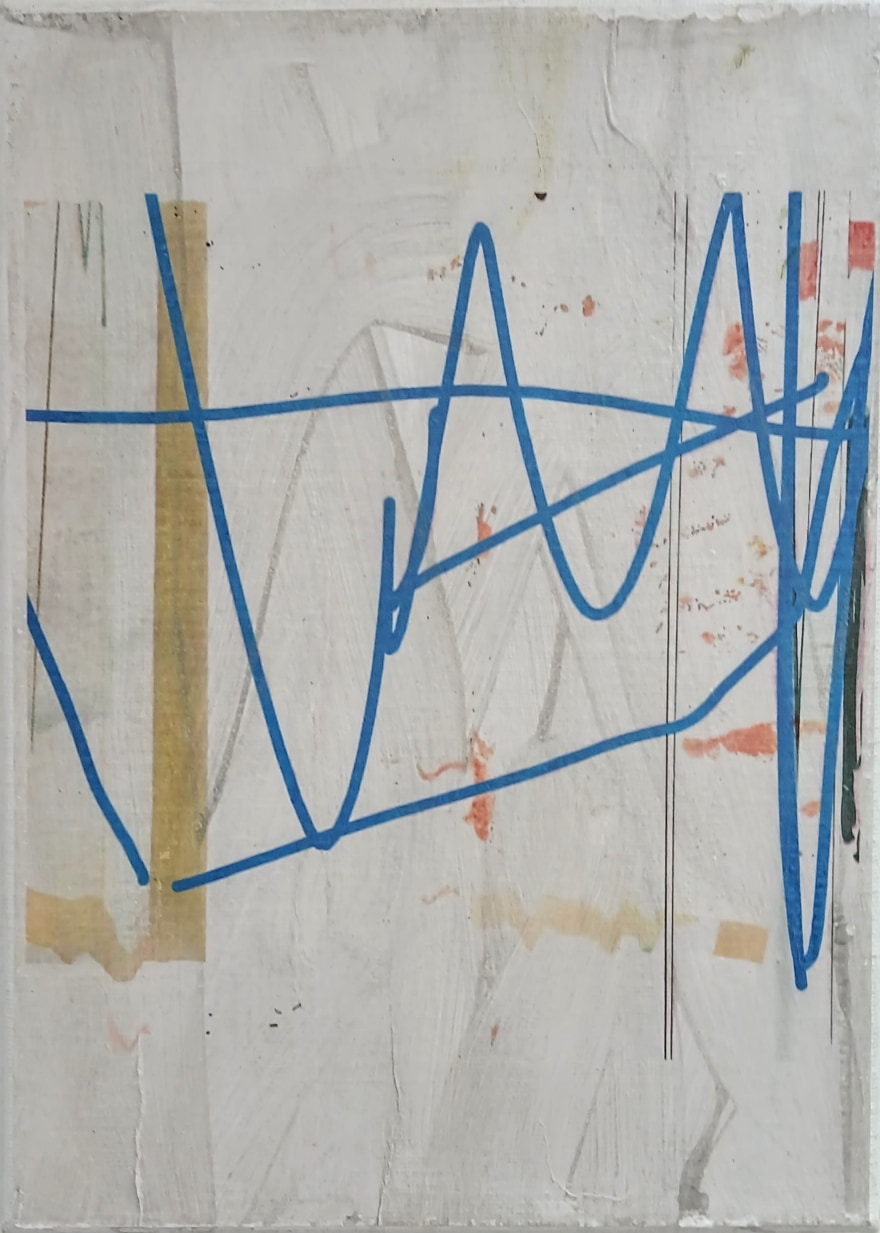
Bart Vandevijvere, Another Small Piece for Sven-Ake Johansson, 2025, Gallery Sofie Van den Bussche
Musical origin of call & response
The notion of call & response has a long tradition in music history. It arose in African oral culture, where singing and answering formed a bond of community and rhythmic interplay. It later made its way into blues, gospel and jazz, where it embodies the essence of both freedom and connectedness. No one improvises in a vacuum, every voice is part of a conversation.
By choosing this title, Vandevijvere explicitly places his work in that tradition of exchange. His paintings are not closed monologues, but invitations to dialogue – with other canvases, with art history, with the viewer. It is as if each work addresses its neighbours in the gallery, firing off a sound that elicits a response elsewhere.
Dialogue with the viewer
What does this mean for the viewer? The painting is not a silent witness, but a partner in the conversation. It asks a question that cannot be put into words and waits for the viewer’s inner response. Looking becomes listening, the eye becomes ear, the canvas a score that can always be read differently. And as in jazz, the beauty is found not in the perfection of the tone, but the tension between them: in the hesitations, the unexpected turns, the space that remains open for a new answer. It is precisely this space that activates the viewer, that prevents a fleeting glance from being enough. You linger and keep listening.
The painter as musician
Perhaps it is no coincidence that Vandevijvere’s way of working recalls the improvisations of Thelonious Monk, Charlie Parker and closer to home, Toots Thielemans. They explored the edges of harmony, not to destroy it, but to let it sound again from an unexpected angle. Vandevijvere also seems to be exploring the border zones of painting. What happens when colour withdraws, when gesture and silence collide, when rhythm is interrupted?
The painter thus becomes a musician without an instrument, but with the same instinct: listening to what has yet to be said and allowing it to come into being on the canvas. Sometimes, he seems to paint as if playing against himself, asking a question and at the same time trying out an answer. That ongoing conversation, that inner jam, forms the undercurrent of his work.

Bart Vandevijvere, Breath and Breeze, 2025, Gallery Sofie Van den Bussche
A journey without end
Call & Response is therefore not an exhibition that seeks to formulate a conclusion. It is a stage in a journey that continues, a snapshot in an unfinished story. Each work is a question that rebounds into another work, each canvas an echo that expands into the next.
Perhaps this is the essence of Vandevijvere’s art: a refusal to be definitive. The courage to keep moving, listening, responding. Just as music does not end with the last note, but resonates on in the ear of the listener, his paintings leave behind a trace that invites the viewer to re-enter the conversation time and again.
Epilogue
Somewhere in all this there is the echo of a memory of a late-night jazz performance: the dimmed lighting, the ticking of drumsticks, the unexpected chord that startles yet liberates the room. Such is the breath of Bart Vandevijvere’s paintings. They are not closures, but openings. Not answers, but questions that invite new conversations.
And perhaps that is the highest form of art. Not the silence of a completed image, but the openness of a dialogue that never ceases. Just as jazz never truly ends, but can always be picked up again, the same can be said of Vandevijvere’s paintings: an ongoing call & response, an improvisation that refuses to fall silent.
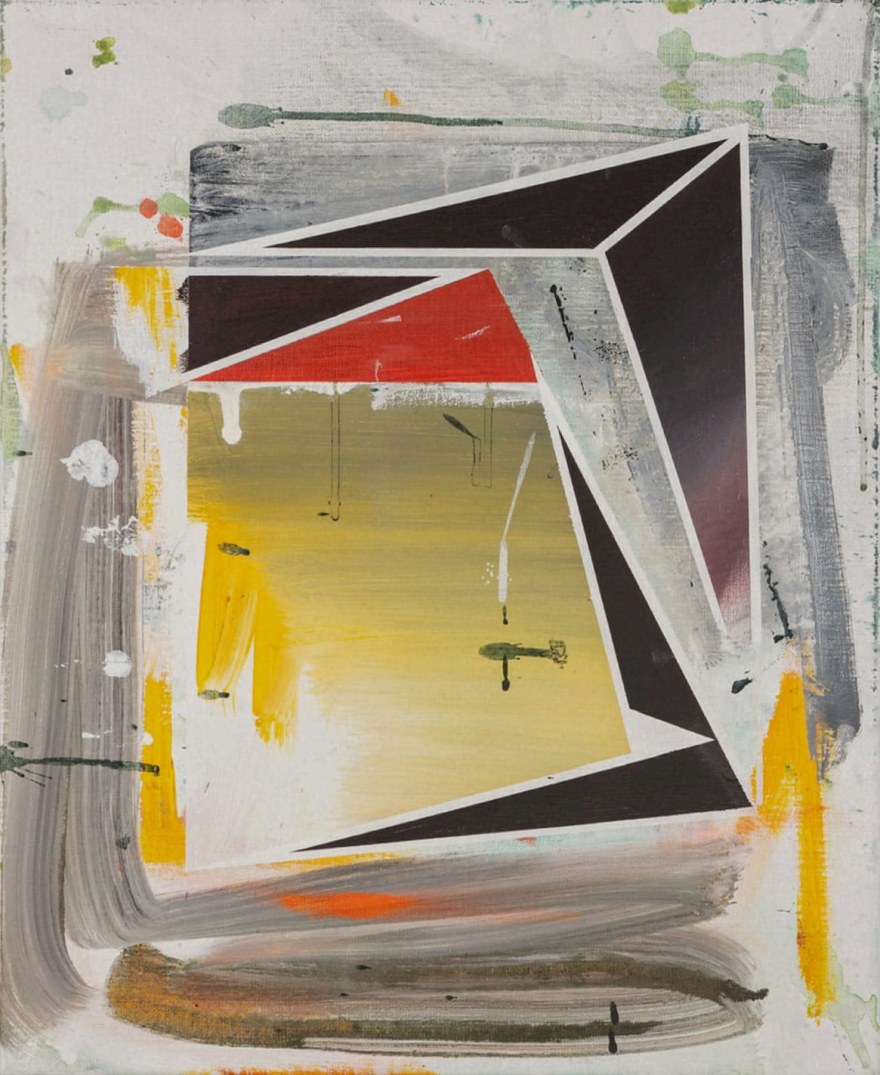
Bart Vandevijvere, Scapediving, 2025, Gallery Sofie Van den Bussche
