06 may 2024, Yves Joris
Between roots and imagination: harvesting according to de vries
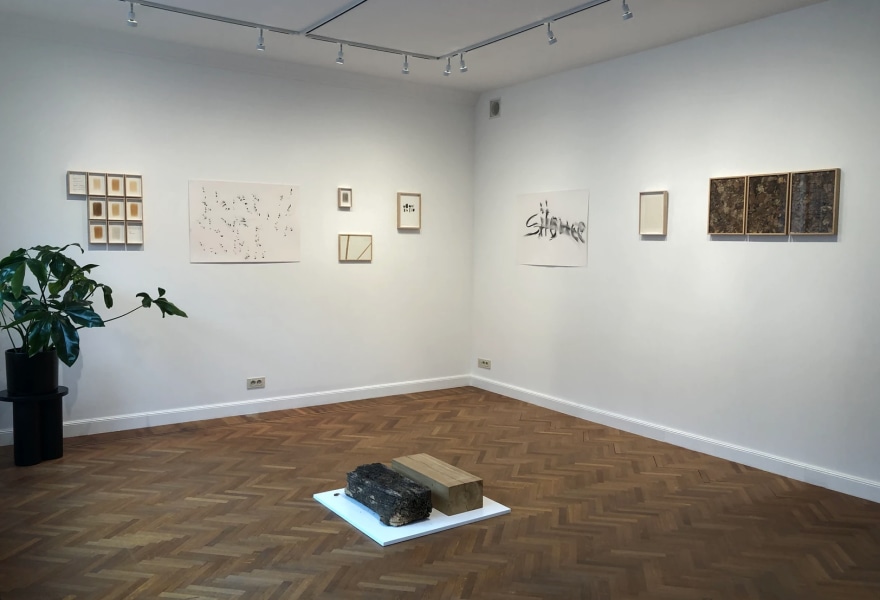
In the gallery Settantotto Ghent, owner Thijs Dely takes me through the exhibition harvest featuring work by herman de vries, a world in which art and nature converge. This exhibition is an artistic journey through the seasons of the earth – as well as those of the soul. So, the title harvest is not only a metaphor for gathering the fruits of nature, but also for harvesting inner wisdom and creativity.
herman de vries, born 11 July 1931 in Alkmaar, Netherlands, is a renowned Dutch visual artist, conceptual artist and botanist. His work is famous for its profound exploration of the relationship between nature, art and philosophy. de vries takes a unique approach to art, viewing nature itself as his medium and source of inspiration. With a background in botany, he has always had a profound appreciation for the complexity and beauty of nature. His work ranges from installations and sculptures to drawings and poems, all infused with his fascination with the natural world. He utilises natural materials such as leaves, stones, soil and plants, and his work often evokes a sense of wonder about the diversity and fragility of life on Earth.

herman de vries, collected im garten eschenau, 2023, Settantotto Art Gallery
In harvest, de vries presents a series of works that emphasise the richness of the natural world. His art engages in dialogue with the earth, using materials he has harvested himself. Each piece is a unique expression of a moment, a place and an emotion captured in time.
The artist invites us to contemplate the deeper meaning of ‘harvesting’. It is not only about gathering what nature offers, but also about appreciating the cycles of growth and decay. His work serves as silent testimony to these cycles, where each leaf, each branch and each piece of earth tells a story about transformation.

herman de vries, collected: north hawar island 18 02 2020, 2023, Settantotto Art Gallery
Nature rubbings
DThe exhibition is composed of two different series of works: soil rubbings and collected (natural) objects. The soil rubbings are quite extraordinary, created through direct contact with the soil, transferring the texture, colour and spirit of the place onto the canvas. de vries is a traveller who combines nature and location.
In 2015, herman de vries represented the Netherlands at the Venice Biennale with the exhibition to be all ways to be. On the remote island of Lazzaretto Vecchio, he created an intersection of soil, scent and text, a place where nature reigns without any human intervention. These works are a physical manifestation of the places de vries has visited, a tangible reminder of the connection between humans and nature.

herman de vries, agapanthus, eschenau, 2023, Settantotto Art Gallery
From found objects to floral patterns
One might ask whether, in addition to minimalism, his oeuvre might also embrace the notion of ‘performance’. The elderly artist wanders into the forests surrounding his studio in search of pebbles, leaves and twigs. They form the second part of harvest. These objects are carefully selected and presented as artworks. They are a celebration of the beauty that can be found in the everyday and an invitation to see the world around us with new eyes.
The meaning of ‘harvest’ within de vries's oeuvre is multifaceted. It refers first and foremost to the literal harvesting of the materials he uses in his art, but also symbolises the spiritual and emotional harvest that art can provide. de vries's works invite us to be silent and explore and appreciate the richness of our inner and outer worlds. It is an exhibition that not only stimulates the senses, but also challenges the mind. It is a reminder of the simple beauty of nature and a celebration of the art of observation. In herman de vries's work, we find an echo of our own experiences with the natural world, a mirror of our own ‘harvest’.
harvest is more than an exhibition; it is a ritual, an ode to the earthly. Visitors are invited until May 12 to slow down, listen to the whispers of leaves and echoes of the earth. And perhaps in that silence we can find our own harvest – a moment of wonder and connection.

herman de vries, collected: eschenau, 2023, Settantotto Art Gallery
