20 october 2026, Flor Linckens
The Belgian avant-garde in an international context: Guy Vandenbranden at the KMSKA
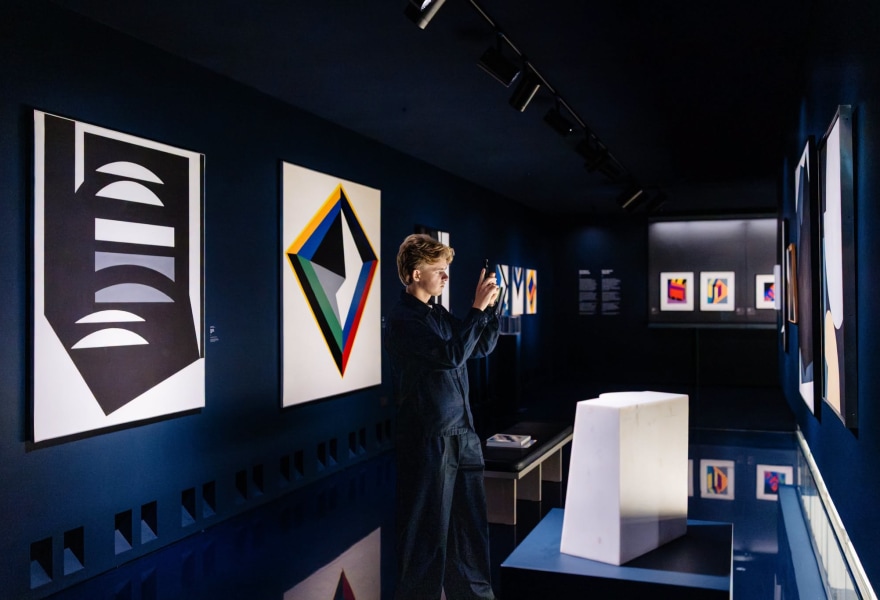
Until 17 January 2027, The Royal Museum of Fine Arts Antwerp (KMSKA) is presenting the exhibition ‘Guy Vandenbranden in the European Avant-Garde’. Marking the centenary of the artist’s birth, the exhibition was organised in collaboration with the Estate Guy Vandenbranden and Callewaert Vanlangendonck Gallery.
The Belgian artist Guy Vandenbranden was born in 1926 in Ixelles, Brussels, and died in 2014 in Antwerp, where he had settled in 1960. Throughout his career, he explored the possibilities of geometric forms as part of a broader search for balance, rhythm and harmony. His carefully constructed compositions are characterised by sharp lines, striking colour contrasts and precise shapes that often suggest depth and movement. Behind their apparent simplicity lies an extensive investigation into the interplay between colour, form and space.
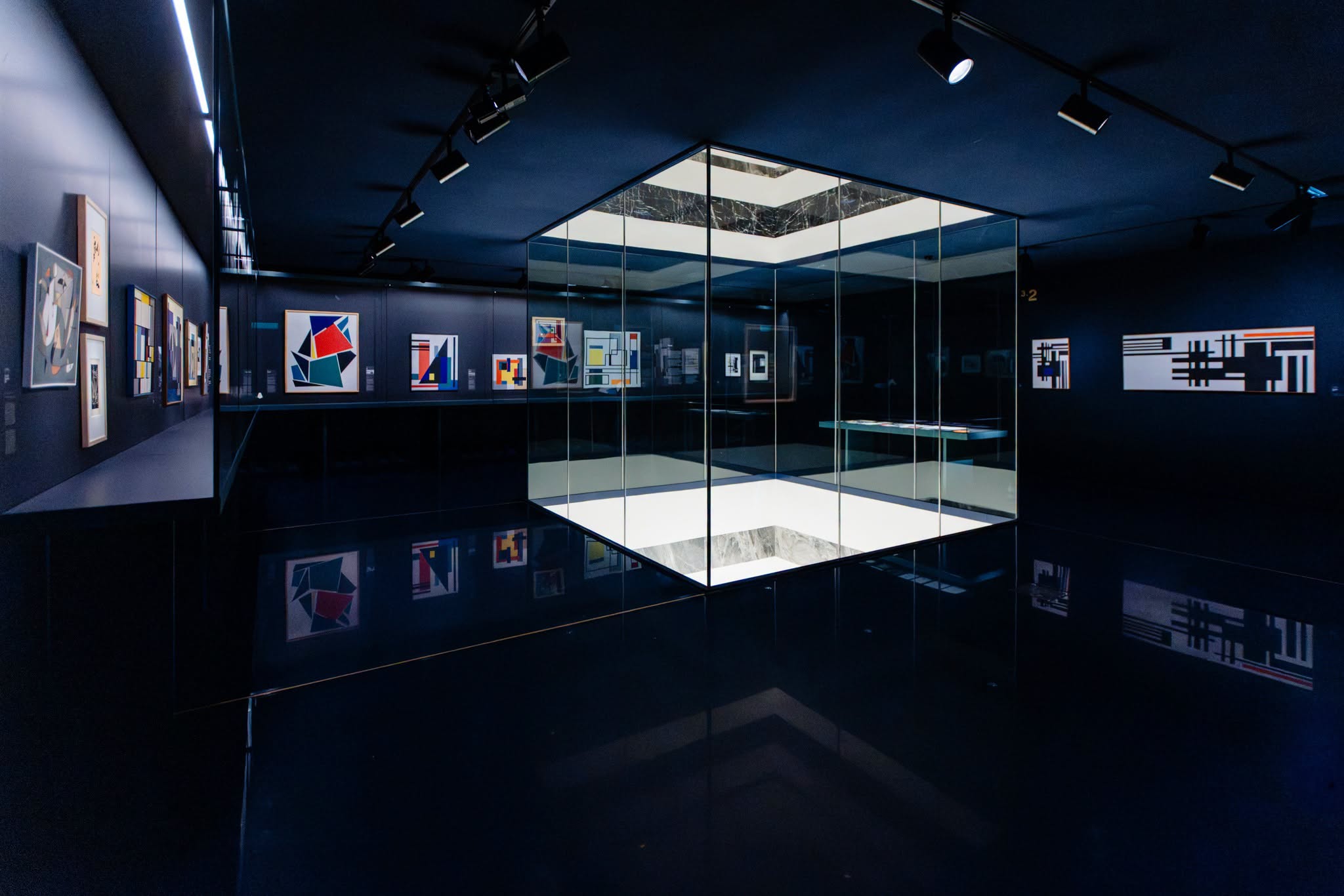
Vandenbranden initially started out as a figurative artist, influenced by Expressionism, but gradually moved away from recognisable imagery in the early 1950s. He initially embraced lyrical abstraction before turning to geometric abstraction and Constructivism in 1954. Although inspired by artists such as Paul Klee, Piet Mondrian and Victor Vasarely, he developed a distinctive visual language of his own. Through his experiments with proportions, tension, colour and composition, he demonstrated how even subtle shifts could produce an entirely different visual experience.
In 1958, he briefly experimented with a much more restricted palette of black and white. His exploration of form and space later extended to reliefs and abstract sculptures. Vandenbranden also experimented with a wide range of materials and techniques, including Formica panels and sprayed cellulose lacquer. This fast-drying industrial paint was particularly suited to the clean lines, sharp transitions, optical effects and uniform areas of colour he sought to achieve.
Vandenbranden also had a profound interest in architecture, exploring how his geometric visual language could become part of a building or a larger spatial environment. From the late 1970s onwards, he would realise several monumental commissions for public buildings, beyond the context of museums and galleries.
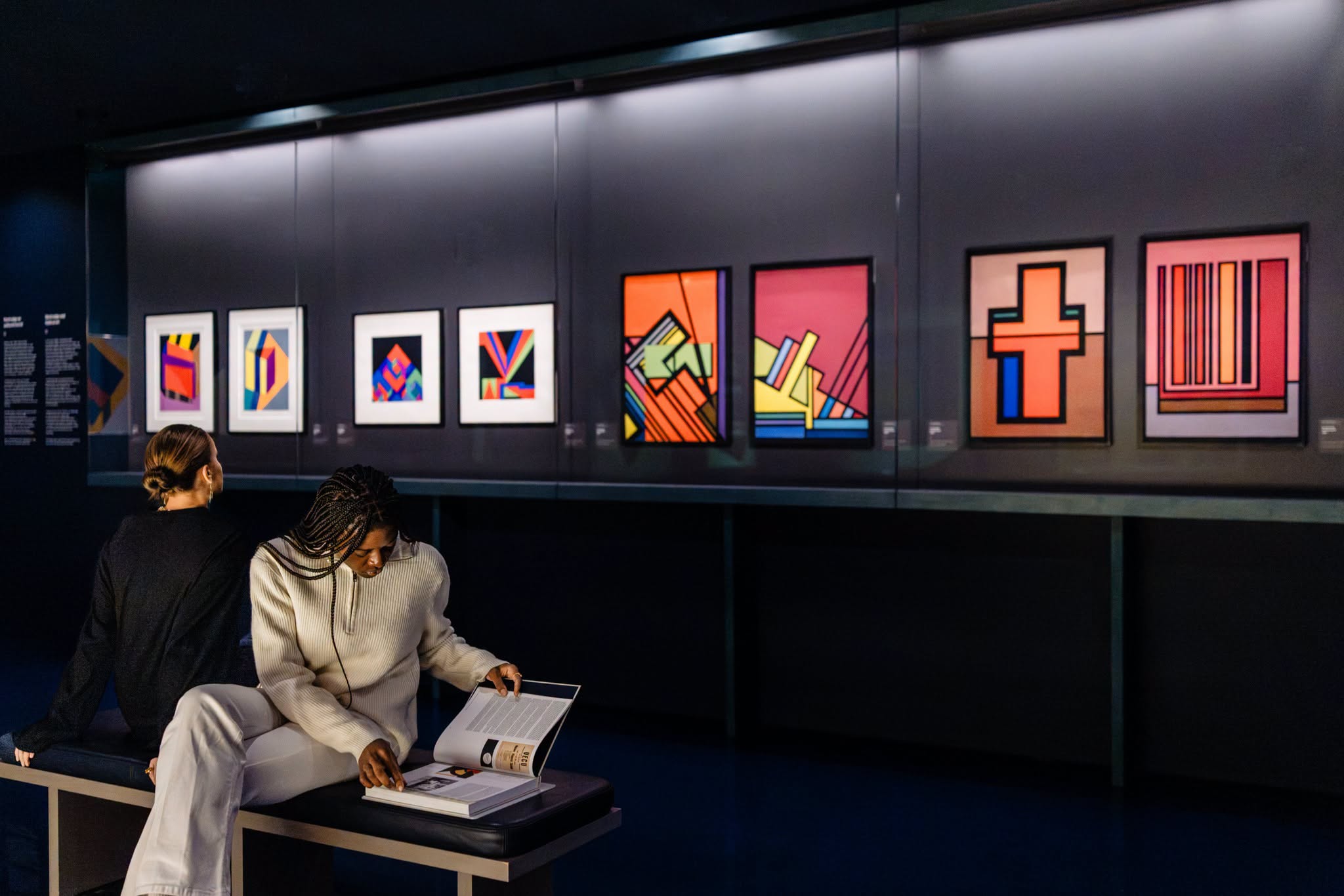
To coincide with the exhibition, Callewaert Vanlangendonck and the Estate Guy Vandenbranden are publishing an extensive new book on the oeuvre of this influential artist, who is regarded as one of Belgium’s leading representatives of geometric abstraction and Constructivism. The publication is the result of years of archival research, drawing on personal letters, photographs, sketches, catalogues and documents from previous exhibitions. It offers new insights into the development of his work, while also examining his role within the European post-war avant-garde. The book reveals just how closely his artistic practice was connected to the international art movements of his time. Vandenbranden, for example, exchanged ideas with artists such as Lucio Fontana, Piero Manzoni, Yves Klein and François Morellet.
The exhibition at KMSKA also places Vandenbranden’s practice within the wider context of the European avant-garde, recognising that the development of post-war abstract art cannot be understood in isolation from the wider artistic landscape. Ideas continually crossed national borders: through exhibitions, personal relationships and collaborations.
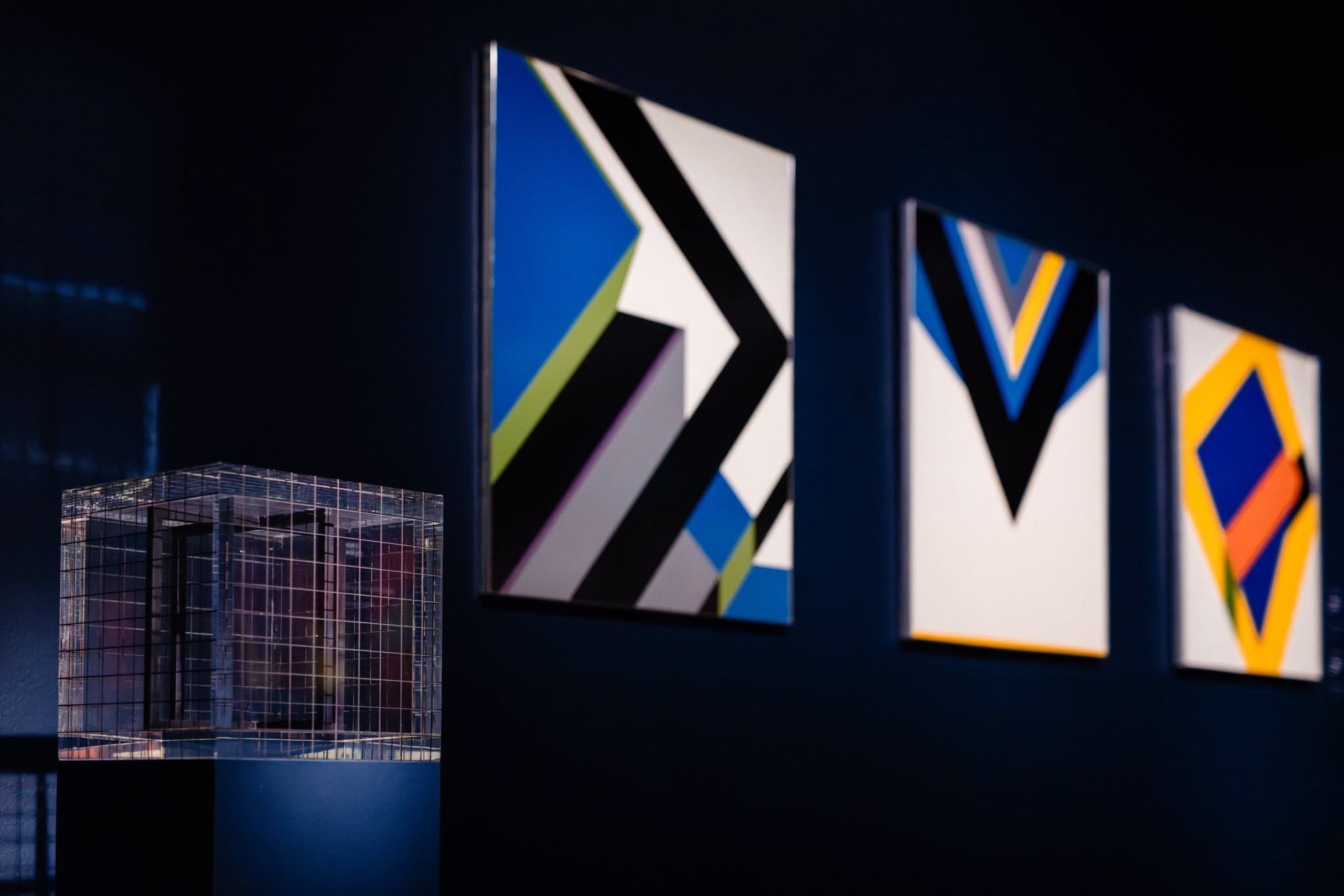
Belgian artists played an important role in this dynamic international network of ideas and artistic innovation. Vandenbranden was involved in several artists’ groups and initiatives, either as a member or co-founder, including Art Abstrait, Formes, the International Working Group for Constructivism and the New Flemish School. He was also a close friend of Jef Verheyen, with whom he had planned to establish a gallery. Vandenbranden organised exhibitions and actively promoted Belgian abstract art internationally. And although he was never officially a member of the ZERO movement, his practice shared clear affinities with the experiments of artists associated with the group.
At KMSKA, Vandenbranden’s work is presented alongside that of Jef Verheyen, Lucio Fontana, Pol Bury, Yayoi Kusama and Günther Uecker.
The museum places Vandenbranden’s paintings, reliefs and sculptures within a interesting spatial experience. Set against dark blue walls, the vivid colours of his works really stand out. His geometric forms find both literal and figurative mirrors in the architecture of the exhibition space: the reflective floor, a large glass cube at the centre of the gallery, the clean lines of a bench and recesses in the walls that appear rectangular or triangular depending on the viewer’s perspective.
