06 october 2026, Flor Linckens
‘to be’ and ‘to become’: herman de vries and Pieke Bergmans at Bradwolff & Partners
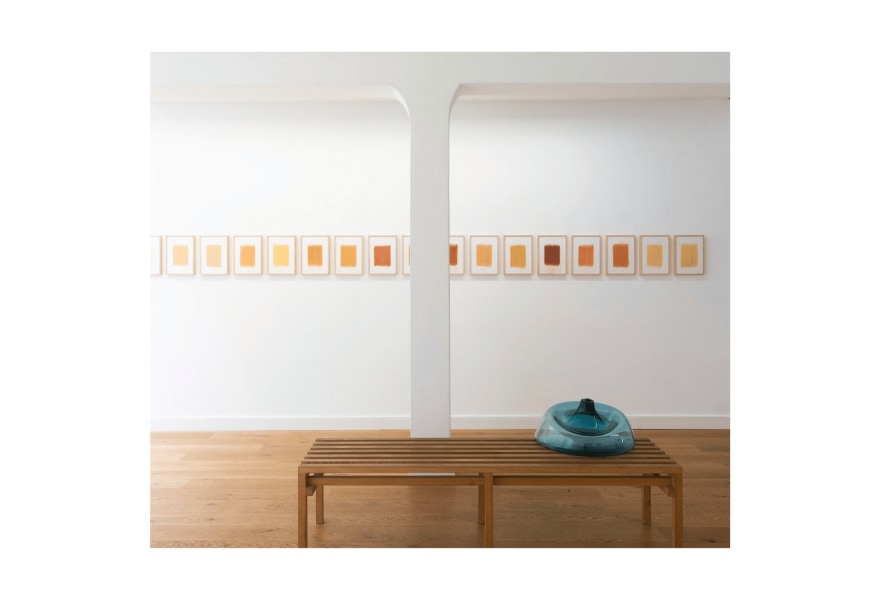
Until 25 October, Bradwolff & Partners in Amsterdam offers two parallel exhibitions: herman de vries’ ‘to be’ and Pieke Bergmans’ ‘to become’. These titles represent two different ways of looking at the world. In his practice, herman de vries focuses on what is already there, from earth and stones to plants. In doing so, he draws our attention to materials, colours and forms that we often overlook. Bergmans, by contrast, is interested in materials that move, react and change: what happens when glass becomes liquid, and how does gravity affect a material?
The artists belong to different generations and have a distinct way of working. At the same time, both are curious about the properties and processes already inherent in their materials, without seeking to control them completely. While de vries singles out or represents an existing stone, plant or type of soil, Bergmans tries to capture the brief moment in which her material assumes a different form. Both artists ask for something increasingly scarce: our undivided attention. The pairing of ‘to be’ and ‘to become’ is therefore not only about being and becoming, but also about what becomes visible when we truly take the time to look.
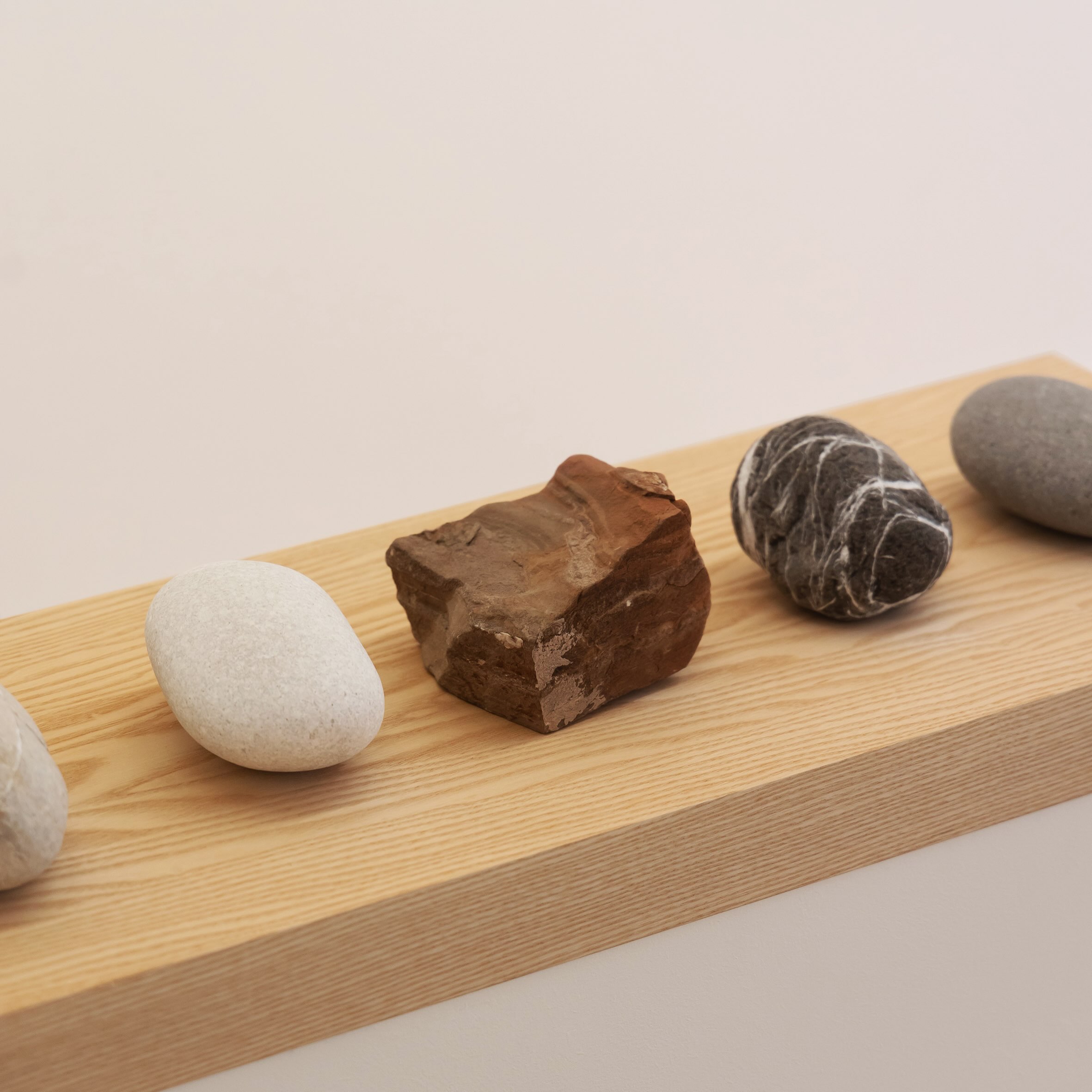
Nature is not a subject in the work of herman de vries: it is the work. The artist has been active for more than seventy years and chooses to write his name entirely in lowercase because he rejects hierarchy. This says a great deal about how this versatile artist thinks. He received numerous awards and represented the Netherlands at the Venice Biennale in 2015. The same attitude is reflected in his practice, which is characterised by an attentive and investigative approach to the world around him.
de vries’ early work consisted of white paintings, collages made from found posters and material works in shades of grey and white. In the 1960s, he joined the Dutch Nul movement and became involved with the magazine ‘nul = 0’, which he later continued in part on his own. Chance, serial structures and the relinquishing of personal expression are significant factors during this period. From the 1970s onwards, his attention shifted decisively towards nature, both as a source and as a bearer of meaning. de vries collects, orders and archives natural elements, presenting them in strict grids or rhythmic repetitions. Central to his oeuvre is the idea of ordering without interpretation: showing what is already there. His practice encompasses a wide range of media, including collage, sculpture, performance, painting and photography.
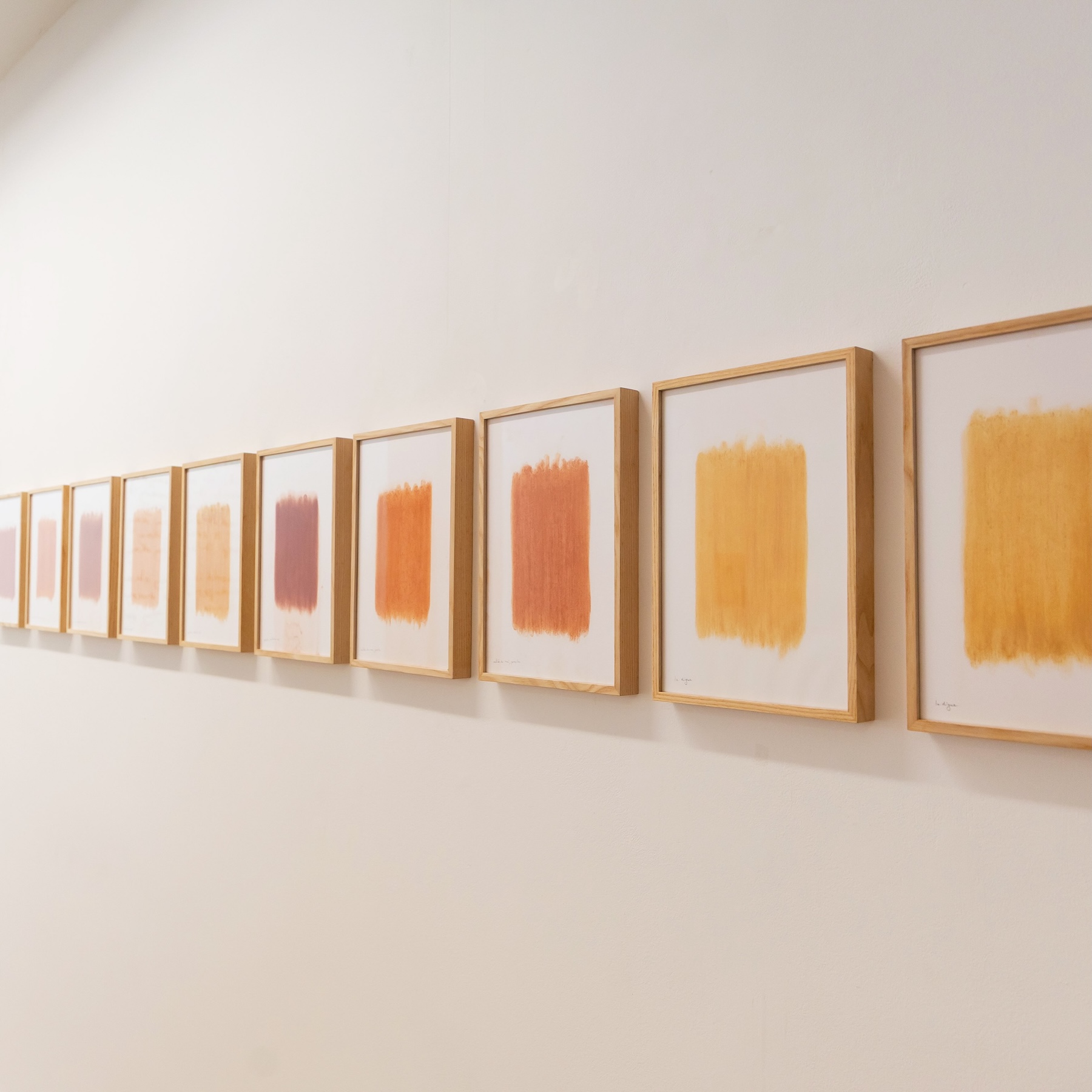
de vries was born in Alkmaar in 1931 and trained in horticulture and botany. He subsequently worked as a biological researcher at the Institute for Plant Disease Research in Wageningen. This background is reflected in his practice: plants, earth, leaves, seeds and stones are recurring materials in his work. Thematically, his work also addresses our complicated and troubled relationship with nature, of which we are, after all, a part. His artistic practice is shaped by a combination of philosophy, spirituality, science, classification and sensory experience, as well as by the many journeys he has made and his extensive archive of more than 7,000 soil samples. At Bradwolff & Partners, the artist presents materials from around the world: earth from Argentina, Chile, the Canary Islands and the Seychelles for his long-running “from earth” series, as well as stones he found on a Greek island.
The work of the now 95-year-old artist is held in the collections of the MoMA in New York, Centre Pompidou in Paris, the V&A in London, the Louisiana Museum near Copenhagen, Stedelijk Museum Amsterdam, Museum Voorlinden, the Rijksmuseum, Museum Boijmans Van Beuningen, the Van Abbemuseum, the Kröller-Müller Museum, the Bonnefantenmuseum, Kunstmuseum Den Haag and Stedelijk Museum Schiedam. In 2025, he was appointed Knight in the Order of the Netherlands Lion.

Pieke Bergmans’ work occupies a space between sculpture, installation, design and craft and is the result of extensive material research into glass, clay, metal and plastic. She frequently collaborates with a variety of craftspeople and technical specialists. The artist studies existing production processes and subsequently looks for ways to deviate from them. Heat, gravity, movement and time are recurring elements in her work. At the same time, the material itself plays an active and determining role, rather than simply being given a form by the artist. Bergmans is interested in the moment when a material no longer behaves entirely according to plan. She will create certain conditions and closely follows the process and intervenes at a decisive moment. Although Bergmans carefully directs the production process, the final form is not predetermined.
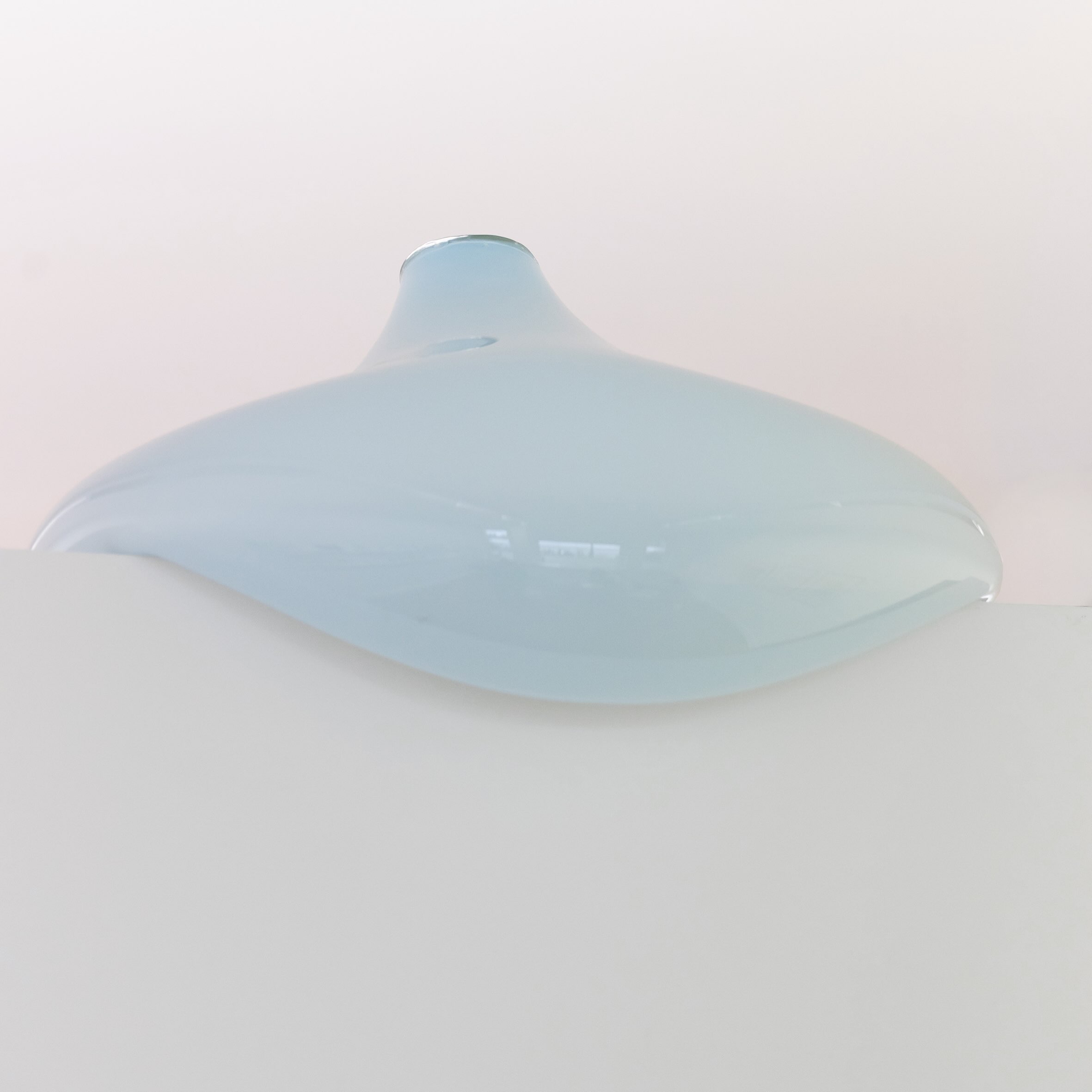
This becomes visible in the installation “Solidified Water” that is currently on view at Bradwolff & Partners. For this work, a tree trunk is split into nine sections, after which hot, molten glass is blown over each piece. Because no mould is used, the glass is free to move along the irregular texture of the wood. It expands, sags and continually changes shape. Bergmans follows the process until the point at which the glass is almost about to collapse under its own weight. At precisely that moment, the movement is brought to a halt. As a result, the final object reveals not only a form, but also something of the process that produced it.
For “Eclipse”, Bergmans created seven circular burn marks on watercolour paper. The day after a solar eclipse, the artist recognised something of that image in a mark that was left by a hot pan on a wooden board, an unexpectedly beautiful image that she might otherwise not have noticed in the same way. She then repeated the action several times on paper. No two circles are identical. The heat spreads differently across the paper each time, while variations in the duration of contact, air, distribution and temperature produce lighter and darker traces. These differences demonstrate that repetition does not necessarily lead to the same result.
Pieke Bergmans was born in 1978 and studied at the St. Joost, Design Academy Eindhoven, ArtEZ and the Royal College of Art in London. She established studios in Amsterdam and Milan and her work was previously shown at the V&A Museum, the Vitra Design Museum and 21_21 Design Sight Tokyo. Her work is held in the collections of Stedelijk Museum Amsterdam, the Van Abbemuseum, Museum Arnhem, the Centraal Museum, the Groninger Museum, the Dutch Ministry of Foreign Affairs, Centre Pompidou, the 21c Museum in Louisville and Centre National des Arts Plastiques (CNAP). Her work is currently on view in the exhibition ‘A Chair and You’ in Kunsthal Rotterdam, until 31 January 2027.
