15 september 2026, Martine Bontjes
The studio of... Anne van As
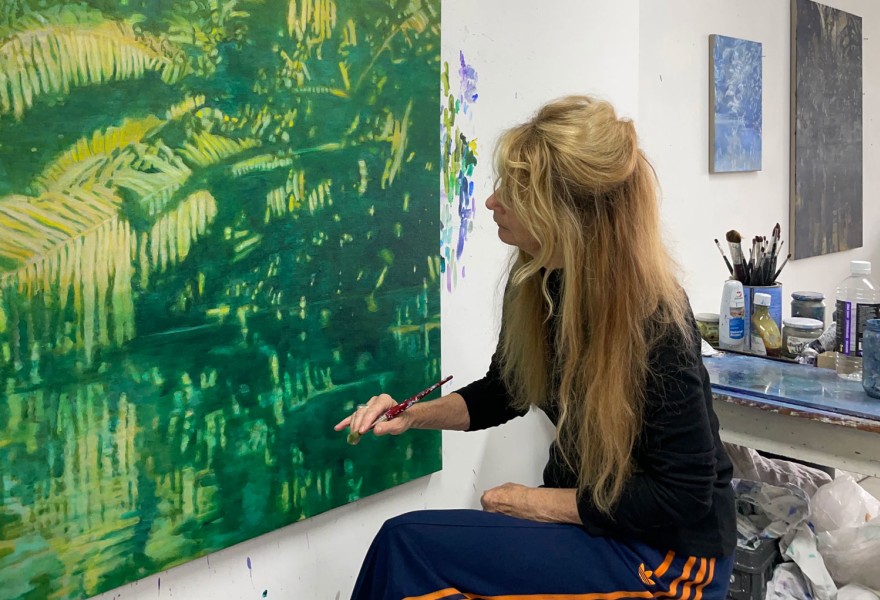
In ECHOES, Van As moves away from the monumental plants and flowers that characterised her earlier work, turning instead towards the experience of nature itself. Her paintings evoke the lingering melancholy of a landscape after we have left it. Because no matter how much we might wish to, we can never truly return to nature as it once was.
Where is your studio and how would you describe this place?
My studio is located at an industrial estate in Amsterdam’s Western Harbour area. Trucks constantly come and go and cargo ships are loaded and unloaded. The contrast between inside and outside is enormous. The studio is filled with light and once you step inside, it feels almost like a loft. It is a large industrial space where I can work on both small and large scale, and I also have a separate storage space.
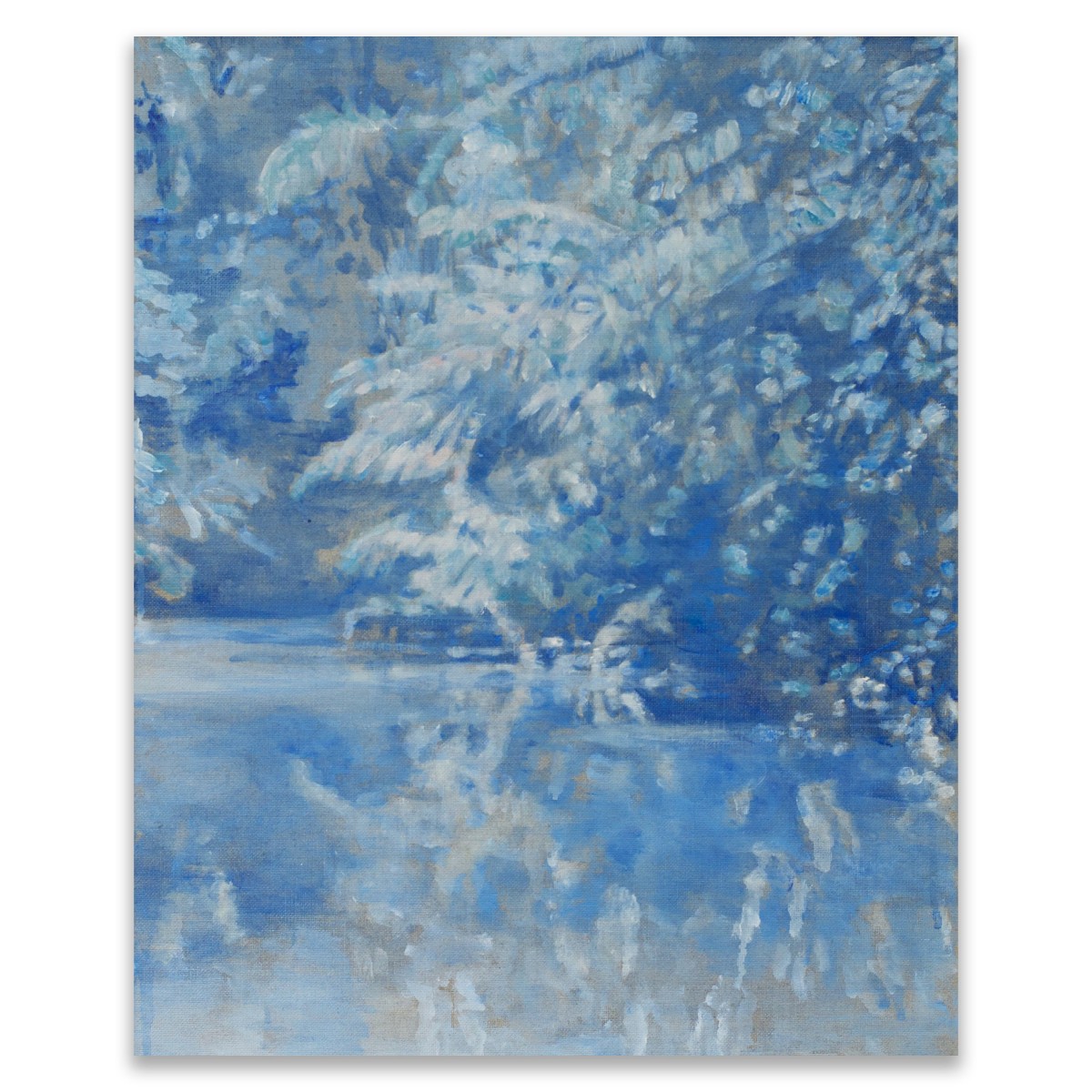 Anne van As, Touching water
2026, Yellow Gallery
Anne van As, Touching water
2026, Yellow GalleryDo you go to your studio every day? Do people ever come inside for a visit?
I am usually up early and almost every day I cycle to my studio, which takes about thirty minutes. I see it as a workout and the journey gives me time to daydream about what I am going to do. I prefer working during the day and sometimes put in long hours. It always takes me a while before I actually begin painting. First, I potter around, make some tea, read, look at the work and think. Once I reach a certain state of mind, I can begin to paint. I usually start by listening to a podcast and when I get into a flow, I put on some music. It is my way of shutting out the rest of the world.
People do occasionally visit my studio. My gallerists might come by with potential buyers and fellow artists sometimes stop in as well. But I prefer to keep it private. It is a place where I can retreat.
For ECHOES, you were inspired by mangrove landscapes you had visited in the past. Which places are you referring to and why did you choose this particular type of landscape?
Although my starting point was the mangrove area at the far southwestern tip of Java, it is not really about one specific place. It is about an experience of connection with nature, of slowed down time and an intense awareness of sound, scent and humid air. The mangrove is so special to me because land and water merge into a labyrinth of roots, tides and filtered light, creating a landscape that is both ancient and profoundly vulnerable.
Do you have any specific memories of this place? What prompted you to explore this more deeply?
The idea to paint a series of mangroves came when I found the letters I had written to my parents at the end of last year, which together read almost like a diary. In 1990, I spent five months in Indonesia as an artist-in-residence and towards the end of my stay I travelled to the remote Ujung Kulon nature reserve. When I reread the letters, I realised how difficult the journey there had been. That was not necessarily a problem, of course, and at the time very few travellers made that journey. The experience was overwhelming. The hollowed out tree trunk that served as a canoe, everything made a deep impression on me, especially a certain oppressive silence interrupted by piercing animal sounds, the darkness of the night beneath an immense starry sky and the sense of how small I felt.
 Anne van As, Echo
2025, Yellow Gallery
Anne van As, Echo
2025, Yellow GalleryA large part of your paintings consists of water. Why did you choose to devote such a large surface to it?
Water plays a central role in the mangrove. Reflections double the landscape, yet never reproduce it exactly. Forms blur, colours shift and vegetation dissolves into the atmosphere. Just as solid ground becomes elusive among the roots and tides of the mangrove, the image itself resists a single interpretation. My paintings are not literal representations of the landscape. What emerges instead is an internalised landscape, composed of fragments of light, shadows, reflections and atmospheric fields of colour. It is a subtle interplay, balancing on the threshold between figuration and abstraction. Forms appear and disappear, recognisable yet dreamlike at the same time. A memory changes as time passes.
Your earlier work often depicts plants and flowers on a monumental scale. In ECHOES, the emphasis seems to lie more on the feeling a landscape leaves behind. Has something changed in the way you look at nature?
That is an interesting question and it is true that my focus is changing. It has shifted more towards the space in between. This allows me to take some distance from the details and gives me the freedom to focus more on the feeling and experience of nature.
Just like the fragile flowers and plants in your earlier work, mangroves are vulnerable. To what extent does the ecological significance of mangroves play a role in your paintings?
It certainly plays a major role, particularly the ecological decline of these landscapes in relation to the concept of time. The paintings stem from memories of my earlier travels. The awareness that these natural environments are being irreversibly altered by human actions intensifies the melancholy in my work: physically and mentally, we can never fully return to nature as it once was. I am making the journey again, but this time imaginatively and with the knowledge I have now. The mangrove is a borderland, both literally and symbolically. It protects coastlines from erosion, absorbs the force of storms and supports a rich biodiversity. Yet ecosystems like these are under pressure around the world because of deforestation, rising sea levels and climate change.
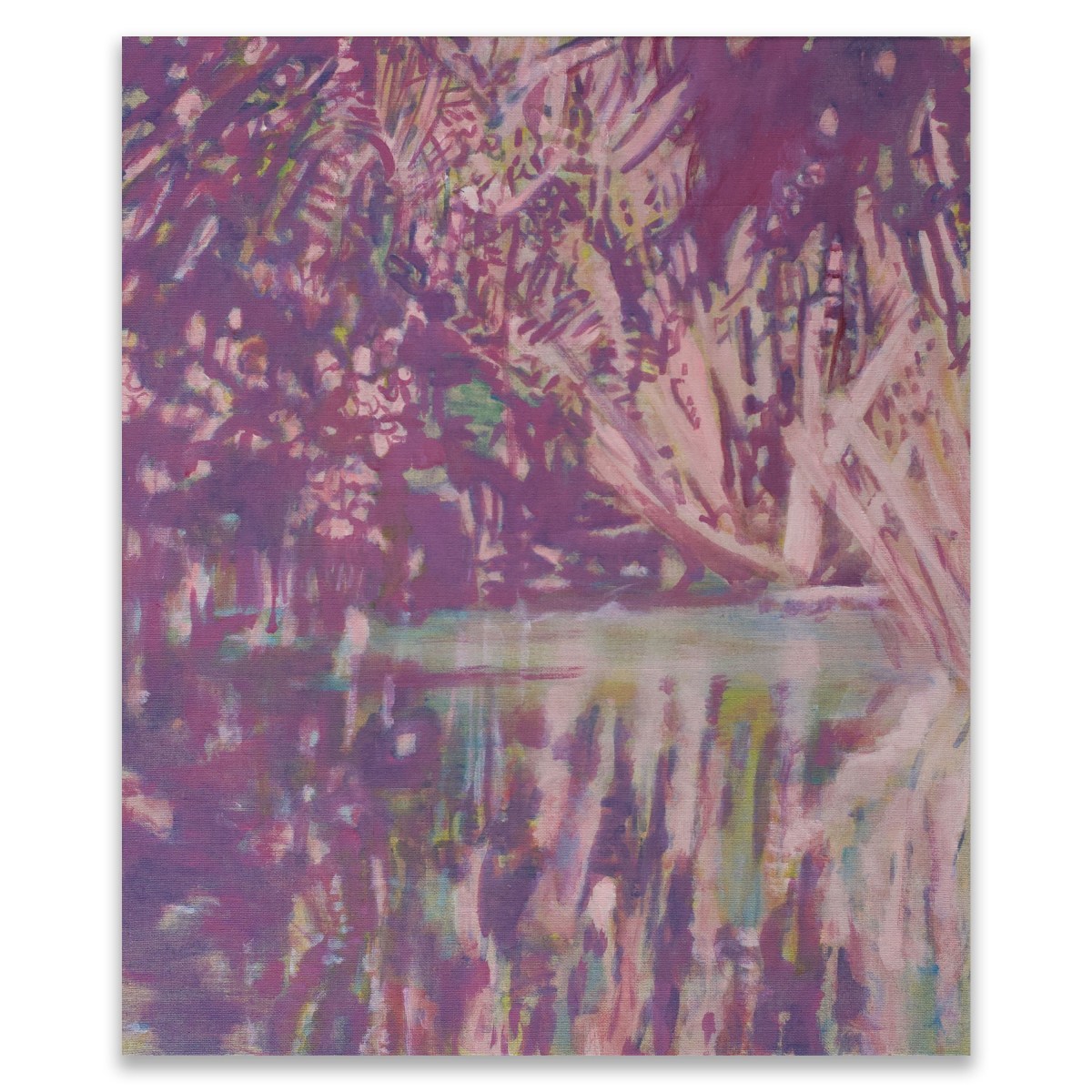 Anne van As, Reflection, 2025, Yellow Gallery
The title of the exhibition refers to the myth of Echo and Narcissus. How do you connect this to the way humans look at the landscape?
The myth of Narcissus and Echo perfectly reflects the contemporary relationship between humans and nature, driven by travel and social media. In the Greek myth, Narcissus drowns in his own reflection. Today, people travel to the most remote places on earth not to experience nature but to place themselves within it. Echo could only repeat the words of others and died of sorrow. In our contemporary culture, nature is suffering a similar fate.
What are you looking forward to most at the moment?
At the moment, I am looking forward to my solo exhibition opening at Yellow Gallery. I am very curious to see how visitors will respond to my new paintings and I am also looking forward to entering into a dialogue about them. Beyond that, I continue to search for a connection with nature. It is an inexhaustible source of inspiration. At the moment, I am still in the middle of a painting process through which I am exploring this further. It is a fascinating process that is partly conscious but often entirely intuitive.
 Anne van As, Fading grounds, 2026, Yellow Gallery