11 september 2026, Wouter van den Eijkel
Big Art lands in Rotterdam
Big Art 2026
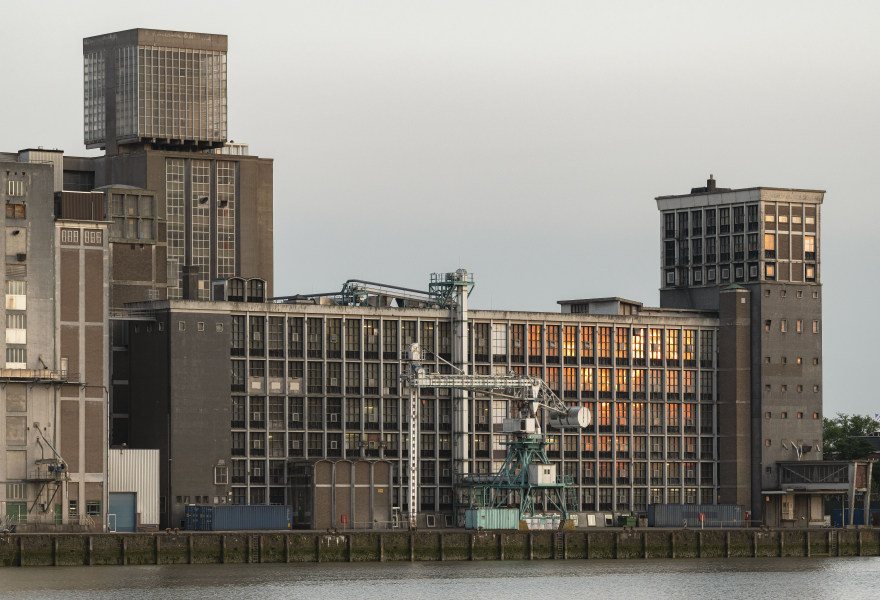
Where? Codrico factory, Veerlaan, Rotterdam
When? 11–13 September
What time? 11am–6pm, last admission at 5.30pm
Admission: Tickets are available at the door or online
Getting there: Directions and accessibility
Location, location, location is a well-known maxim in the property world, but it also applies to art fairs – and particularly to Big Art. The fair was founded in 2016 by cultural entrepreneur Anne van der Zwaag and has previously opened its doors at other vacant, raw and often industrial sites that capture the imagination. Think Het Hem and the Slotervaart Hospital. ‘We want Big Art to continue surprising people, and this unique location offers participants and visitors another completely new experience,’ says Van der Zwaag.
The monumental Codrico factory is located in Katendrecht, between FENIX and the Nederlands Fotomuseum, and is about to be redeveloped. ‘Codrico is an industrial enclave that will soon be transformed into a wonderful place to live and work. We’re delighted that Big Art is already showing the potential of the site,’ says architect Nanne de Ru.
Another feature that makes Big Art special is that all proceeds go to the participating artists and galleries. Big Art is also not dependent on grants or sponsors. You notice this as a participant, explains Lenny Oosterwijk of Rotterdam gallery Untitled. ‘Because Big Art is organised by people who are passionate about artists and designers, it feels like a warm, welcoming community. When you take part in Big Art, you become part of a large art and design family.’
Accessible and inspiring
Big Art is also special for visitors, says Yvonne de Jong of Root Gallery, which is taking part with works by Jan Theun van de Rees, Saïd Kinos and Madelon Uljee. ‘For visitors, Big Art feels more like a large exhibition than a fair. Because of the scale and the surroundings, paintings, sculptures and installations have a completely different impact here than they do in a traditional fair setting. That’s also what we hear from our clients: they find it surprising, accessible and inspiring to walk through a building filled with large-scale art.’
It is also an interesting fair for corporate clients, according to De Jong, because they can see many works that are suitable for larger spaces, offices or public environments.
 Ricardo van Eyk, Pink Flora, 2026
 Saïd Kinos, Running Wild, 2025
 Jan Theun van Rees, Cactus, 2026
Root Gallery | Jan Theun van de Rees, Saïd Kinos and Madelon Uljee
Root Gallery is showcasing work by three artists represented by the gallery. Madelon Uljee creates architectural flora: sculptural works that magnify the hidden structures of nature into monumental forms. Working with leather, steel and iridescent details, Uljee translates nature into spatial experiences.
Jan Theun van de Rees focuses on the appearance of space as an image and on our perception of that space in relation to the space around us. Van de Rees has a preference for ‘unattractive spaces’ that usually go unnoticed. Through his photographs, he seeks to capture the specific qualities of these spaces.
Van de Rees has photographed, among other things, hidden (rest) spaces in striking buildings in Chicago, as well as the many dismantled theatres and museums in Amsterdam that have undergone major renovations.
Saïd Kinos (1988) focuses on the visual translation of language. With a background in graffiti and graphic design, he has developed a practice centred on typography, colour and rhythm. His work explores how language functions in a society characterised by speed, visual culture and fragmentation. Words lose their fixed meaning – and it is precisely in this distortion that Kinos finds room for abstraction.
His compositions, built from fragmented letterforms, vivid colours and layered structures, evoke abstract painting while remaining rooted in the written word. In addition to canvas and panel, Kinos also translates this visual language into large-scale murals, installations and sculptures. His work moves between street and gallery, between autonomous and applied art, and between intuitive visual language and graphic precision.
 Joyce Overheul, WAR, 2026, O-68
O-68 Art Gallery | Joyce Overheul
Joyce Overheul's tapestry War (2026) is on display. Overheul creates textile artworks, often based on photography. She frequently works with craft techniques that were long dismissed as typically female hobbies and leisure activities. She combines these with politically charged themes including women's rights, emancipation and feminism, creating a sharp contrast between the directness of the subject matter and the softness of the material.
Overheul graduated from HKU in 2012 and has been steadily building her career ever since. In 2022, she had her first solo exhibition at Museum de Fundatie, tellingly titled Let's get political.
 Mila Lanfermeijer, Venus with Amor, Rademakers Gallery
Rademakers Gallery | Mila Lanfermeijer
Mila Lanfermeijer (NL, 1988) works across a range of media, including textiles, sculpture, writing and video. By interpreting folklore as an active verb, she presents her works as a tribute to the processes through which beliefs, customs and skills are passed from one person to another.
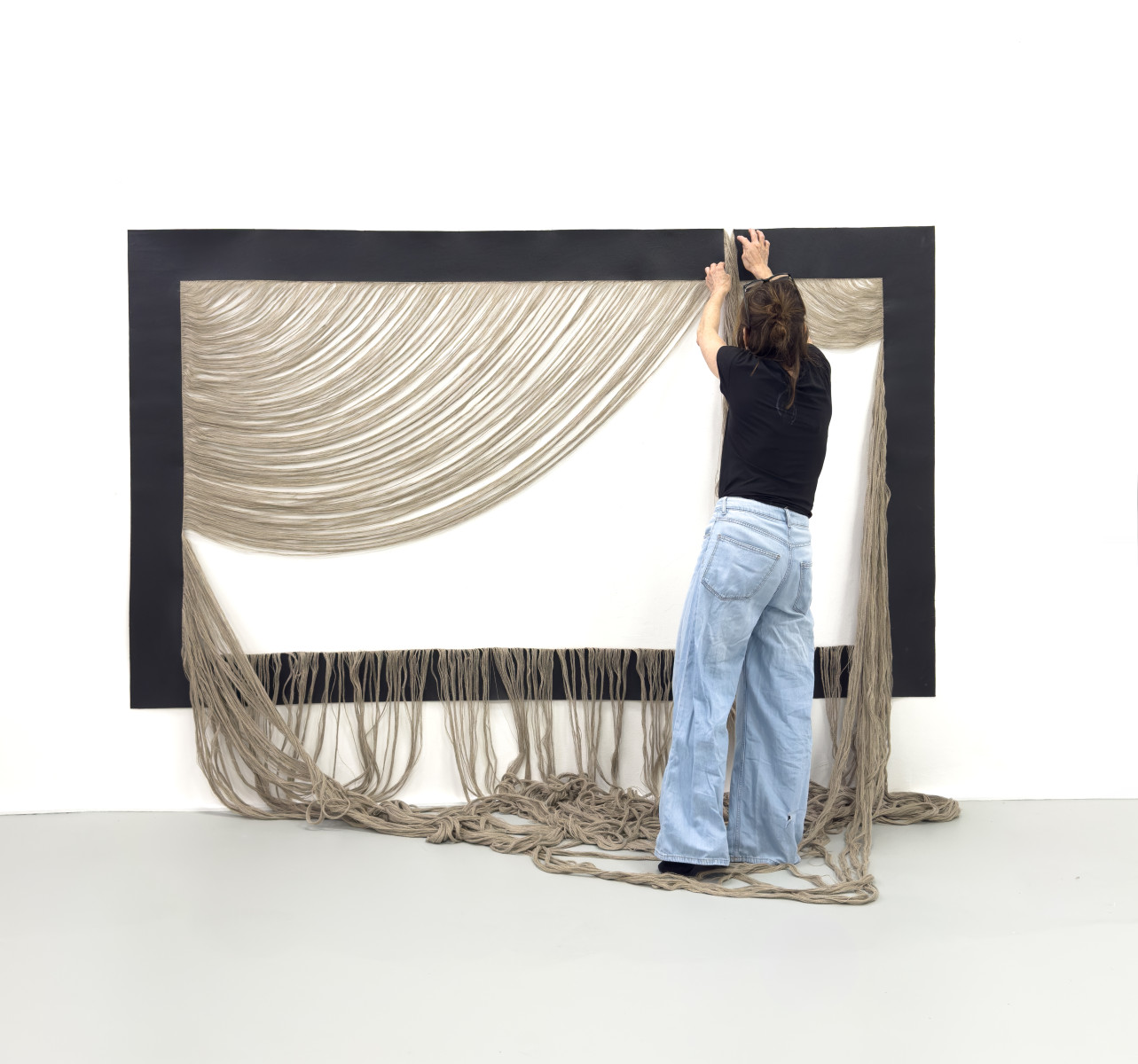 Lily de Bont, NL=US
NL=US | Lily de Bont
The paintings of Lily de Bont (NL, 1958) are both a destruction of and a reconstructed alternative to the archetypal painting. De Bont radically attacks the canvas by carefully cutting away large sections of its structure until it is no longer really fabric, but consists only of loose threads. ‘The painting is, as it were, minimised. You might expect the painting to look minimalist as a result, but the opposite happens. It actually creates a more complex and interesting composition, in which gravity also plays a role,’ says De Bont.
 Sander Buijk, aalscholver, 2022, Gallery Untitled
Gallery Untitled | Sander Buijk
At Big Art, Gallery Untitled is showing two large sculptures by Sander Buijk, including Aalscholver, which stands no less than 3.5 metres tall.
The Rotterdam-based artist is known for his distinctive and contrasting use of materials. His cartoon-like figures are tough and fragile, caricature-like and vulnerable, emotional and closed-off.
Buijk's use of materials is equally unorthodox. He combines cast concrete with neon, polished aluminium and elegant white ceramics, among other materials. In his sculptures, Buijk pushes the boundaries of what can communicate visually while retaining its individuality, spontaneity and rawness. Gallery owner Lenny Oosterwijk expects Buijk's sculptures to come fully into their own in the large industrial spaces of the Codrico factory.
