01 september 2026, Martine Bontjes
The studio of… Milena Bonilla
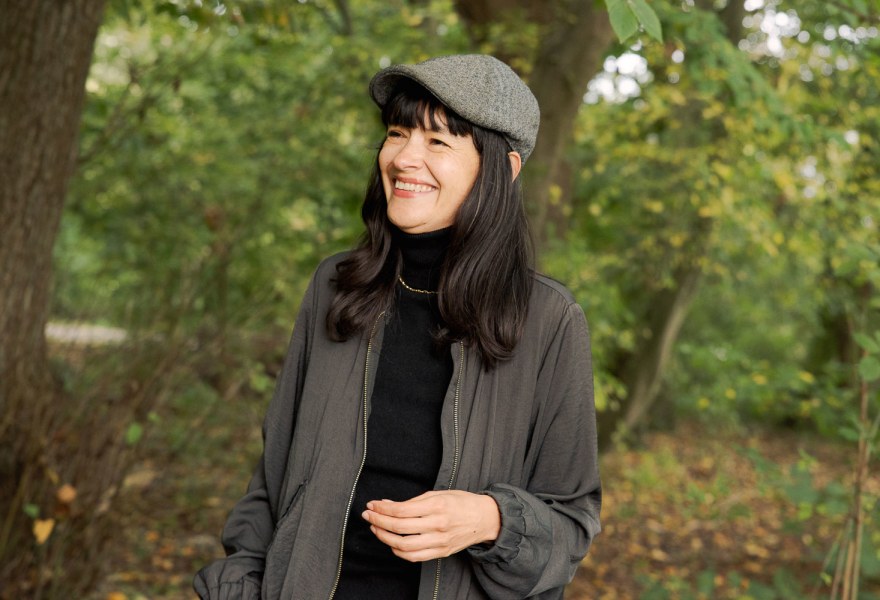
Rosa Luxemburg returns once again in her work. Bonilla is fascinated by the botanical collections of this revolutionary and the way she connected with animals and plants. According to Bonilla, this side of Luxemburg has long been separated from her political thinking. Her fascination with plants goes beyond the question of how we look at nature: she challenges the frameworks through which we determine what knowledge is and who or what is considered a political actor.
You live and work in Amsterdam, how would you describe your studio? What is the most important quality of your studio?
My studio is small, full of light and has access to a garden. The best quality of the studio is the light.
In your new exhibition, ‘Notes on Soils, Light and Gravity’, you return to the roots of plant life. Do you keep plants yourself?
I take care of plants.
 Milena Bonilla,Sketches for Gardening
, 2025, Ellen de Bruijne Projects
Milena Bonilla,Sketches for Gardening
, 2025, Ellen de Bruijne ProjectsYour new drawing installation from the ‘Sketching for Gardening’ series focuses on Amsterdam. Which places have you researched?
Here I am focusing on two places whose foundations defined the shape of the city planning as well as its commerce, both places are connected. The first is the former Pesthuis / Buitengasthuis in Amsterdam, and the second is the Hortus Botanicus originally called Hortus Medicus.
You also describe plants as epistemic subjects, capable of generating knowledge about the world in their own right. What forms of knowledge can plants offer that differ from, or perhaps exceed, human ways of knowing?
Our bodies already know plants in some capacity by ingesting them, being healed by them and getting intoxicated by them, smelling their flowers and inhabiting them through decisions on materials’ use in our housing, among other things. The question is how do we define knowledge. If we reduce knowledge to the cognitive traits we have been restrained to by the imposition of taxonomic logic, molecular understanding provided by the hyper visuality of microscopes and the literacy found in books (made out of trees by the way), then yes, there’s no way to interact with a plant that won't be reduced to human research or extractive ways of seeing and knowing be it -visual- pleasure, different types of consumption or science.
If plants perceive and understand the world in ways that are different from our own, is it actually possible for us, as humans, to access or interpret that knowledge without inevitably translating it into our own frameworks?
Herbalists from different parts of the world use their touch, oral traditions, and a lot of silence just to open up to listening to what otherwise is inaudible. We think we define plants, their lives and even their politics. Other traditions keep reminding us that plants may also have not only knowledge and agency, but desire. A change of a way of seeing is a challenge to dissolve an idea of reality that has been carefully crafted to objectify living beings. The thing that needs to change is precisely the cognitive and sensory “framework” we are formed in. That frame is not inescapable, it is colonial.
A moment of silence among a bunch of sprouts in spring alters the work of neurotransmitters in your nervous system. That is an update on mainstream science that several indigenous groups, curanderas, rural midwives, monks and dissident scientists have known for a very long time with the use of different argot. Back in the days that idea of connecting in a non-extractive way with other organisms was called superstition, witchcraft and satanism, among many other epithets. This should be common knowledge by now, so we don’t repeat history and lose access again to that possibility of knowing and recognizing the world.
You return once again to Rosa Luxemburg in this exhibition. You travelled to Berlin and visited several memorials dedicated to her. What were you hoping to find there? And did you find what you were looking for?
My aim with this work was to pay homage to Rosa. She collected different types of plants for five consecutive years in the 18 notebooks that compose her herbarium between 1913 and 1918. I went to the locations where she was killed, disappeared and later buried, to find the plants that she’d collected and pair them with aspects of her thought I found important in discussion with her legacy. Then, for example, a plant that grew resistant to toxic pesticides starts telling a story of resistance, resilience and evolution at the same time. I did this in conversation with herbalist Shelley Etkin in 2020-21.
 Milena Bonilla, I am Life and Life is Beautiful, 2022, Ellen de Bruijne Projects
Could you tell us more about the text on the cotton banner in ‘Letter to a Roosting Tree’? What did Rosa Luxemburg describe in her letter about the flock of crows, and what drew you to this particular passage?
"Sonyichka, the evenings are so magical now, as though it were spring. Around 4 p.m. I go down into the prison yard, where twilight has already begun, so that the hideous surroundings are shrouded in the mysterious veil of darkness, but in contrast, the sky still glimmers with a sweet blue light, in which there floats a moon of clear silver. Every day at about this hour, high in the sky, hundreds of crows pass diagonally across the prison yard in a ragged, widely spread out flock heading out to the fields to the "roosting tree," where they will spend the night. They fly with their wings flapping leisurely and exchange peculiar calls- quite different from the sharp krah with which they rapaciously chase their prey during the day. Now the call sounds soft and muted, a deep, throaty call that somehow gives me the impression of a little metallic globule. And when several of them take turns gurgling out this kau-kau one after the other, to me it is as if they were at play, tossing one another little metal balls that arc gently through the air. They're chatting calmly about what they've experienced, talking "of the day, of the day enjoyed today "
I am interested into the particular sensibility of Rosa Luxemburg in response to the way her image was traditionally projected, especially by the old left in Europe. Dislodging Luxemburg’s struggle from her sensibility towards other beings was a way of crafting a misunderstanding of purpose, to disconnect political imagination from political ecology, ecological thought and the role of poetical thinking in processes of liberation.
Do you recognise a similar connection among activists and revolutionaries today? Are plants and other living organisms again becoming part of political resistance?
I’ll answer with a quote from Chico Mendes, a Brazilian ecological leader assassinated “Environmentalism without class struggle is just gardening”.
Plants are at the center of political struggles between lands and corporations, we humans are bound to their ecologies’ survival. Clean air and food supply for terrestrial organisms depends on them, just to mention the most obvious. How would anybody paying attention think they are not political subjects? They have been used and abused to impose colonial plantations, forced borders and populations’ addiction among many other monopolized malpractices, their exploitation is intimately connected with the development of capitalism.
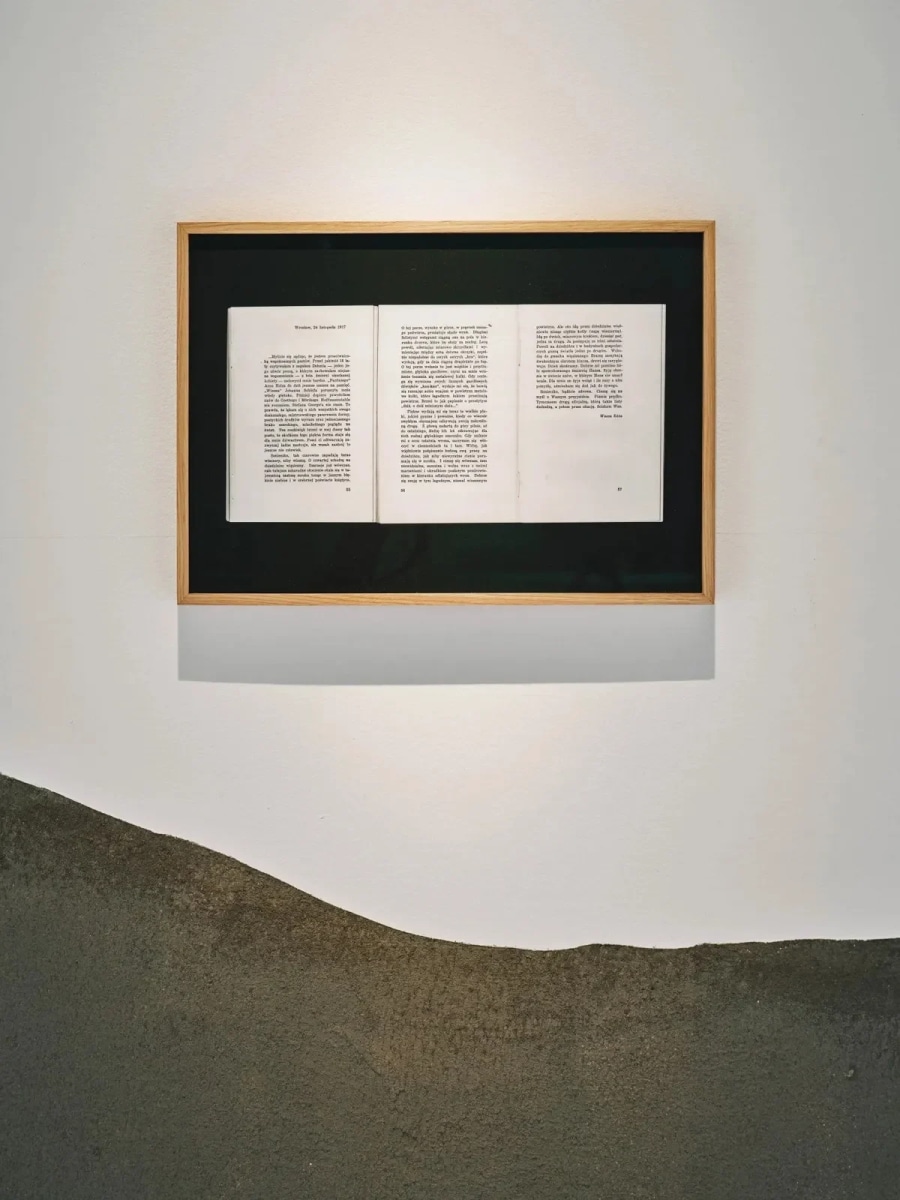 Milena Bonilla,Letter To a Roosting Tree, 2025, Ellen de Bruijne Projects
Do you think plants will play a more central role in how we understand and shape our world in the future?
The thing is that that’s not up to us to decide, the plant world is already at the center of our lives whether we are conscious about that or not. That we tap into understanding ourselves better through their teachings and take action by dismantling the current economic arrogance imposed not only on plants, but on a planet on fire which happens to be our home, well, that’s what is up to us.
Are you currently working on a new project or exhibition that you are particularly excited about?
I am at the moment collaborating with If I Can’t Dance, an performing arts organization based in Amsterdam on a research about the plants growing spontaneously around the former Buitengasthuis Asylum and Vrouwenkliniek belonging to the Wilhelmina gasthuis. We are mapping the weeds growing around these former buildings to listen to their medicinal powers in relationship with the history of the places that used to be at these locations.
 Milena Bonilla, Localized Anger: Uranium and Scopalamine, 2021, Ellen de Bruijne Projects