16 june 2026, Wouter van den Eijkel
The Intuitive Alphabet: Erik de Bree at Torch Gallery
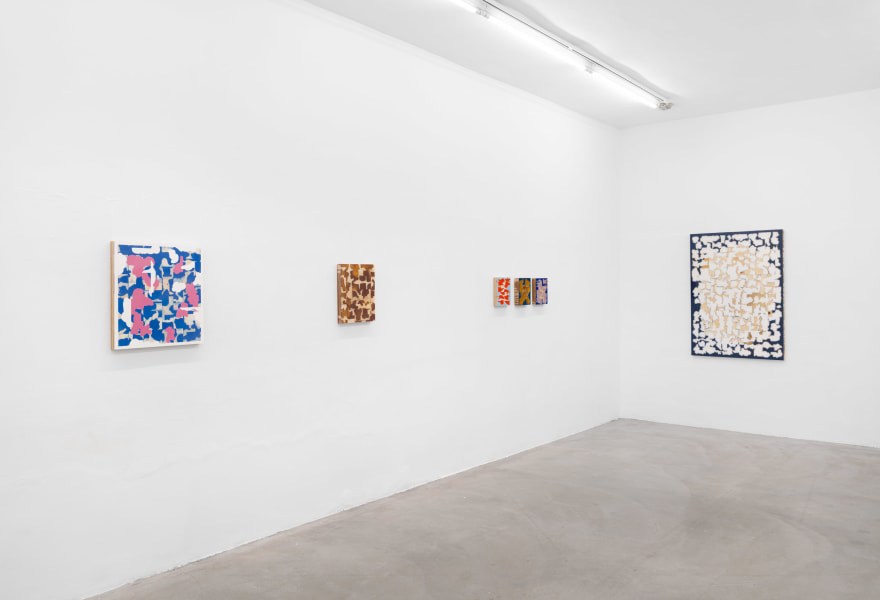
A few months after his previous exhibition at Torch, Erik de Bree was forced to put his work with wallpaper on hold indefinitely. Over the past four years, he has been developing a new body of work using wooden children's puzzles and resin as his primary materials. This opened up an entirely new world for him. Every week, De Bree continues to discover new possibilities. The first result of this new approach, The Intuitive Alphabet, is on view at Torch Gallery in Amsterdam until 11 July.
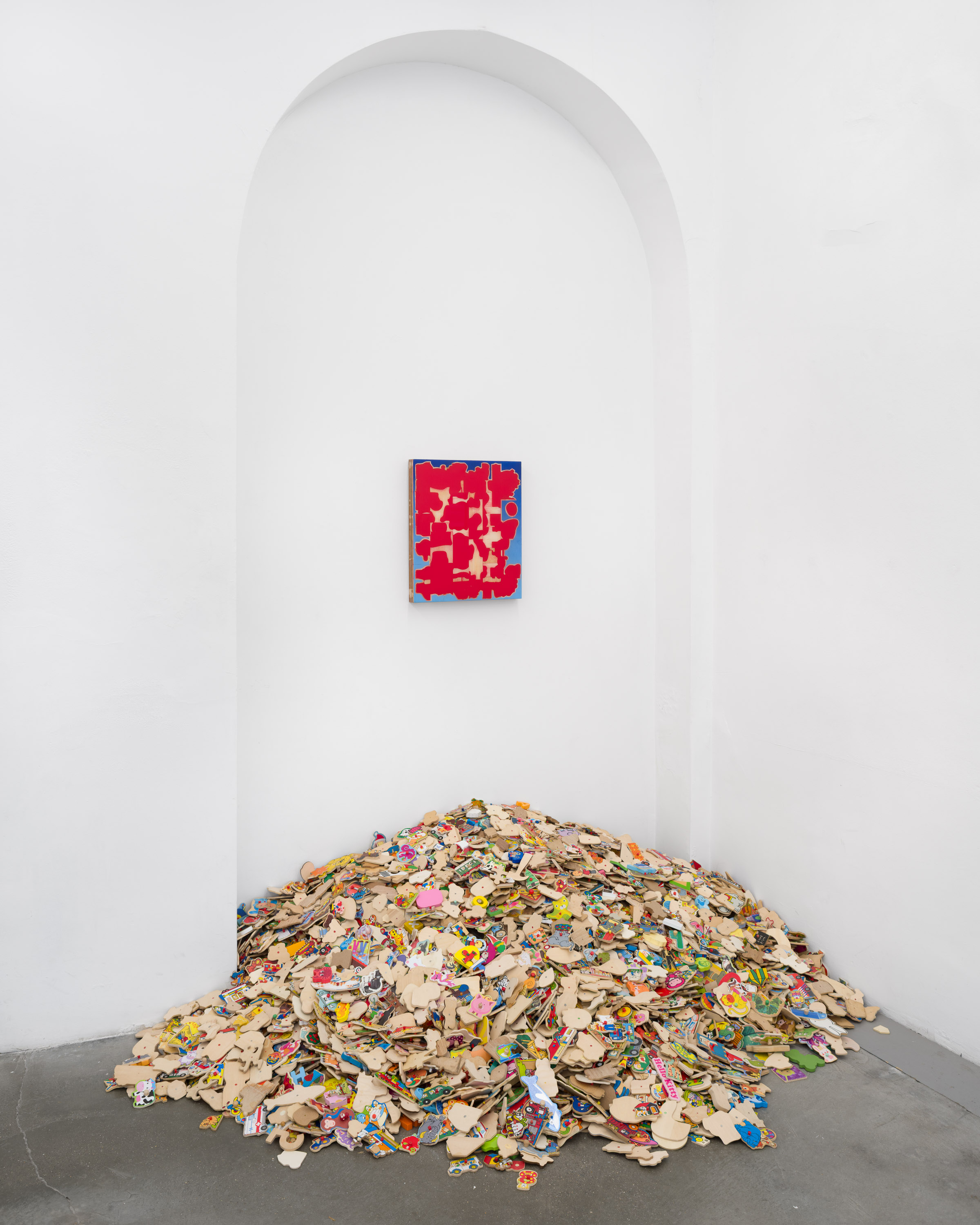
"I have ten shopping bags full of them," says Erik de Bree, standing beside a mountain of wooden puzzle pieces at the front of the gallery. "I had actually expected the pile to be a bit bigger." Understandably so, as the number of puzzles De Bree needed to create the mound must inevitably run into the hundreds. The large puzzle pieces intended for toddlers are merely the leftover materials. For The Intuitive Alphabet, De Bree used the boards into which the pieces are fitted.
As with his previous work, the Soviet Series, which he exhibited at Torch at the end of 2021, De Bree receives his materials through family, friends and acquaintances. For The Intuitive Alphabet, he acquired incomplete puzzles from charity shops across the Netherlands – items that were unsellable.
For the Soviet Series, he had a contact in Ukraine who sent him rolls of Soviet-era wallpaper. Russia's invasion of Ukraine, less than three months later, brought that series to a temporary end. De Bree explains, "The woman who bought the wallpaper for me in Ukraine fled to the Netherlands through Poland. Although the work itself had not changed, the context of the series had, and with it its meaning. It no longer felt right to continue."
This brought an abrupt end to a ten-year period during which De Bree worked with wallpaper. Understandable as it may be, it is interesting that something as apolitical and nostalgic as wallpaper can suddenly acquire political significance. By that time, he had already started collecting another highly domestic material: puzzles and Ministeck mosaics. He hopes to do something with the latter in the future.
 Erik de Bree, The Intuitive Alphabet, Torch Gallery
Base material
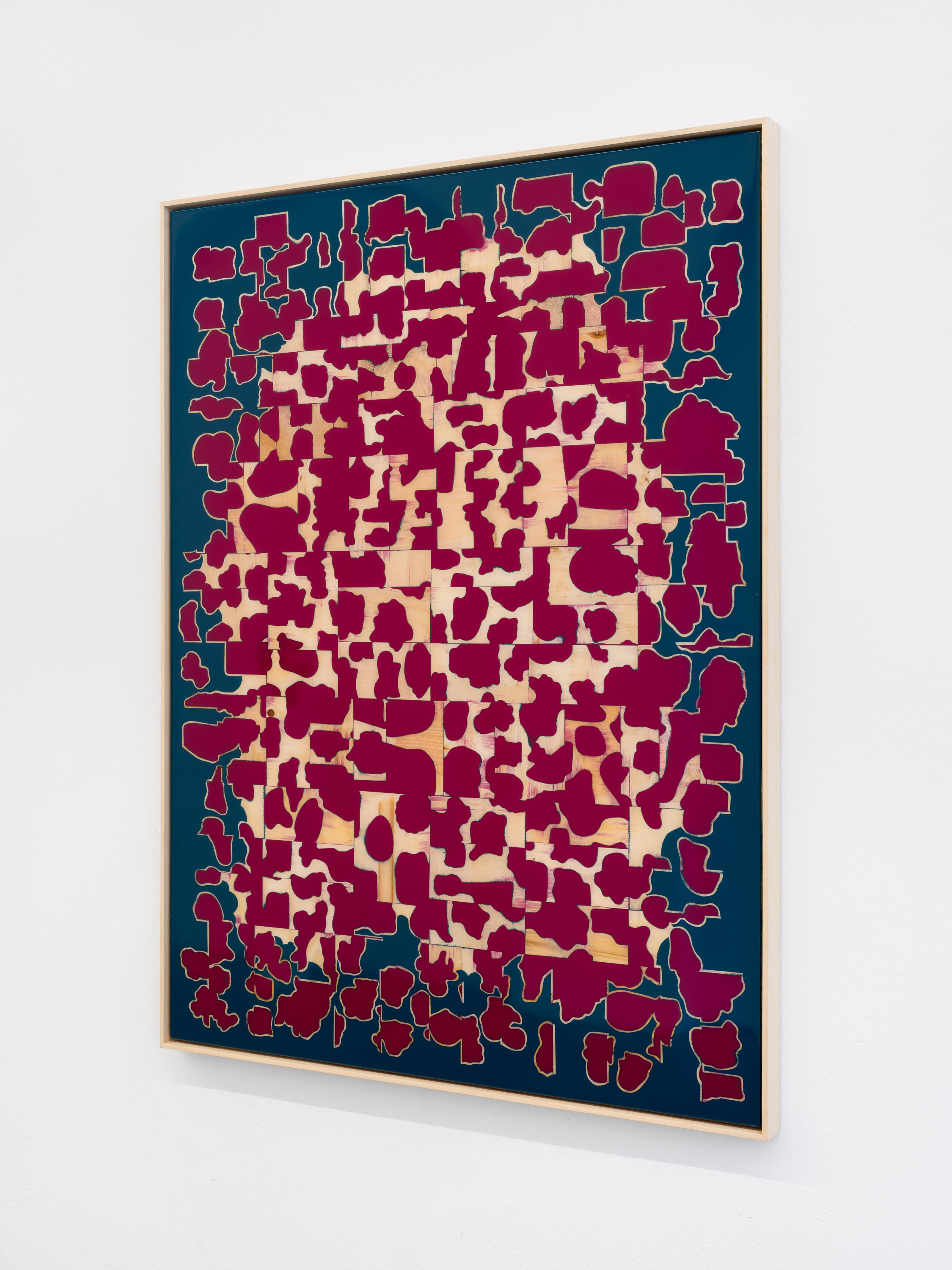
Although the base material has changed, much remains the same. In the Soviet Series, De Bree had already been cutting away layers of wallpaper to create openings and negative spaces. With the puzzle boards, those negative spaces are already pre-cut.
But this does not mean that composing the work is any less time-consuming. The puzzles generally vary in thickness, wood type and colour, so much of the work lies in finding and sorting complementary pieces. "I then saw up and glue the puzzles together. Each work contains parts of eight to ten different puzzles. I do it so that it looks as though they've been put through a randomiser."
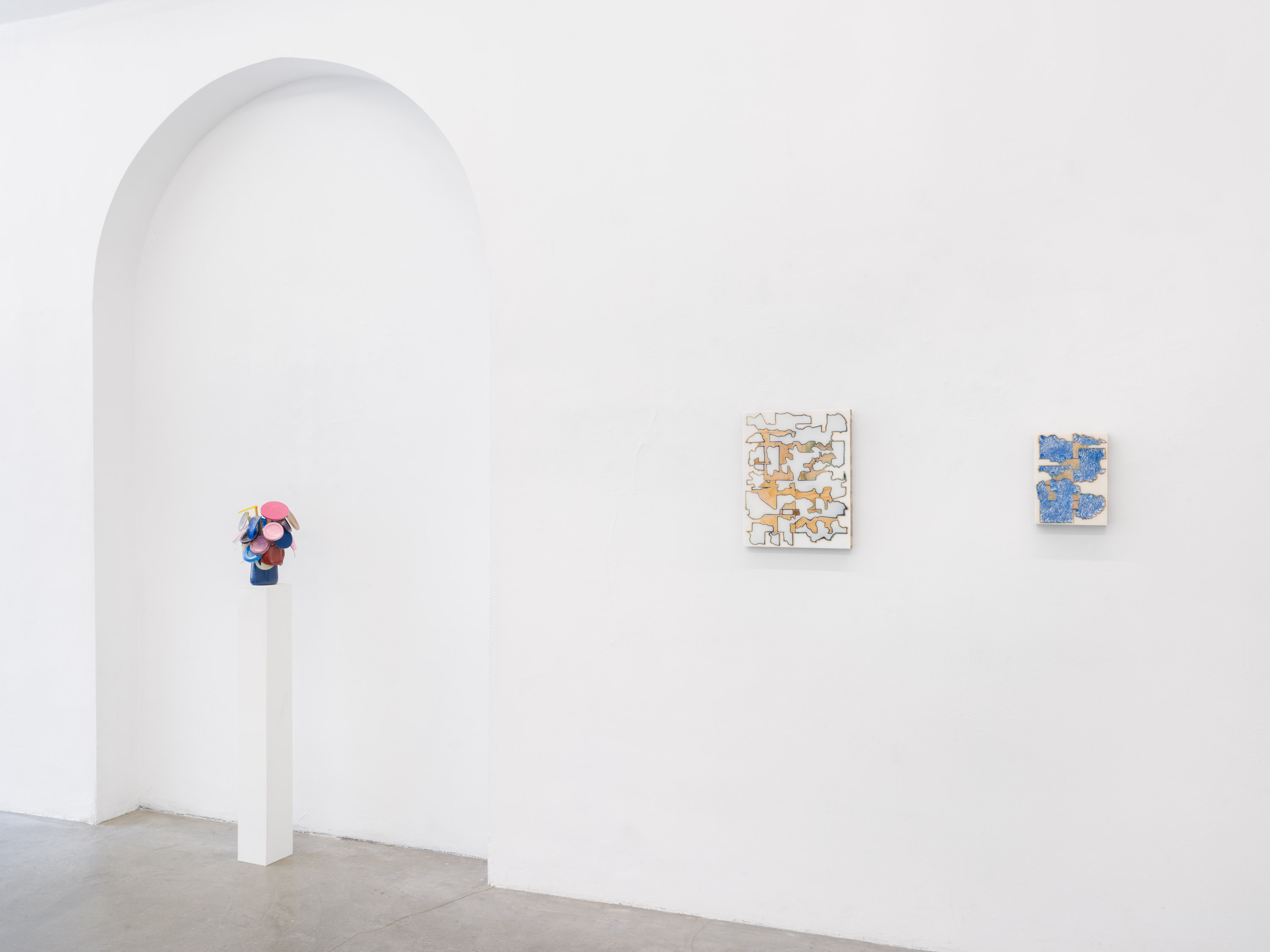
The assembled puzzle pieces do indeed appear to have been joined together at random, resulting in the most extraordinary shapes and patterns. These shapes are then filled with coloured resin. What follows is a lengthy process of sanding, colouring and polishing. De Bree often outlines the shapes in black or a contrasting colour. Some of the works of art have a polished surface, giving them a glossy finish, while others are deliberately left matt.
"When I ask people what they see, they often say they recognise something. Usually it's the shapes, but they never know exactly what they're looking at," says De Bree, explaining the title of the exhibition. "When I tell them they're looking at puzzle boards, you can see the light bulb go off in their head."
 Erik de Bree, The Intuitive Alphabet, Torch Gallery
Something similar happened with the Soviet Series. "We also showed work from that series at PAN, which was visited by lots of Russian expats. At first, they were delighted to recognise something from their childhood. Some even wanted to buy a piece, but later decided against it because their childhood had not been all that pleasant. It was fascinating to see how something as ordinary as wallpaper could carry so much emotional weight."
De Bree initially filled the gaps in the puzzle boards with coloured plaster. "I filled one piece with plaster, but it didn't work well, so I decided to try casting resin instead and that turned out brilliantly. I learned you can do almost anything with it." This meant De Bree had to expand his knowledge of the material considerably.
"I watched endless YouTube videos of women making brooches with the stuff. Around the same time, I happened to visit Dirk Salz' studio in Dusseldorf. He also works with casting resin. Seeing his work gave me a completely different perspective on what the material could do. A little later, I got in touch with a laboratory technician from a company specialising in resin flooring, who explained to me how resins work on a molecular level. That gave me the chemical know-how."
To cut and assemble the puzzles, De Bree swapped his scissors for a router. A furniture maker taught him the basics, after which he adapted the tool to his own work. He began supplementing his compositions with 'drawings' he created using the router.
De Bree expects to continue developing The Intuitive Alphabet and his new working method for a long time to come. It remains largely uncharted territory, he explains. "I discover something new every week." The inspiration can come from anywhere. Recently, for example, he saw a marble floor and thought: Could I imitate marble? Simply because it's possible. One thing that has not changed in De Bree's work is the sheer pleasure of creation. And that joy radiates from the work itself.
 Erik de Bree, The Intuitive Alphabet, Torch Gallery