05 may 2026, Wouter van den Eijkel
Spatial Shade: Lisette Schumacher’s new series of sculptures in coloured glass
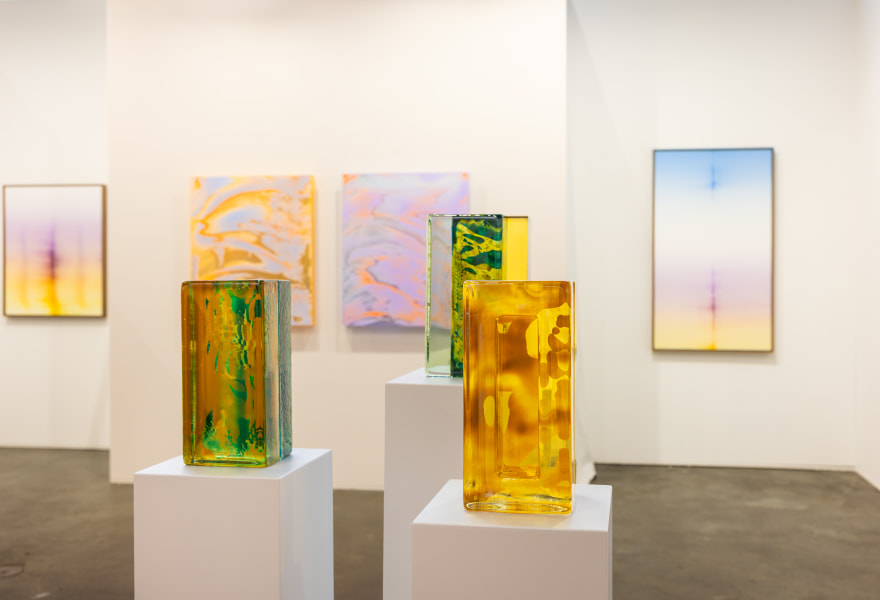
Sometimes, it takes a moment to realise exactly what it is you are looking at. That brief hesitation lasts just long enough to take in the form and colours and above all, to keep looking. This is especially true of Spatial Shade, Lisette Schumacher's new series of sculptures in coloured glass.
With the coloured light emanating from the glass sculptures, it takes a few seconds before you realise you have already seen this shape countless times that very day. It is the shape of the most fundamental element in architecture: the brick. From the brick, the step to Modernism—the architectural movement Schumacher frequently draws on for inspiration—is quickly made. We spoke with Lisette Schumacher about Spatial Shade and her love of modernist architecture.
The last time we spoke was last year in the run-up to Art Rotterdam. At the time, she was working on the Daytime Full Moon series, paintings on floating panels that respond to ambient light and refer to the transient beauty of the daytime moon. The latter, like modernist architecture, is an important theme in her work.
Your most recent series is called Spatial Shade, in which you create sculptures in the shape of glass bricks. In the past, you have worked with plexiglass constructions, so why did you choose to start working with real glass?
For me, working with glass was a logical next step alongside working with plexiglass. Both materials share the same visual qualities: transparency, reflection and a variety of colours. What makes working with glass even more interesting is how it captures and refracts light and how the curvature of the glass causes subtle shifts in perception.
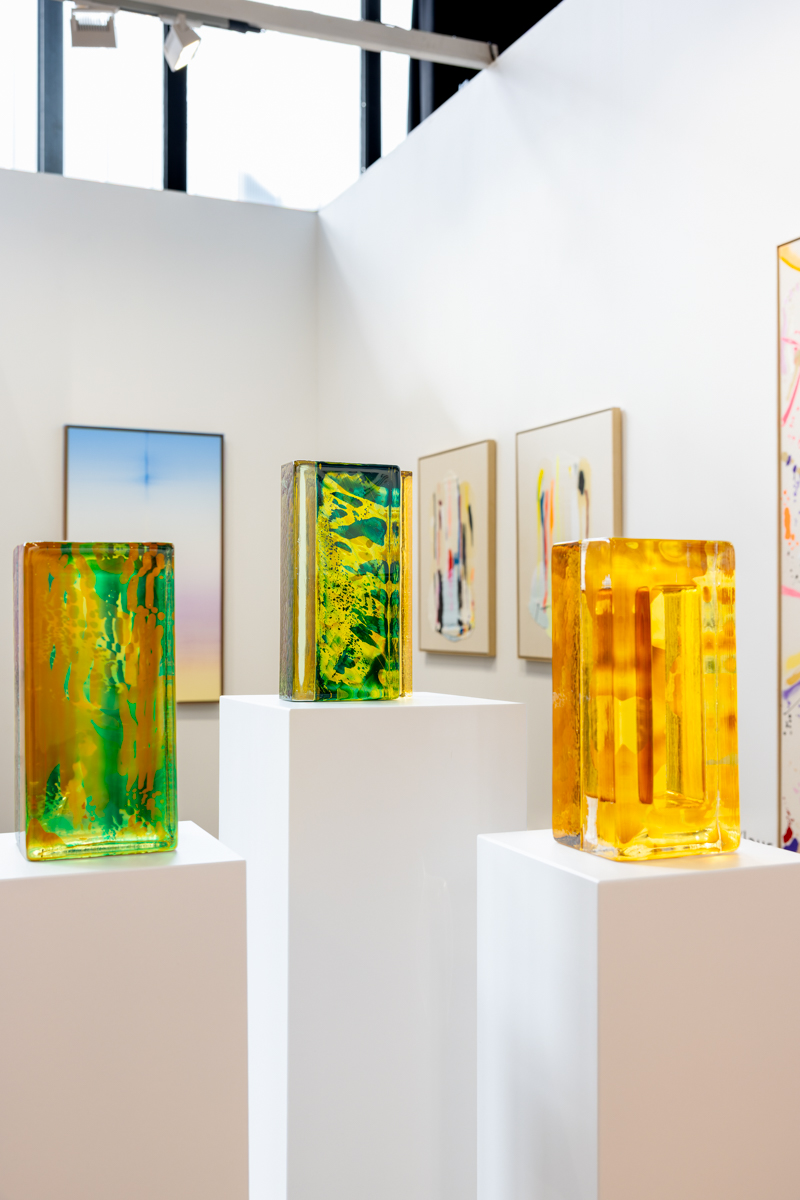 Lisette Schumacher, Spatial Shade, Root Gallery
How do you like working with glass?
A lot. I enjoy variety and working with multiple materials at the same time. By working with both plexiglass and glass, I gain an even deeper understanding of their individual qualities and can highlight these more effectively in both my paintings and sculptures.
With this new material, I found myself once again at the beginning of a journey of discovery. I learned about the purity and unprecedented transparent and reflective effects that glass offers. In May, I will be taking a glass fusing class, simply to learn to work more broadly with the material and how to control it. I have no idea whether this will result in a new body of work in the future—and that doesn't matter. I don't enter the workshop with that expectation. I prefer to keep an open mind and see whether this new technique is something I might use in the future. At the very least, I will gain technical knowledge and that is always valuable.
Like Daytime Full Moon, Spatial Shade also deals with architecture and our perception of it. You primarily refer back to modernist architecture by Mies van der Rohe, Neutra and Le Corbusier. Why is modernism such an important point of departure for you?
I feel the strongest affinity with this style and period and I can translate its elements effectively into my paintings and sculptures. To get inspired for a new series of paintings, I always travel to see modernist architecture. For the sculptures, I used the shape of the brick as my starting point.
How did you arrive at the brick as the central element of this series?
In my work, I make subtle references to modern architecture. These are often abstract. In this series of sculptures, a more recognisable and tangible reference appears: the shape of the brick. The brick is a fundamental building element that was reintroduced into modern architecture by, among others, Mies van der Rohe, Alvar Aalto and Le Corbusier.
I saw in the brick a form I could build and assemble. The shape and weight of the glass impose restrictions and challenges and that is precisely what I am pursuing within my artistic practice. Working with challenging materials and forms and bending them to my will is what I enjoy most. I am composing to create images that change throughout the day due to variations in light incidence and colour intensity
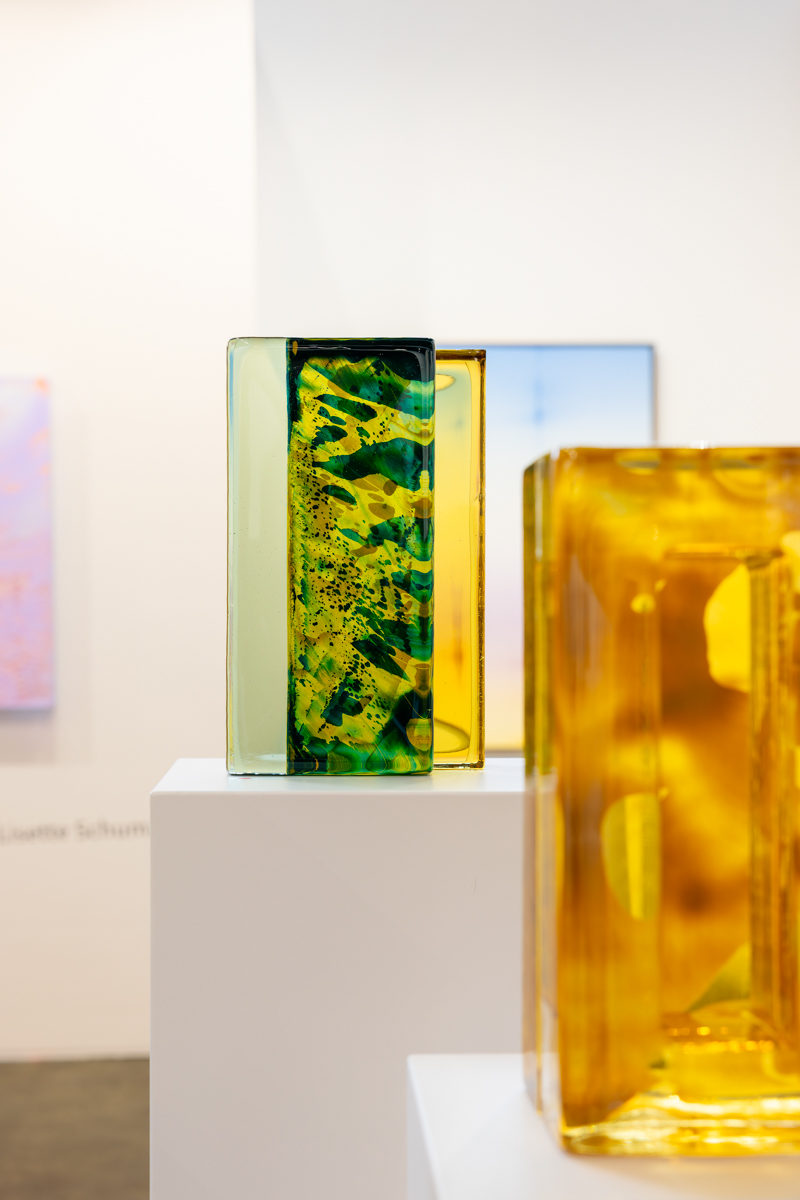 Lisette Schumacher, Spatial Shade, Root Gallery
When I first saw the works from Spatial Shade at Art Rotterdam, I could hardly believe I was looking at a glass brick. Initially, I thought of something spiritual rather than an industrial mass-produced object. It made me see these building blocks in a different light. Is a reappreciation of something as basic as a brick also something you hope viewers will experience?
By working with glass blocks instead of traditional bricks, I present a modern variation to the viewer. I enjoy incorporating an element of surprise in my work, prompting the viewer to pause, wonder and question how the work was made and what materials were used.
The glass blocks come from the Venice region, where they are cast by hand. The craftsmanship is clearly visible and tangible. Each glass block is unique: they vary in thickness, are sometimes slightly uneven and contain beautiful air bubbles that are forever captured within the glass. The forms of the glass blocks range from recognisable rectangular shapes to more elongated and fluid forms. The blocks are produced in small batches, from a mass-produced stone to a hand-cast glass block—and you can see and feel that when you look at my sculptures.
Where Light Lands is currently on view at Root Gallery, a group exhibition together with Jeske Haak and Donald Schenkel. Is there a common denominator in your work and if so, what is it?
Our common ground lies in a shared focus on material and light. All three of us have a strong artisanal approach that we continue to refine and deepen. In the exhibition, it is fascinating to see how our work changes in colour intensity throughout the day due to shifting light conditions.
Finally, most of the architects you admire are associated with Modernism. Nothing is as changeable as human taste, so I wondered whether there is a chance you might one day fall for postmodernism and architects like Piano and Mendini. If so, would you begin to create a different type of work?
Well, it's difficult to predict the future, but I have a clear preference for Modernism and there are still many architects and buildings I want to explore further. Right now, I can't imagine immersing myself in another style. But then again, never say never!
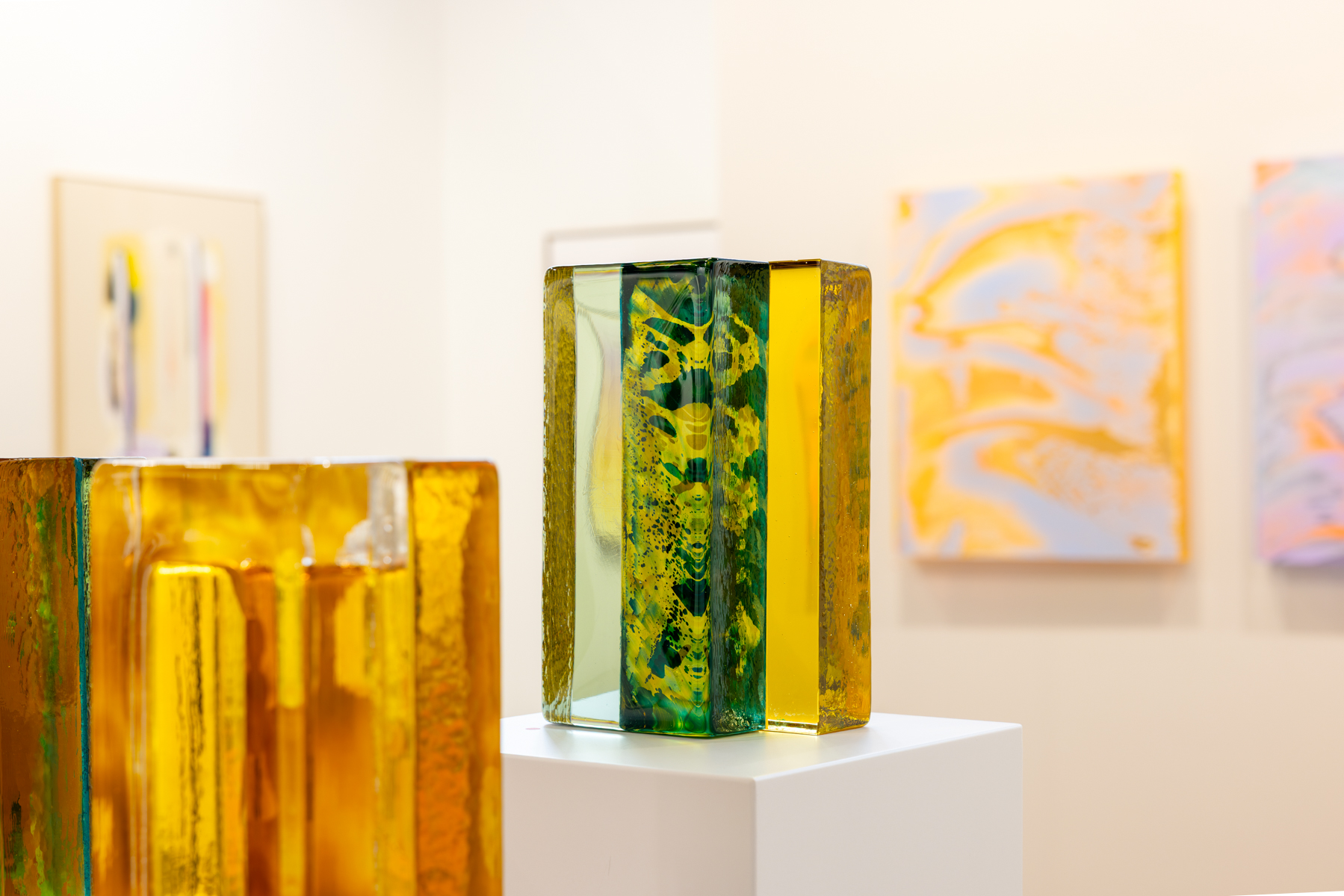 Lisette Schumacher, Spatial Shade, Root Gallery