17 march 2026, Martine Bontjes
The studio of... Tony Dočekal
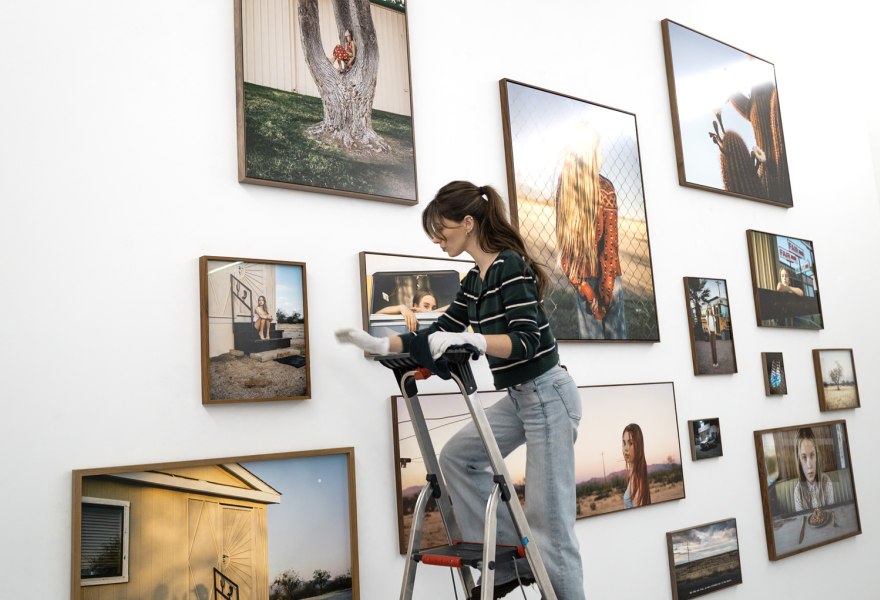
As a child Tony Dočekal did not easily start conversations. With a camera in her hands it became easier. It gave her a reason to come closer and ask questions. Dočekal still uses photography to build relationships, as we see in her solo exhibition Paper Stars at Art Gallery O-68. At the center of this photographic series is Lyric, a girl she met in Arizona. She continued to visit her for years. These encounters resulted in intimate portraits that follow Lyric’s gradual transition from child to teenager, set against the vast landscape of the Sonoran Desert near the contested border between the United States and Mexico. Dočekal recognized something of herself in Lyric: the same curiosity about the world, but also the restlessness of someone who feels that many paths are open without yet knowing which one to follow.
In her studio, at the top of her large glass house from the 1970s surrounded by nature, Dočekal is currently putting the finishing touch on her presentation for Art Rotterdam. Her worktable is filled with maquettes and layouts for upcoming exhibitions.
The exhibition ‘Paper Stars’ by Tony Dočekal remains on view until 22 March at Art Gallery O-68 in Velp. On Sunday 22 March a finissage will take place from 15:00 to 17:00, with the artist present. Dočekal’s work will also be shown next week at Art Rotterdam (27–29 March at Rotterdam Ahoy) in the booth of Art Gallery O-68, alongside work by Maaike Kramer.
Where is your studio and how would you describe this place?
As a photographer a large part of my process takes place on the road, in unfamiliar and constantly changing environments. I recently moved into a glass house from the 1970s in the middle of nature in the Netherlands. The entire house is split level and essentially one large open space. Only upstairs in my studio can I close the door. From my worktable I look out over the water. The walls are covered with prints, contact sheets and notes. At the moment it is filled with maquettes of various exhibitions I am working on. My dream is to build an open forest studio here one day so that I can experiment more freely and more extensively with material, time and scale.

Tony Dočekal, Nine Years Old, 2026, O-68
Do you go to your studio every day?
During periods when I am not photographing I work at home on the archive almost every day. Because I mainly shoot on film this is the place where I see my images for the first time since taking the photograph. In my studio I slow down and work through the material: selecting, scanning negatives, retouching, writing and thinking about the form and sequence of images.
When did you buy your first camera?
My first camera was a simple analog point and shoot that I received from my parents. What immediately appealed to me was that a camera gives you a kind of access. Because you photograph on film and do not see the result immediately a space opens up. That is important to me because it allows me to let go of expectations and in return gain enjoyment and connection. As a rather quiet child I sometimes found it difficult to start conversations. With a camera that became easier. It gave me an opening to come closer and ask questions.
Your journey to the United States began with a volunteer project with homeless people. Why did you want to immerse yourself in that raw environment?
I was always fascinated by the image of the American West. My parents lived there shortly before I was born and their photographs and stories made a strong impression on me. In my mind Arizona became a kind of dreamland of freedom and possibilities.
During an artist residency in San Francisco I met a boy of my age who lived in a tent in front of the studio where I worked. He was also an artist but he did not have the same access to space and resources as I did. That inequality affected me. Through that encounter I began to look and work differently. I became fascinated by the stories of people who live outside the visible structures of the city and especially by the way individuals relate to their surroundings. That experience ultimately became the starting point for the project that led to my first book The Color of Money and Trees.

Tony Dočekal, New Mexico, 2026, O-68
Can you describe the environment in Arizona? What did you encounter there?
The landscape is impressive and harsh at the same time. An environment of extremes. I fell in love with the light, the pink skies, the dusty silence and the vast openness. Desert plants bloom briefly and exuberantly. At the same time you feel that life there is not self evident. Long distances and limited facilities mean that people rely strongly on themselves and on their immediate surroundings. The landscape is not only a backdrop. It determines the rhythm of everyday life.
How did Lyric react when you asked if you could make a portrait of her?
Lyric was shy but also a little bored and very curious. The latter won out. The motel where I stayed was next to an RV park where Lyric lived with her family in a parked school bus. There were no other children and despite the nearly twenty year age difference she was interested in what I was doing there. She liked to hang around while I was photographing and I asked if she would like to make a photograph together. The next morning she was standing at my door at nine o'clock. From that moment a bond of trust slowly developed.
You have visited Lyric in different places over the past years. How have you seen her change and how is your contact now?
When I met Lyric she was still a child. Because she mainly grew up among adults, there was something prematurely mature in the way she spoke and looked. When she returned to school after two years of homeschooling that was quite confronting. In recent years I have seen her grow into a teenager who develops her own ideas and doubts. That makes the work recognizable but also vulnerable. Her family settled on a piece of land in the Sonoran Desert, a region about an hour from the contested border between the United States and Mexico. Now that she is getting older that environment is becoming more and more part of the story. Her mother regularly keeps me informed about daily life and about how Lyric is doing.
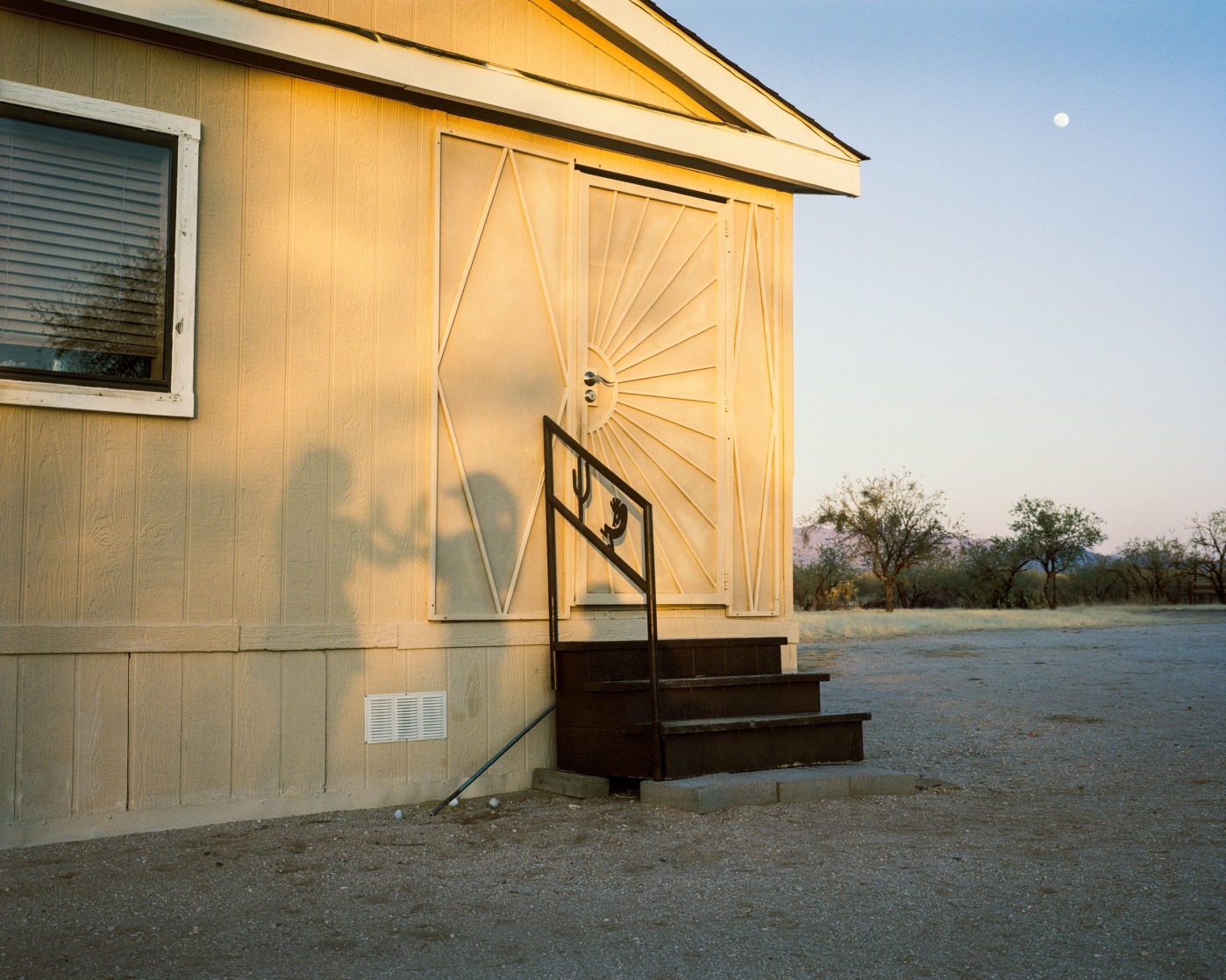
Tony Dočekal, Mother Daughter at Blue Hour, 2026, O-68
You say you recognize yourself in the people you portray. In what way do you recognize yourself in Lyric?
I recognize in her a strong curiosity about the world but also a certain restlessness. The moment when you begin to feel that many possibilities exist but you do not yet know which direction to take. Her will overcomes her fears. I admire that and it made us click immediately. When I was younger I also felt that tension between freedom and searching for a place in the world. Art and creativity became a way for me to give shape to that search. I see something of that in Lyric.
Who would you still like to portray one day?
Patti Smith because of the way she connects poetry, music and observation. And Bad Bunny because of his creativity and his outspoken personality and opinions.

Tony Dočekal, Tree at Pima County, 2026, O-68
What can we expect from your presentation at Art Rotterdam?
At Art Rotterdam I will show a selection from Paper Stars, the first chapter of my long term project about Lyric and her environment in Arizona. The series follows her during the transition from child to teenager while also looking at the landscape and the conditions in which she grows up. I will also bring several works from my series The Color of Money and Trees and my short film Pearls on Credit (2023). In the film a young woman explores different sides of herself in front of a mirror. We hear a female voice explaining the system of creditworthiness as an almost impossible rat race while a man recites the poem America by Allen Ginsberg.
What project are you working on at the moment?
I recognize three phases in my practice: making, editing and presenting. Making includes photographing filming and writing. Exhibiting requires a different energy than photographing and developing new material. At the moment I am in the middle of my solo exhibition and the preparations for Art Rotterdam. Paper Stars feels like the closing of a chapter but at the same time it marks the beginning of something new. I am looking forward to returning to the making phase. Lyric is now a teenager and that changes the perspective. In the coming years I want to develop that phase further in moving image and in book form.
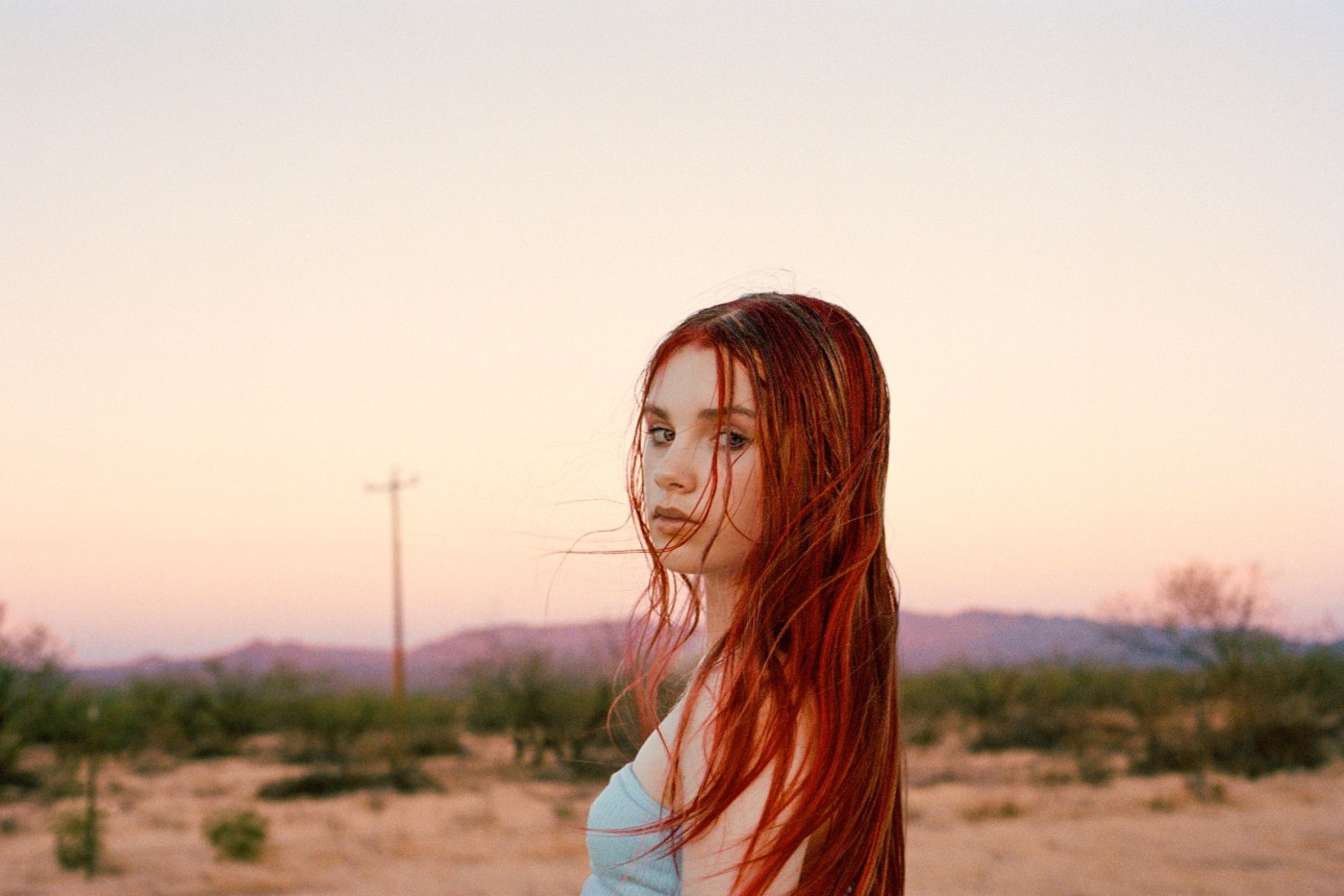
Tony Dočekal, Twelve, 2026, O-68
