13 march 2026, Emily Van Driessen
Two Solo Exhibitions at Frank Taal Galerie: Unfolding Voids and Movement Repose
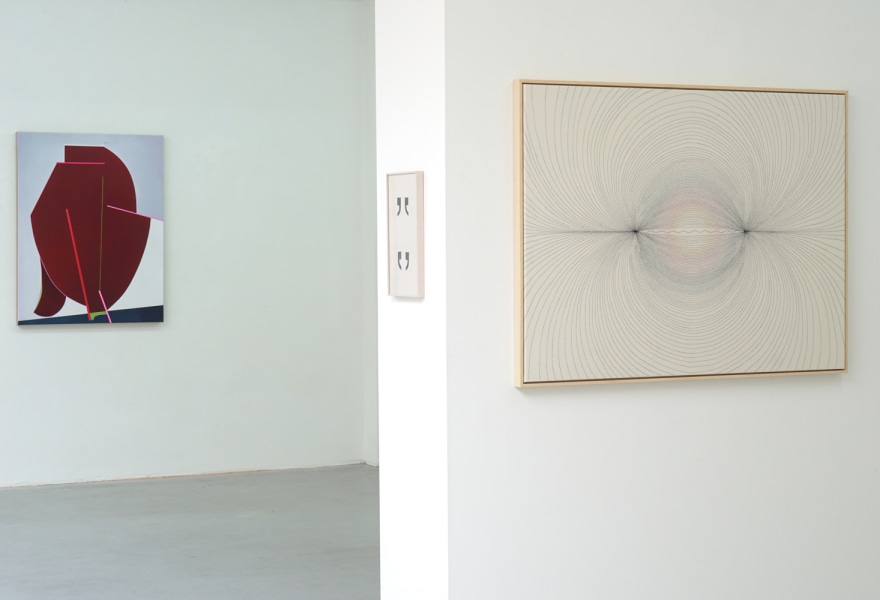
Frank Taal Galerie in Rotterdam presents two solo exhibitions with works by Isabelle Borges (1966, Brazil; lives and works in Berlin) and Zoë d'Hont (1990, the Netherlands; lives and works in Rotterdam). Although their practices differ in both conceptualisation and formal approach, they share a grounding in labour-intensive artistic methods. At the same time, both artists recognise a similarity in the way they explore space and time, translating their immediate surroundings into an abstract visual language.
Both artists identify lines as a shared grounding element in their practices. For Borges, their lines create structure and movement; for d'Hont they resemble networks of veins or nerves, structures that run through both physical and spiritual bodies.
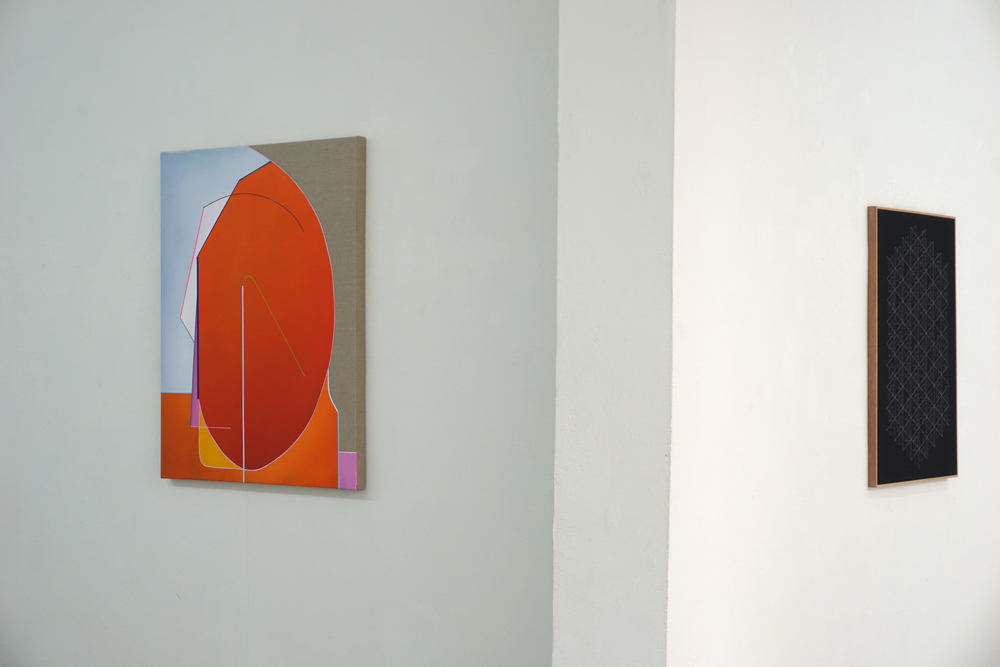
Installation view, Frank Taal Galerie
In the short interview below, both artists offer additional insights into the works presented in their exhibitions. Unfolding Voids and Movement Repose run until 18 April, including during the art fair Art Rotterdam.
Zoë d'Hont will host workshops every Sunday in March and on Sunday 12 April, from 11:00 to 13:00. If you would like to attend, please contact [email protected]. The workshops will be conducted in Dutch, but English speakers are very welcome to participate.
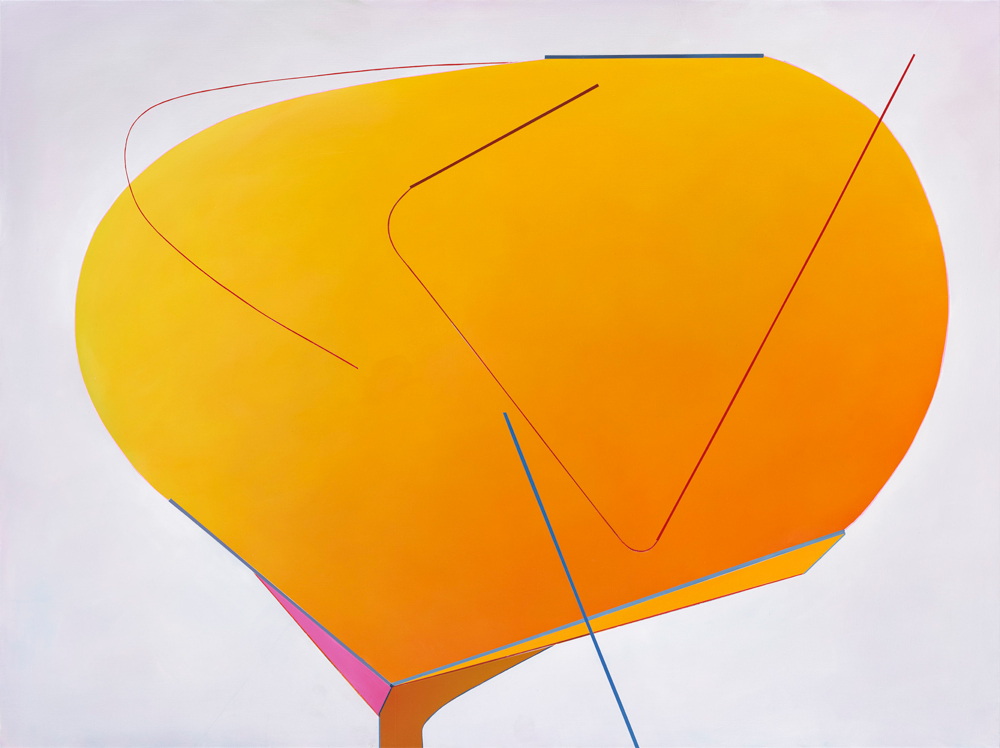
Isabelle Borges, Cocoon, Frank Taal Galerie
My main medium is painting, but I also work with objects, photography, and murals. All of my works emerge from nature, and for the past fifteen years, I have been working with images I take of a specific lake on the outskirts of Berlin.
The central research of my practice revolves around space and how we perceive it. I'm interested in the geometry of the in-between: those spaces that emerge between things and through which spatial dynamics unfold. These spaces expand and contract, forming a visual continuum of tension and release and become moving, breathing fields.
In the painting series, I use bold colors and build space through many thin layers, creating depth. The ceramics shown in the exhibition were produced during my residency at EKWC at the beginning of 2025. I was curious to translate my research on voids and shapes into another medium while maintaining the constructivist approach to spatial tension that characterizes my paintings. The ceramics still deal with spatial perception and become something between a body and a building. The association with architecture is always present in my work, including in the ceramics, particularly in the way they are installed on the wall.
One of the reasons I wanted to explore ceramics was to return to the organic aspect of the image. My works are inspired by structures in nature, yet they pass through many stages of abstraction before becoming an image. By working with ceramics, I wanted to see how this process might reconnect with the original organic quality of form. In a way, it is about molding space out of voids.
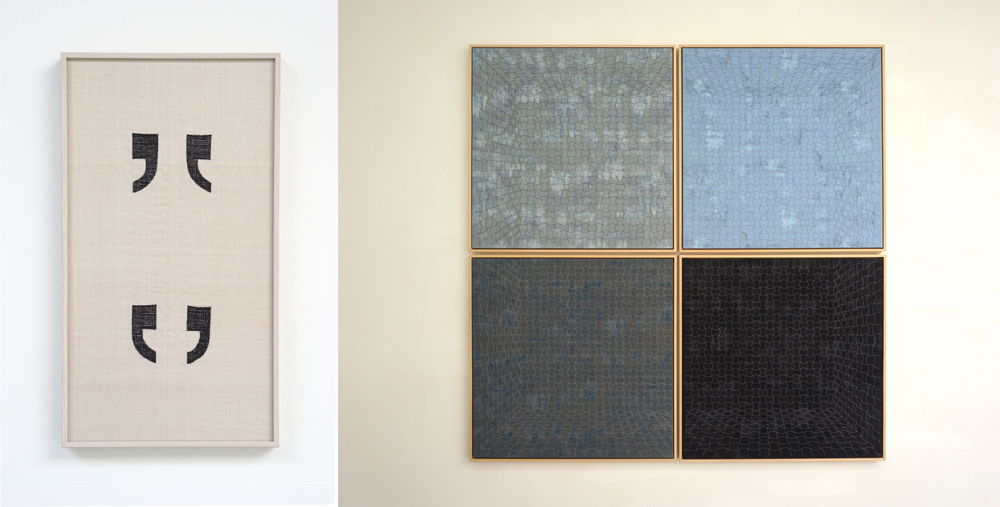
Zoë d'Hont, Interlude (Bell and Bowl), 2026 / Sonic Perspective (chord), Frank Taal Galerie
Zoë, in Movement Repose, you work with paper weaving and embroidery. How do you relate these methods with your conceptual relation to sound and music?
Embroidery and weaving are quiet, meditative processes that create space for listening. At the heart of my practice lies an interest in perception: how we experience the world around us, and how that perception resonates through our actions. It feels like an inexhaustible source, because perception is never static. It is always in motion and arises through movement.
The natural philosopher Lorenz Oken once said, "The eye leads the human being into the world; the ear leads the world into the human being." This continual movement between expansion and contraction feels essential to me. My relationship to music and sound is therefore rooted more in listening and attunement than in transmitting.
Interlude (Bell and Bowl) 2026 for example grew out of a series of graphic scores exploring silence and intervals. Musical instruments depend on empty space because it is within that space that vibrations resonate and become audible. When you allow yourself to become still, the world around you, as well as your inner world, grows louder. In this sense, form is emptiness and emptiness is form, which is a Buddhist principle I often meditate on. The sound of a bell (or any sound) emerging from silence calls you back to the present moment.
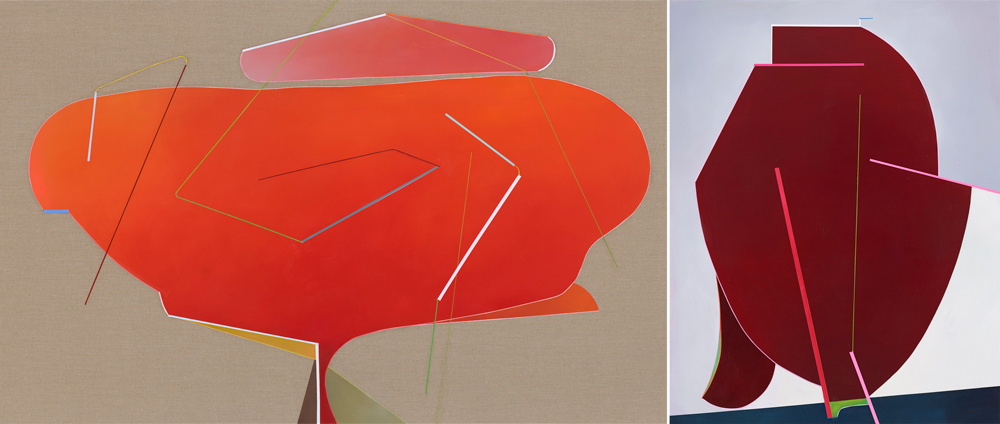
Isabelle Borges, ECHOES, A point in space #3, Frank Taal Galerie
Isabelle, the titles of your works open up rich imaginative associations in dialogue with the artworks. Could you take us through your process of title formation?
It is not always easy to find the right title. I do not want to describe the work directly, but rather to leave space for the viewer's imagination. Sometimes it appears during the process; other times it emerges only once the piece is finished. It is similar to writing a poem. It comes in relation to the image, but without describing it.
At times, a piece of music creates a space that resonates with the image. Sometimes it is literature. For example, the title A Point in Space #3 was inspired by the short story The Aleph by Jorge Luis Borges, which explores infinity, memory, and the limitations of language. These themes are always present in my research.
The title ECHOES also refers to a memory of something that cannot be fully described or reached. In my inquiry, I am always searching for the sublime, that which resists complete articulation.
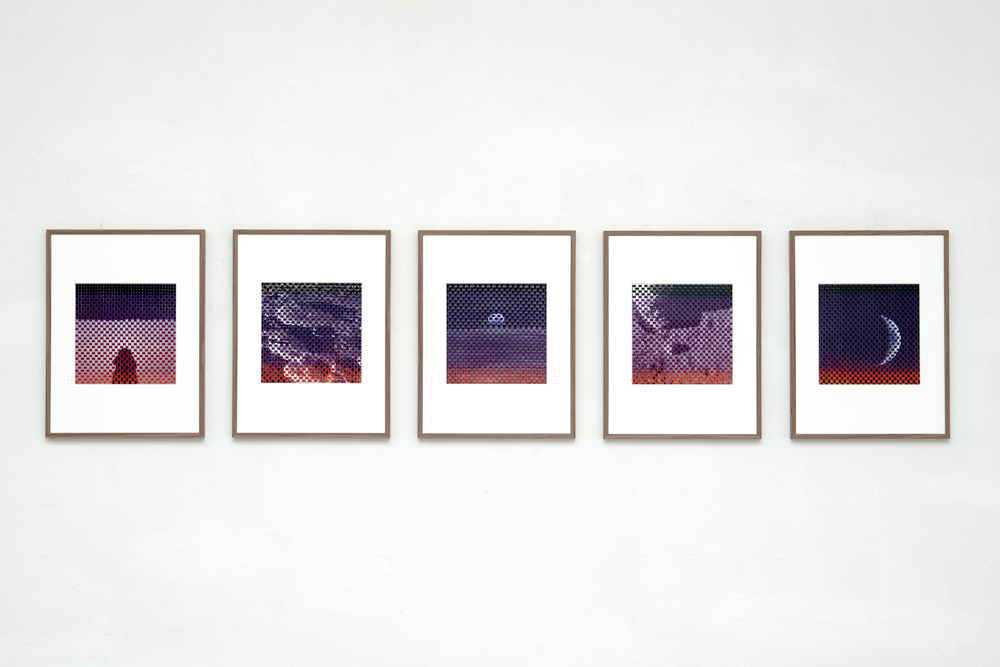
Installation View Zoë d'Hont, Frank Taal Galerie
Zoë, how do you see performance in relation to your visual arts practice? Does it create an additional layer, or is it completely distinct?
I find myself drawn more to non-performance than to performance. In his silent composition 4′33″, John Cage transformed the audience into performers. Even when I reenact compositions, my interest lies in the egolessness of sharing. Any realization is simply one of many possible interpretations. A score becomes a way of transmitting a composition or constellation and in that transmission, the ego seems to dissolve. My visual and performative practices are closely connected in that there is almost always a movement from image to sound, or from sound to image. These two worlds continuously nourish one another.
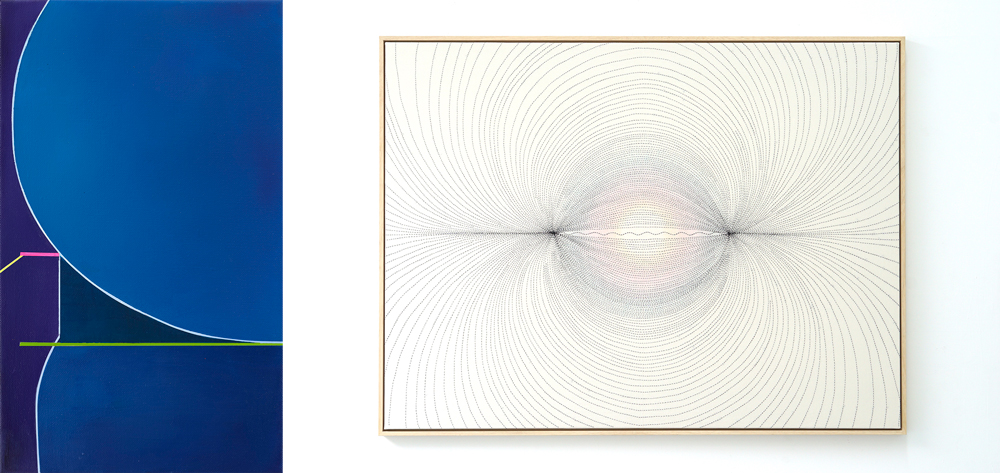
Isabelle Borges, Blue, 2026 / Zoë d'Hont, Harmonic relationship between opposites, 2025, Frank Taal Galerie
