16 february 2026, Flor Linckens
Marjan Laaper and the sculptural power of video
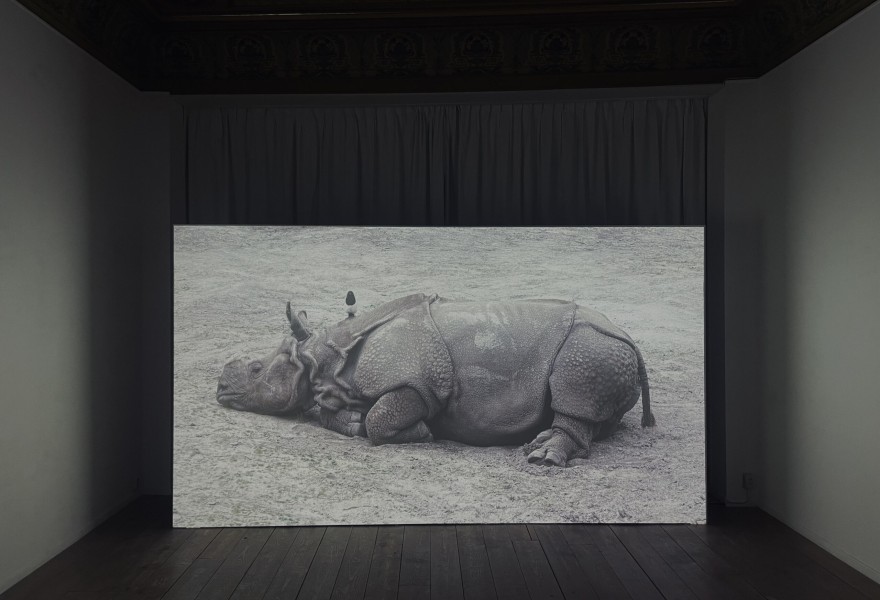
Until 8 March, NL=US Art in Rotterdam presents the solo exhibition ‘Loss, Hope and Wonder’ by Marjan Laaper. In this exhibition, the Rotterdam-based artist shows five large-scale video works in which animals take centre stage. Laaper considers herself first and foremost a sculptor, yet instead of working with stone or bronze she employs manipulated moving images.
The artist was born in Rotterdam in 1971 and studied Sculpture at the Willem de Kooning Academy. She continued her education at the Maryland Institute College of Art in Baltimore, followed by a residency programme at the Rijksakademie van Beeldende Kunsten in Amsterdam. She later completed residencies in the United States, Japan, China and Iceland.
Within Laaper’s practice, video functions as a sculptural medium. A classical sculpture occupies a physical position in space and calls for a bodily relationship with the viewer. Laaper films from a single fixed viewpoint, that of the spectator, using minimal movement, extreme deceleration and avoiding narrative development or shifts in perspective. The viewer quite literally stands opposite the image. For this reason, her video works do not operate as cinema or as filmic sequences but as objects in space to which you, as a viewer, must relate. Furthermore, a sculpture does not fundamentally change: duration is experienced through one’s own presence. The same applies to Laaper’s work. Her projections are monumental, often larger than life, giving the images a tangible scale. The work becomes part of the space, much like a sculpture would. As a viewer, you are invited to look more closely, to register subtle shifts and to become aware of your own perception.

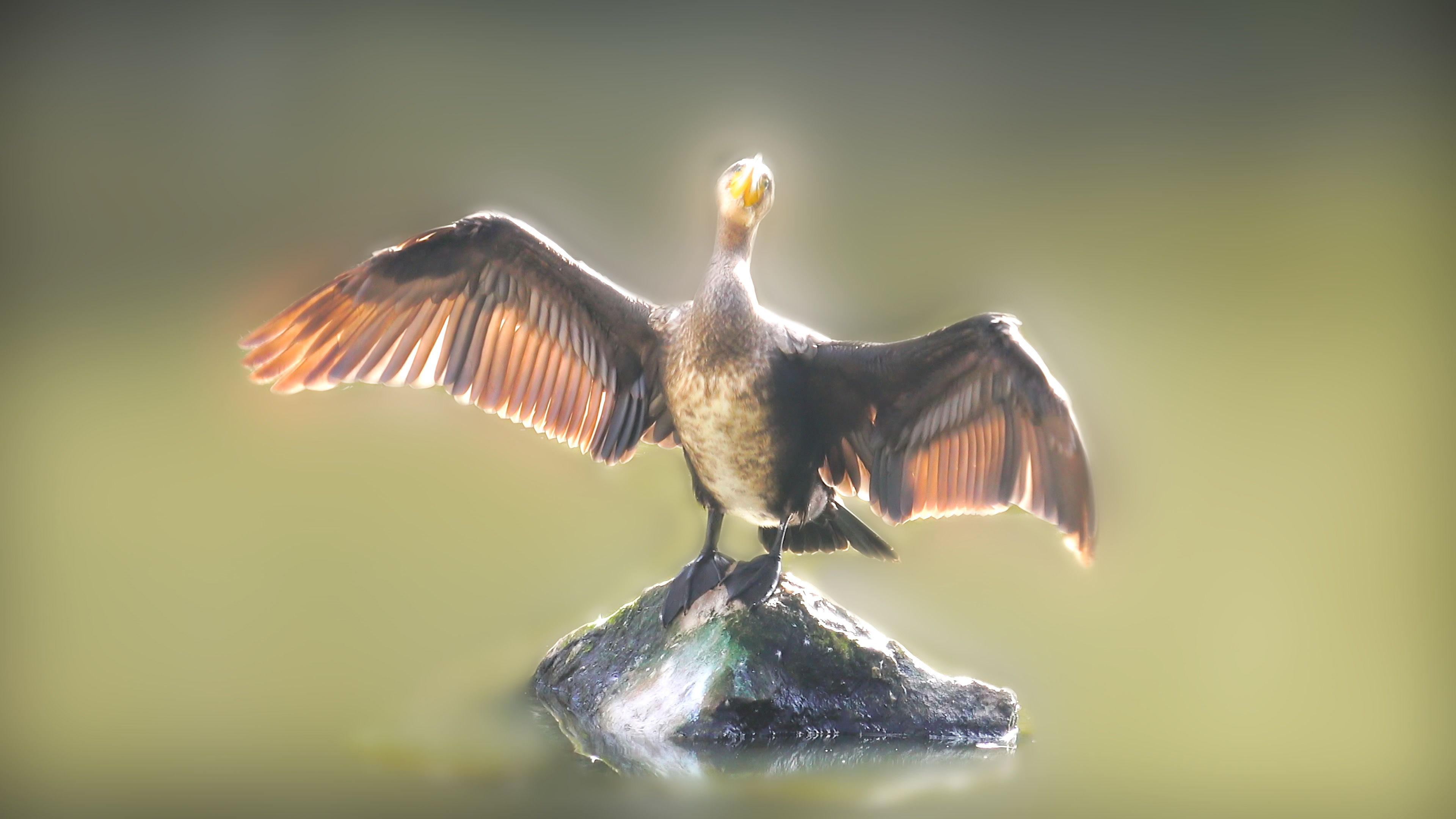
Laaper is interested in rituals, ancient stories and symbolism, as well as in transience, the immaterial and the relationship between humans, nature and time. Nature functions as a carrier of meaning and, by extension, as a mirror or metaphor for human emotions and projections. In the video work "Requiem in Slow Motion" (2025), for instance, we see a vast Indian rhinoceros with a magpie perched on its back. The massive animal scarcely moves and appears vulnerable; only slight movements of the ears signal life. A rhinoceros at life-size or beyond conveys weight, an almost physical presence in the space. When music enters, reminiscent of a requiem, the image acquires an undertone of farewell and loss. In "The Gathering" (2025), two prairie dogs sit beside the unmoving body of a third. It is a concentrated scene in which one of the animals occasionally turns towards us, as if seeking contact. It is difficult not to read universal human emotions into the image. In "Wings" (2025), a cormorant balances on a rock in the water, its wings spread in the sunlight. The surroundings are blurred, allowing the bird to almost detach itself from its context. With its open wings and gently raised head, it's imbued with a sacral element.
Marjan Laaper’s work has been shown at Museum Schiedam, Frac Marseille, Tenderpixel in London, Museum W, Paleis Soestdijk, BRUTUS, Buitenplaats Doornburgh and the Australian Centre for the Moving Image in Melbourne. From 6 March onwards, she will present a work at the Musée d’Art Contemporain de Lyon. In addition, Laaper has realised large-scale commissions in the public space, including for the Vijzelgracht metro station, part of the North/South line in Amsterdam.
