04 january 2026, Flor Linckens
Hamza Halloubi at Museum De Pont: art, capital and a disappeared body
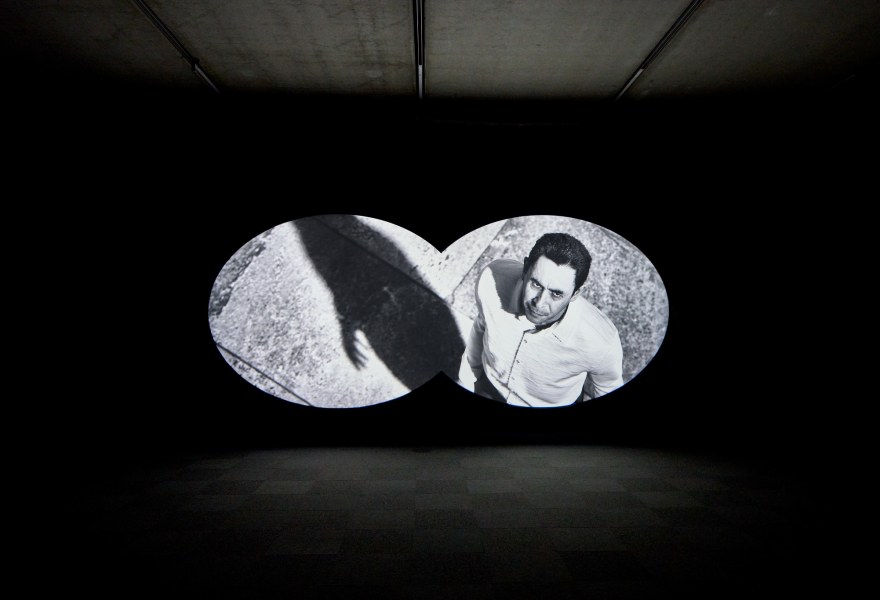
Until 1 March 2026, Museum De Pont in Tilburg presents new work by Hamza Halloubi (tegenboschvanvreden) in the exhibition with the enigmatic title ‘Its throat is parched with thirst, but it would not accept a single drop of water from alien hands’. This is not the first time the artist has been shown in Tilburg: Museum De Pont presented his first museum solo exhibition as early as 2015 and has since added several of his works to its collection. In this new presentation, film, language and sculptural work come together in a layered and poetic installation in which the personal and the political converge.
Halloubi has a multidisciplinary practice in which video, installation and painting play a central role. He often connects the political and the collective with the personal. His work raises questions about history and its blind spots, as well as about the act of looking itself: who sees whom, and under what conditions? His films, often structured as letters or monologues, address the viewer directly or speak to an absent other, hovering somewhere between fiction and documentary.
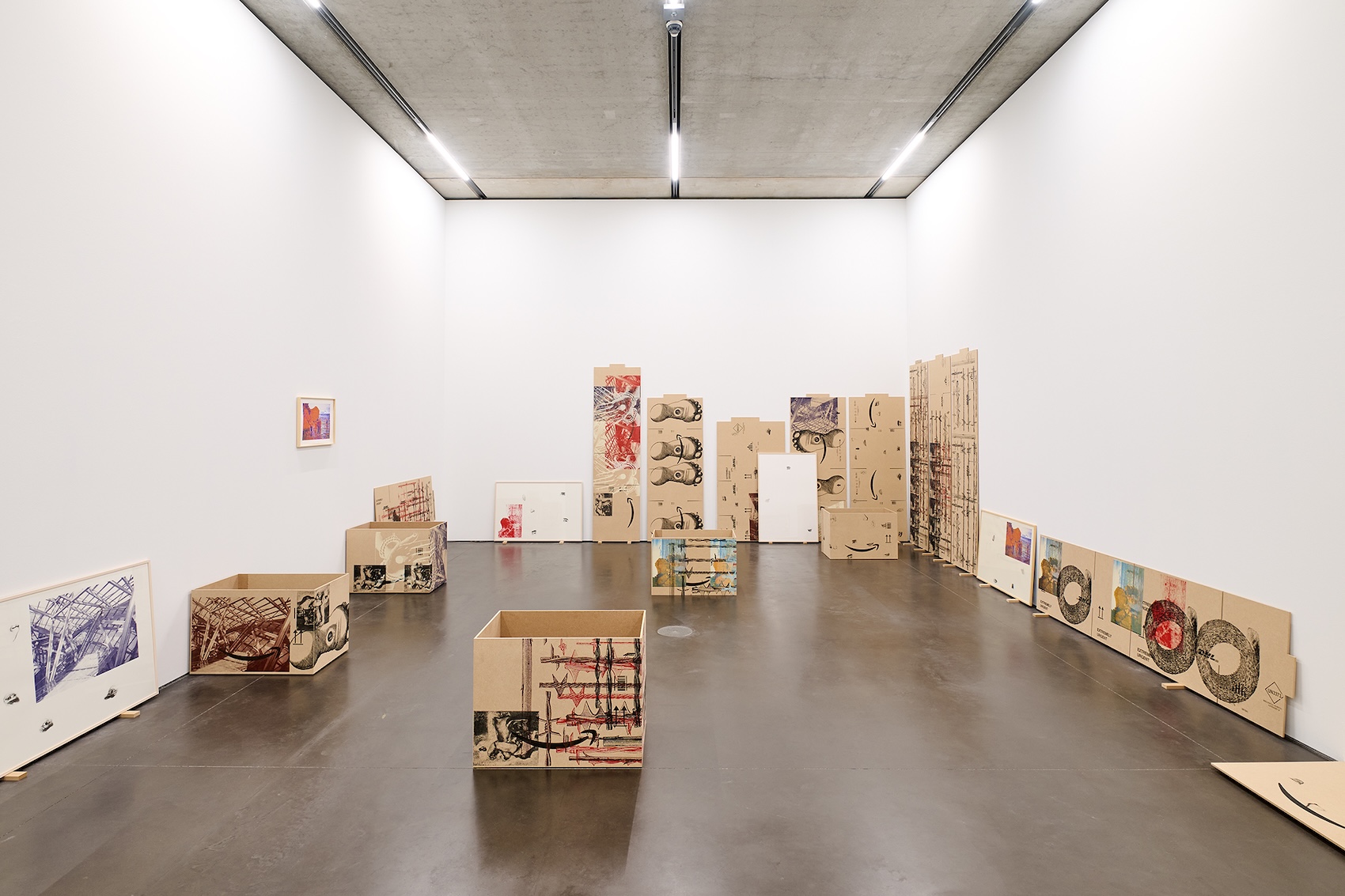
Within this hybrid form, Halloubi explores broader histories, identity, power structures, exclusion and migration. He also examines the continued dominance (and his deliberate decentring) of a Western and Eurocentric worldview, reflected within the art world, alongside the workings of collective memory and postcolonial thought. Art and the position of the artist recur as themes throughout his work. In his practice, Halloubi resists the essentialisation of identity, persistent cultural hierarchies and the tendency to confine artists to easily defined categories. He avoids the spectacular, opting instead for gestures that are small and precise. His images suggest rather than explain, leaving room for doubt, friction and delay.
At Museum De Pont, Halloubi centres two recent projects. At the heart of the exhibition is a poetic and compelling 3D animated film that considers the unresolved disappearance of Mehdi Ben Barka, an influential Moroccan opposition leader, a vocal critic of the monarchy and an advocate of a democratic and anti-colonial Morocco. Ben Barka also played a key role in establishing the Tricontinental Conference, which foregrounded solidarity between liberation movements from Africa, Asia and Latin America. Halloubi allows Ben Barka’s spirit to wander through the empty building of the Fondation Louis Vuitton, a private museum founded by multi-billionaire Bernard Arnault and a site where, according to some sources, Ben Barka’s body may have been buried, long before the museum was constructed. The vacant museum space becomes a ghostly backdrop for reflections on power, memory, the construction of meaning and the role of art within a neoliberal and post-capitalist system in which economic interests dominate.
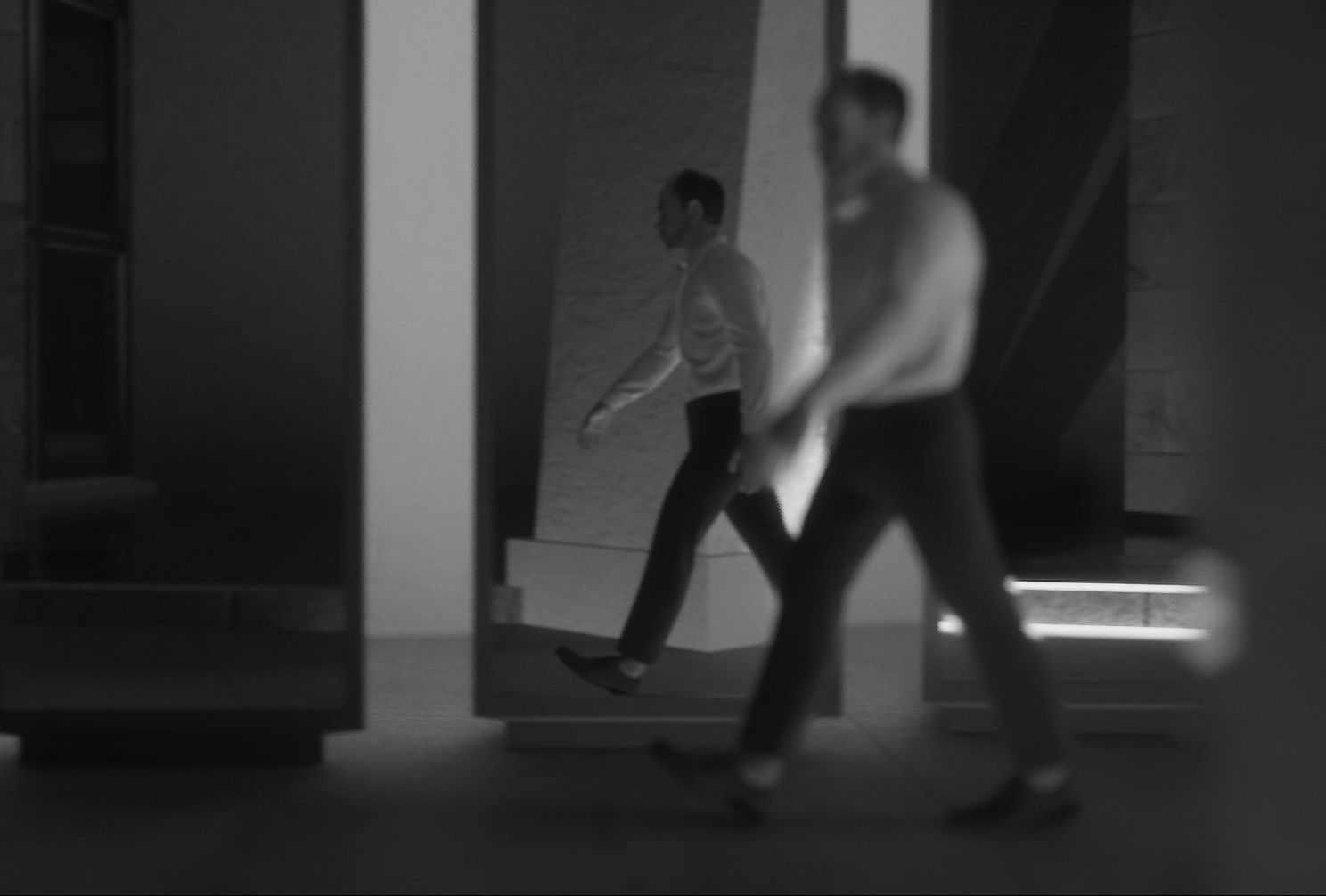
In addition, Halloubi’s first feature film "Vizor" (2024) is screened three times a day in a dedicated space within the museum. The film initially follows a conventional narrative structure. We see a man who discovers that he has unknowingly married his own sister and flees in confusion. Yet the drama does not unfold linearly but rather in fragmented, open and associative sequences that repeatedly reach an impasse. More generally, the film addresses the insoluble dilemmas that shape our lives. Themes such as corruption, art, gentrification and tensions within Moroccan society also surface. Halloubi consciously plays with cinematic conventions and with the idea that cinema, like ‘reality’, is always a construct. He shows reflections in a helmet visor, unnatural shifts in colour and even appears within the frame. In doing so, he examines not only the story but also the medium of film and the ways in which it constructs narratives.
Hamza Halloubi was born in 1982 in Tangier in Morocco. He obtained a master’s degree in Fine Arts from ENSAV La Cambre in Brussels and participated in the residency programme of HISK in Ghent, followed by a residency at the Rijksakademie van Beeldende Kunsten in Amsterdam. He currently divides his time between Brussels, Tangier and Amsterdam. His work has been included in the collections of Museum De Pont, S.M.A.K. in Ghent and M – Museum Leuven, and has previously been shown at EYE Filmmuseum, ARGOS, A Tale of A Tub, Museo Hermann Nitsch, Centre Georges Pompidou, Haus der Kulturen der Welt, Kunsthal Extra City, Kunstinstituut Melly, KIOSK, Schirn Kunsthalle and the Palais des Beaux-Arts in Brussels.
