28 december 2025, Flor Linckens
The attentive eye of Klaus Baumgärtner
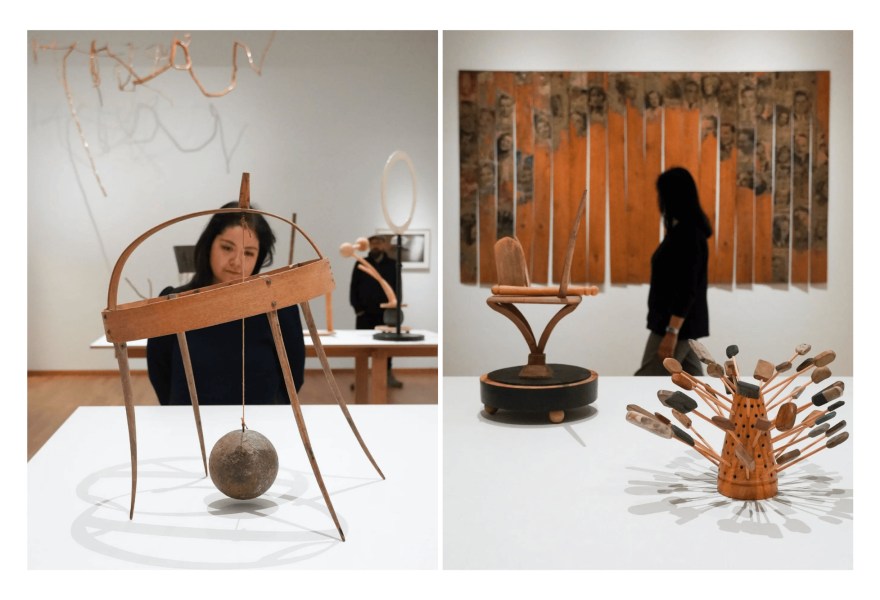
Until 11 January 2026, Kunstmuseum Den Haag presents the exhibition ‘Simpele dingen’ ('Simple Things') by Klaus Baumgärtner, who is represented by Galerie Ramakers. The exhibition offers a concentrated view of a poetic body of work that consistently focuses on the everyday, without excessive embellishment or explanation. Here, an open and attentive gaze is rewarded more than the search for the ‘right’ interpretation.
Baumgärtner was born in Heidelberg in 1948 and studied at the Kunstgewerbeschule in Basel. In 1984, he moved to The Hague, where he not only further developed his artistic practice but was also associated with the Royal Academy of Art for many years. There, he became known as an inspiring teacher who encouraged students to look at the world differently. On the Jegens & Tevens platform, an artist recalls being given the assignment to write a full A4 page about a lens case, as a way of learning to look more effectively. He continues: “Baumgärtner also became very popular because of his fondness for nameless little things, like the half plastic, half metal clips used to seal bags of stroopwafels, for example. We could make our teacher so happy with them that we collected them during the week to give to him.”
This specific and idiosyncratic way of looking forms the core of Baumgärtner’s artistic practice, which included painting, photography, sculpture and graphic design. His working method can be linked to assemblage art, which emerged at the beginning of the twentieth century in response to decorative and monumental tendencies of that period. Yet where this tradition was often accompanied by social critique or irony, Baumgärtner deliberately chose the small and the intimate. He also resisted having his work labelled within a single movement, as he felt such categorisation would narrow, rather than deepen his practice.
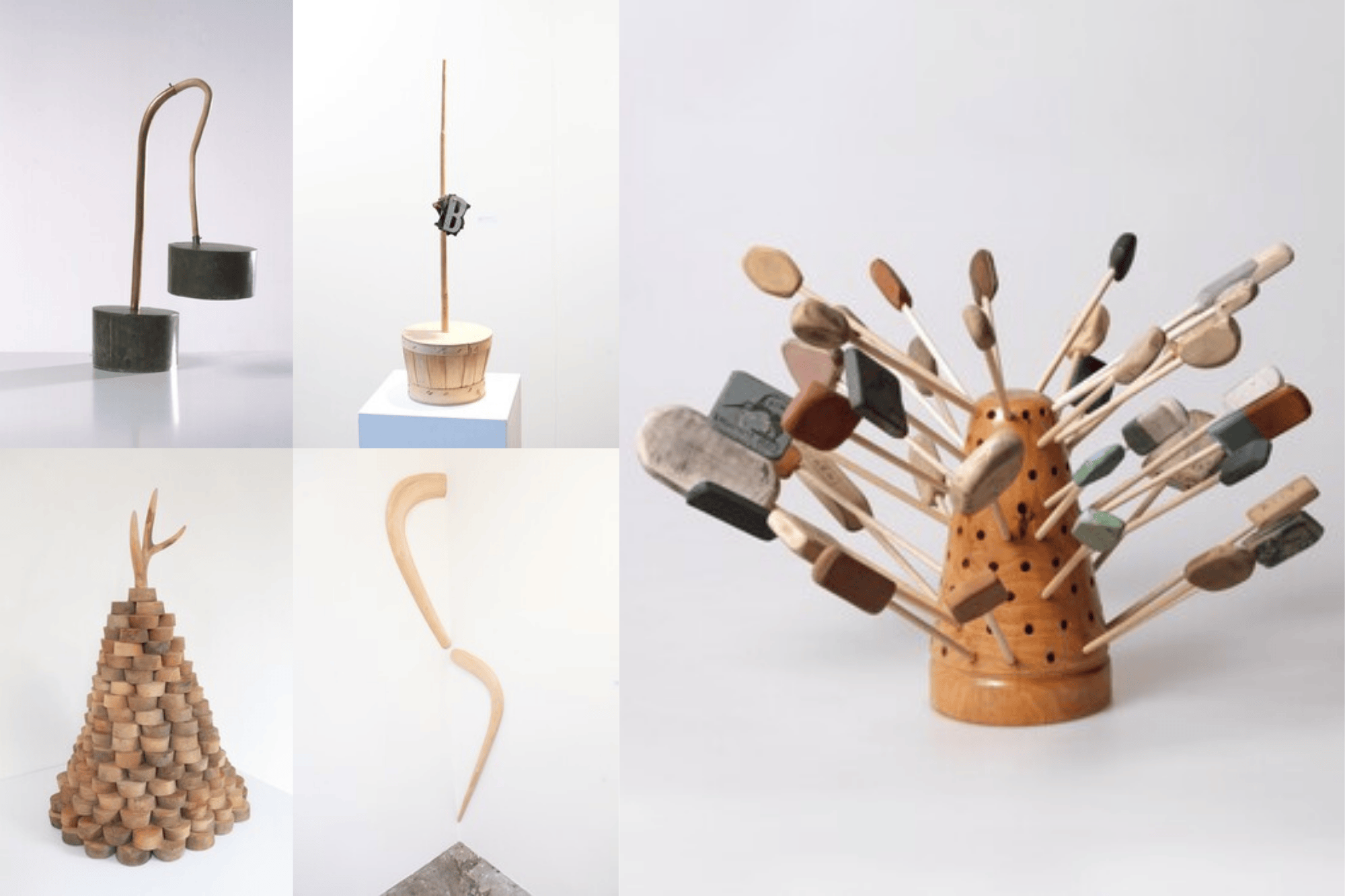
Baumgärtner frequently worked with found materials and everyday objects that he encountered during walks or visits to flea markets, ranging from twigs and iron wire to erasers and newspaper clippings. His interventions were deliberately minimal. Through mounting, sanding, sawing or connecting, he created assemblages marked by careful attention to form, line, rhythm and proportion.
Notably, most of his works are untitled, a logical consequence of his approach as titles would impose direction where he preferred to leave things open. The same restraint applies to his photography, in which he recorded objects and situations exactly as he found them. Staircases, floors, light falling across surfaces and traces of use are not staged but carefully observed. Here, the everyday is briefly released from its function and takes on a different, more contemplative charge.
In ‘Simpel Things’ at Kunstmuseum Den Haag, different disciplines come together without a fixed hierarchy. What connects these works is an attentive handling of material and detail, and the conviction that meaning does not need to be added because it is already inherently there. The exhibition makes clear how consistent and timeless Baumgärtner’s oeuvre is, despite the range of media he employed. Sculptures, collages and photographs do not function as chronological chapters or isolated statements, but as parts of a larger whole. Together, they form a visual language with recurring motifs and resonating materials.
Baumgärtner died in 2013 in Roche-et-Raucourt in France, where he spent the final years of his life. His work has previously been shown at Fotomuseum Den Haag, Kunsthalle Basel, CODA Museum, Stedelijke Musea Kortrijk and De Brakke Grond, and has been included in the collection of Museum Voorlinden. Earlier this year, Galerie Ramakers presented the group exhibition ‘An ode to Klaus Baumgärtner’, in which five artists paid tribute to the late artist’s distinctive way of looking.
