09 december 2025, Wouter van den Eijkel
Sander Coers: Excess Baggage
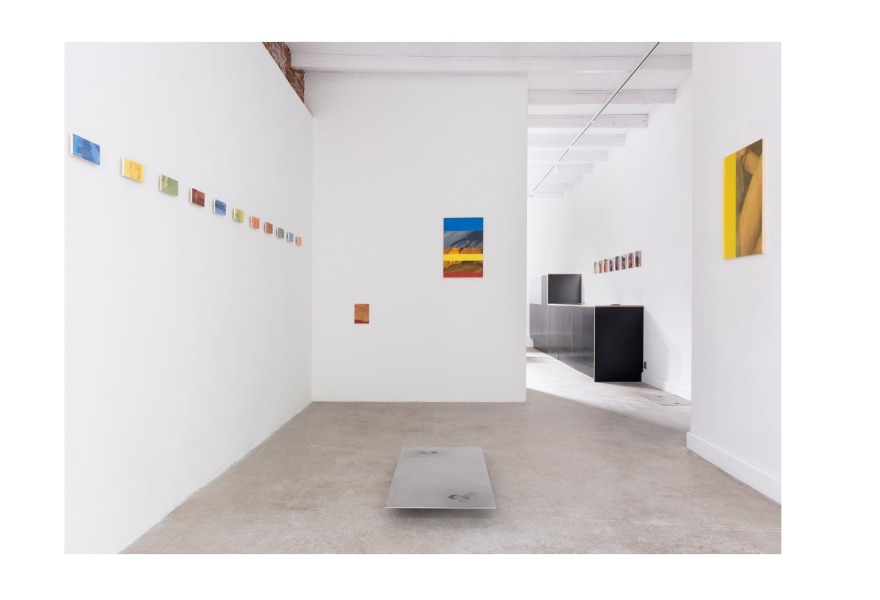
In Excess Baggage, Sander Coers explores the stories that have been passed down from generation to generation within his family. In recent years, the young photographer quickly made a name for himself with work centred on the question of what it means to be a man today. Other questions gradually surfaced: questions about family relationships, which are as personal as they are universal.
The starting point for this exploration was the sudden passing of Coers’ grandfather, who had re-emigrated to Indonesia. Coers learned of his death through Facebook. In an attempt to process this trauma, he decided to use the colours from the news photo he found online in his work.
Coers combed through family archives and edited photographs using AI: “My version of memory is more beautiful than the original. You make it better than it was, much more romantic, something you can look back on with a sense of longing.” He chose plywood and ceramics as carriers, which Coers calls materials with personality. “They’re not entirely perfect, just like a memory.”
Excess Baggage by Sander Coers can be seen at Galerie Caroline O’Breen in Amsterdam until 20 December.

Sander Coers A Dinner no. 04, 2025, Galerie Caroline O'Breen
The last time we spoke was about your 2023 series Blue Mood (Al Mar). That series revolved around, among other things, the question of what it means to be a man. Your current show, Excess Baggage, zooms in on family relationships. Why did you decide to shift the focus to relationships within the family? Did you feel you had addressed the previous theme sufficiently?
Exactly. I thought, “These topics only take me so far. Now I need to do something else.” The subjects I discussed came from an inability to deal with emotions. That worked well, but I gradually noticed other questions. My work is quite egocentric in that it is an exploration of myself and one that continuously evolves.
Excess Baggage literally means ‘too much baggage’, but informally, it is often used to refer to psychological baggage. In your case, it’s about a traumatic event. Can you tell us more about that?
The traumatic event is the death of my grandfather five years ago. My grandfather moved back to Indonesia about ten years ago. We kept in touch through Facebook, although I barely used it anymore. After his death, a photo appeared in an Indonesian newspaper showing him being carried out of his house in a body bag. Someone had posted that photo on Facebook and tagged him in it. When I checked Facebook again, that photo popped up. That’s how we found out he had passed away. That was, of course, a traumatic experience.
Based on that one picture, I began mapping out the stories that have been passed down through the generations in my family. I do this by editing photographs from family archives using AI.
How did you get the idea to use the colours from that specific photo as your starting point?
I spent a long time thinking about whether—and if so how—I could use that picture in my work. In the end, I decided to do so because by working with that picture lets me try to heal the trauma. That approach also worked in my previous projects. The idea to work not with the image itself, but with its colours felt logical to me because colour is a major component of my work. Colours can convey emotions and moods very effectively. It’s a broader part of my practice and that’s important to me. Online, I found a tool that extracts colours from an image. The picture turned out to contain 12 different colours. I used those colours for the work on ceramic tiles, as well as for the oil paint used on the wooden panels.
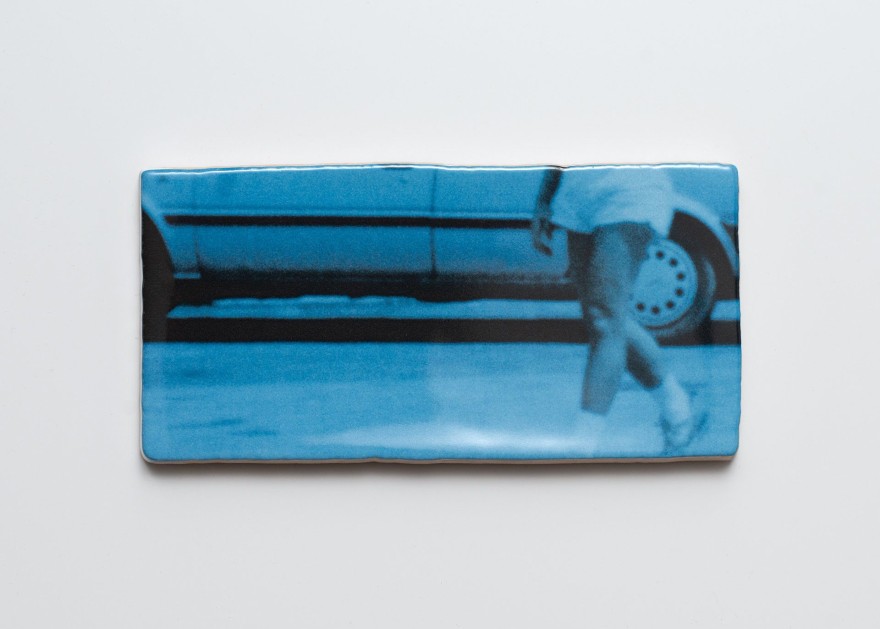
Sander Coers, The Gathering 16, 2025, Galerie Caroline O'Breen
The photos show fragments of everyday domestic scenes and personal objects, such as a pair of pumps, a hair clip, birthday candles on a cake, someone walking toward a car. All in sepia tones. You print them with a UV printer on ceramic and wood. What do you hope to achieve by using these materials?
I wanted a material that mimics the qualities of memory. They are both carriers with personality. They’re not entirely perfect, just like a memory. Memories form the basis of my work and that’s why I’m looking for new ways to interpret them.
Speaking of which, the family photos form the basis, but you edited them with AI. Why?
What I find so interesting about that tool is that it allows me to create my own version of a memory by building on what already exists. My version is more beautiful than the original. You make it better than it was, much more romantic, something you can look back on with nostalgia. That’s why those everyday situations are so interesting: in daily life, you never pause to consider them, you overlook them, but when you use those images, you suddenly elevate them into something special.
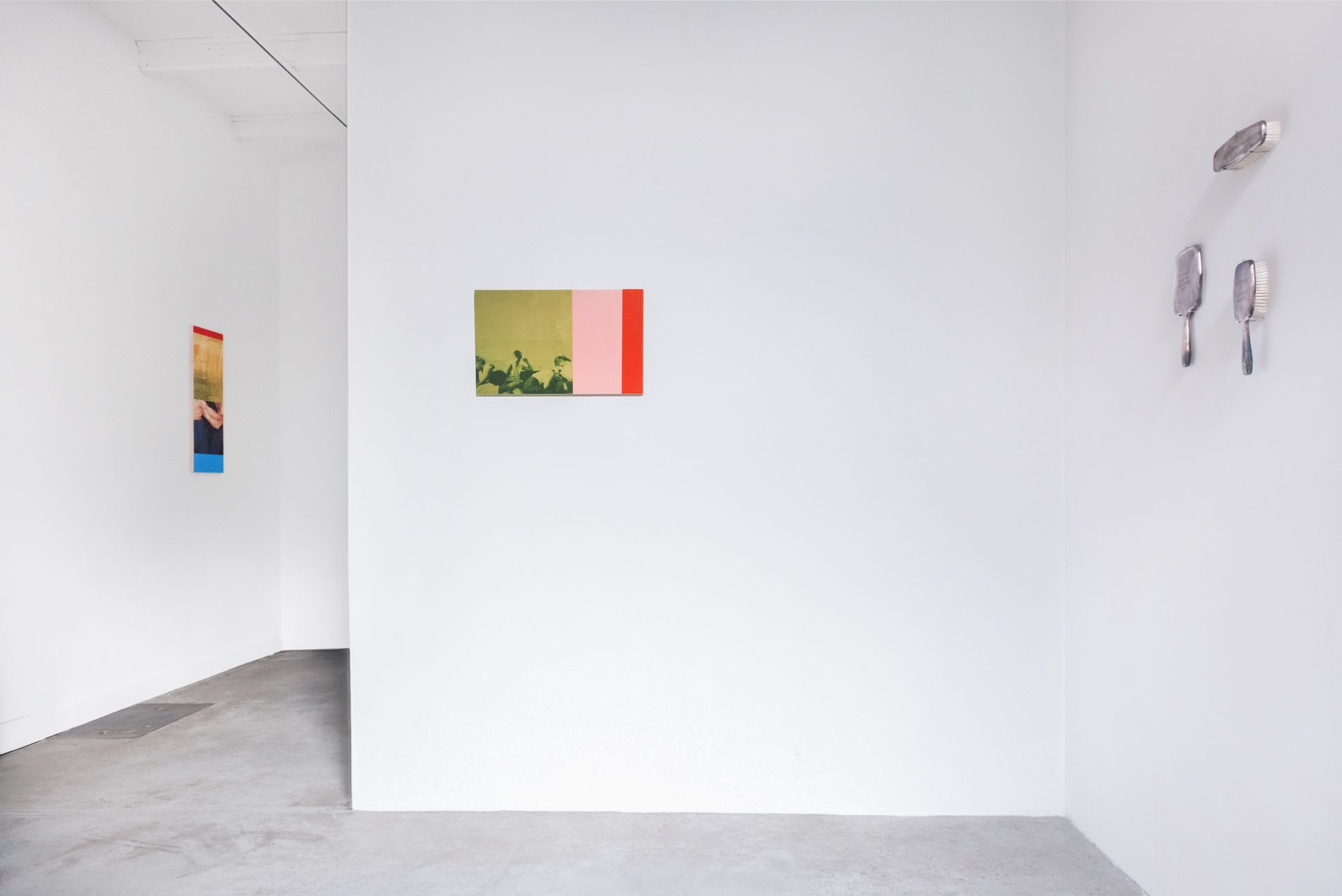
From pictures taken in a domestic setting, it’s a small step to the blinds, the doormat and the brush set also on display. Why did you include those?
The objects refer to moments that take place indoors. By experimenting with these objects and placing them in a universal context, I aim to revive intimate memories while also anonymising them.
Sander Coers, Excess Baggage, Galerie Caroline O'Breen
