05 december 2025, Flor Linckens
Jerry Zeniuk at Slewe Gallery: colour as metaphor
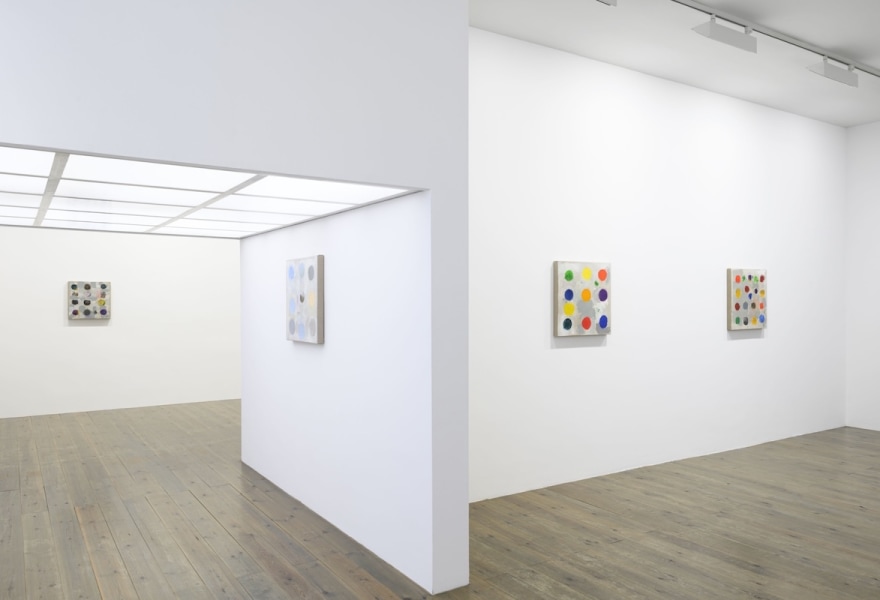
Until 11 January, Slewe Gallery in Amsterdam presents a solo exhibition with recent work by Jerry Zeniuk. He is part of the small group of artists who, in the 1970s, began asking what painting can be when all excess is stripped away. Elementary or fundamental painting focuses on the most basic conditions of the medium (colour, form, surface) to show how little is needed to bring an image to life. Institutions such as Stedelijk Museum Amsterdam and Documenta were, at the time, also exploring what the future of painting could behold. Zeniuk’s participation in the exhibition ‘Fundamental Painting’ (1975) at the Stedelijk marked a decisive moment in his career and two years later his work was included in Documenta 6.
Since then, his practice has shifted from densely layered monochrome surfaces to open compositions in which colours are increasingly positioned in direct opposition to one another. For Zeniuk, colour has always been more than pigment: it is a relational force, a metaphor for human interaction.
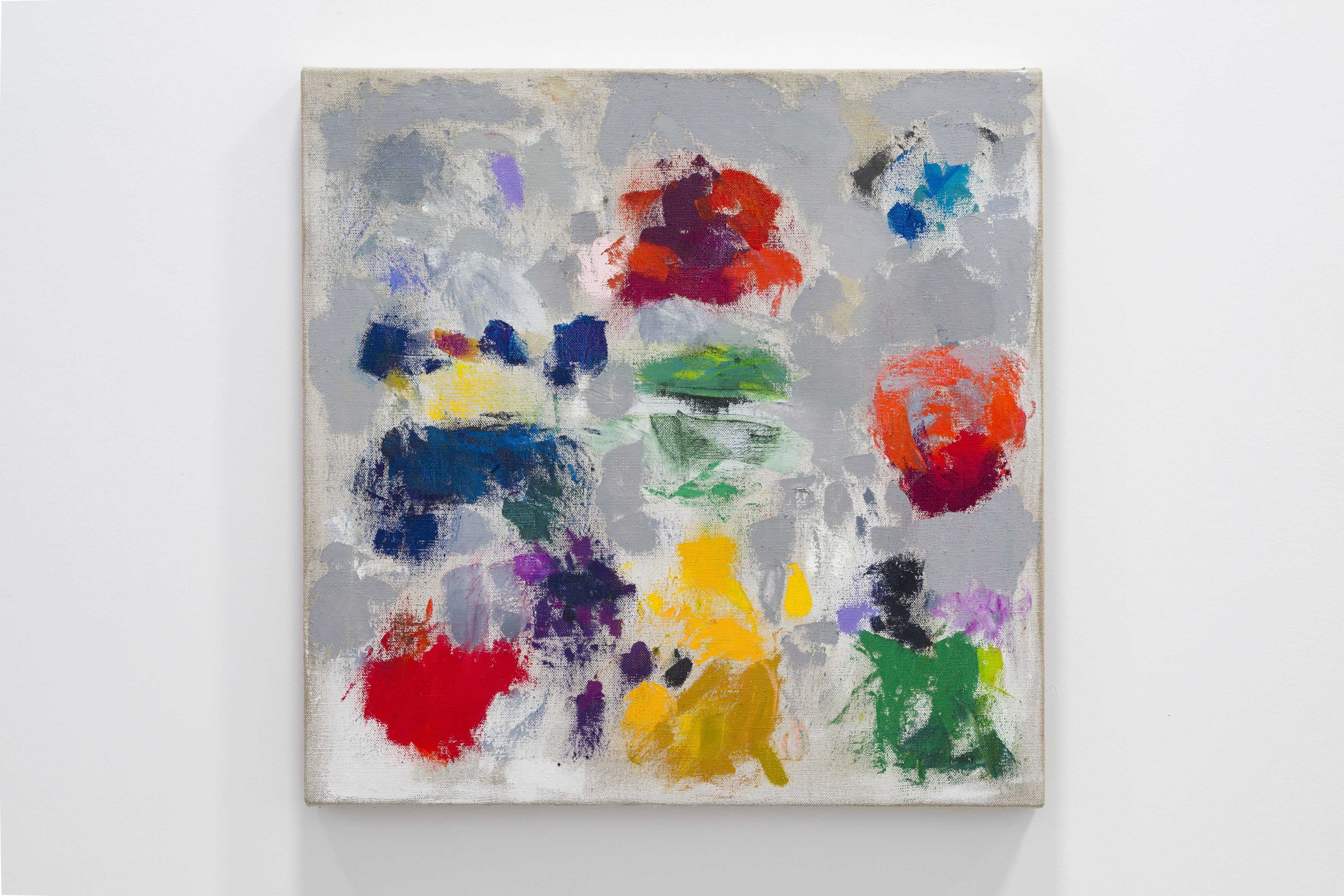
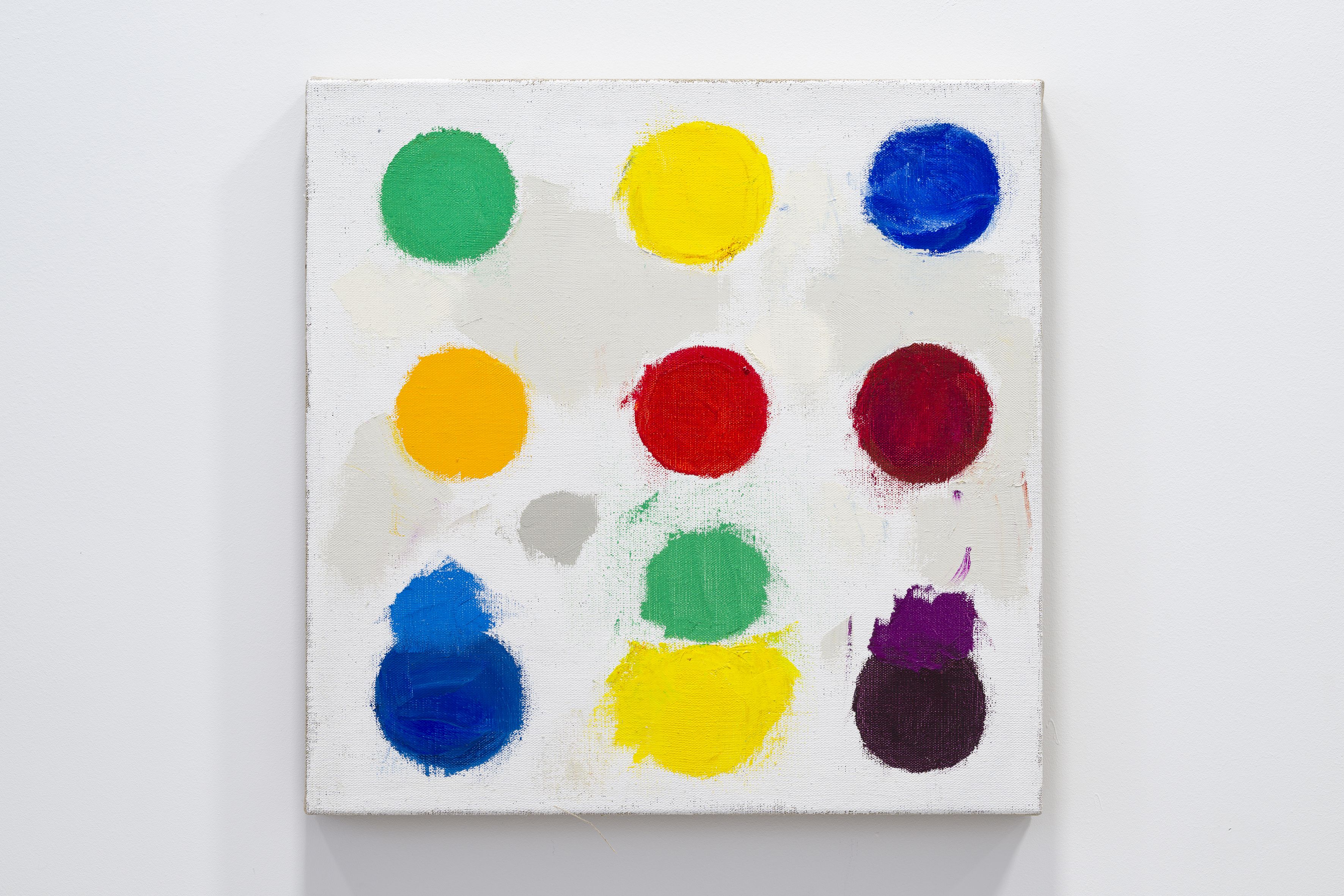
The canvases in the exhibition feel alive: rows and clusters move, probe and test. They are not concerned with order but with friction. Each colour sets off collisions that subtly shift the rhythm as you look. At times, the works approach a grid, at others they resemble a loose sequence of gestures with variations in pressure. Colours may bleed, appear as isolated accents or, in some works, be applied without adhering to the circular form at all. Bright hues such as lemon yellow, cobalt blue and emerald green appear alongside deeper bordeaux and violet. The circles function as points of reference, and by maintaining a single basic form, the emphasis shifts to what actually changes: position, colour, distance and the tension with the background.
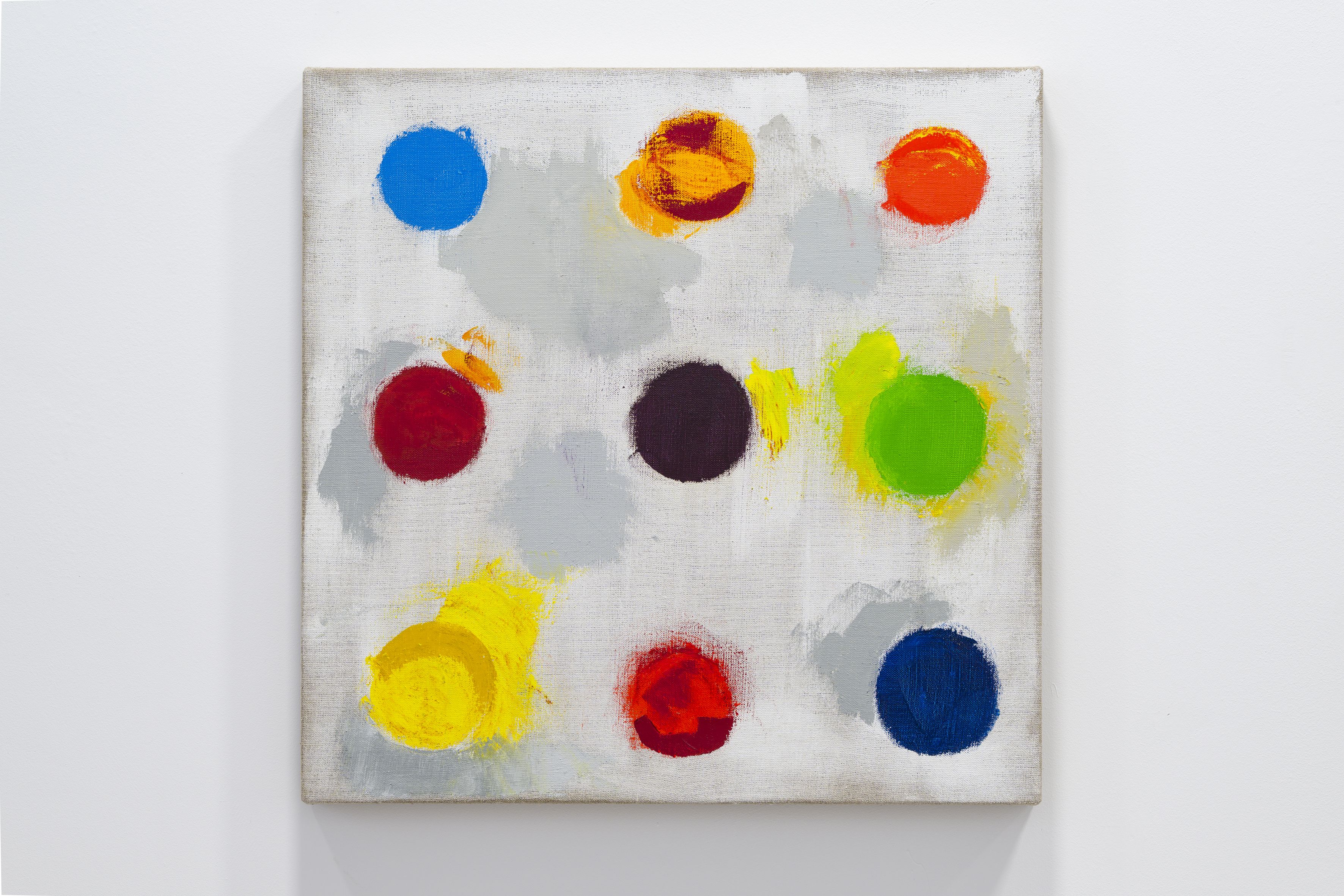
At first glance, the multicoloured dots claim all attention, but the surrounding open space proves equally decisive for the painting as a whole. Zeniuk treats the linen not as a neutral support but as an active, light-catching surface. The areas between the circles remain visible, sometimes veiled by a grey or white wash. This shapes the behaviour of the colours and guides the movement of the eye across the canvas.
Through this minimal vocabulary, the focus turns to rhythm, spacing and proportion, prompting a continual search for balance. The result is lively and unpredictable. The works have a musical quality, as if the colours could vanish and reappear at any moment, interacting like voices in a polyphony. This occurs within each painting, but also between the works in the gallery space. No single canvas demands full attention, yet together they create a field of variations in which repetition and difference alternate rhythmically. Viewers move almost instinctively through this field, gradually recognising the subtle decisions that shape the whole.
Zeniuk works without preliminary studies, relying on experience and intuitive choices instead. At the same time he adheres to a strict set of self-imposed limitations that structure his approach. The final image appears spontaneous, yet it is anchored in an underlying order.
His engagement with painting is inseparable from the question of how we look. For him, true looking is not a matter of sharper eyesight but of a shift in thinking. Those who take time to explore the space of a painting are rewarded for it. In his book ‘How to Paint’ he writes:
“If you study painting, you see more. It is not that your eyes have gotten any better, rather it is because you have thought about and reflected on what you have seen. Seeing is a kind of visual thinking. How you think determines how you see. (...) Visual artists, painters in particular, think outside the limitations of language. I would say the fullest explanation of their method is the understanding of space, whether it is actual space or pictorial space. Pictorial space is an imaginary space generally seen in pictures or paintings. Space has no time. Time comes from moving about in space. Pictorial space is quickly grasped, making for a static image, but moving about in this static space enhances the visual experience and takes place in time. So when we look at a picture, we see everything at once; but in real time we see much more, although the image has not changed.”
Jerry Zeniuk was born in Bardowick, Germany, in 1945. In 1950, he emigrated with his Ukrainian parents to the United States. After completing his Master of Fine Arts at the University of Colorado, he moved to New York in 1969. In 1981, he received a grant from The National Endowment for the Arts. He currently divides his time between Munich and Murnau. His work has been collected by, among others, the Pinakothek der Moderne, Kunstmuseum Winterthur, the Lenbach Museum and the AkzoNobel Art Foundation. He has had solo exhibitions at the Josef Albers Museum, Museum Lenbachhaus, Kunsthalle Bremen, Museum Wiesbaden, Kunstmuseum Kassel, Kunstmuseum Winterthur and the Pinakothek der Moderne, and his work was included in shows at the Mondriaanhuis, the Folkwang Museum, Museum Augsburg, Louisiana Museum, the Virginia Museum of Fine Arts and the Hirshhorn Museum in Washington. From 1992 to 2010, he taught at the Akademie der Bildenden Künste in Munich.

