28 november 2025, Flor Linckens
Torii as anchors in a changing landscape
Blue Lotus Gallery in Hong Kong presents ‘Torii’, a project that Canadian photographer and longtime Hong Kong resident Ulana Switucha pursued for more than a decade. During that period she travelled through a wide range of Japanese landscapes, often far from familiar routes, to photograph a series of iconic gates. Torii have served as cultural anchors since the tenth century, marking the threshold where the everyday gives way to the sacred. Within Shinto tradition, a torii signals the entrance to a sacred space inhabited, according to belief, by kami: divine beings or spirits. The gallery is showing around fifteen works, alongside the recently published photobook of the same name. The exhibition offers visitors the chance to experience the spiritual landscapes Switucha has studied for decades.
Switucha works with an attentive, almost meditative approach. She considers torii not only as architectural structures but also as markers and resting points within landscapes that are constantly shifting. The gates appear as solitary sentinels by the sea, on snow-covered plateaus, or in tidal zones where they seem to float at high tide. Some photographs were made during snowstorms or long journeys to remote areas, others after careful research into lesser-known Shinto shrines. In each work, a physical closeness to the landscape is quietly yet clearly present: the almost audible sound of waves, the bite of winter air, or the trace of an earthquake that permanently reshaped an island and its gate. Every image underlines that these places draw their meaning from both spirituality and ancient stories, as well as from their geographical setting.
Switucha looks for subtle shifts in colour and tone, observes how weather and seasons leave new impressions, and waits patiently for the right moment. Her minimal approach is firmly rooted in respect for the landscape and its impermanence. Additionally, she has worked in Asia for more than thirty years and also lived in Japan for a period of time.
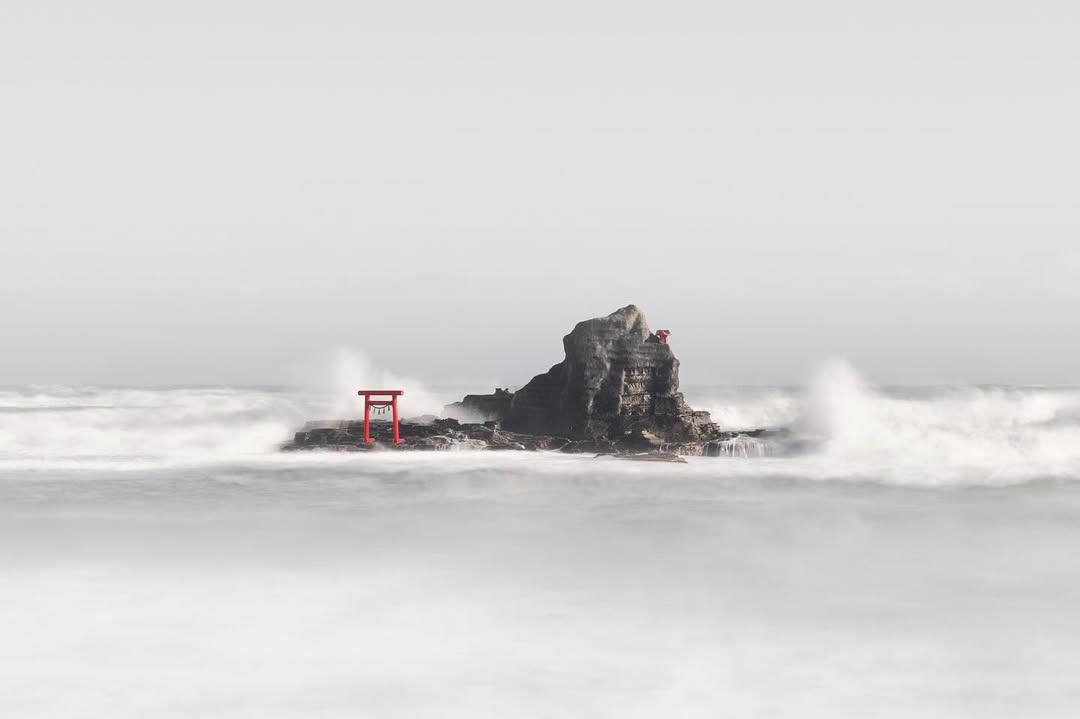
Many of the works in the exhibition and the photobook are defined by their quietness. The compositions are often nearly empty, allowing the gates and their surroundings to momentarily detach from reality. In other images, such as “Shizen”, the contrast between the torii and the forceful sea becomes tangible. The red gate stands on a small rock, fully exposed to the power of the waves. The tower and the shrine were originally built to protect passing ships. Using a longer exposure on her camera, the waves turn into soft white veils, while the rock and the torii remain sharp. This tension between constant movement and absolute stillness lies at the heart of Switucha’s interest: the way natural forces and human symbols interact, the pull between the eternal and the transient, between reverence for the natural world and the human impulse to inscribe meaning into the landscape. The photograph carries a rhythm created by the seemingly endless repetition of waves that remain unseen yet strongly felt when you look at this photo. A work like “The Path” exemplifies her sense of composition: clear and minimal, yet never rigid, her images breathe. The three torii form a visual axis stretching from the foreground toward the horizon. The temporarily high water, which can rise up to six metres at high tide, effectively becomes a mirror that makes the gates appear to float. In “The Summit”, the torii and the shrine are completely encased in snow and ice, their shapes only just recognisable. Switucha plays with this ephemeral abstraction: a white world without a distinct horizon.
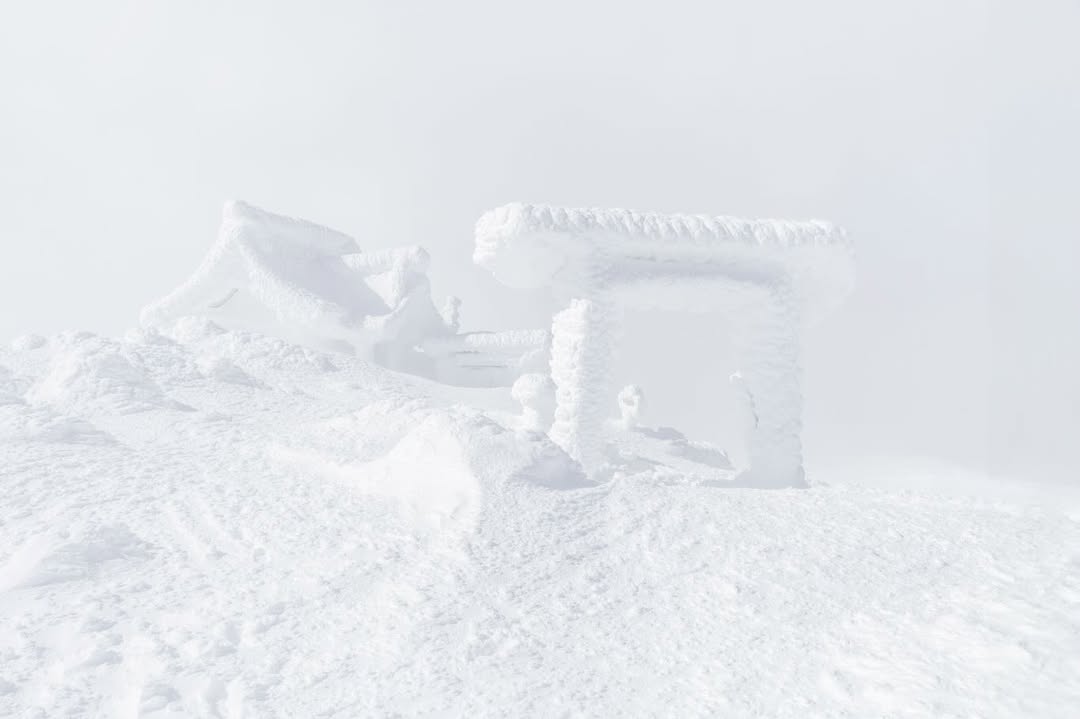
Switucha writes on her Instagram page: “This mountain is popular for its 'Juhyo': a phenomenon in which snow and ice adhere to tree branches forming beautiful shapes that are also called 'snow monsters'. This rime ice forms when supercooled water droplets freeze onto surfaces. Above the tree line, the summit, the Torii and the Shrine are also entirely covered in a thick layer of snow and ice, giving it a magical appearance. Getting to this location in the winter is no easy task. However, the local ski area is known for its back country skiing and deep powder. My guide and I joined a group of skiers in a snowcat and were taken to the top of the mountain. A blizzard hit. Visibility was nil. After taking refuge in a concrete bunker, huddled around a propane stove, to wait out the storm, we snowshoed the final track to the summit. The snowshoe descent was through the forest of snow monsters: mysterious and magical scenery."
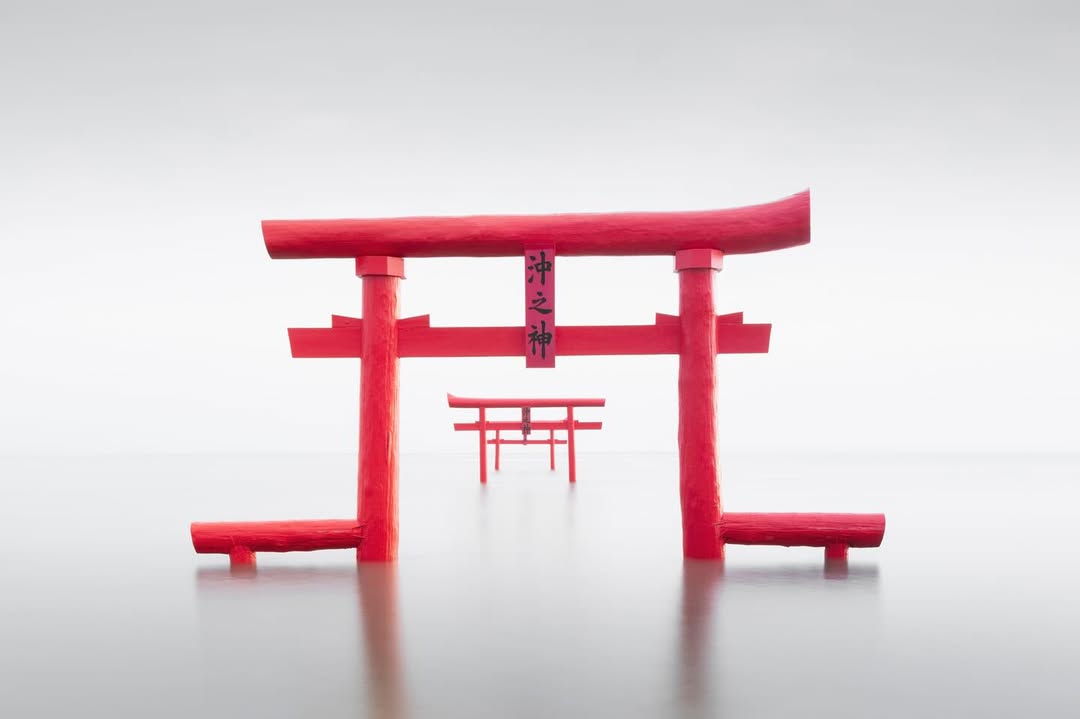
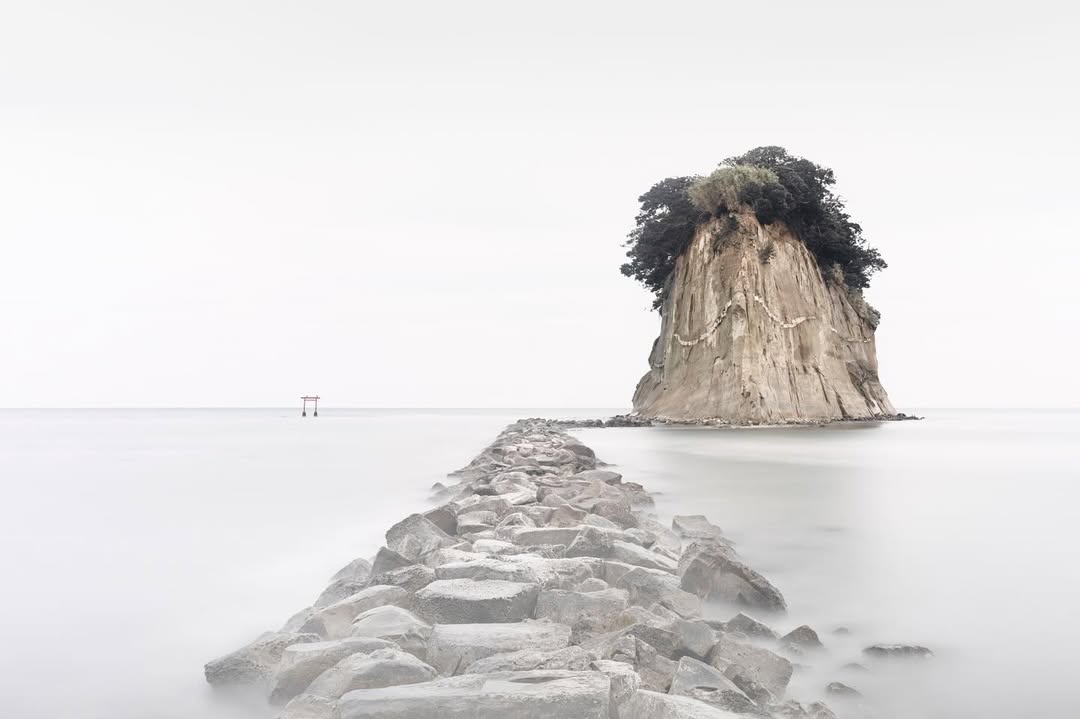
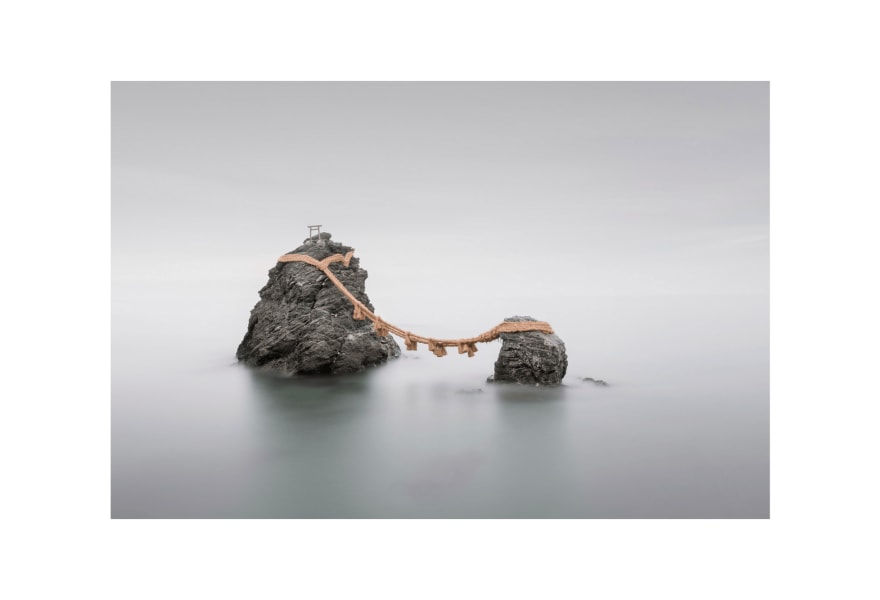
The work "Mononoaware" refers to the Japanese term ‘Mono no aware’, the awareness that everything shifts and that every place, no matter how familiar, will eventually change. In 2024, an earthquake and tsunami struck the island shown here, along with the torii and the stone path that led to it. Where the island once stood around twenty-eight metres high with a circumference of roughly four hundred metres, it has now been reduced to a fraction of that. The view that once existed here has disappeared and has been replaced by a new and inevitably altered landscape. The work "Union" depicts Meoto Iwa, the ‘married rocks’, bound together with a sacred rope that in Japan symbolises protection and connection. These ropes, the shimenawa, mark the boundary between the spiritual and the earthly and appear in a wide range of traditions, from New Year ceremonies and weddings to sumo rituals. In Switucha’s photograph the rope stands out against the calm, milky water, rendering the physical link between the rocks even more palpable. The work shows how a simple gesture, literally binding two elements together, can grow into a powerful symbol of unity. In "White Torii", Switucha shows a white gate, a colour that is associated in Shinto with purity and origin, and a colour that was likely more common in the past than the colour that is now so very familiar: vermilion.
Switucha has received several international awards, including first place in Architecture and Design at the 2025 Sony World Photography Awards and a place in the 2025 PhotoLucida Critical Mass 50. Works from her "Torii" series have also been recognised, for instance by the Prix de la Photographie in Paris.