18 november 2025, Wouter van den Eijkel
“We also need beauty”: Bryan Schutmaat at Galerie Wouter van Leeuwen
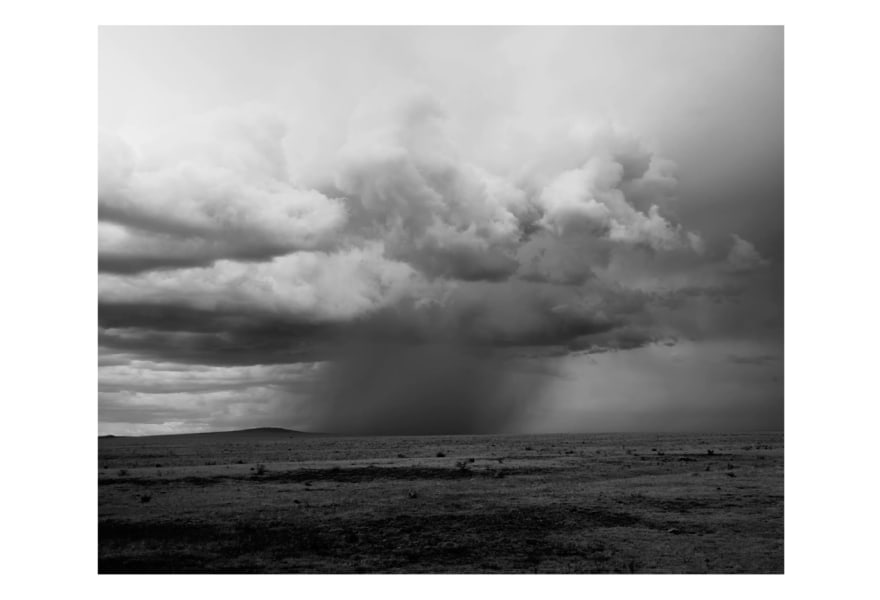
In Western Skies, American photographer Bryan Schutmaat turns his camera toward the skies above the western United States, home to vast prairies and bone-dry plains where not a single human being can be found. And that is really saying something, because you can see far and wide. The skies above are nothing short of magnificent.
At Galerie Wouter van Leeuwen, around 20 cloud formations are on display. In most of the images, the horizon is low, with cloud cover above it. One image shows low-hanging shutter clouds. In another, you can see a downpour miles away. The lower half of the images is empty. The only photograph with a trace of human activity shows nothing more than a barbed wire fence. In another, we see a small lake. Beyond that, it is dry and empty. As a human being, you are at the mercy of the elements.
Western Skies by Bryan Schutmaat can be seen at Galerie Wouter van Leeuwen through 20 December.
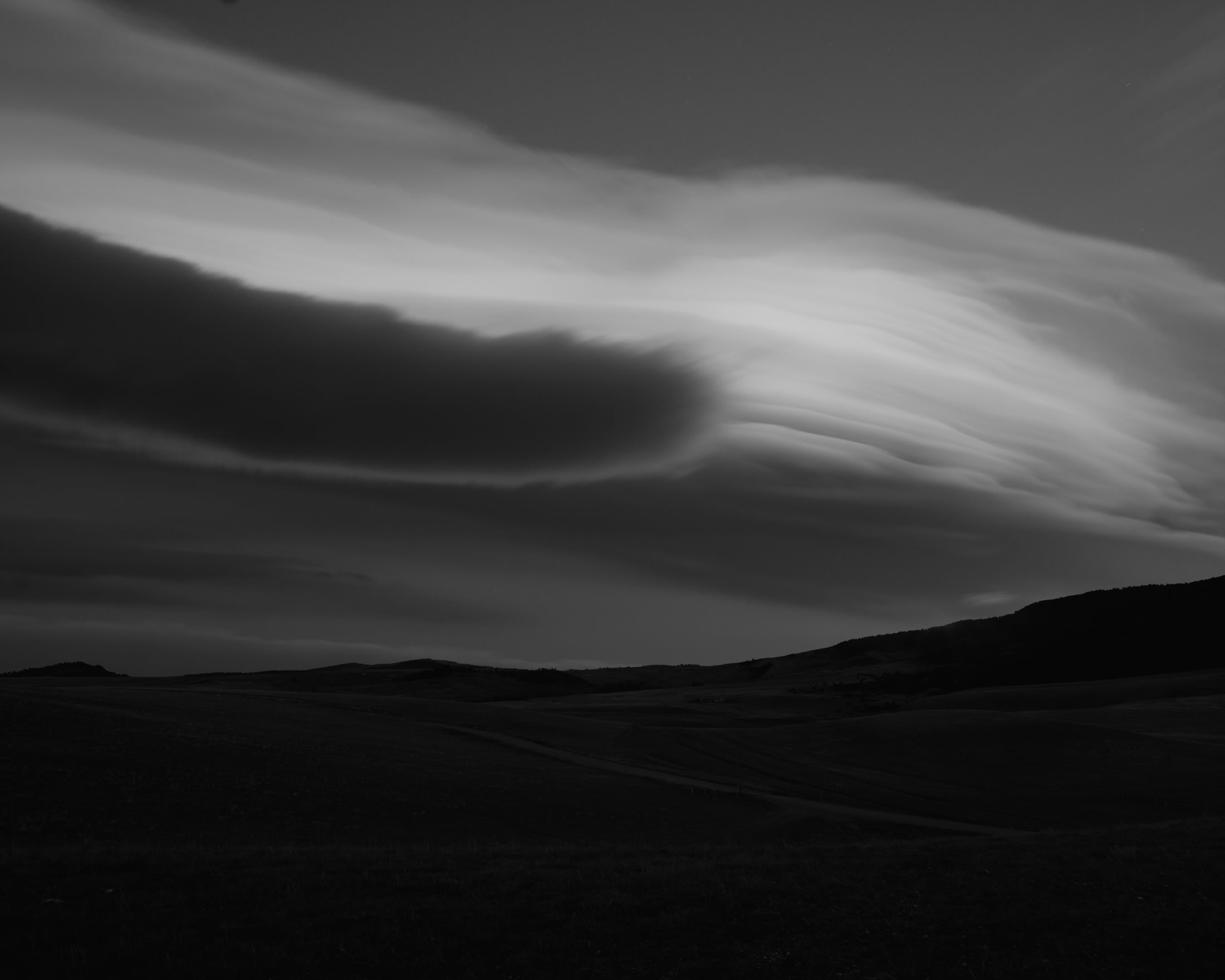
Byran Schutmaat, Montana Sky 3, Galerie Wouter van Leeuwen
The photographer from Houston, Texas (1983), has made an international name for himself over the past 15 years with such series as Greys the Mountain Sends (2013), Good, Goddamn (2017) and Sons of the Living (2024). In these books—each of which has become a collector’s item—Schutmaat focuses primarily on people on the margins of society, against the backdrop of environmental damage and economic decline: people wandering alone through the desert, a friend wrongfully sent to prison or a mining community where the environmental harm is visible and poverty tangible.
Western Skies is not a project Schutmaat worked on continuously. He made the photographs over the years as a temporary remedy for the misery he documented in his other series.
“The world is always full of chaos, conflict and all kinds of horrible shit. But we also need beauty. I think it’s important not to be engaged with the news all the time, but to take a break and breathe. To simply enjoy the sky that gives us those strange shapes.”
Schutmaat told Het Parool how the exhibition came about.
“I have an archive of my photos and I look at it regularly. I think it’s very important for photographers to work that way. To know what your work is about, you have to look back at your own work.” He noticed that he often photographed cloudscapes. “What I also find very important is something that’s obvious but still overlooked. Every time you look at the sky, you will never see it exactly like that again. Not in a billion years will that cloudscape be precisely the same. I think that’s a beautiful thought.”
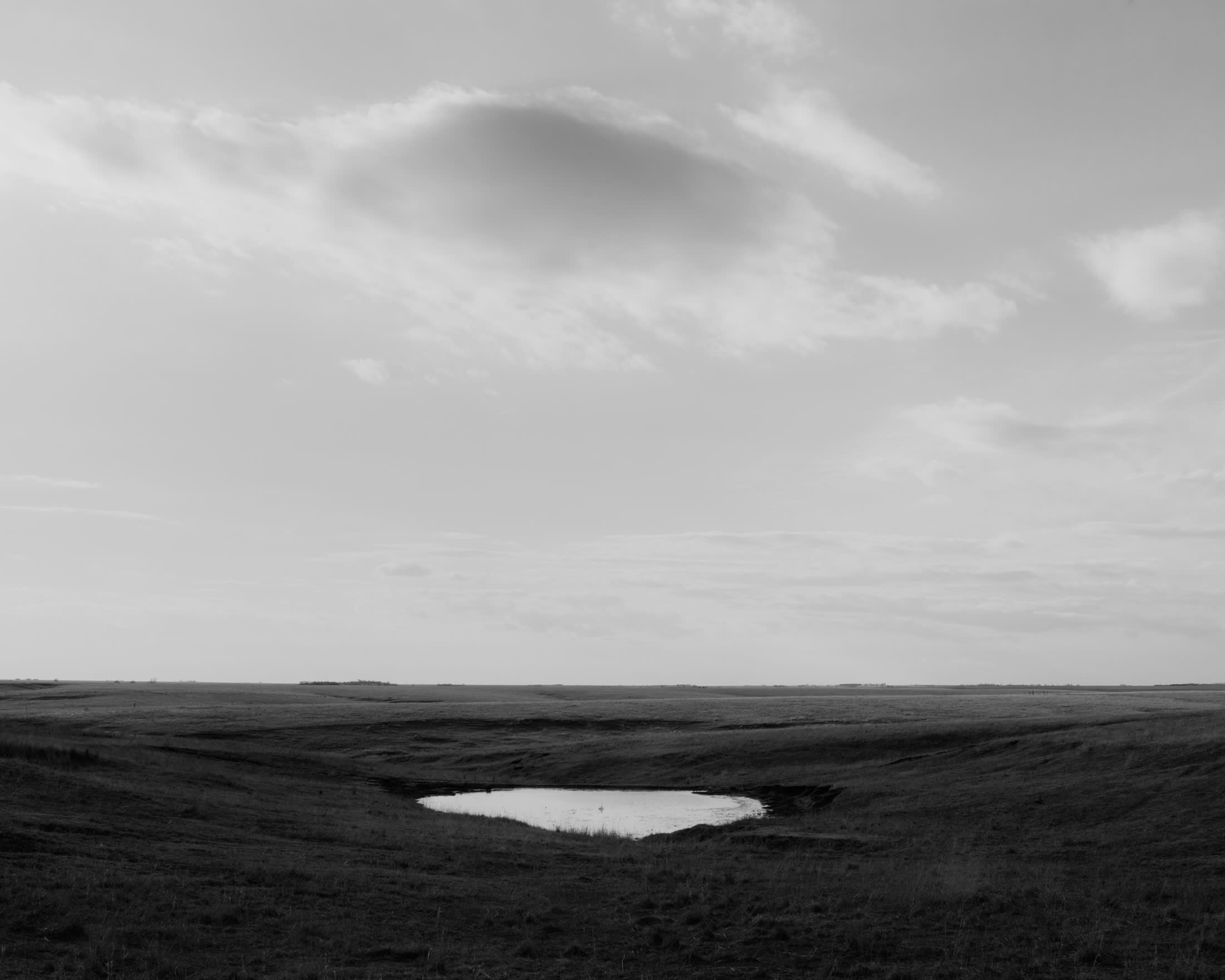
Byran Schutmaat, Kansas Sky, Galerie Wouter van Leeuwen
When you view the series as a whole, the desolation of the vast landscapes stands out alongside the cloud formations. Here, humanity is defeated and almost powerless in the face of nature. This places Schutmaat within a long tradition of American landscape photography. While in 19th-century Europe, nature represented idyllic, tamed beauty inhabited by humans, the situation in the U.S. was completely different. Nature there was wild and brutal and no people were to be seen. Photography was done mainly for functional purposes during exploration expeditions in the West.
With the disappearance of the frontier, American landscape photography also changed. In the 20th century, American photographers became increasingly aware of what John Szarkowski, former curator of photography at MoMA, called the “wounded and harshly exploited earth”. Not surprisingly, Ansel Adams (1902–1984), the photographer who has inspired Schutmaat, was also a conservationist. Adams still enjoys an excellent reputation for his printing techniques, with a vast range of grey tones. He considered himself primarily a weather photographer. Like Adams, Schutmaat has an eye for atmospheric conditions and like Adams, he focused in Western Skies on composition and tonality.
Schutmaat’s black-and-white prints also use the full greyscale, containing every shade between deep black and the creamy white of the clouds. Because of that rich tonality, you often keep looking at the cloud formations and landscapes, just to see whether the image reveals more the longer you look at it – and if you look very closely, you’ll see that one landscape is not entirely empty after all. In Wyoming Sky, you can spot a herd of bison as tiny dots on the horizon. It doesn’t get any more American than that.
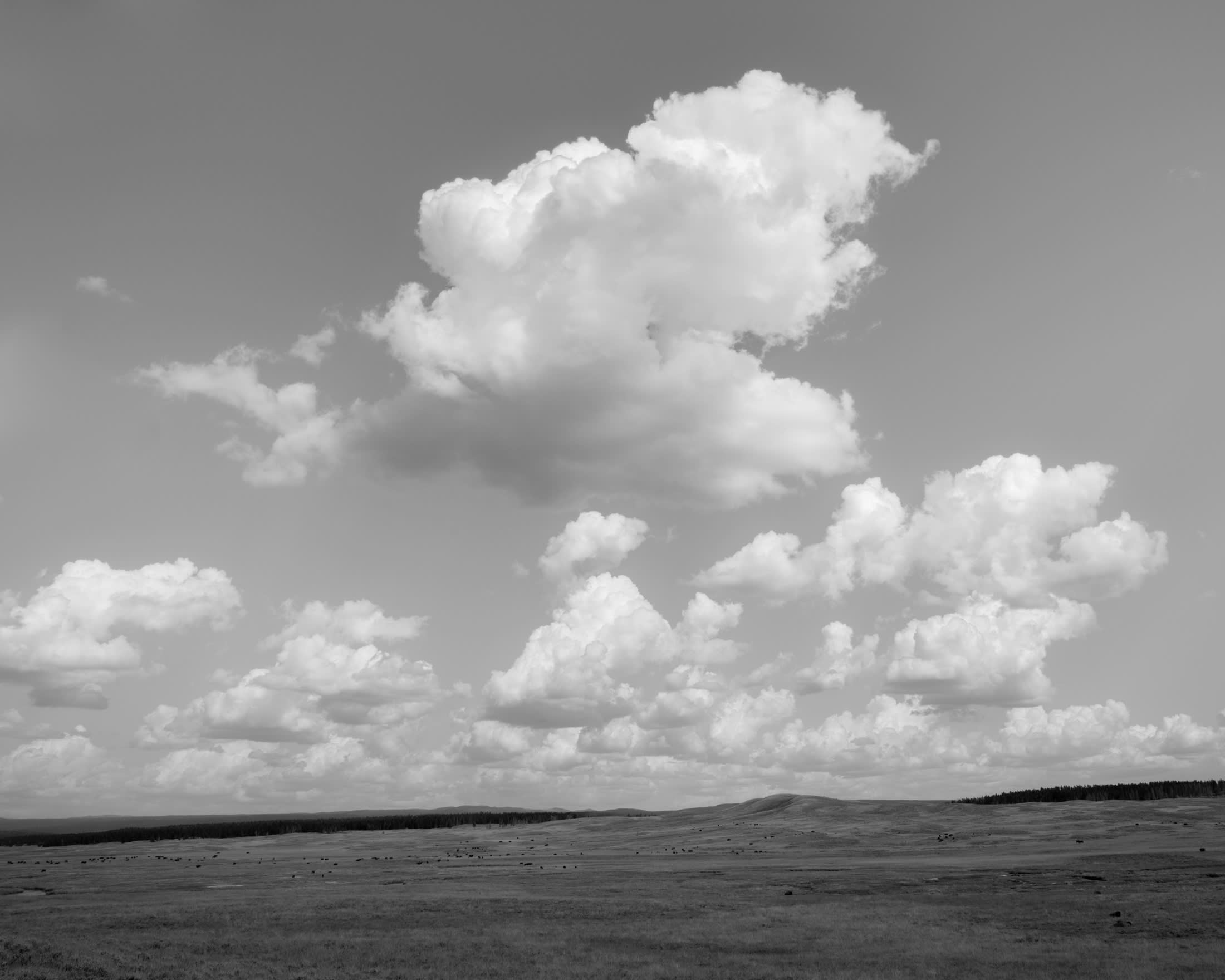
Byran Schutmaat, Wyoming Sky, Galerie Wouter van Leeuwen
