18 november 2025, Wouter van den Eijkel
The studio of... Samah Shihadi
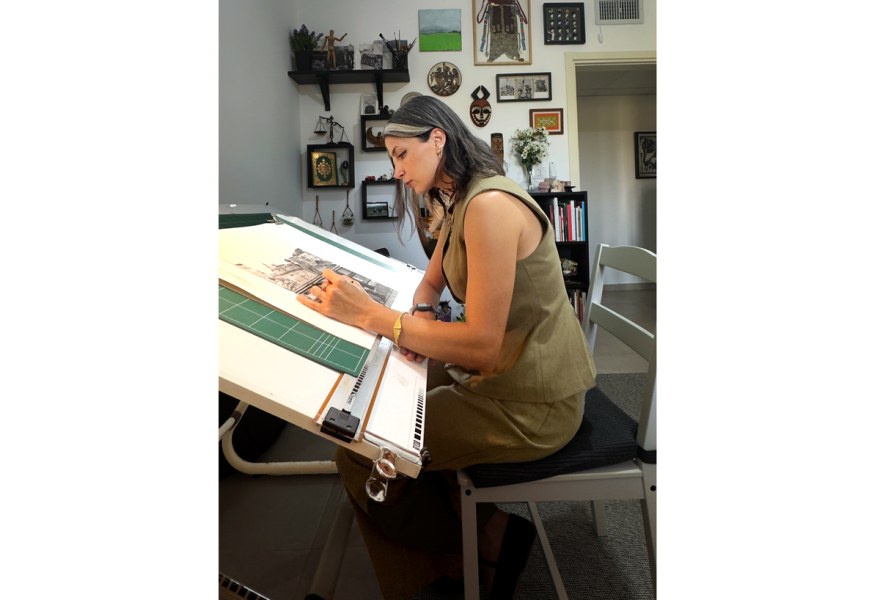
The Palestinian artist Samah Shihadi is known for her photorealistic drawings of family life, daily rituals, and the landscape. In the black-and-white drawings depicting family life, her mother and sister take center stage. We see them cooking and serving food. Nothing remarkable, you might think, but Shihadi views such moments as a nexus where care, tradition, and connection come together. “By documenting these customs and experiences, I hope not only to preserve memories but also to capture the essence of a culture shaped by history, displacement, and resilience.”
Shihadi lives and works in northern Israel. This week, she began her residency in Berlin, a place where she has worked before. There, she plans to continue developing several ongoing projects. The work she creates during her stay in Berlin will be on view from March 8, 2026, at Galerie Livingstone in The Hague. At the moment, Shihadi’s work can be seen at the Fenix Museum in Rotterdam.
Where are you based and what does your studio look like?
I'm based in Fassuta Village located in the upper Galilee, North Israel.
My studio is quite small, but it really feels like my world. It’s bright and peaceful, with natural light coming in through the window that’s where I love to work most. The walls are covered with my artworks and pieces that inspire me, and there are books, personal objects, and small details that make it feel warm and alive. Even though it’s not a big space, it has everything I need, it’s where I can think, create, and feel completely at home.
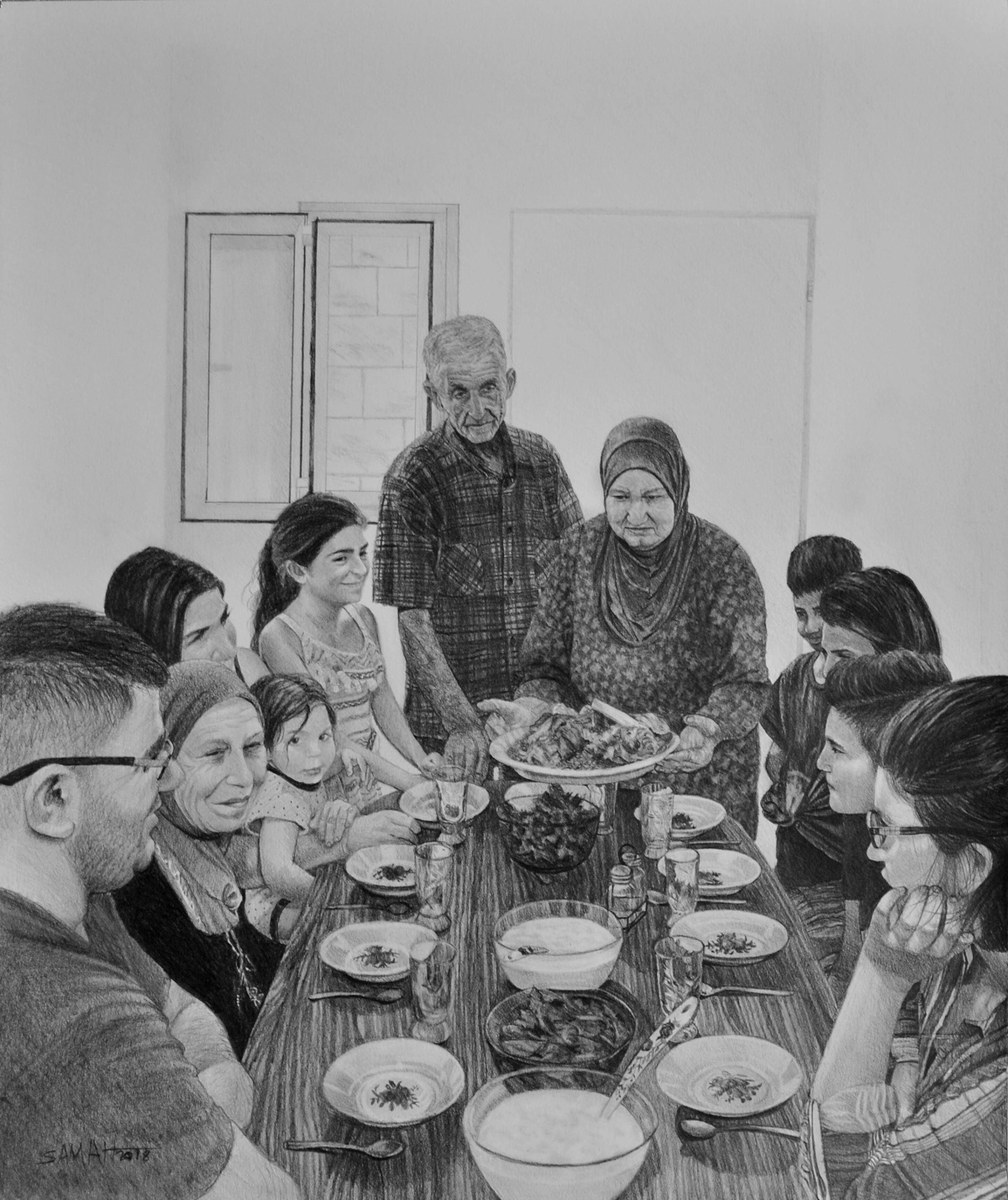
Samah Shihadi, Mansaf, 2018
You are known for your highly detailed, photo-realist drawings of family life and landscapes. I can imagine you need a lot of time to make drawings like these. What is essential to a good studio for you?
Since my drawings take a lot of time and attention, what matters most to me is having a space that feels calm and focused. I like to work in quiet, with natural light and a clear table where I can really sink into the details. I also keep personal objects and small things that inspire me nearby, they make me feel connected and grounded. My studio does not have to be big; what’s important is that it holds good energy and lets me spend long hours there without feeling rushed.
What does your typical working day look like?
My day usually begins around 7 a.m. with a cup of coffee, a quiet moment to wake up, and gathering my thoughts. I head to the gym for a couple of hours, moving my body helps me start the day energized and clear-headed. After a light breakfast, I settle into my studio, where most of my day is spent creating and exploring ideas. Around mid-afternoon, I take a short break, then continue working until the evening. After dinner, if inspiration strikes, I sometimes return to the studio for a few more hours. This rhythm of movement, focus, and pause keeps me productive while leaving space for creativity and reflection.
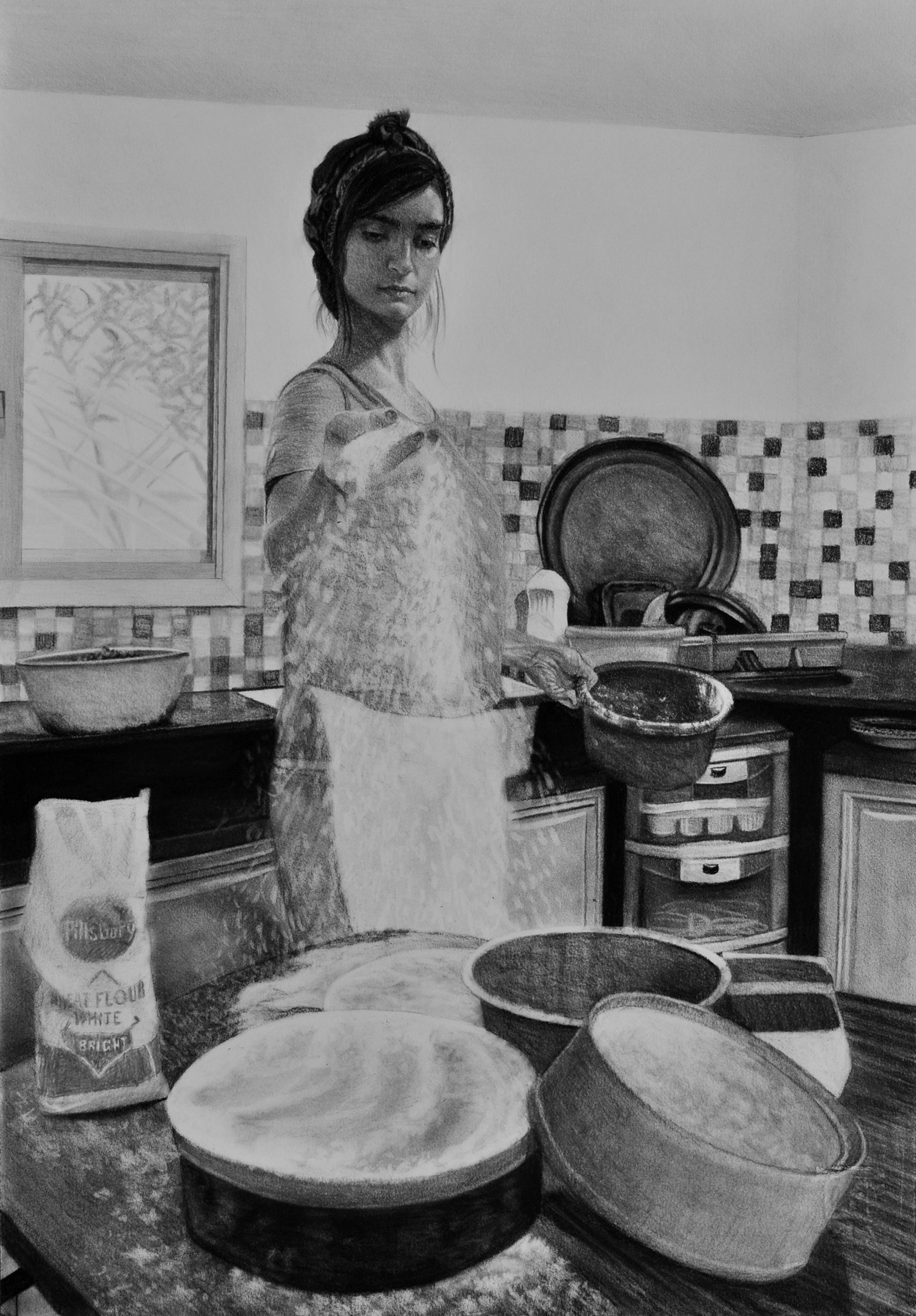
Samah Shihadi, Cooking Series 2
This week you’ll start a residency in Berlin. What do you expect from your spell in the German capital, and what do you aim to do there?
Returning to Berlin and this residency feels like coming back to a space that already resonates with my work, yet with fresh inspiration. I plan to focus on developing ongoing projects, experimenting with new techniques, and letting the city’s unique atmosphere influence my creative process. It’s an opportunity to immerse myself fully in my work while absorbing the dynamic energy that Berlin always offers.
You are a Palestinian artist and your work deals with family life, displacement, and longing for home, documenting rituals such as cooking and eating as well as the landscapes of your youth. Do you consider your drawings a way to preserve Palestinian culture?
Yes. Through my work, I explore family life, daily rituals, and the landscapes of my youth moments, and places that carry deep personal and collective significance. By documenting these experiences, I hope to capture not just memories, but also the essence of a culture shaped by history, displacement, and resilience. My art becomes a space where intimate and cultural stories coexist, allowing me to engage with my roots and share them with others, keeping them alive through visual memory.

Samah Shihadi, Dair Al - Qassi, 2023, Livingstone Gallery
Some of the drawings about family life depict your mother and sister cooking and serving food. Why did you choose to focus on them?
My mother and sister are central figures in my life, and focusing on them allows me to explore family dynamics and intimate daily rituals. Cooking and serving food are acts of care, tradition, and connection, and by depicting these moments, I’m able to capture the warmth, rhythm, and emotional depth of family life. These scenes also reflect a broader cultural memory, showing how everyday gestures carry meaning and preserve a sense of home and identity.
Apart from the landscapes and family drawings, there are more mysterious, metaphysical works. They seem to reference Tarot cards, Lady Justice, the Koptik cross, and the all-seeing eye. Can you tell us about these and how they relate to your other work?
I’ve always been drawn to the spiritual world, it’s full of wonder, mystery, and questions that I return to in my work. The symbolic and metaphysical drawings come from my curiosity and desire to understand what lies beyond the visible world. Our connection with goodness, the universe, and something greater than ourselves. Elements like the Tarot, the Koptik cross, or the all-seeing eye explore meaning, justice, and unseen forces that shape our lives. Even when I draw family or landscapes, I’m searching for the invisible thread that ties everything together memory, faith, and the human need to belong and believe.
If I were to give you carte blanche, and time and money were no object, what project would you start working on right away?
If time and resources were no object, I would expand my current exploration with collage, watercolor, and rapidographs into a monumental series centered on spirituality, women’s experiences, and emotional narratives. I imagine creating large-scale works that envelop the viewer, filled with layers of symbols, color, and texture that express the complexity of inner worlds. The project would explore questions of faith, intuition, and transformation how we carry both strength and fragility within us. It would be a continuation of my current path, but on a much larger, more immersive scale, translating intimate emotions into powerful visual experiences.
What are you working on right now?
Right now, I’m exploring a new direction in my work using collage, watercolor, and rapidographs. It’s the first time I’ve worked with this combination of ideas, techniques, and materials. Previously, I mainly focused on pencils and charcoal. This shift allows me to experiment with texture, color, and layering in ways I haven’t before, opening up new possibilities for depicting both intimate, personal moments and symbolic, metaphysical ideas. It’s an exciting process of discovery, pushing the boundaries of my practice and seeing where these new materials and techniques can take me.

Samah Shihadi, Al Bassa, 2023, Livingstone Gallery
