18 november 2025, Flor Linckens
L.A. Raeven and the fragile architecture of individuality
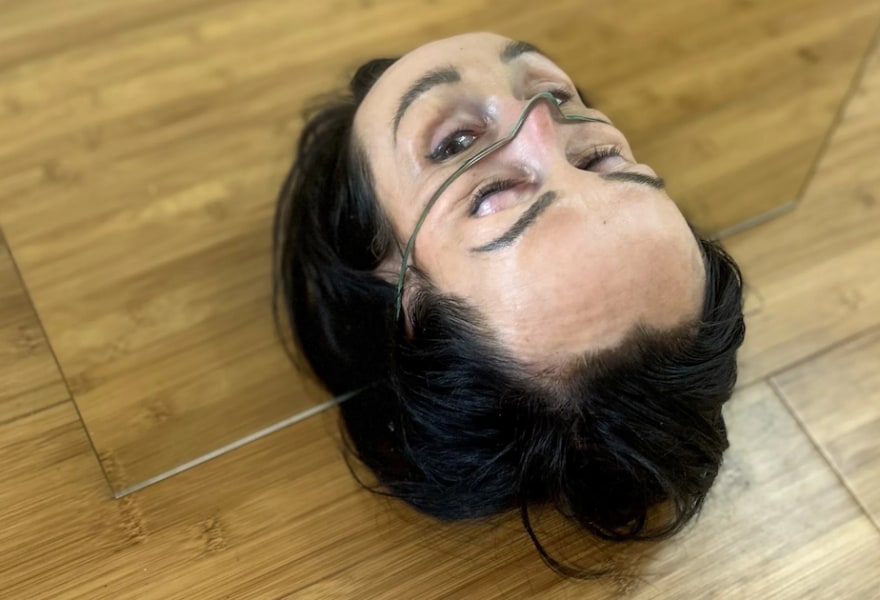
Until 20 December, Ellen de Bruijne Projects in Amsterdam presents the exhibition 'The Concept of Self'. In this show, the artist duo L.A. Raeven, formed by identical twins Liesbeth and Angelique Raeven, reopens the tensions that have long defined their practice: the terrain between the individual and the mirrored double, between autonomy and dependence, between norm and deviation. The exhibition introduces a new chapter in their ongoing exploration of self-image and bodily representation, but also of the psychological and social mechanisms that shape relationships, identities and structures of power. Liesbeth and Angelique examine not only how a self-image comes into being, but also how it is stretched, distorted, tested and reflected back: by each other, by the gaze of others and by the systems we must navigate.
Liesbeth and Angelique Raeven were born in Heerlen in 1971 and have always been closely connected. Their relationship is defined by affection but also a certain competitiveness. At first, they each chose a different field of study, a period in which they saw less of one another. Liesbeth obtained a medical background and studied Nursing in Maastricht and Leuven before enrolling at the HKU Art Academy, where she specialised in Photographic Design. In New Yorkm she interned with photographers such as Nan Goldin and Philip-Lorca diCorcia, and in Paris she gained experience with the French multimedia artist ORLAN. In 1998, she entered the postgraduate programme at the Jan van Eyck Academie in Maastricht. Angelique studied Fine Art and Fashion at St. Joost School of Art & Design in Breda and at the Royal Academy of Fine Arts in Antwerp, after which she worked for a period as an assistant to Jean Paul Gaultier in Paris. In 2000, she joined her sister at the Jan van Eyck Academie. During their studies, both women encountered normative notions of bodily perfection in different ways: in the fashion world and in the medical sphere.
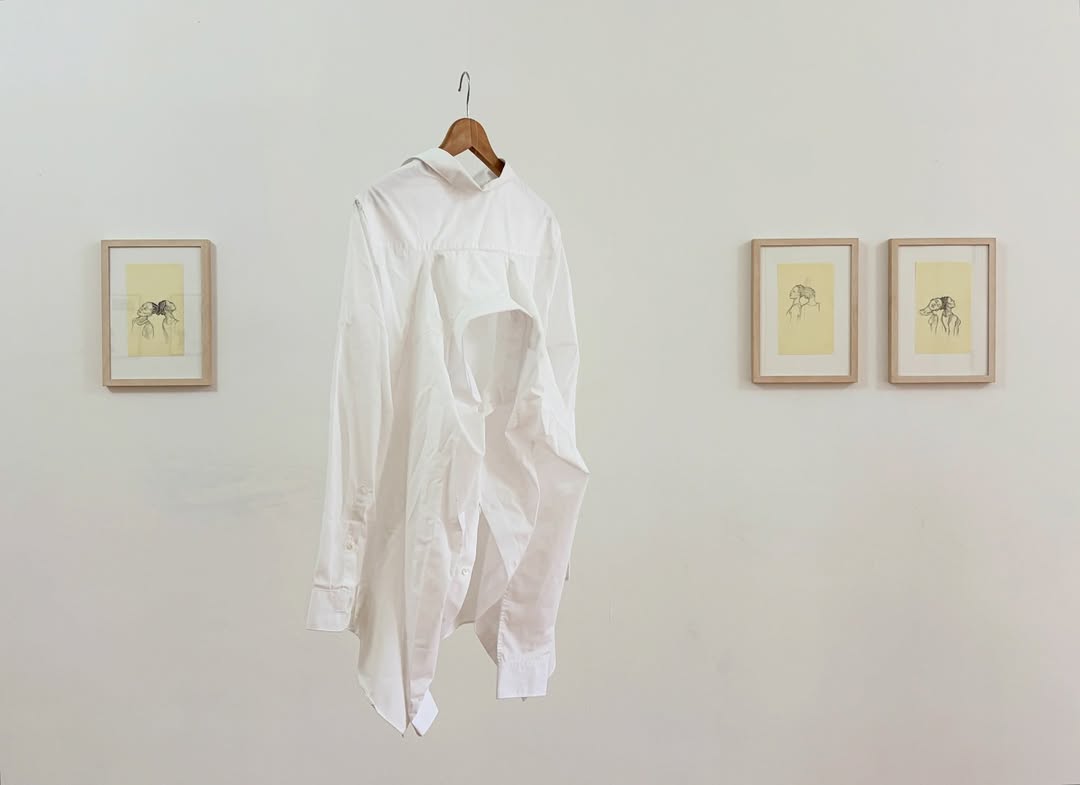
At the Jan van Eyck Academie, the collaborative project L.A. Raeven emerged. Under that name, the artists create performances, video installations and sculptural interventions in which both their symbiosis and their friction become visible. Their bodies serve as a point of departure, not least because twins are confronted with their physicality even more directly than others. The resulting works reflect the society we live in, its beauty ideals and the assumed malleability of the so-called perfect body, but also rituals, voyeurism, power dynamics, female role patterns, representation and stereotypical ideas about ‘cute’ twins. Their work poses a provocative question: what happens when they define themselves as the norm, rather than adjusting to an existing one?
The artists share a complex dynamic and their work is often defiant, disruptive and controversial, not least because their bodies reveal their relationship to food and, by extension, to control. But Liesbeth and Angelique refuse to be placed in a predictable category and resist any narrative that recasts them as victims. In their work, they frequently test boundaries, only to cross them deliberately. Their body-centred work relates to shock art and exhibitionism and at times takes on a slightly morbid tone.
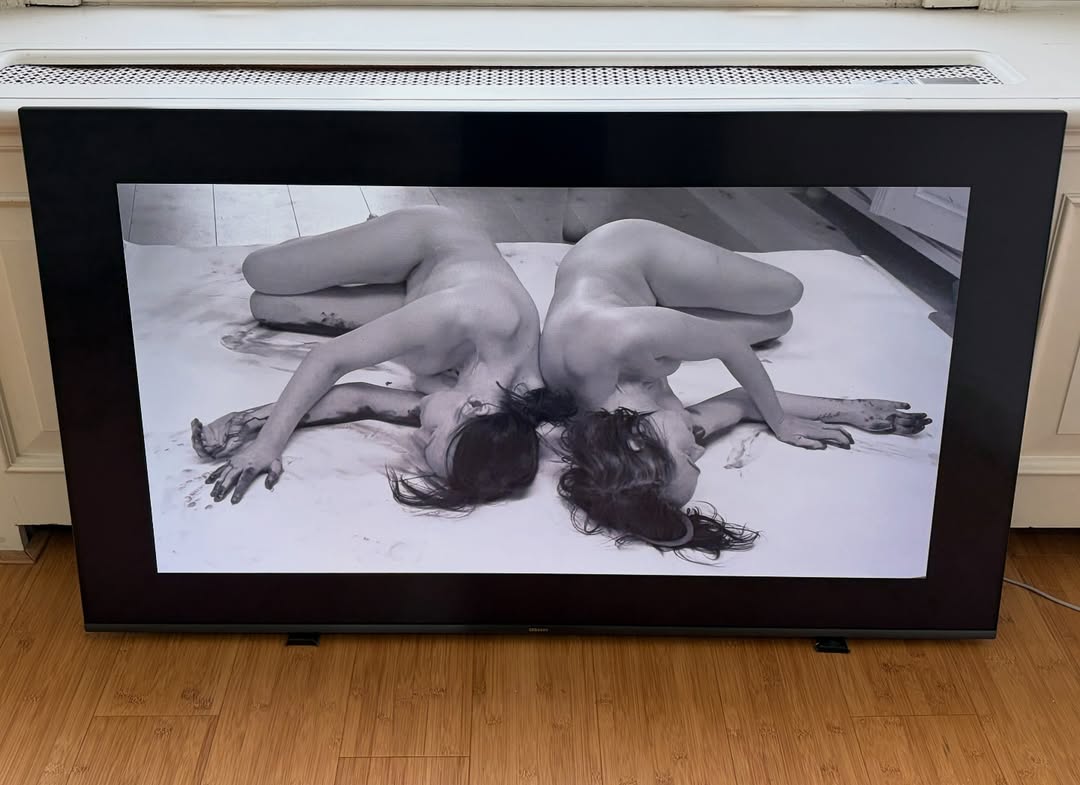
Their earlier projects often played with the limits of what an audience can bear to see, allowing the resulting discomfort and aversion to become part of the work itself. In the video installation "Wild Zone 1 & 2", which was shown at the ICA (Institute of Contemporary Arts) in Boston, they show their extremely thin bodies and rigorously symbiotic food intake through the unflinching lens of a camera. In some instances, they even diffused their condensed bodily scent throughout exhibition spaces as a way of marking territory, ensuring that looking becomes an inherently physical experience. Viewers are compelled to question where power structures end and performance begins. Other projects such as "The Height of Vanity" address the strugges of another pair of twins.
Another example is the semi-medical advertisement they tried to place under the name L.A. Raeven Analyse & Research Service in various publications, including the recruitment section of The Guardian. The ad listed extremely specific physical requirements for ‘Ideal Individuals’ for a so-called ‘L.A. Army’, with ‘body doubles’ who matched their own physique. The newspaper refused to publish it. The project resulted in the work "L.A. Army", which was shown in De Appel in Amsterdam in 2002. In its accompanying text they stated: “People do not know how lucky they are that they are unique individuals, instead, they try to submit to an ideal.”
L.A. Raeven’s work is frequently framed in medical terminology and diagnoses, which in itself reflects our societal urge to classify everything around us in an effort to understand it. Other artists are not subjected to this same metric, even though in some cases it might be equally justified. Why, then, is this measure applied here?
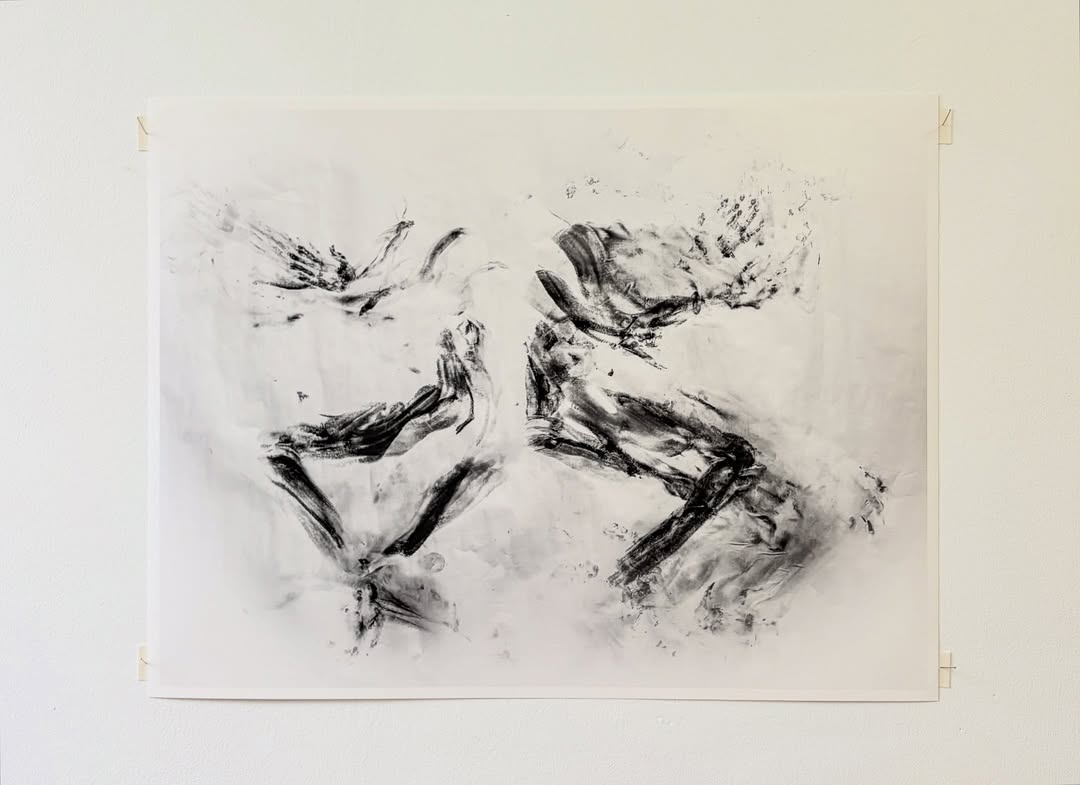
The complexity of L.A. Raeven’s practice lies in the way they both critique and physically embody (and exaggerate) dominant ideals of the body, in effect mirroring society at large and, on an individual level, each of us. What is our own implication in this? It renders their work ambiguous, a mirror that inevitably turns back on the viewer. During a talk at the ICA, an audience member asked whether the artists had anorexia. Liesbeth’s reply offers a clear insight into their thinking: "Why do you need to know? If you can label us anorexic, you can be relieved. Without the label, the work is more challenging of you."
Their well-known robot project "Annelies" originated when the twins wondered what it would be like to be part of a triplet instead of a pair. The idea emerged during a period of extreme mutual dependence and prolonged struggles concerning food and physicality. But Liesbeth wanted a child and realised she needed distance, calm and a different approach to eating. She broke away from the symbiosis, loosened her strict routines, recovered physically, chose to live on her own and claimed space for herself. Angelique was left with a sense of loss. With the help of a modeller and robotics engineer, the artists developed a lifelike crying robot based on their own bodies and faces, designed to trigger an immediate response of care and unease in viewers. "Annelies", whose name is a merging of both names, explores the boundary between the manufacturable and the imitable body.

For their exhibition ‘The Concept of Self’, which is currently on view at Ellen de Bruijne Projects, the focus appears to shift more visibly from the body as an outward form to an inner sense of identity and individuality. Their question is both simple and existential: does the ‘self’ exist as an autonomous entity, or is it always relational, fragmented, constructed and partly performed? For twins, this question is even more palpable. What does it mean to be yourself when you are constantly mirrored by someone who resembles you down to the smallest detail, both in private experience and in the gaze of the outside world? And all this within a society that already encourages relentless comparison and conformity, amplified further by social media. The exhibition forms part of a broader research project in which L.A. Raeven collaborates with scientists, philosophers and medical experts. Together they examine the intersection of autonomy and control, identity and performativity, vulnerability and resistance.
The work of L.A. Raeven has been shown at Museum Arnhem, the Museum of Contemporary Art in Belgrade, MoMA PS1, Stedelijk Museum Schiedam, Brutus, Stedelijk Museum Bureau Amsterdam, Kunstinstituut Melly, Marres, the Bonnefanten Museum, NEST, Garage Rotterdam, Kunsthal Rotterdam, the Ludwig Museum in Budapest, FRAC Nord, Mu.ZEE, Museum Dhondt-Dhaenens, Bozar, Haus der Kunst Munich, the Verbeke Foundation and M HKA. Their work is part of the collections of the Bonnefanten Museum, Stedelijk Museum Schiedam, Museum Arnhem, the Fries Museum, Rijksmuseum Twenthe, FRAC Nord and the Ludwig Museum. In 2010, Lisa Boerstra directed the documentary 'L.A. Raeven – de verbeelding voorbij’ about the artist duo.
