10 october 2025, Emily Van Driessen
Paul Van Hoeydonck (1925–2025): more than the man with an artwork on the moon
With the passing of Paul Van Hoeydonck (1925–2025), Belgium loses one of its most visionary artists. Known worldwide for Fallen Astronaut (1971), the only artwork ever placed on the moon, his centenary is being honoured this autumn with not one but two major tributes: a survey at the Royal Museum of Fine Arts Antwerp (KMSKA) and a dedicated exhibition at Callewaert Vanlangendonck Gallery.
“Our exhibition Light Years forms an intimate and complementary chapter to the museum show,” says Yoeri Vanlangendonck, who runs the gallery together with Brecht Callewaert. “We focus on the period from the mid-1950s to the mid-1970s, the crucial decades during which Paul Van Hoeydonck’s career truly took shape.”
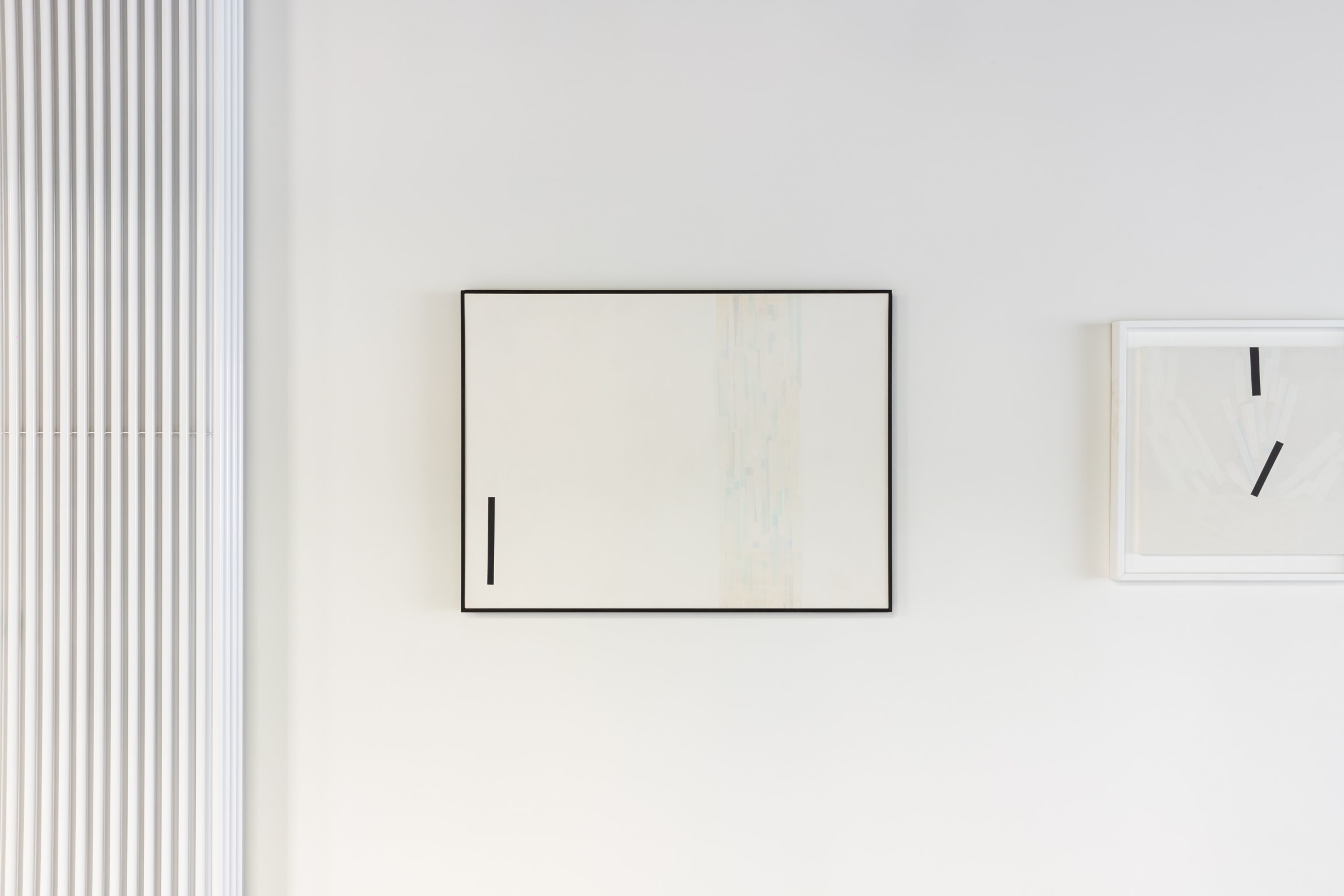
Paul Van Hoeydonck, Light Years, Callewaert Vanlangendonck Gallery
At the entrance of the gallery hangs a black-and-white photograph of the artist in New York, posing in front of the Empire State Building. Dressed in a sharp suit, confident, his gaze slightly lifted. “Paul was an incredibly powerful and proud dandy with an unshakable optimism,” says Yoeri. “Always elegant, charming, present. Even in his nineties, he radiated that same energy.”
Next to the photograph stands Man in Space, an autonomous work that Van Hoeydonck developed in 2018 together with the gallery, based on his original vision for the lunar project. The sculpture refers to Fallen Astronaut, the iconic figure placed on the moon during the Apollo 15 mission in 1971. “For Van Hoeydonck, it symbolised human progress,” Yoeri explains. “That kind of optimism feels rare today.”
The original sculpture is only eight centimetres tall and had to meet strict NASA regulations: no plexiglass (fire hazard) and small enough to fit into the astronaut’s personal package. “The commander of Apollo 15 actually smuggled it along in his PPK, a pouch for personal belongings,” Yoeri smiles. The version in the gallery is part of an edition of 1,971 pieces, a subtle reference to the year Fallen Astronaut reached the moon.
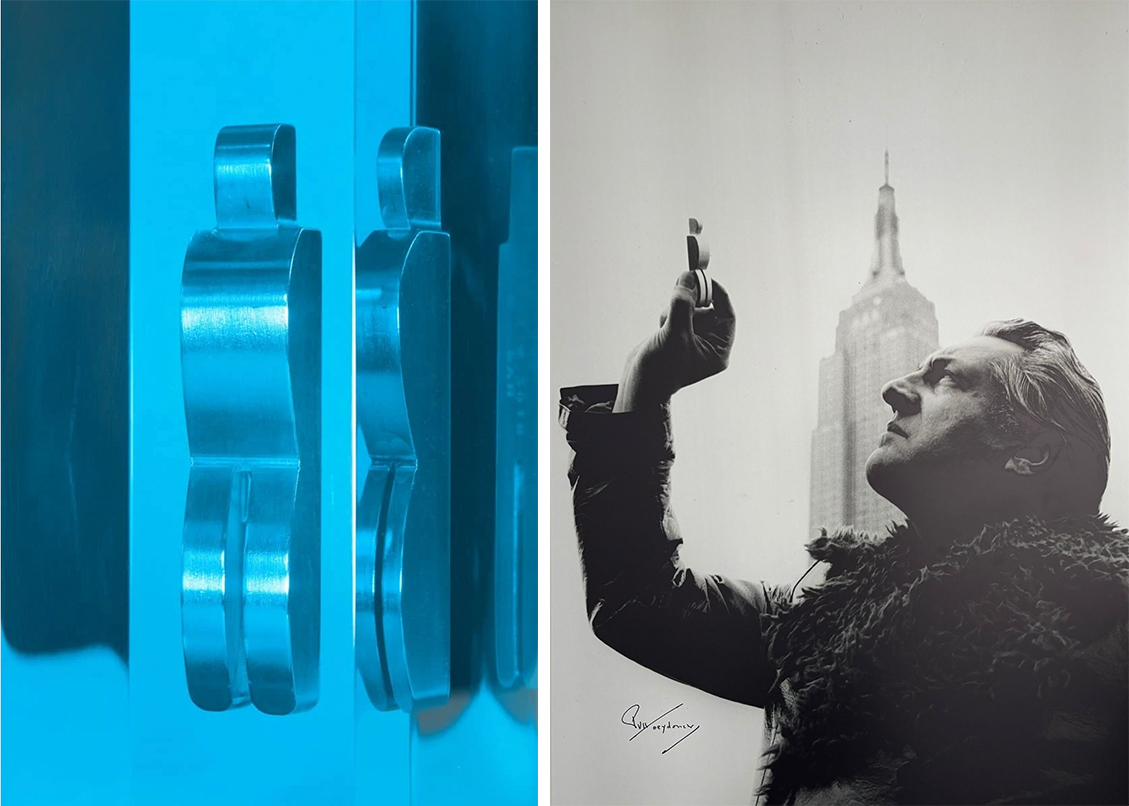
Paul Van Hoeydonck, Man in Space - 1971/2018 + Paul Van Hoeydonck in NYC, Callewaert Vanlangendonck Gallery
The 1950s
The exhibition opens with three paintings from 1958, from the G58 Hessenhuis period, the legendary artists’ collective that put Antwerp on the map in the mid-1950s. Paul Van Hoeydonck was one of its co-founders and helped outline the framework for the groundbreaking exhibition Vision in Motion. “G58 was a breeding ground for young local talent,” Yoeri explains, “but it was also internationally oriented. For Vision in Motion, Van Hoeydonck invited artists such as Yves Klein, Jean Tinguely and Daniel Spoerri, inspiring figures from France, Switzerland and Italy. Antwerp suddenly became a hub within the European Zero network, a place where artists connected as Europeans avant la lettre.”
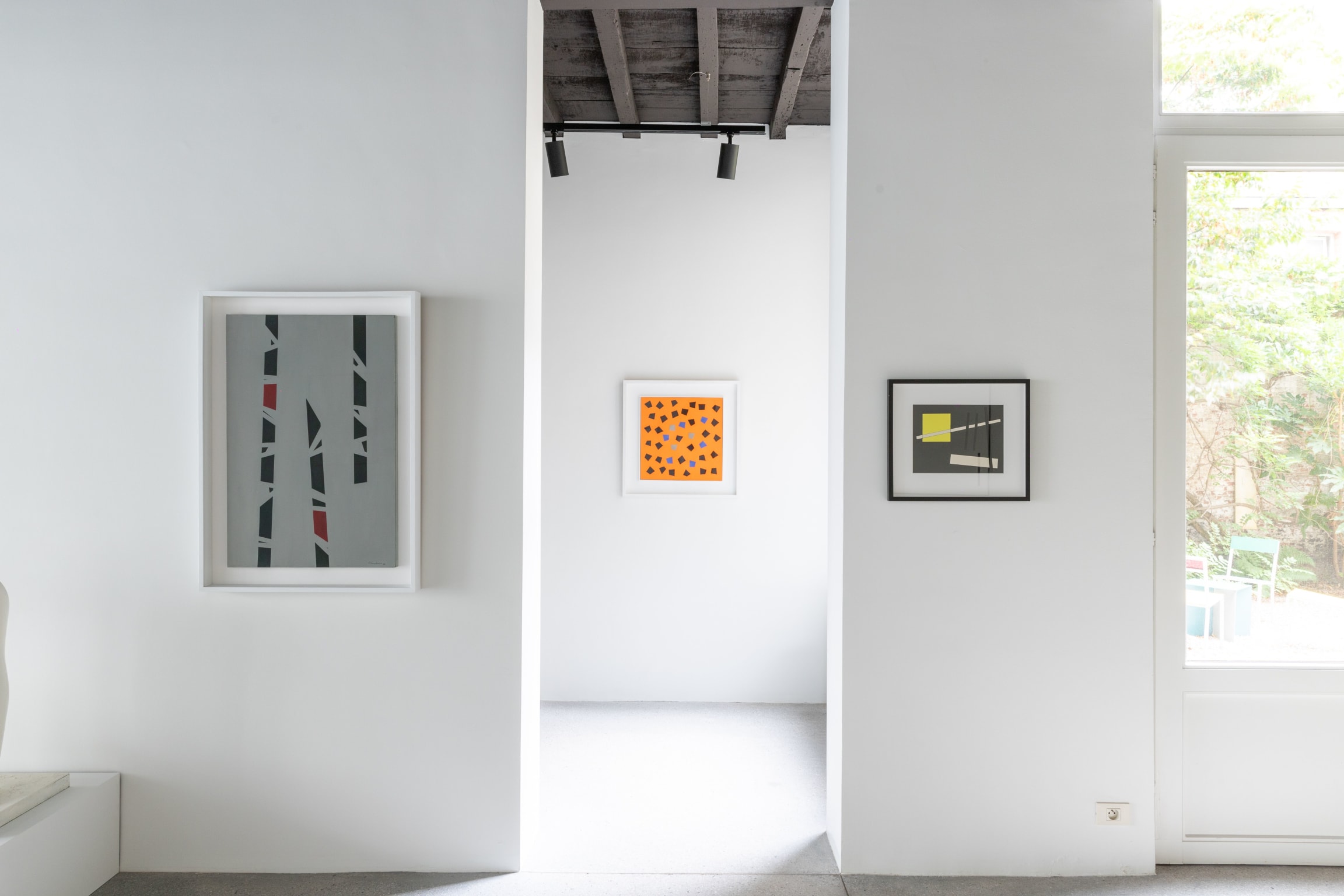
Paul Van Hoeydonck, Light Years, Callewaert Vanlangendonck Gallery
The show also includes an early work that inspired the poster design for Vision in Motion. It serves as a bridge between Van Hoeydonck’s early geometric experiments and the international Zero movement, which was rapidly emerging at the time.
Long before space travel literally pushed his imagination towards the stars, Van Hoeydonck painted the abstract work Sterrenhemel (Starry Sky, 1953), a prelude to his later obsession with the cosmos. “It’s visionary when you look back at it,” says Yoeri. “The only artist to ever place a sculpture on the moon was already obsessed with outer space in 1953.”
Van Hoeydonck’s eye for rhythm and movement was also present in his ear. While listening to avant-garde compositions by Pierre Boulez, he created spiral drawings where sound and motion intertwined, like a visual echo of the cosmos. Around the same time, while still working at Esso in the Antwerp harbour, he began capturing urban light, movement and reflection in abstract form: the refineries along the Scheldt, the vibrations of nocturnal Antwerp, the ripples of the river itself.
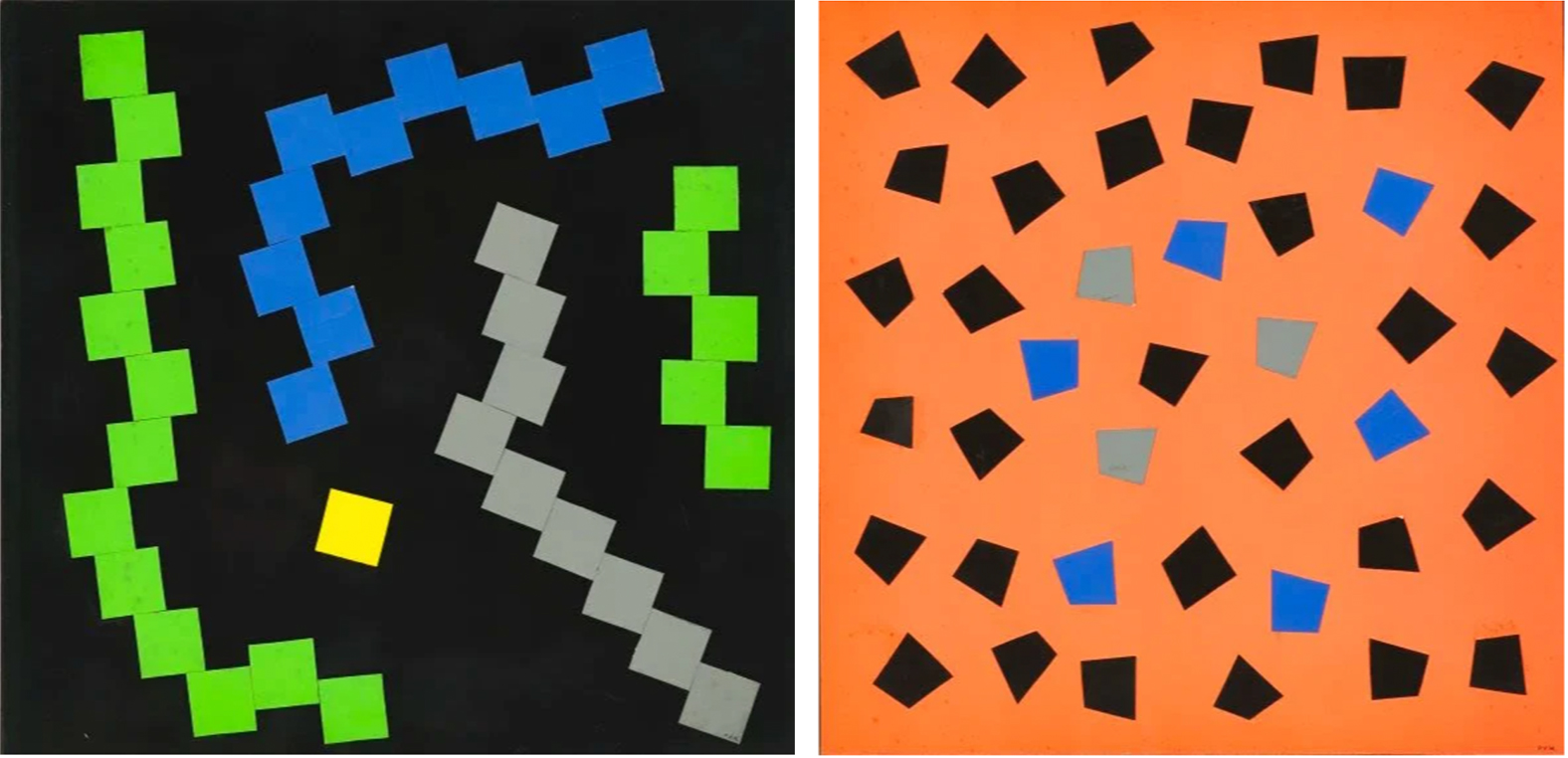
Paul Van Hoeydonck, Composition, 1958, Callewaert Vanlangendonck Gallery
The 1960s: Lightworks
1959 marked Van Hoeydonck’s true breakthrough with his monochrome white-on-white works. “You have to walk past them for the piece to activate,” Yoeri explains. “The refractions of light change the image and complete the composition.”
Soon his work reached the international stage. At Galleria Pater in Milan, the house gallery of Piero Manzoni, Lucio Fontana bought one of his lightworks. Not long after, Van Hoeydonck exhibited at Iris Clert Gallery in Paris, where the MoMA also acquired one of his pieces.
The exhibition Light Years features three of these rare lightworks. “We’re showing three large examples, one from my own private collection,” says Yoeri. “The director of the Zero Foundation was even at the opening; people are clearly rediscovering this kind of work.”
When Van Hoeydonck was 89, the Guggenheim Museum in New York hosted a major retrospective on the Zero movement, which included one of his lightworks. “My co-gallerist Brecht Callewaert, my partner David Vermeiren and I travelled to New York with Paul for the opening. It was incredibly special to share that moment with him,” Yoeri recalls.
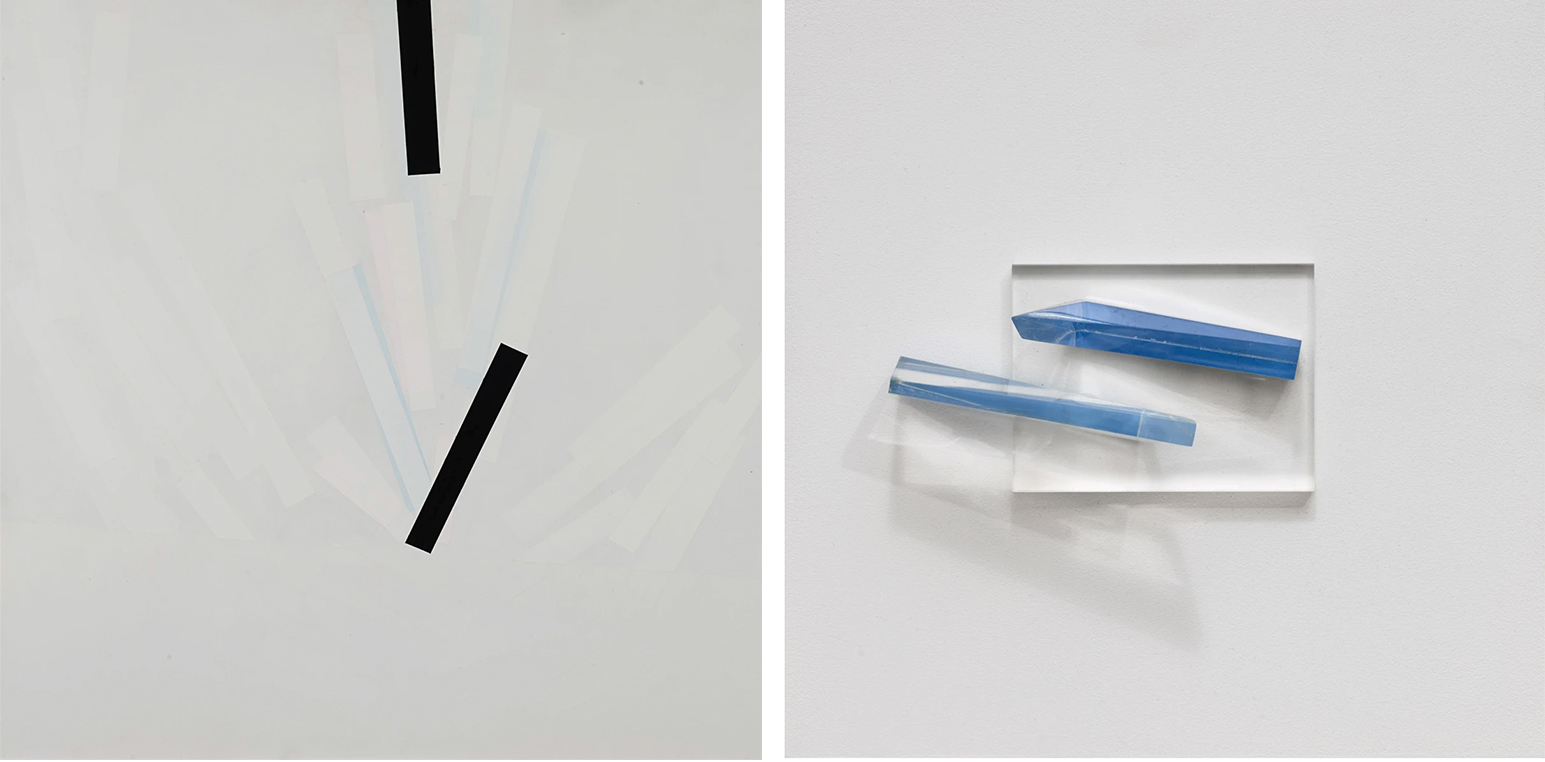
Paul Van Hoeydonck, Lightwork, 1959 + Lightwork, 1960, Callewaert Vanlangendonck Gallery
The 1960s: Space Art
From 1961 onwards, Van Hoeydonck was fully engaged in the race to the moon. He created planetscapes and space assemblages using discarded materials, nails, metals and layered oil paint, as if he was building worlds of his own. Unlike Günther Uecker, who hammered his nails into rhythmic patterns, Van Hoeydonck let them float freely like abstract particles in space.
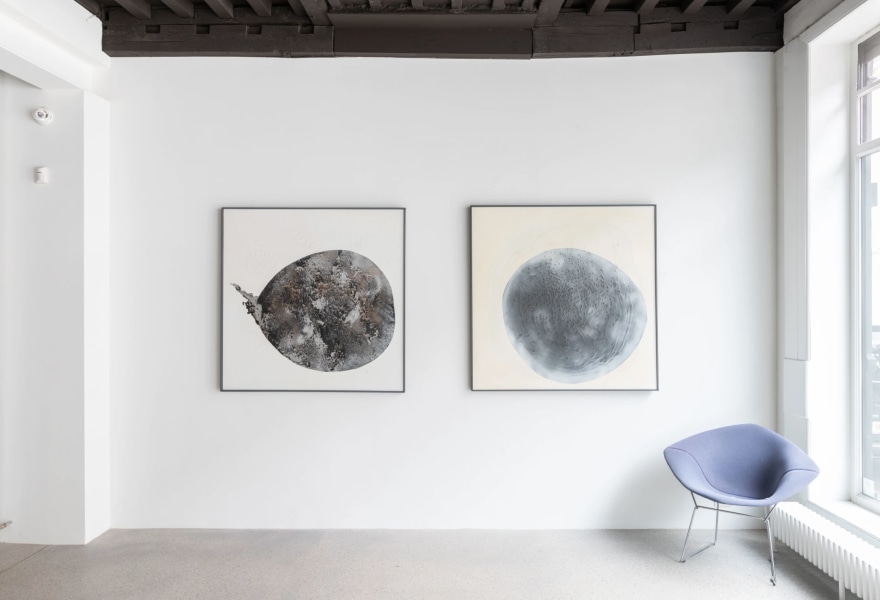
is Antwerp studio at the time was filled with experimentation: oil on panels, layers of resin, acids that corroded metal. In The Birth of a Silver Planet (1961), a silver sphere seems to implode out of dark matter; its texture is thick and almost volcanic. “Paul literally worked with acids to create those planetary surfaces,” says Yoeri. The circular form evokes a planet, the moon and the zero, the symbol of the Zero movement.
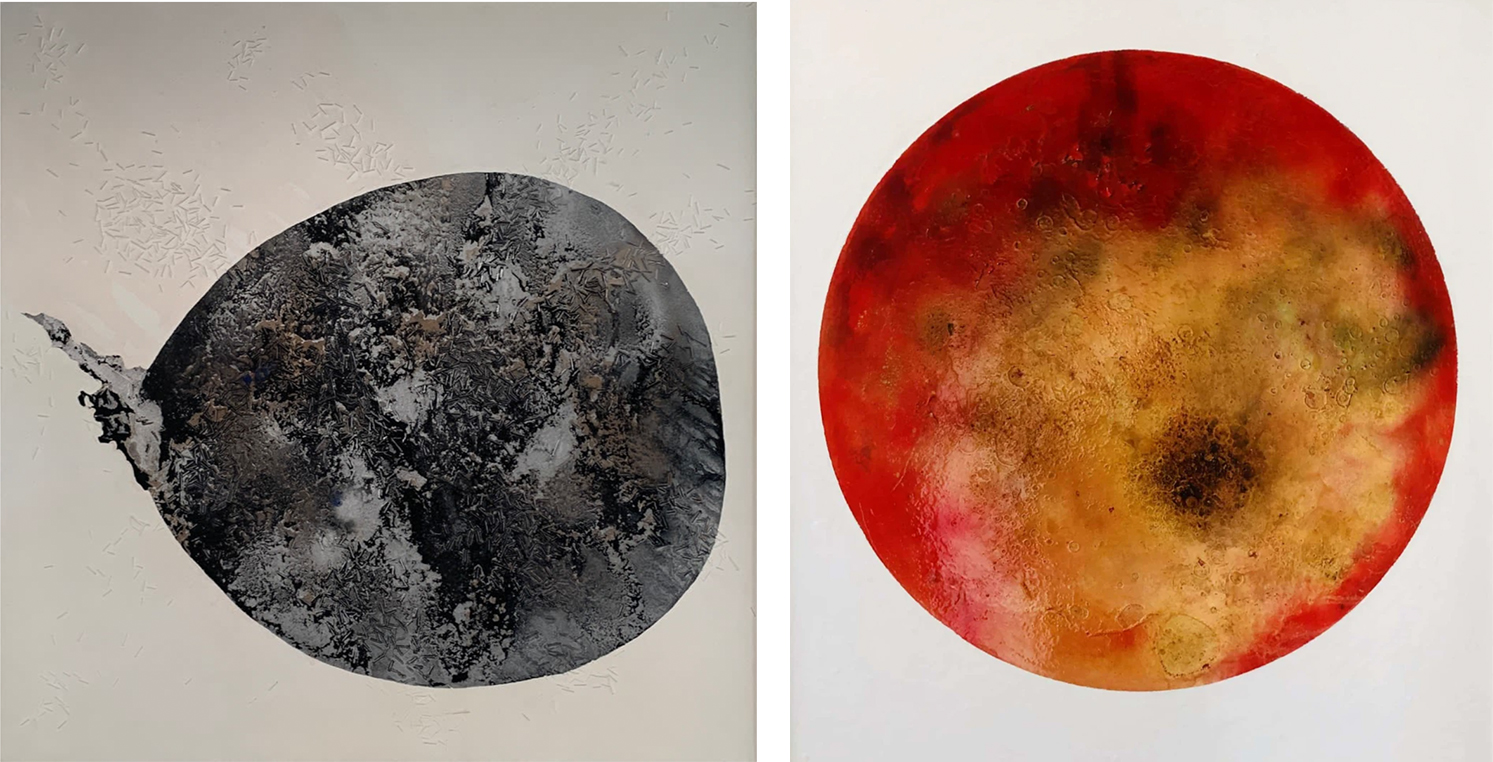
Paul Van Hoeydonck, Naissance de la Planète Argent, 1962, Red Planet, 1964, Callewaert Vanlangendonck Gallery
Through the New York gallery Waddell, Van Hoeydonck came into contact with the American avant-garde. His work entered the collections of Hugh Hefner and the Rockefeller family. “Through that gallery, the first connections with NASA and the Apollo 15 astronauts emerged,” explains Yoeri. In 1971, his miniature sculpture Fallen Astronaut travelled to the moon. “That tiny figure represented humanity itself, genderless, universal and optimistic.”
The episode ended on a difficult note in the United States. At the time, lunar missions were not allowed to be commercialised, and when plans surfaced to produce an edition of the sculpture, Van Hoeydonck was accused of profiteering. Disillusioned, he returned to Belgium, where he continued his practice. In 1974, he created Red Planet, a key work that brings that period to a close and crystallises his cosmic years.
The 1970s
In the 1970s, Van Hoeydonck’s assemblages took on a distinct pop-art flair. Space Samurai is a striking example of his brutalist bricolages. He worked with bright colours, plexiglass surfaces and found materials such as his children’s toys and tennis balls. His circle of friends at the time reads like a who’s who of the avant-garde: Arman, Christo, Niki de Saint Phalle, with whom he shared a close friendship that clearly influenced his practice.
Speaking about a later phase of his planetary works, heading into the 1980s and 1990s, Yoeri recalls a remarkable personal detail. “Van Hoeydonck’s daughter was for many years in a relationship with Belgian painter Luc Tuymans. Paul once told us that Tuymans used to smoke in his studio while he was working, and that some of the ashes ended up in his planets.”
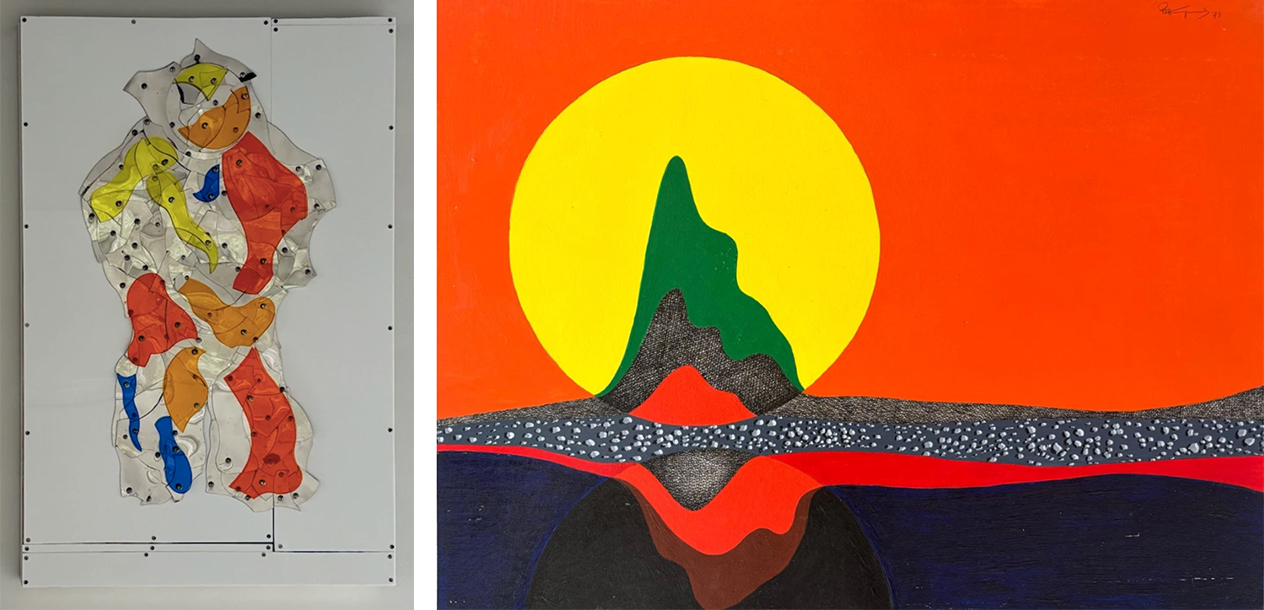
Paul Van Hoeydonck, Space Samurai, 1970, Landscape, 1974, Callewaert Vanlangendonck Gallery
An eternal dandy
Paul Van Hoeydonck was self-taught, and his practice defies easy categorisation. “He might have achieved the same level of fame as Günther Uecker if he had stuck to one style,” Yoeri reflects. “But Van Hoeydonck always wanted to reinvent himself. He used to say he knew he could have gone further in his career, but then he would have had to paint white-on-white for the rest of his life. And he didn’t want that.”
That drive for change and renewal is what makes him such a remarkable artist. From his Sterrenhemel of 1953 to the sculpture that still rests on the moon, Paul Van Hoeydonck’s oeuvre remains a reminder of a time when humanity still believed in optimistic progress. “Paul admired Pablo Picasso immensely,” Yoeri adds, “and he genuinely believed he could become more famous than him with his sculpture on the moon.” And who knows, perhaps he still will.
Paul Van Hoeydonck: Light Years is on view at Callewaert Vanlangendonck Gallery, Antwerp, until 23 November 2025.
