07 october 2025, Flor Linckens
The Collateral Kin: the result of three years of listening
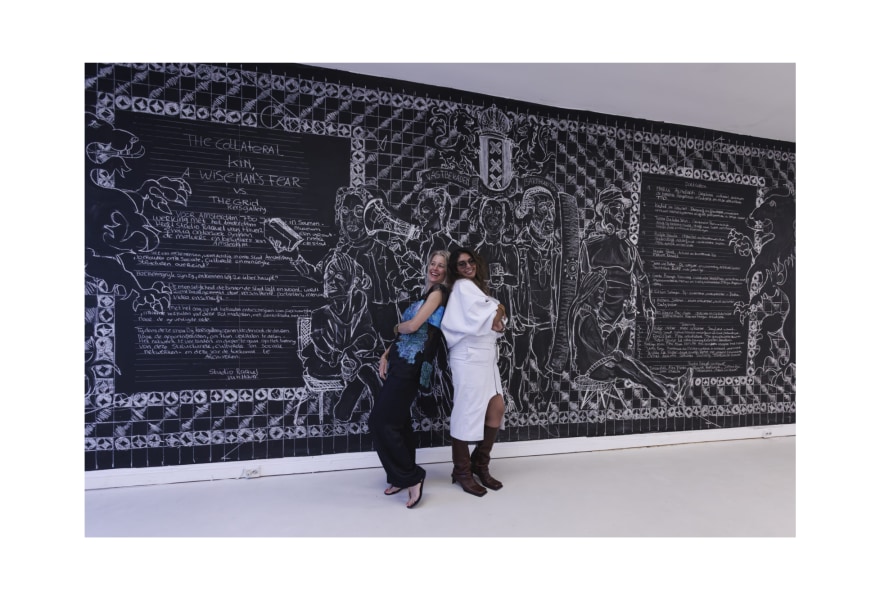
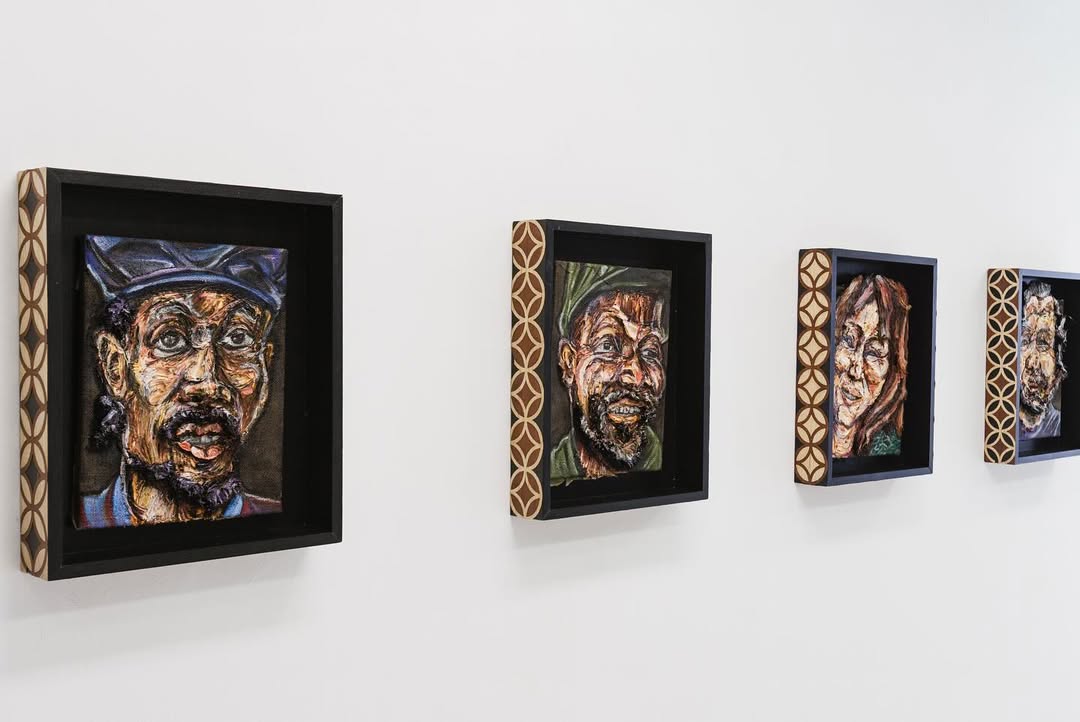
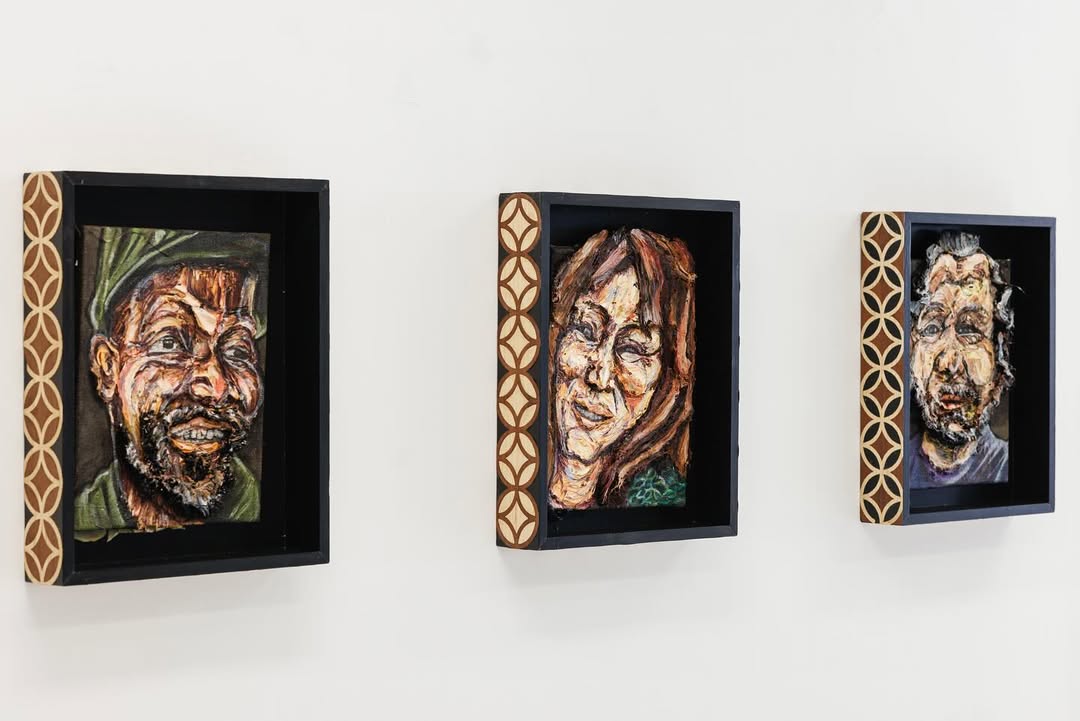
Parallel to her solo exhibition ‘The Collateral Kin’ at the Amsterdam Museum (part of Refresh Amsterdam #3 – Amsterdam 750), Raquel van Haver also presents her work on a more personal scale in KERSGALLERY. Two levels of the same vibrant narrative of a city. In her eponymous exhibition at KERSGALLERY, the artist presents a series of smaller portraits and a monumental wall piece that emerged from the same long-term research. The complex social structures that Van Haver explores in her work take literal shape on the wall here. Whereas the museum project features large-scale group portraits capturing Amsterdam’s DNA, the presentation at KERSGALLERY focuses on the individuals who carry these collective stories. Their narratives touch on migration, upbringing, care and street culture, people who often dedicate themselves selflessly to others. Together, these exhibitions form a diptych about community, representation and the power of storytelling.
Van Haver is known for her multidisciplinary practice and her layered, physical paintings in which she mixes oil paint with materials such as tar, plaster, ash, resin, sand, wood, hair and found objects. Her works are often preceded by extensive research. These figurative portraits are vivid, raw, intimate and sincere. She constructs her canvases as sculptural installations, with paint applied so thickly that it sometimes reaches several centimetres in depth. The result is work that is not merely looked at but almost experienced as a relief. The surface of the painting bears the traces of life itself: rough textures, marks of touch and the echoes of conversation. The heavy impasto layers and long drying time mean that the artist often works on multiple paintings at the same time. In addition to painting, Van Haver also creates video and sound works. Her practice addresses subjects such as migration, spirituality, empathy, people living on the margins of society, folklore, care, solidarity, popular culture and collective memory, linking personal histories to broader cultural and political perspectives.
Conversations are at the heart of Van Haver’s practice. Instead of sketching or asking models to pose, she engages in long dialogues with her subjects. She listens, observes and collects images, notes and impressions before she begins to paint. She is fascinated by memory, by what is and is not passed down through generations. Van Haver explains: "Only the stories that are remembered will survive." She only begins to portray someone once she has come to understand how that person moves, speaks and thinks. It is a method she has followed for years, whether she is working with residents of the Bijlmer neighbourhood in Amsterdam, women in Colombia or activists in Ghana. Her paintings are not commissioned portraits but visual translations of mutual trust. Van Haver also frequently collaborates with other artists and collectives.
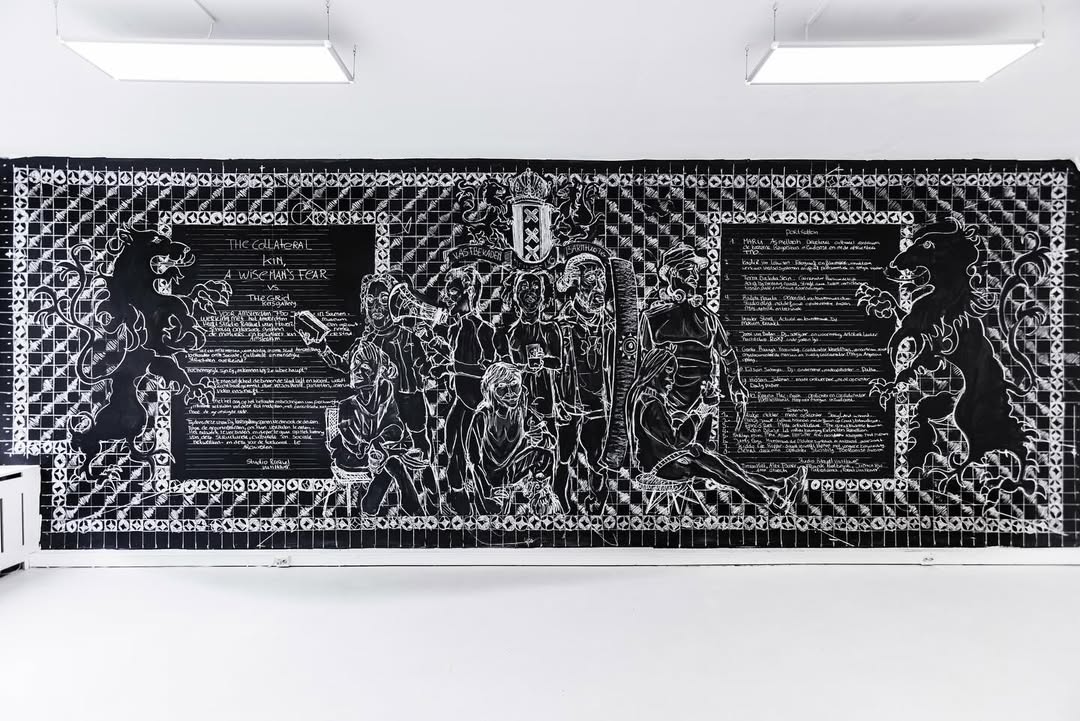
Upon entering the exhibition at KERSGALLERY, visitors are immediately met by a large, chalk-drawn mural featuring a description of the project:
“For Amsterdam 750, in collaboration with the Amsterdam Museum, Studio Raquel van Haver conducted an extensive study into the makers and guardians of the city of Amsterdam. Which of our people, living in our city, uphold our social, cultural and human structures? How important are they, and do we even know them? The humanity that lives and breathes within the city is made visible through portraits, interviews, video and writing. With the aim of preserving and documenting the personal, intimate stories of these role models, accompanied by a critical note towards the establishment. During this show at KERSGALLERY, we open our doors to those portrayed, to share their stories, connect the network and delve deeper into the importance of these structural, cultural and social networks – and to archive them for the future.”
The group of people at the centre of the mural recalls a seventeenth-century group portrait or regents’ piece, but stripped of its hierarchy and symbolic power structures – and no longer featuring only white men. At the top, beside Amsterdam’s coat of arms, appear the words ‘Determined’ and ‘Compassion’. On either side of the group stand two lions, traditional heraldic symbols. With these references, Van Haver draws on the historical visual language of power and civic identity, yet she reframes it in a contemporary context. Where the lions once defended the city, they now symbolically protect the community of ordinary Amsterdammers. The work can be read as a decolonial reinterpretation of the historical regents’ portrait, where representation is no longer determined top-down, but arises from the city itself. Van Haver depicts contemporary changemakers, people who keep Amsterdam liveable, while rarely stepping into the spotlight themselves. Her paintings redefine the group portrait as a collective monument, in which equality and community take centre stage.
The works at KERSGALLERY stem from the same three-year research that led to ‘The Collateral Kin’ at the Amsterdam Museum, where Van Haver presents six monumental group portraits created for the city’s 750th anniversary. For this series, she portrayed more than 120 Amsterdammers, aged between twenty and ninety-five. The selection, each personally interviewed, was made in collaboration with researchers from the University of Amsterdam and the City Archives. They are contemporary city-shapers, captured in the same style as the mural, reminiscent of the seventeenth- and eighteenth-century civic guard portraits. But you see no velvet-clad governors here: instead, teachers, makers, activists, entrepreneurs and volunteers. For this project, Van Haver spoke with over a hundred Amsterdammers who dedicate themselves to themes such as education, culture, housing, sustainability, solidarity and the position of undocumented residents.
Some of them are well-known figures, such as Gloria Wekker, Nancy Jouwe, Kadir van Lohuizen, Massih Hutak, Joost van Bellen and Henk Schiffmacher, but many more are people who rarely receive recognition, such as Marlyn Mimi Mau-Asam, chair of the anti-racist activist group Mad Mothers, which campaigns for non-racist children’s toys and against blackface. Or Jennifer Tosch, historian and founder of the Black Heritage Tours in Amsterdam, Brussels and New York. The selection includes curators, activists fighting institutional racism, fashion designers, actors, scholars challenging the academic canon, teachers, cultural historians, writers, poets, theatre-makers, filmmakers, graffiti artists, cultural producers, creative entrepreneurs, DJs and rappers turning nightlife into cultural history, councillors, community organisers and anonymous participants. Van Haver does not build monuments to heroes but gives form to the intensity of their civic engagement. As their stories have been documented in collaboration with the City Archives, their contributions to Amsterdam will be preserved for the future. In the KERSGALLERY exhibition, these voices return in smaller, more intimate portraits. Each work stands on its own, yet together, they form a network of faces, gestures and memories, on a human scale.

Raquel van Haver was born in Bogotá, Colombia, in 1989, and grew up in the Netherlands, where she studied at the HKU University of the Arts and the Gerrit Rietveld Academie. She currently divides her time between Colombia and the Netherlands and she travels extensively. Since her large-scale solo exhibition at the Stedelijk Museum Amsterdam in 2018, Van Haver has shown her work at institutions including the Textielmuseum, the Bonnefanten Museum, the Bolivariano Museum of Contemporary Art, BOZAR in Brussels, the H’ART Museum, KINDL Zentrum für zeitgenössische Kunst Berlin, the Centraal Museum, the African Artists’ Foundation in Lagos, Museum Kranenburgh and the Royal Palace Amsterdam. Her work is held in the collections of the Stedelijk Museum, the Bonnefanten Museum, the LAM, the Dordrechts Museum, Sanquin and ABN AMRO, and was also acquired by former Queen Beatrix. In 2016, Forbes included her in its ‘30 under 30’ list for the European art world, followed by the Royal Award for Painting in 2018 and the Amsterdam Prize in 2019. Van Haver also completed several artist residencies in Nigeria, Zimbabwe, Suriname and Amsterdam.
