29 august 2025, Wouter van den Eijkel
'Vigor' by Britte Koolen at Galerie Bart
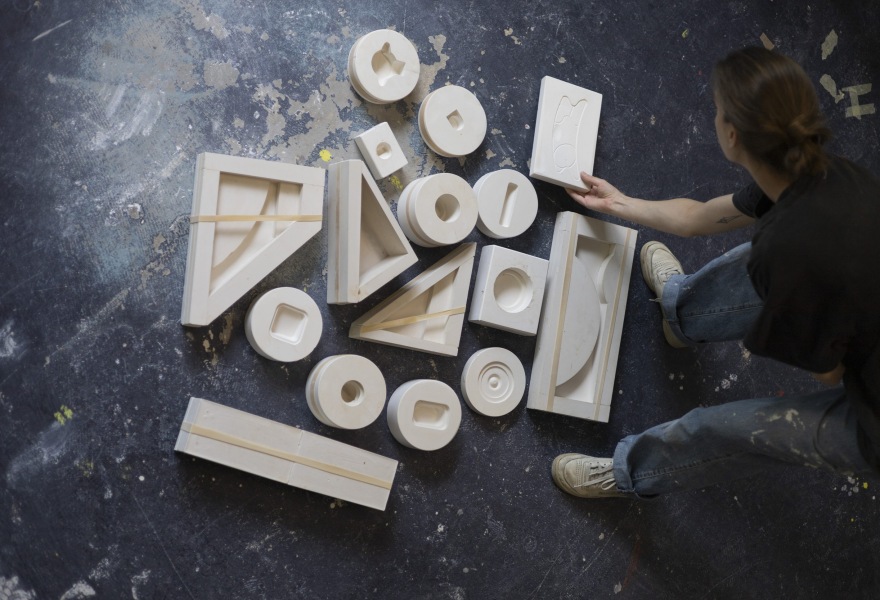
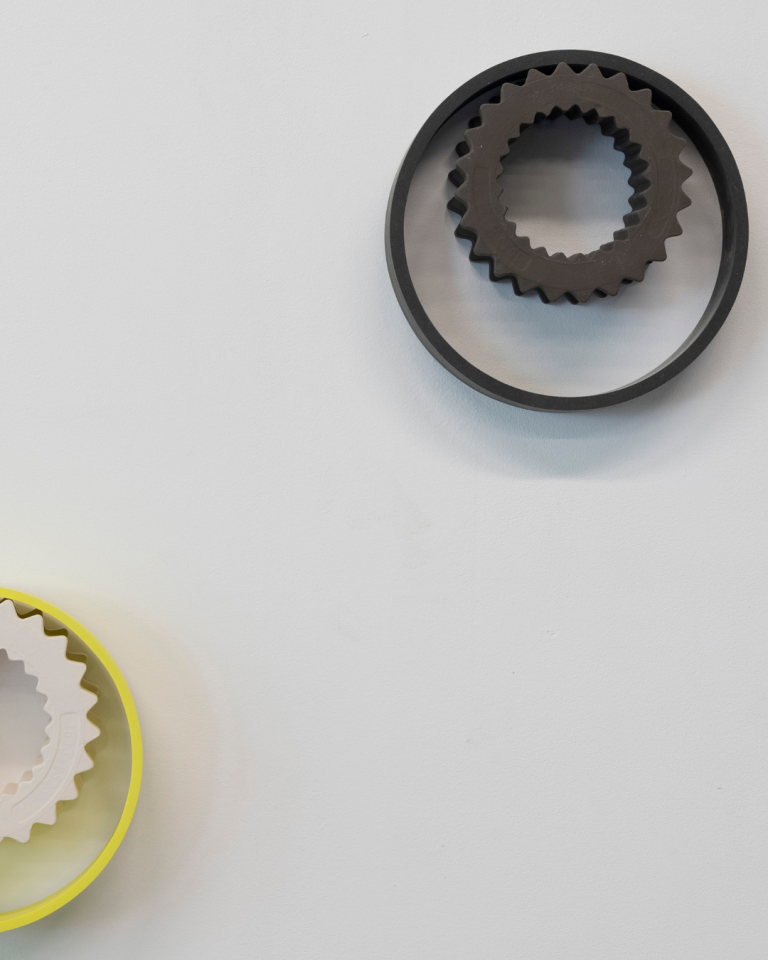
We always associate strength with something big and hard to miss, but Britte Koolen proves that this doesn’t have to be the case in her new solo exhibition Vigor, which means ‘strength’ in Portuguese. For Koolen, strength lies precisely in what you don’t immediately notice, what doesn’t stand out, like the objects she found during a residency in Portugal: small gears, rods and caps.
She recreated the found objects in ceramics, a material she had never worked with before, but which seamlessly fit her goal to make us pause and reflect on the smallest of details. “You may think at first glance that you know what you’re seeing, but the essence of the work lies in the details.”
Vigor by Britte Koolen opens on Friday 5 September and runs until 25 October at Galerie Bart in Amsterdam.
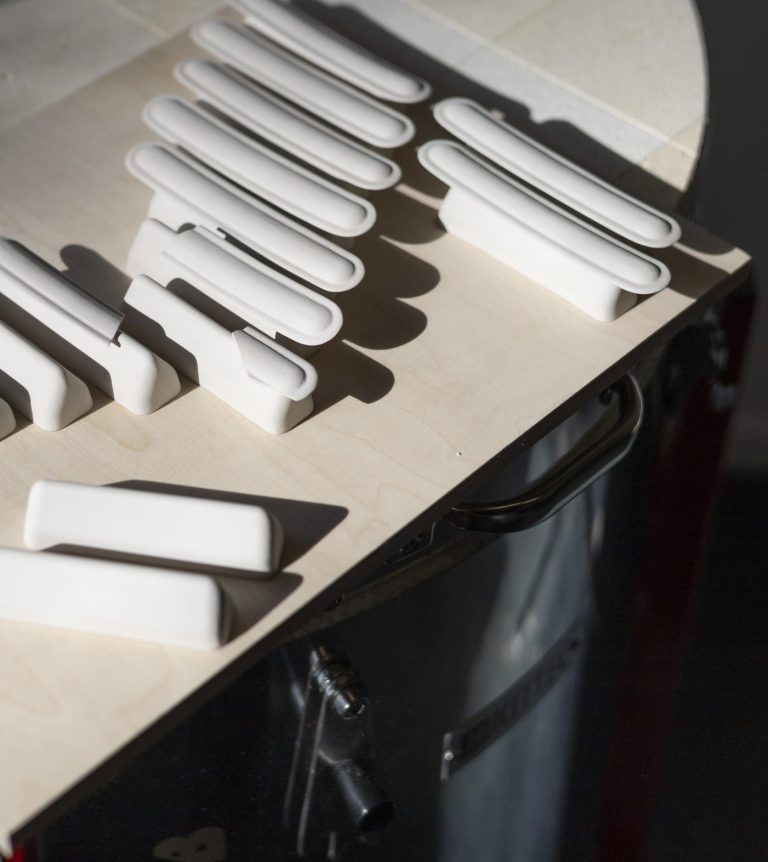
For her new solo exhibition Vigor, Britte Koolen worked with ceramics for the first time, more specifically slip casting clay.
Britte Koolen, Galerie Bart
The last time we spoke, at the beginning of last year, you had just started working with ceramics. Now we can see the first results at Galerie Bart. What prompted the transition?
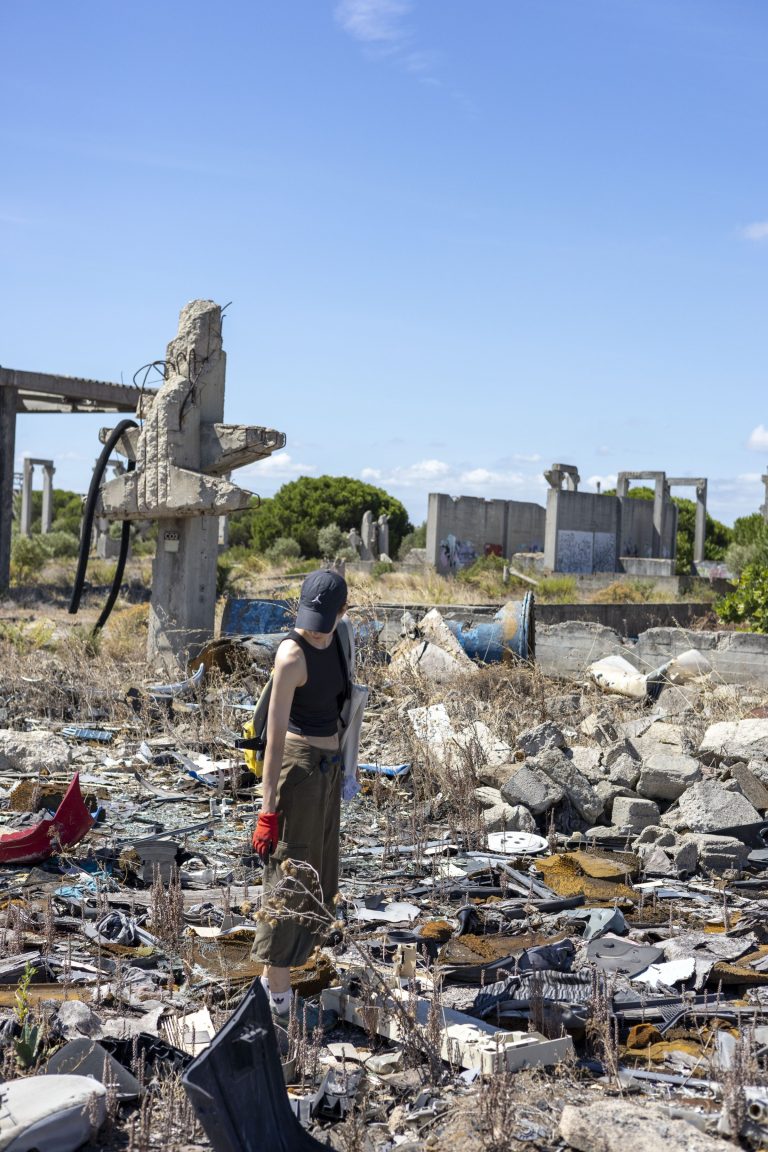
During my PADA residency in Portugal, I spent a lot of time collecting objects and materials. Back in the Netherlands, I gained new insights into the meaning of found objects within my own work. A found object often tells a story: you start to wonder where it comes from, who it used to belong to and what its function was. I made the switch to ceramics because my work is not narrative but abstract. There may be an explanation for what you are seeing, but it is precisely the absence of a story that fascinates me most. By translating the objects into ceramics, the story is detached from the object, so I can give it my own meaning.
What has your experience been working with ceramics?
My first experience with ceramics went very well. During the residency at the Cool Clay Collective, I started making moulds. I wanted to create moulds of as many objects as possible so that I could later create with a wide variety of forms. After that, I started using the moulds with slip and press clay. I immediately noticed that slip, when poured very thinly, becomes incredibly fragile. That was where the challenge lay for me: I tried to push that boundary. At first, quite a lot broke, luckily before it went into the kiln. This way of working immediately put me into a state of focus and reminded me of sanding, treating and lacquering my wooden sculptures.
Britte Koolen, Galerie Bart
Working with ceramics is quite a slow process. Some artists find that frustrating and therefore avoid it. What about you?
In mijn werk probeer ik eigenlijk altijd te vertragen en ik probeer de toeschouwer daarin mee te nemen. Je denkt misschien in een oogopslag te weten wat je ziet, maar de essentie van het werk schuilt in de kleine details. Precies dit aspect van keramiek sluit dus perfect aan bij die gedachte.
Your upcoming show is called Vigor, which is Portuguese for ‘strength’. When you see the smooth shapes, you might think more of fragility. How did you arrive at this paradox and what do you want to express with it?
I think we often mistake strength for something big, hard to miss and visually powerful. But for me, strength lies precisely in what we often don’t immediately notice, what sometimes gets overlooked or what you need to give more time. Something that may look like it could easily fall may in fact be standing firmly on the ground.
Britte Koolen, Galerie Bart
The new work traces back to your residency at PADA in Portugal. PADA is located on a large industrial site where all kinds of objects can be found. In essence, we are looking at found objects recreated in ceramics. What happens to the meaning of those objects when you make them in ceramics?
Ik denk dat we kracht vaak aanzien voor groot, aanwezig en visueel sterk. Maar voor mij schuilt kracht juist in hetgeen wat we vaak niet meteen zien, wat soms over het hoofd wordt gezien, of dat wat je meer tijd moet geven. Iets wat misschien lijkt te vallen, staat soms juist stevig op de grond.
By translating the objects into ceramics, the story can be detached from the object. That allows me to give it my own meaning. The form also changes. For example, I choose to also reveal the inside of the object. This lets me draw attention to what normally remains hidden.
You have always worked with a very limited palette of yellow, purple and red. Can you tell us more about that? Why these specific colours?
When I was young, things could sometimes feel overwhelming. In such moments, I always looked for something in the space I could disappear into. That might be a piece of chewing gum on the ground or a hole in the wall. But more often, it was something with the colour red. Red is an important colour for me because it stands out. When I feel restless or uncomfortable, I search for something red in the space to calm myself. So, red has always been a logical choice for me. The colours I chose afterward always had to work together with red.
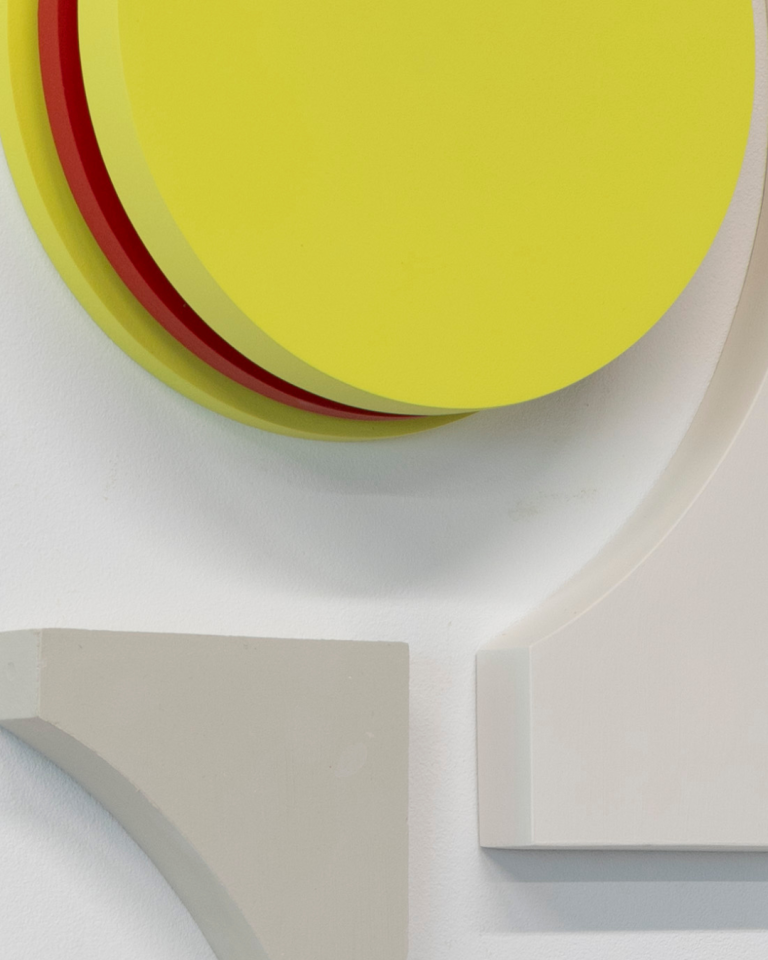
Britte Koolen, Galerie Bart
One work usually logically leads to the next. Do you already have an idea about what your next project will be?
First of all, I want to continue collecting objects and translating them into ceramics. I am getting better at making complex moulds. The works in this exhibition are really just the first steps. This involved working intensively with moulds, both for my ceramic sculptures and the concrete sculpture in the garden. Making a mould requires a lot of time and focus. In the future, I would like to use these moulds in a different way. What if the concrete sculpture was not the end result, but rather the mould itself that was made for it? That way, you can also show what usually remains hidden inside a sculpture, something that ultimately no longer receives attention. I also want to keep challenging the materials of wood, concrete and ceramics, and continue to specialise in them.
