12 august 2025, Martine Bontjes
The studio of... Alfhild Sarah Külper
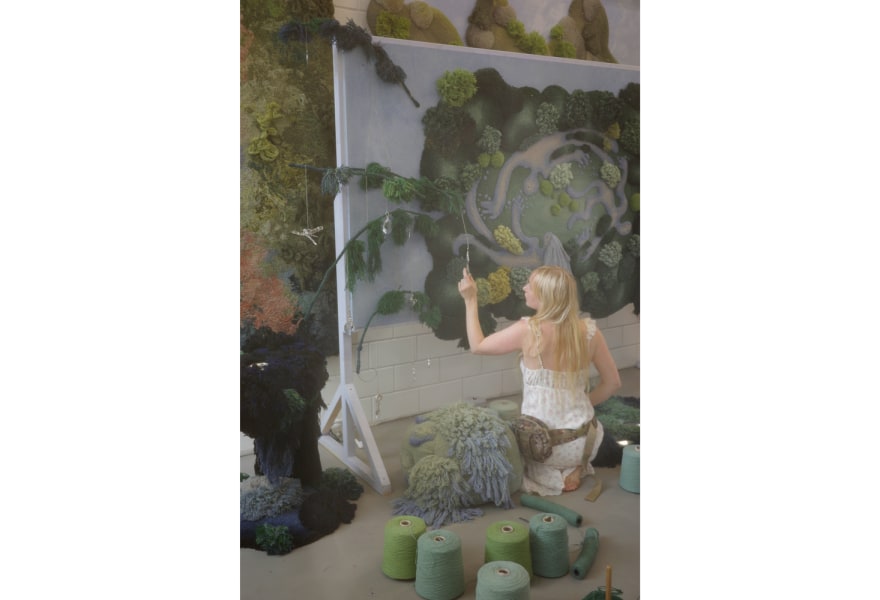
For the Swedish artist Alfhild Sarah Külper, wool is more than just a material to work with. Its soft texture brought her inner peace when she was forced to stay home due to physical complaints. Külper started to research the origin of wool production which led her to the mountains of southern Nepal and northern India, where ancient dyeing techniques and the traditional art of weaving are still preserved. Here, she worked with a local family to give new life to leftover yarn from hand-knotted carpets.
Over the past months, Külper has been working at her spinning wheel in Amsterdam-West, creating a new series of colorful, tactile sculptures. These will be shown at the Enter Art Fair in Copenhagen from 27 to 31 August. Next month her work will be featured in the exhibition "SOFT! Textile Art" at Rademakers Gallery, from 10 September to 13 December. It will be the seventh edition of the gallery’s annual presentation of emerging talent in contemporary textile art.
Where is your studio, and how would you describe this place?
My studio is located in the west side of Amsterdam, Netherlands. It's an old technical school building, with large windows towards some of the most beautiful trees I have ever seen. The sun filters through the moving leaves, creating dynamic wave patterns that bring the place to life. My main material is wool, filling the studio with softness. The colors of the wool always retain a natural undertone, giving the space the calmness of being in nature, and the material absorbs sound, making it a calm sanctuary. I honestly want to spend every waking hour here.
Alfhild Sarah Külper, The wall, Rademakers Gallery
What is the first thing you do when you enter your studio? What do you prefer to start with?
I start with one of the most meditative parts of my process, yarn spinning. I do this in the natural light, before turning any electrical lights on. Just the repetitive movement and the sound of the wooden mechanism. As the threads untangle into neat balls of yarn, my thoughts untangle and become clear. Giving me focus so I can plan my day.
What are the essential objects or tools you always need around you while working?
I think I could work anywhere at any time, haha. I have to set strict schedules for myself, otherwise I never stop. But I have a ceramic snail that my friend made, it has a great expression of awe. I like to have it around for support. Some days I work alone , and some with my trainees and assistant. On Wednesdays my mother-in-law comes to help with the hand stitching finishes we do along every edge of the finished works. I love these afternoons, sitting with different generations of women around the piece, comparing our experiences of the world. It has been an enormous joy to see the studio become the happy place for not just myself.
You spent a decade as Head of Design at Viktor & Rolf. At what point did you feel the need to express yourself more independently?
I loved my time there so much, it truly is a magic factory. And I never felt the need to express myself outside of work. I started as a designer, where all my creative needs were met. Later, when I got promoted to Head of Design, I was creatively fulfilled mentally but not physically, as I would not always execute the ideas myself anymore. My hands protested, but my head did not listen, and eventually it made me very sick. I was not allowed to come in to work anymore, because of my physical illness, I had to stay home to rest. And there my own ideas started taking form. Once I had opened the door, they poured out of me, like a never ending river. And now I cannot close that door.

Alfhild Sarah Külper, Deep Sea Sunset, Rademakers Gallery
Do you still feel connected to the fashion world, or has your relationship to it fundamentally changed since starting your own practice?
I love the fashion world for its transformative magic. Its ability to let you be exactly who you want to be. Putting on a certain color or shape can completely change how you feel and interact with the world. I try to keep the same magical powers while now dressing walls instead of bodies.
In September you will be taking part in the group exhibition SOFT! Textile Art at Rademakers Gallery. What does softness mean to you exactly?
The concept of softness is central to my work. My art practice came out of a healing process. A strong longing for something physically and emotionally soft. The intense longing has gone from being a very personal experience, to my motivation and philosophy of the studio. My mission to make the world a softer place is getting more defined and conscious. My practice started from a need to pull myself out of a dark place, and to create the visual and emotional surrounding I wanted to live in. Since the world has overall become a place with quite some darkness, it feels even more important to show a possible path forward, a soft and kind path to walk with bare feet and feel the warmth through the soles of your feet. You become like your environment.

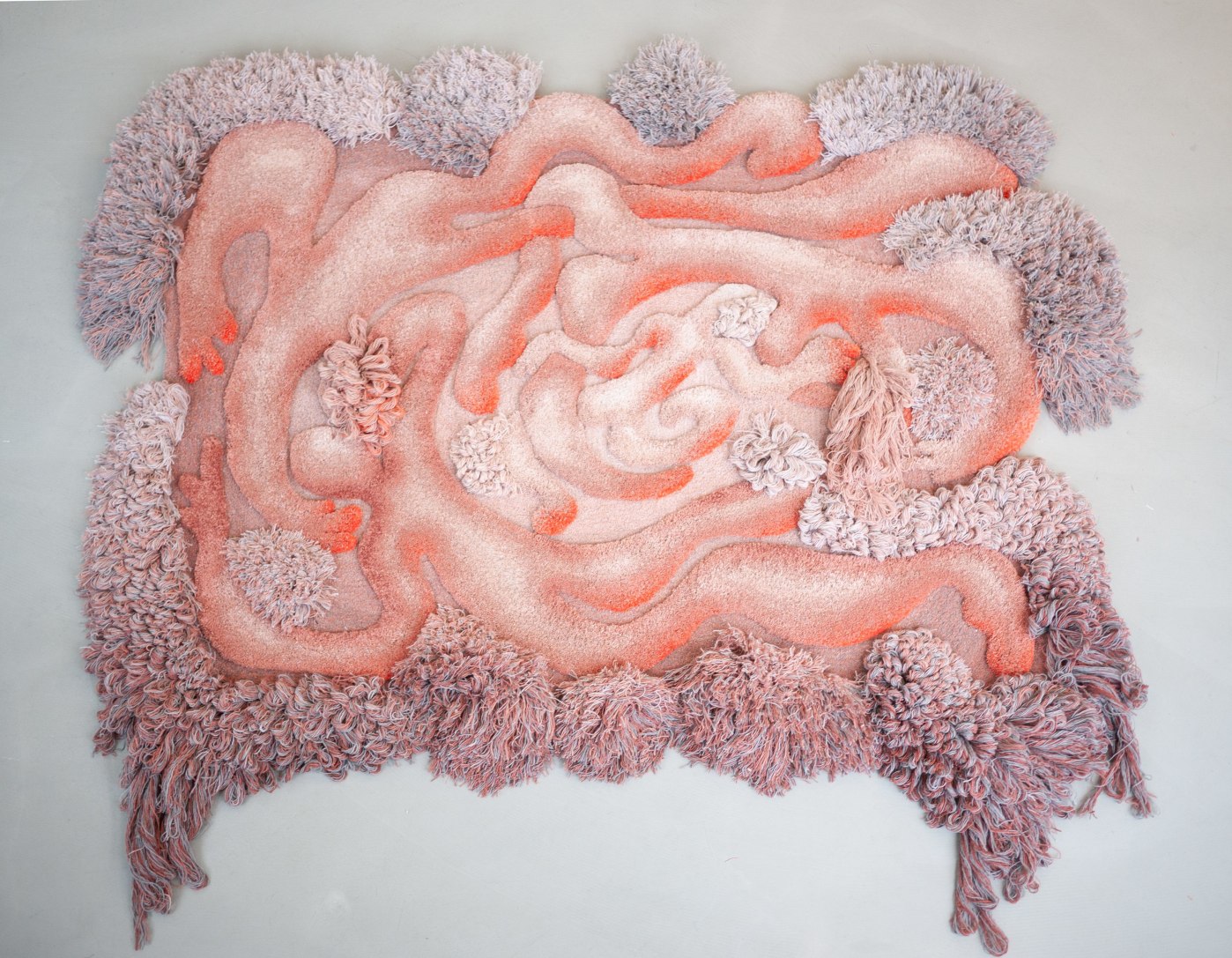
Alfhild Sarah Külper, Twilight Dreams, Rademakers Gallery
Your materials come from all over the world, from Nepal to the Netherlands. Does the origin of the material influence the story you want to tell?
For me it is important that everywhere the material has been handled, it has been done so with good intentions and energy. Material that has been touched by living hands in all the parts of the process. I very much believe this downloads a frequency into the works that keeps it radiating calmness and connection.
Can you tell us more about your collaboration with the weavers in India? What was the start of this connection?
It has been a very nice connection, I started using leftover wool from the Netherlands. But the materials were often quite old, from the factories that one by one had closed down. I followed the trail of manufacturing that often led to mass production and cheap synthetic materials. But in the mountains of southern Nepal and Northern India I found an area of textile craft preservation. Old dye techniques and beautiful wool. The hand knotted carpets they make take so long that the leftover colors rarely come in use again. I have set up a programme with a local family to buy up all the little leftover colored yarns, giving them a new life.
What are your next steps? Are there any materials, techniques or collaborations you would like to explore?
There is so much to explore. I would love to continue making healing environments. Especially for places where it is utterly needed, like hospitals or governmental buildings. Wherever beauty in thought and softness is needed. I am also dreaming of an exhibition showing a bigger arch of the soft future stories. And I would love the opportunity to develop work for outside public spaces, giving more people the experience of a softer world.

Alfhild Sarah Külper, Dream Mountain Rising, Rademakers Gallery
