17 march 2025, Flor Linckens
A glimpse behind the curtain: the layered and poetic work of Laurence Aëgerter
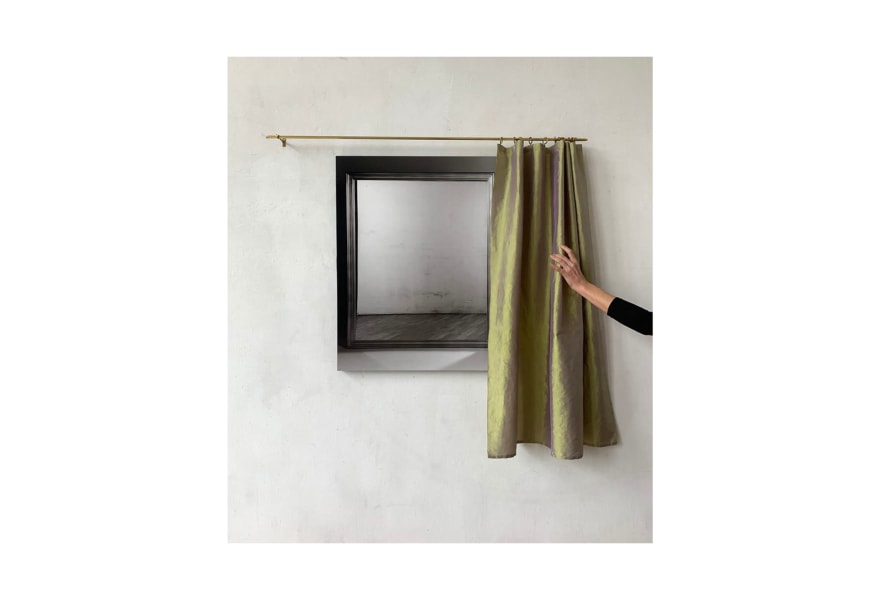
Until 29 March, Bildhalle in Amsterdam presents ‘Le Miroir aveugle’, a solo exhibition by Laurence Aëgerter. Here, the artist invites us to reflect on perception, memory and the elusive nature of images. Trained as both an art historian and a visual artist, the French-Dutch artist has developed a multidisciplinary practice that spans photography, textile art, installations and community projects. Her layered work is deeply rooted in a profound exploration of the transformative power of images and how they shift in meaning over time and context.
Aëgerter examines how images are created, circulated and consumed. By reinterpreting historical imagery and forging new connections between past and present, she reveals how visual culture shapes our perception and challenges us to reflect on authenticity. In doing so, she explores the structures — the archive — that shape our collective memory. ‘Le Miroir aveugle’ brings together new and existing works, demonstrating the variety within her practice.
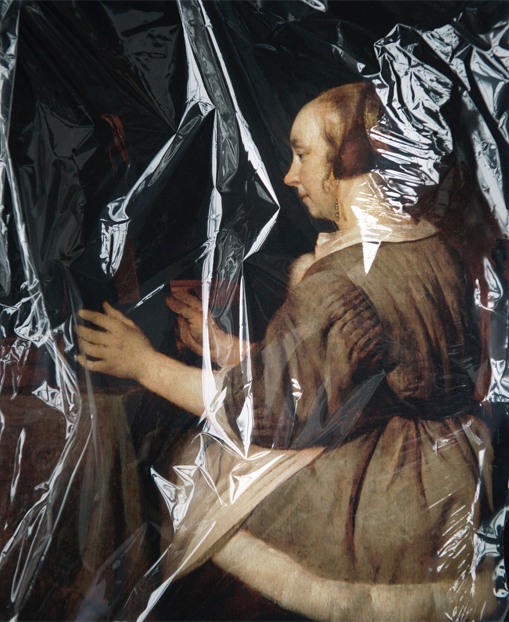
The exhibition title refers to a recurring motif in 17th-century Dutch painting: a painted curtain partially concealing the scene behind it. This illusionistic technique, which both provokes curiosity and protects the work from light, serves as a metaphor for the workings of memory. In Aëgerter's practice, images function not only as mirrors of the past but also as veils that reveal new meanings.
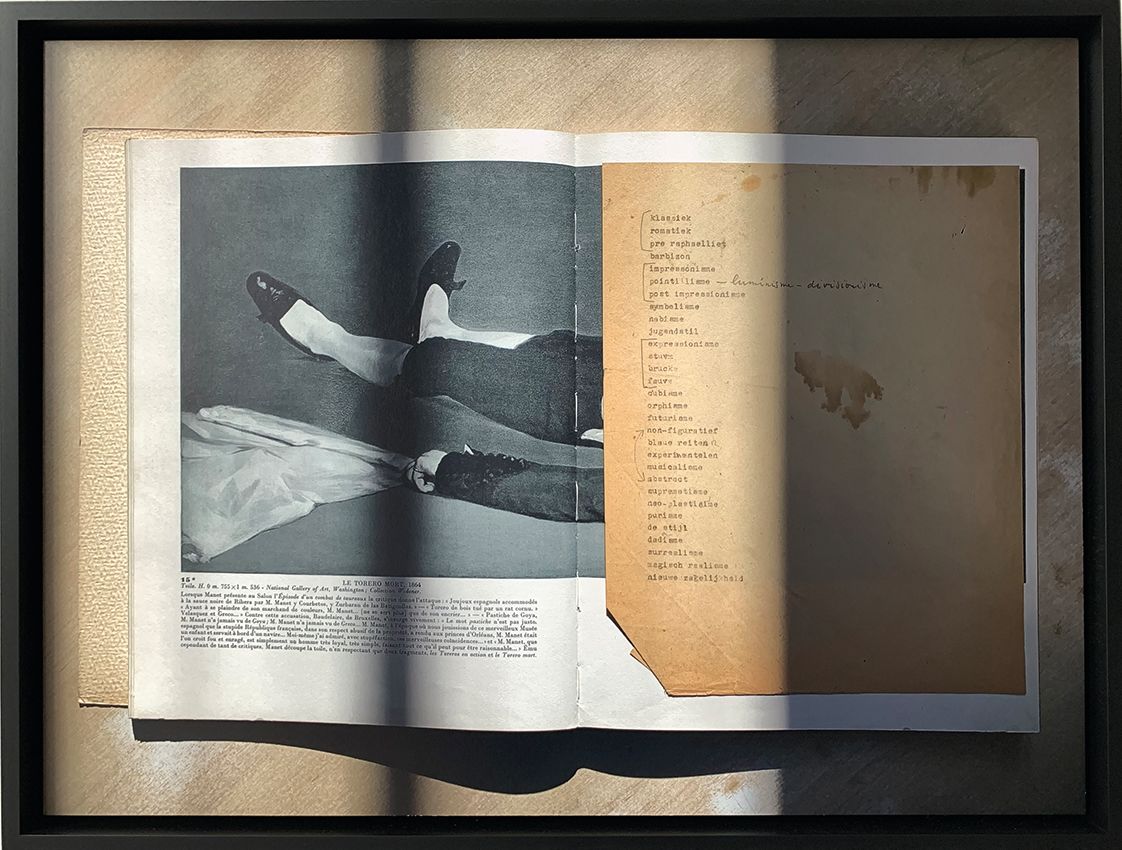
Aëgerter works at the intersection of photography, textile art and installation. In her practice, appropriation and transformation of existing images play a central role. Using material from encyclopaedias, art reproductions and documentary photography, she recontextualises these images in a new, often poetic framework. Historical reproductions are manipulated, fragmented or rephotographed. They are distorted, reversed, concealed or exposed to time, light, shadow or heat. Some interventions result in subtle shifts in colour and composition, while others involve radical physical alterations. Aëgerter incorporates elements such as mirrors or sand from her hometown, creating visual tensions where the boundaries between original and interpretation dissolve, allowing one reality to transition into another. Through visual illusions, deliberate disorientation, disappearance and duplication, she explores the tension between the static nature of images and the fluidity of perception.
The artist possesses a profound knowledge of art history and iconography, which she employs to bring images from different time periods into a dialogue. Her work weaves together transcultural and transhistorical references, infusing traditional visual language with contemporary depth and complexity. Beyond its aesthetic interplay of visibility and concealment, her practice also engages with broader themes such as impermanence and absence. Some works in the exhibition can be interpreted as contemporary memento mori — reminders of what has been lost or is at risk of disappearing.
Alongside her art historical research — as a child, she once dreamed of becoming a detective, police commissioner or spy — collaboration plays a key role in her practice. In recent years, she has worked with psychiatrists, neuroscientists and patients, including individuals with dementia and mental health disorders, to explore how images influence memory and cognition. This investigation into the fragile edges of the human mind also resonates in this exhibition, where the boundaries between fact and fiction, past and present are constantly challenged. That sense of vulnerability is mutual: on her website, the artist shares that she has dyscalculia, vertigo and asthma. She also happens to mention that she is fluent in five languages.
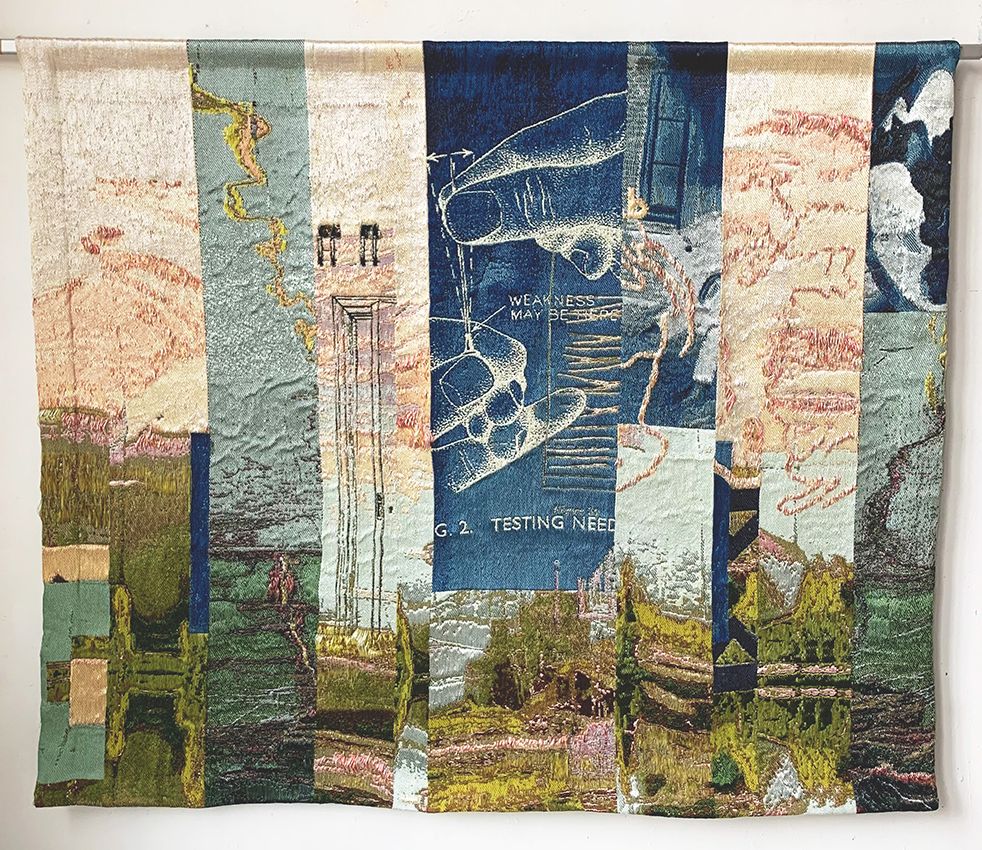
The exhibition also features two works from the series ‘A Glitch in the Mind’. This trio of tapestries (Lake, Hill, Moss) originates from her monumental piece "Epic of the Mind". During the creation of this 38.5-metre-long tapestry, Aëgerter discovered the power of test strips: fragments and disruptions that stimulate the mind and evoke new associations. These ‘glitches’ invite the viewer to fill in the spaces between the fragments and reinterpret the whole.
Born in Marseille in 1972 into a family of antique dealers, Aëgerter now divides her time between her hometown and Amsterdam. She studied art history at the Université d’Aix-en-Provence and the Vrije Universiteit Amsterdam, where she graduated cum laude with a thesis on the trompe-l’œil in 17th-century Dutch painting. She later pursued visual arts at the Gerrit Rietveld Academie, further developing her research into image transformation. Her work has been exhibited at Petit Palais in Paris, MAMAC in Nice, Guggenheim Museum Bilbao, Les Rencontres de la Photographie in Arles, the Museum van de Geest, the Fries Museum, Jeu de Paume in Paris, FoMu Antwerp, the Frans Hals Museum and the Nederlands Fotomuseum. Her work has been included in the collections of institutions such as The Metropolitan Museum of Art in New York, The J. Paul Getty Museum in Los Angeles, The New York Public Library, Museum Voorlinden, MAMAC in Nice and the Nederlands Fotomuseum.
Bildhalle has organised a public programme alongside the exhibition. On Saturday 22 March at 16:00, Laurence Aëgerter and philosopher Marjan Slob will discuss Aëgerter’s new artist’s book ‘Rome Éternelle’, which will be presented at the event. Additionally, Aëgerter will offer guided tours of the exhibition on Wednesday 19 March at 18:00 and Thursday 20 March at 14:00. Visitors can register in advance by contacting the gallery.
