13 february 2025, Emily Van Driessen
High Frequency Interactions at BARBÉ Gallery
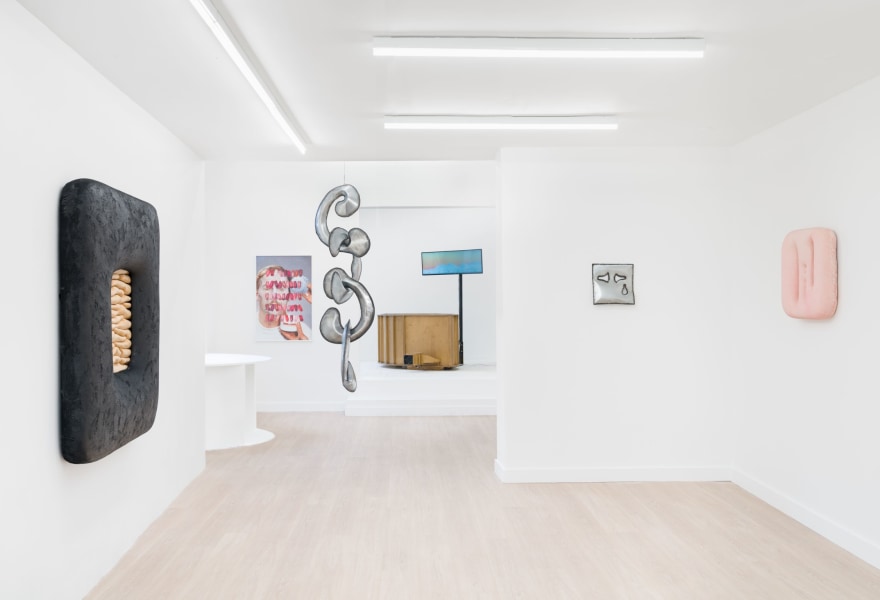
Four artists, four approaches, one precise curation. 'High Frequency Interactions' brings together four distinct artistic practices at BARBÉ Gallery in Ghent. The interplay between these artists reaches new heights, resulting in a layered and dynamic exhibition.
Jens Kothe and Walter Wathieu represent two extremes within the sculptural domain. Kothe’s work is rooted in physicality and tactility; his forms seem to breathe, carrying a fleshy, organic presence. Where his sculptures feel like a second skin, folding and stretching with an almost corporeal texture, Wathieu’s emerge from industrial processes — welded and expanded under water pressure. Yet, beneath their cool, metallic surfaces lies a delicate, poetic fragility. “By placing these two distinct practices side by side, they enhance one another even further,” says gallerist Oliver Barbé.
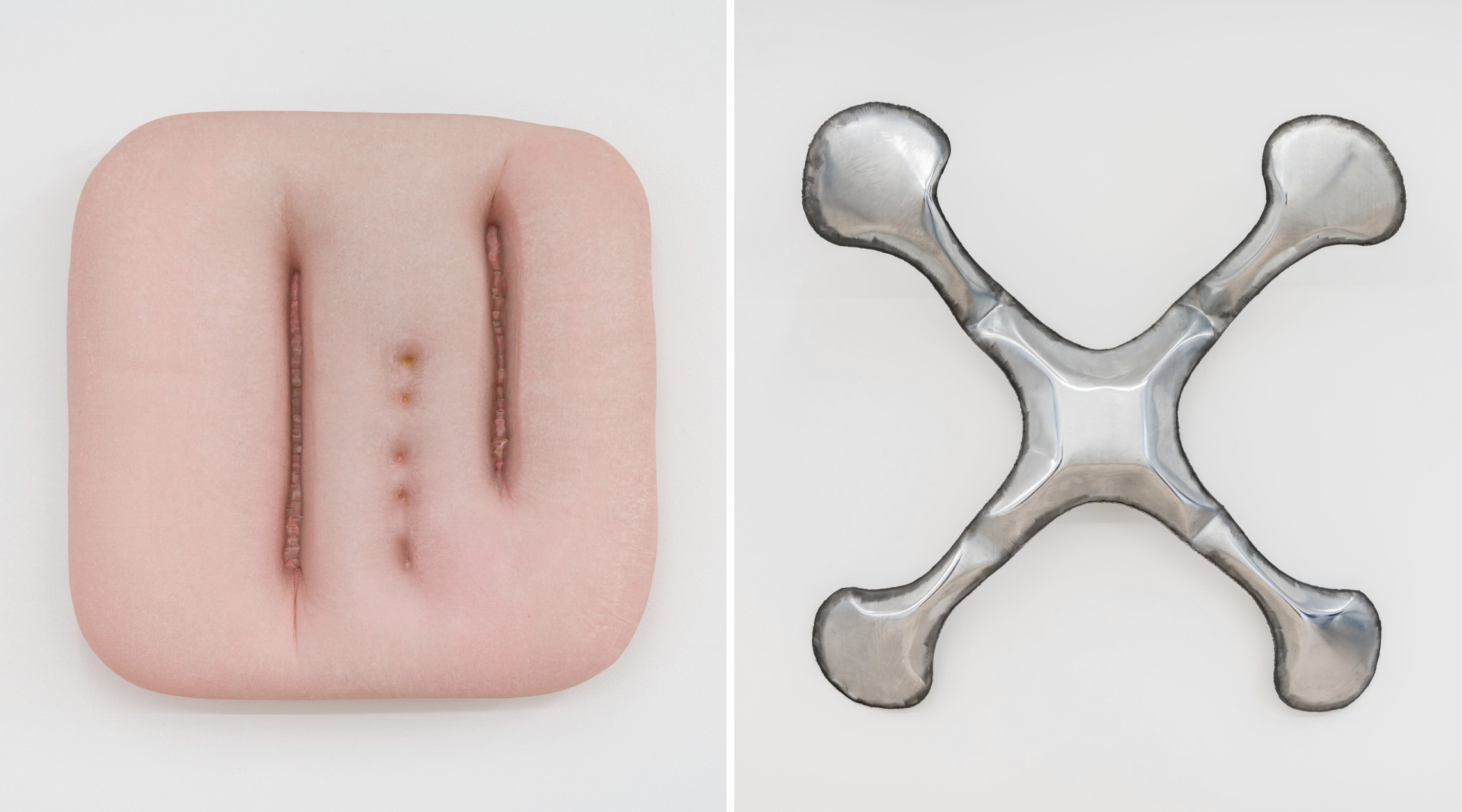
Jens Kothe, Stapled Cracks III, 2023 | Walter Wathieu, Heimat, 2024 | BARBÉ
Walter Wathieu’s approach is intuitive and unrestrained, akin to écriture automatique, a technique in which spontaneity and the subconscious drive creation. “It’s a free-flowing state of mind,” he says of his process, where chance plays a vital role. His sculptures take shape through a dynamic exchange between material and external forces. Using water pressure to inflate his forms, he allows gravity to dictate how they ultimately unfold in space.
Alongside these sculptural explorations, the multimedia works of Sarah & Charles and Haseeb Ahmed make the invisible tangible. Sarah & Charles investigate how stories take shape and how illusion shapes perception. Drawing from cinematic and narrative structures, they explore make-believe, the ability to fully immerse oneself in a fictional world, and suspension of disbelief, where audiences accept the unreal as long as the narrative holds. This results in playful, often humorous works that weave multiple plotlines into an intricate layering of realities.
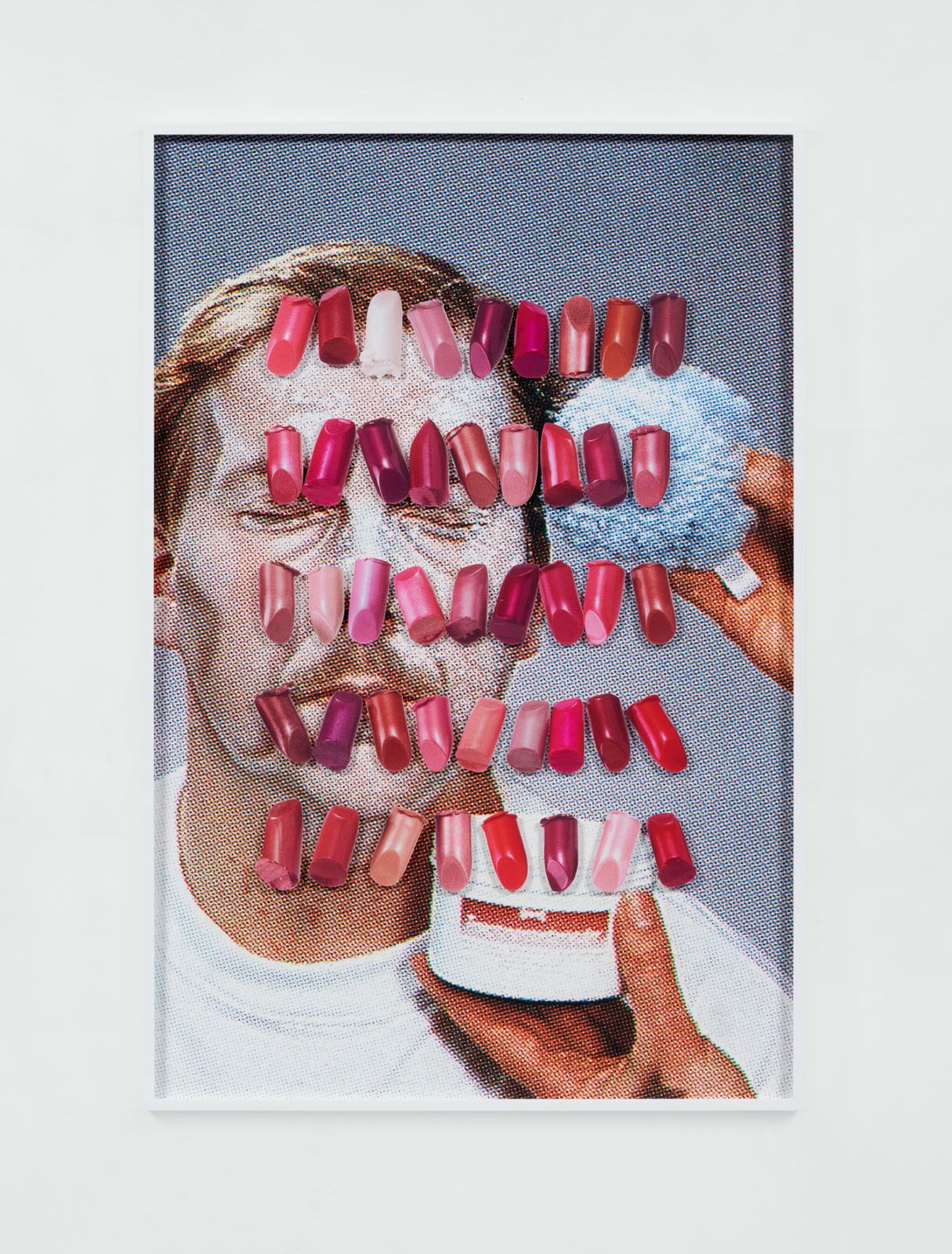
Sarah & Charles, Simulacre & Simulation (Lipstick), 2019, BARBÉ
Haseeb Ahmed’s practice operates at the crossroads of art and science. In this exhibition, his works not only give form to the dynamics of wind and economy but also expose how these invisible forces quietly shape our perception and daily lives. In his series "Words on the Wind", he trained an AI to analyse the use of wind as a literary metaphor. The selected phrases are painted onto hand-marbled surfaces inspired by wind patterns and flow visualisations. In "Stock Weather II", Ahmed translates financial data from 2008 into air currents that sculpt a miniature desert landscape. This installation makes the abstract impact of economic systems tangible by connecting them to the physical forces of wind.
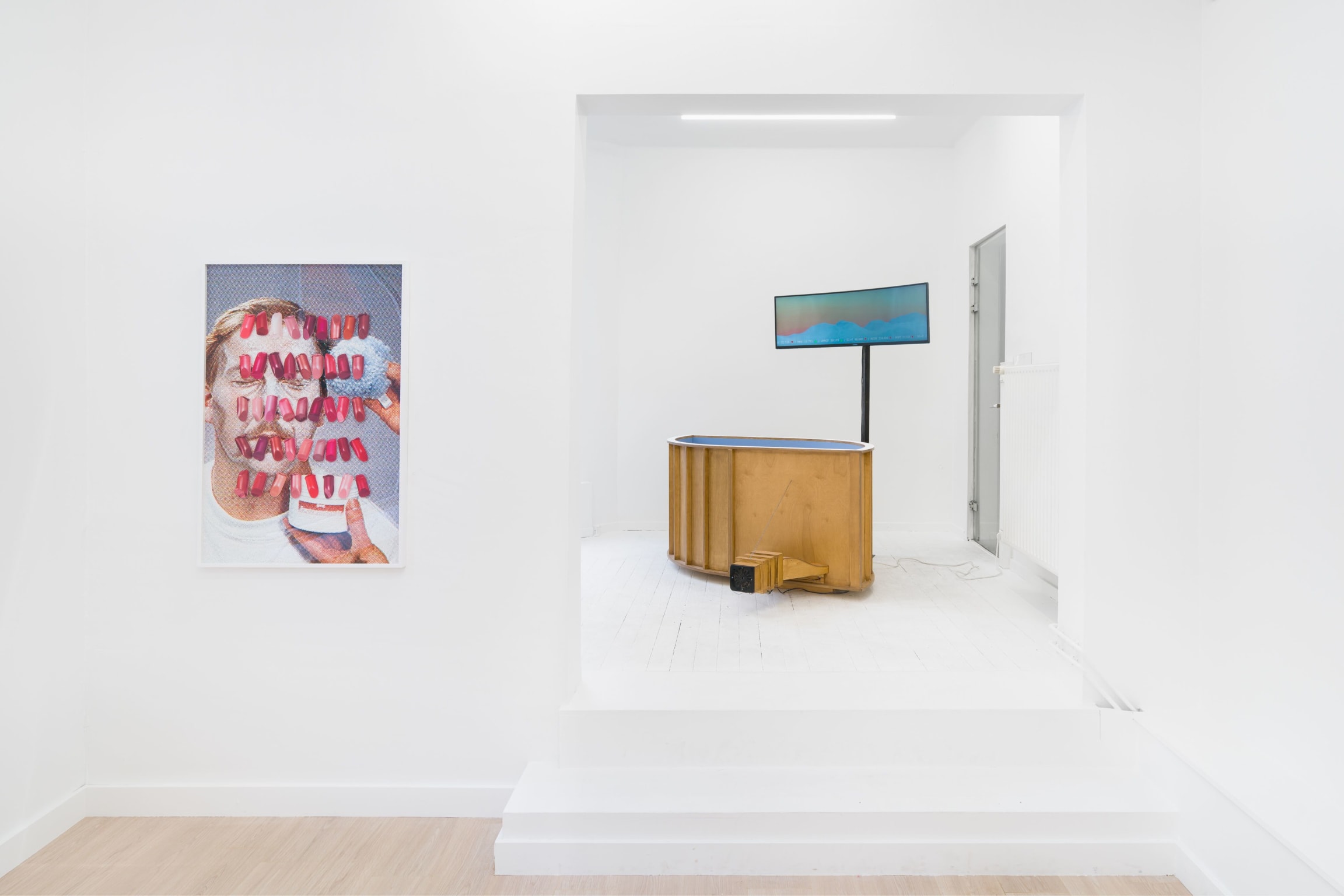
Work by Sarah & Charles (left) and Haseeb Ahmed (right) in the exhibition
