01 august 2023, Wouter van den Eijkel
Best of Graduates 2023
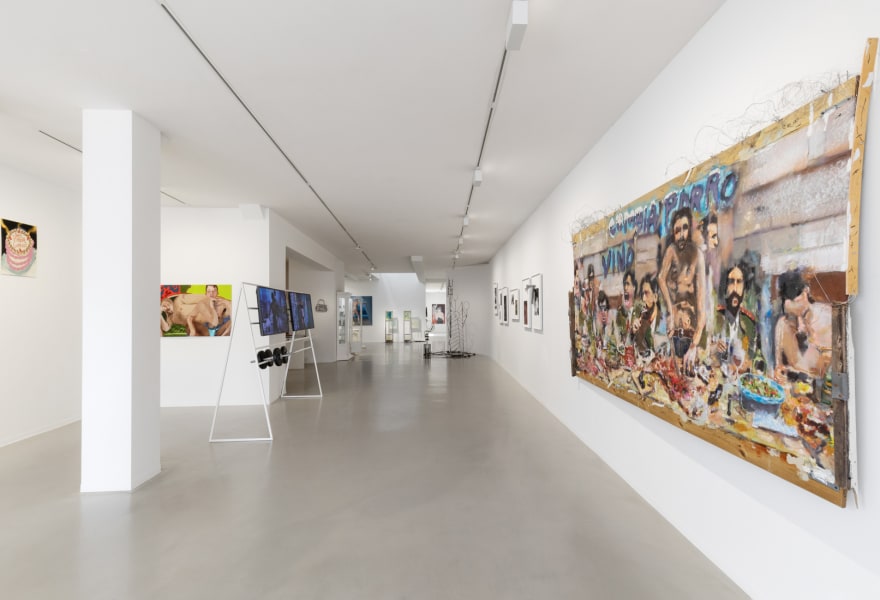
Considerable attention to personal subjects and memories in a beautiful edition of Best of Graduates, the annual overview at Galerie Ron Mandos with the best of the nine graduation shows.
Every year, Best of Graduates is a gift to art lovers with too little time to visit all Dutch graduation exhibitions. For this 16th edition, curator Radek Vana, Ron Mandos en Lars Been of Galerie Ron Mandos set out to make a selection of 25 recent graduates. This year, the emphasis is less on identity issues, yet the subjects are often personal.
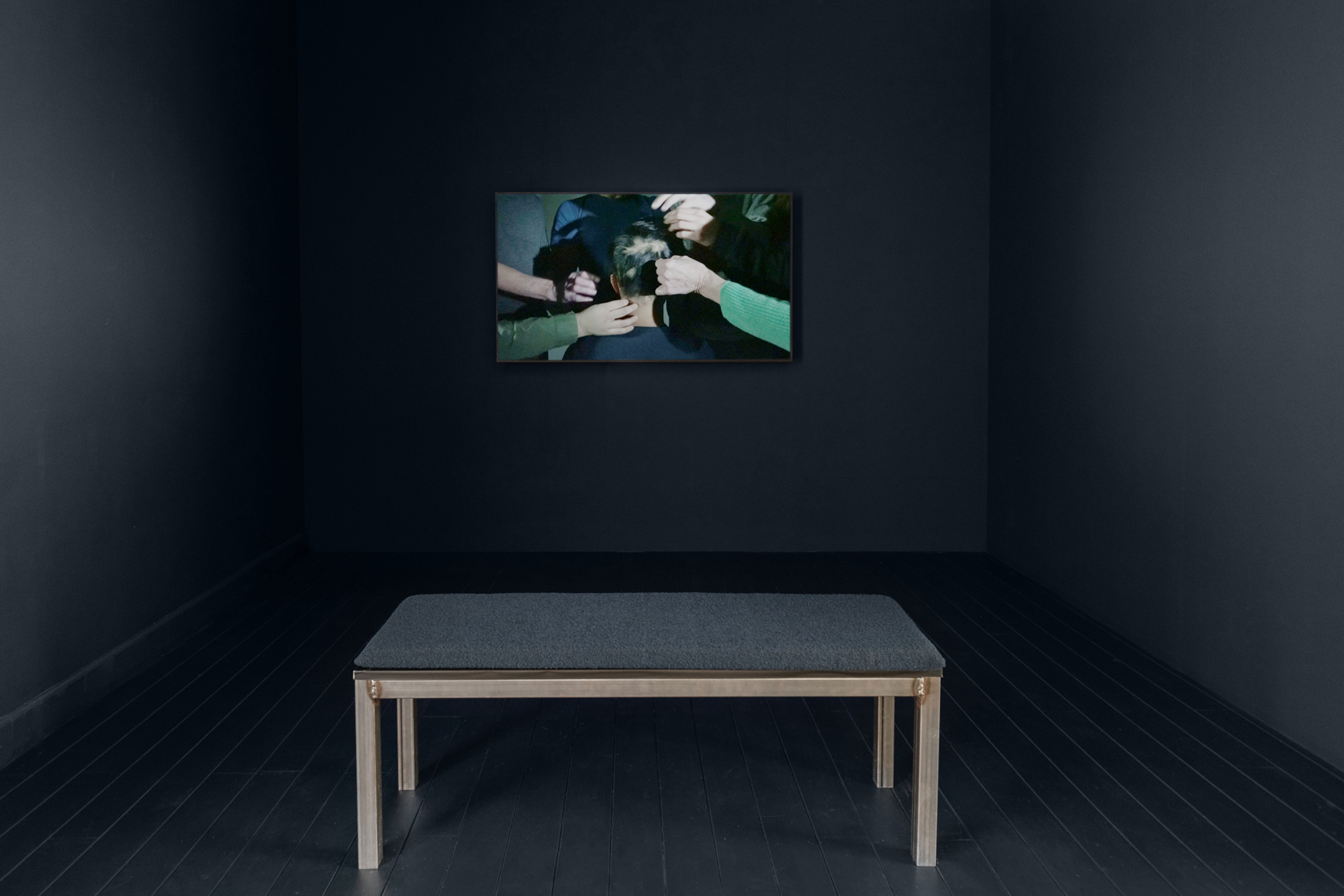
Mellika Ghirah, Best of Graduates 2023, Photo by Michèle Margot
“With some work, you immediately know that it should be included in the exhibition,” says Radek Vana. A good example is the video work by Mellika Ghirah (Rietveld Academy), for example, in which the artist is stripped of her hair in 15 minutes by five hands. It is an extremely personal work that simultaneously touches on the themes in Ghirah's photographic work: time, death and the complex nature of transience and memories.
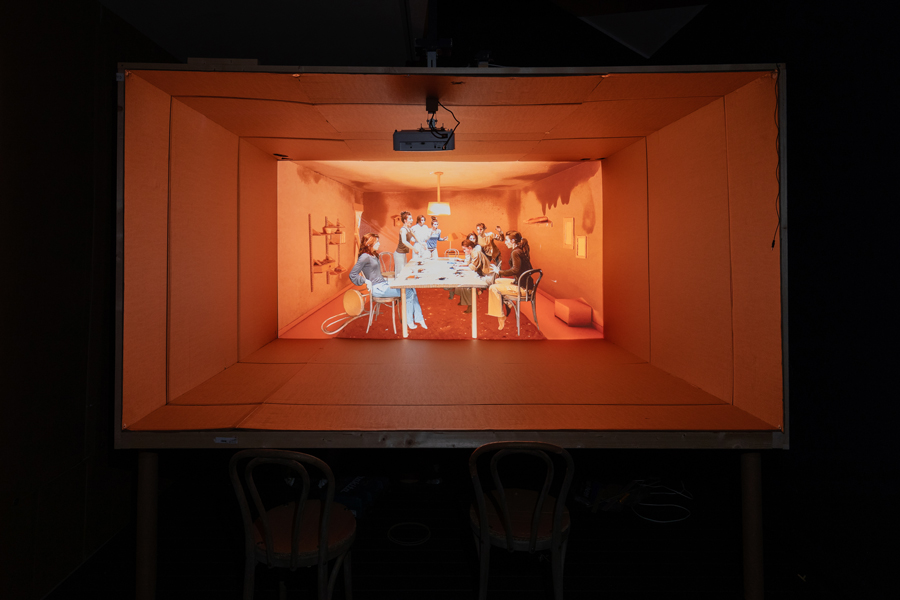
Jemima de Jonge, Best of Graduates 2023, Galerie Ron Mandos, Photo by Michèle Margot
Another example is the artwork by Jemima de Jonge (KABK, providing no fewer than eight out of 24 entries). Vana comments, “Jemima's work is very complete and complex, as if you are stepping into another world.” De Jonge makes cardboard viewing boxes, ranging from a practical size to entire rooms in which everything is made of cardboard, from the houseplants to the bed and blinds. The cardboard rooms serve as a backdrop for films in which De Jonge plays all the characters, from a girl doing a TikTok dance in a sports bar to all nine family members, one of whom chokes on a piece of cardboard.
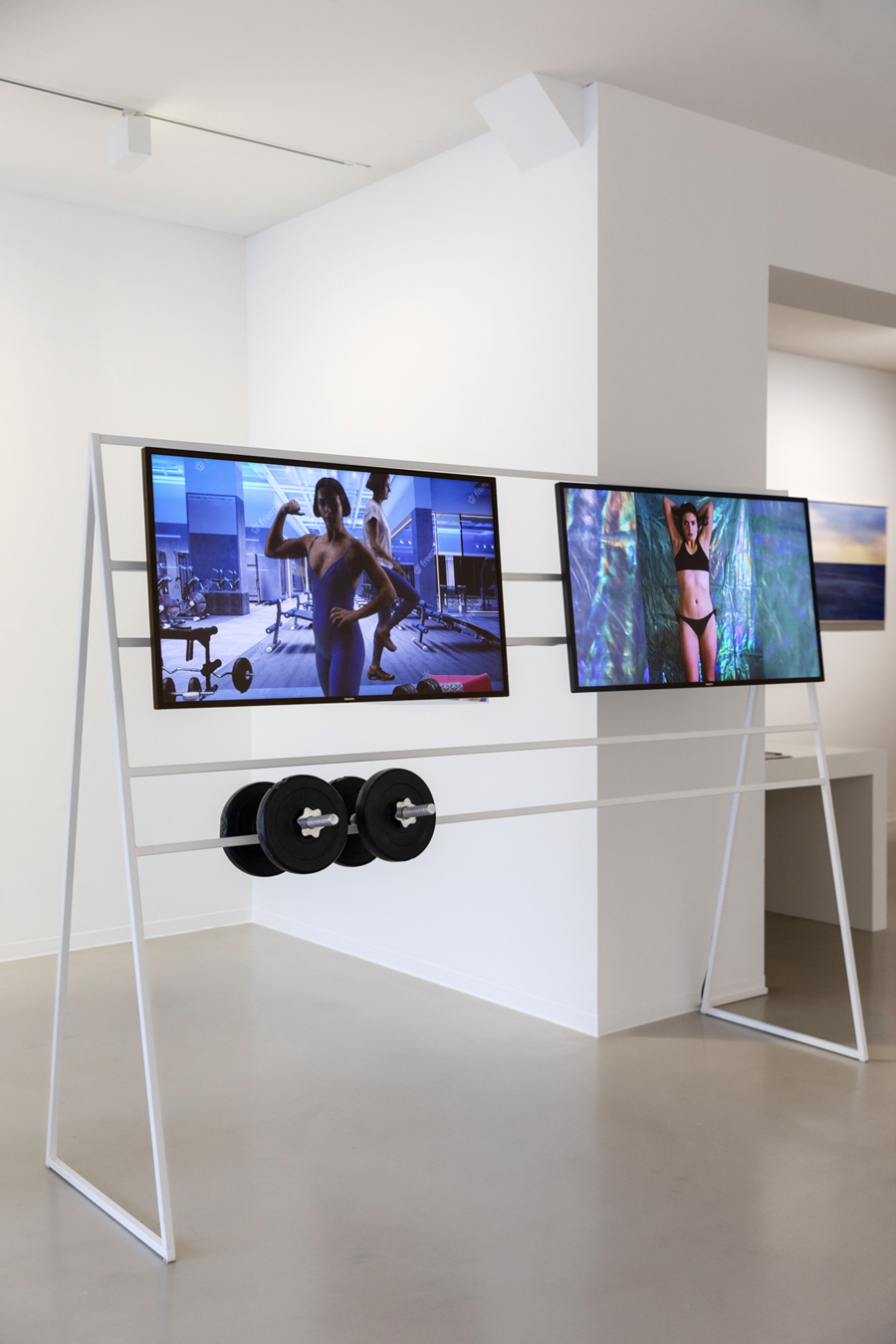
Julia Leijten, Best of Graduates 2023, Galerie Ron Mandos, Photo by Michèle Margot
Past and present
“We also always try to choose current work,” adds Vana. The video work by Julia Leijten (St. Joost, Breda) is certainly topical. In her videos, she humorously addresses our obsession with our bodies and appearance in social media in the form of an Instagram reel and hilarious protein shake partnership video.
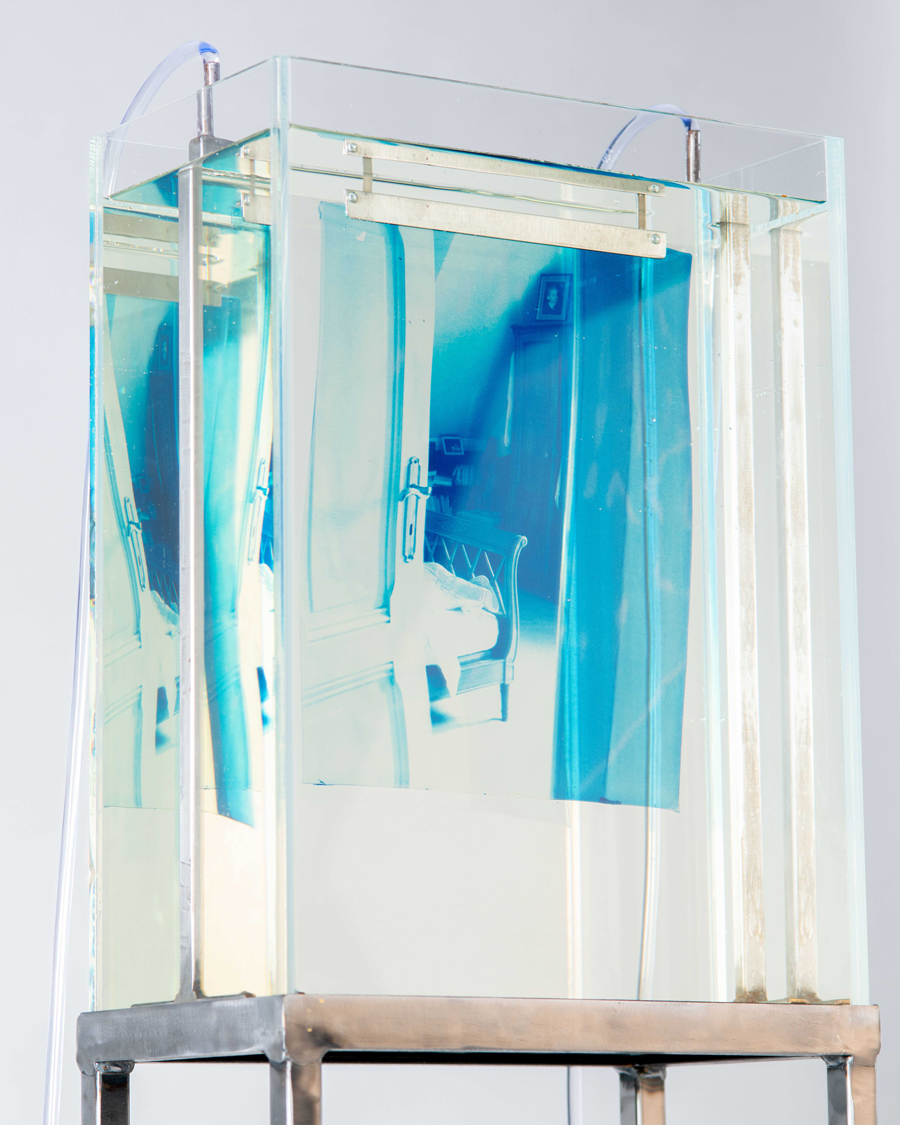
Vincent Zanni, Best of Graduates 2023, Galerie Ron Mandos, Photo by Michèle Margot
The past is also a common subject in the form of memories, especially of houses. Swiss Vincent Zanni (Willem de Kooning Academy) invented a special process to make his gelatine cyanotypes dissolve more slowly in water. Over the course of two weeks, the images of Zanni's emptied family home dissolve entirely, as do his memories of the house that had to be sold after the death of his grandparents.
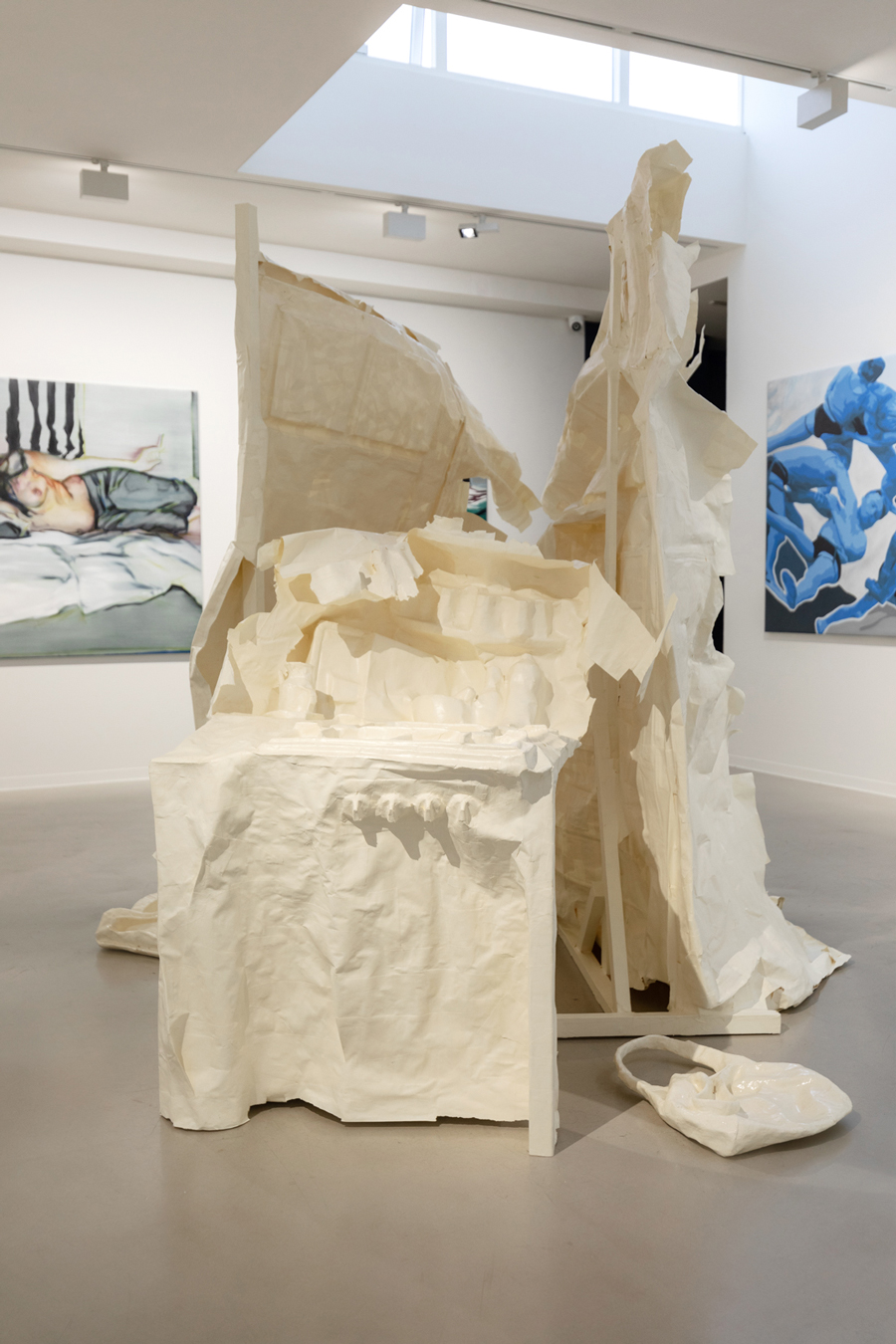
Emma Sebregts, Best of Graduates 2023, Galerie Ron Mandos, Photo by Michèle Margot
The transient nature of memories of old addresses is also the theme of the paper mâché work of British Emma Sebregts (KABK). Sebregts has lived in lots of different places and has made papier-mâché prints of parts of those locations. She has combined the impressions of the different spaces, partly collapsing under their own weight, in a single installation, so that the memories flow into one another.
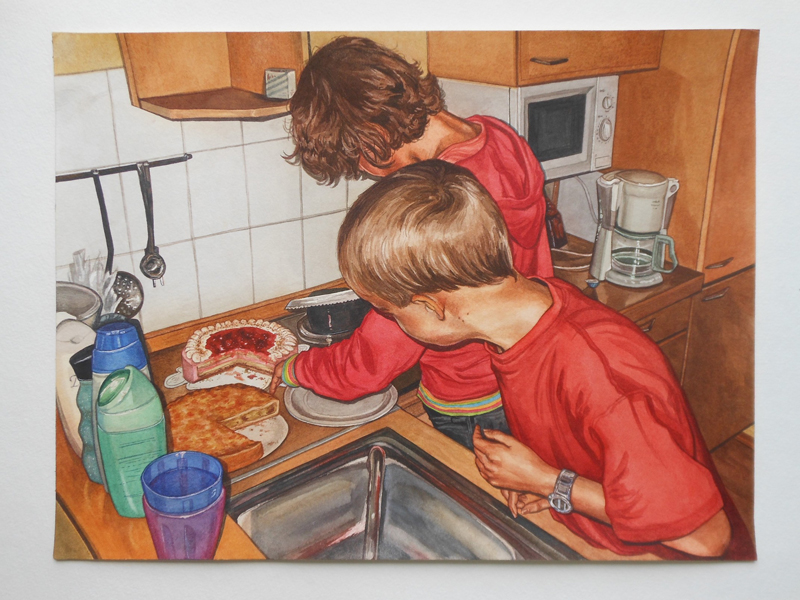
Judith Knol, Best of Graduates 2023, Galerie Ron Mandos, Photo by Michèle Margot
Photos in watercolour
Judith Knol (Academy Minerva) from Groningen also stays close to home, using watercolours to copy a large number of her family photos, everyday snapshots taken on holiday or at home. Her work can be interpreted as a response to the possibility to take digital pictures anytime, anywhere. This has drastically changed our approach to photography and memories. She challenges the factuality of photography by reconstructing the pictures layer by layer in watercolour.
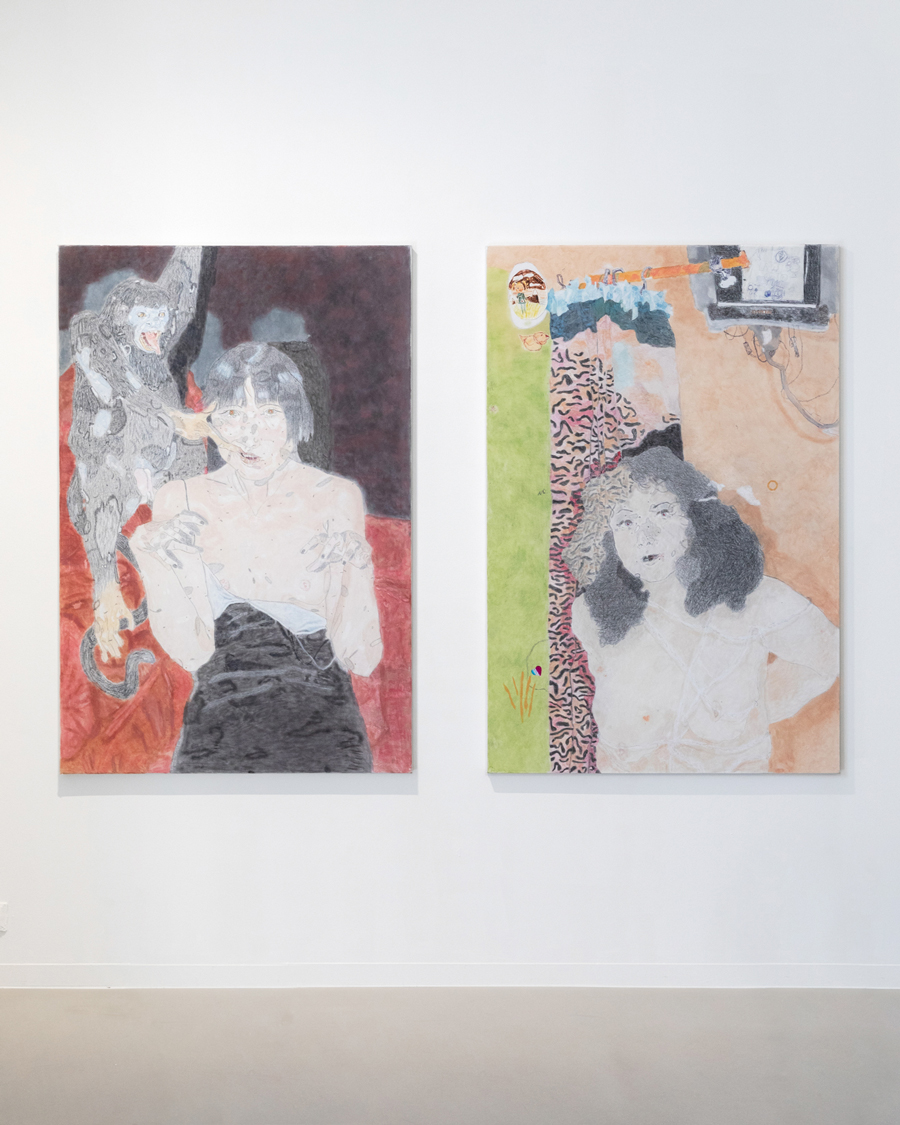
Sofiia Dubyna, Best of Graduates 2023, Galerie Ron Mandos, Photo by Michèle Margot
“What really stands out is that much of the work is personal or close to the artists. Very few of the artworks relate to the outside world,” says Vana. The war in Ukraine is only present in the work of Ukrainian Sofiia Dubyna (AKI ArtEZ) by deliberately being absent. Dubyna makes portraits of women she knows by painting them using only their make-up, thus focusing her attention on everyday life.
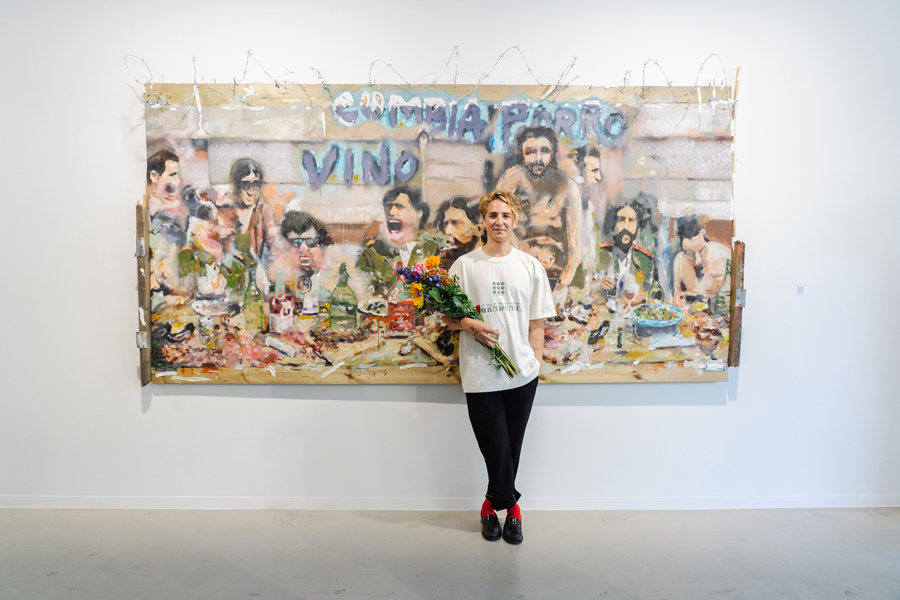
Matias Salgado, winner of the Ron Mandos Young Blood Award 2023, Galerie Ron Mandos, Amsterdam, Photo by Almicheal Fraay
Ron Mandos Young Blood Award
This year's Ron Mandos Young Blood Award went to Argentinian painter Matias Salgado. The context of his paintings is invariably Argentine society, in which he denounces the role of men. Salgado's work seems cheerful on the surface, but has an ominous undertone. Sunday bbq seems like a happy feast until you realise that the figure resembling Diego Maradonna is flanked by members of the junta and you then notice the barbed wire. A sea of bodies can be seen in a triptych – not included in the show – about the revelry that broke out after winning the World Cup. This also seems like a cheerful subject, but the way Salgado paints it, it is highly questionable whether you would actually want to be there.
As part of the award, a work by Salgado will be donated to Museum Voorlinden by the Ron Mandos Young Blood Foundation. Joop van Caldenborgh, founder of the museum, praises Salgado's work because it evokes so many emotions: “In his energetic compositions, which show traditions from his homeland of Argentina, figuration and abstraction merge and compete with one another. Different emotions are evoked as you are drawn into the painting, absorbed into the landscape as it were.”
Best of Graduates can be seen through 10 September at Galerie Ron Mandos in Amsterdam.
