18 july 2023, Flor Linckens
Last chance: Art in three dimensions in The Hague
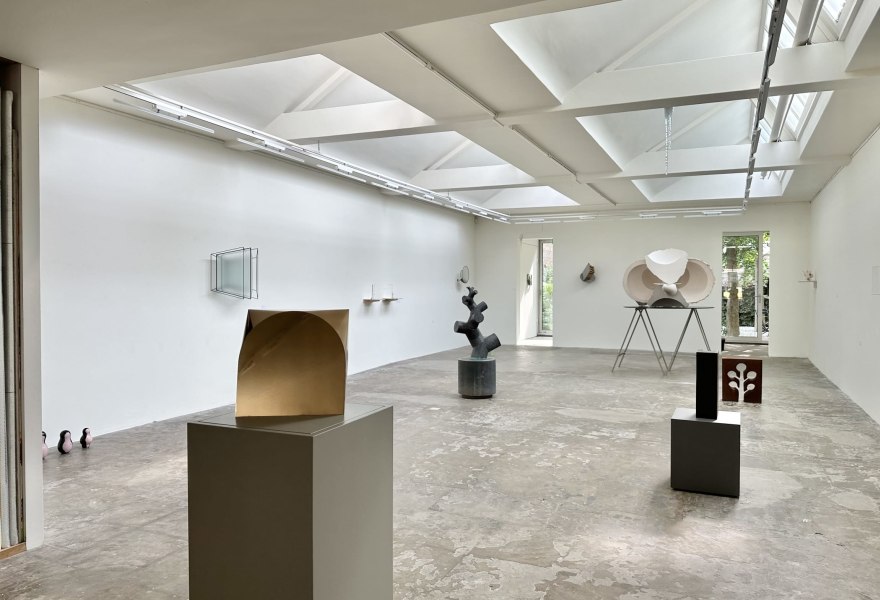
Until 23 July, Galerie Ramakers in The Hague invites you to the exhibition 'Sculpture Garden', in which you can explore the artistic medium in all its width.
The Hague is all about sculpture this summer. That includes the exciting retrospective exhibition by Henry Moore in Museum Beelden aan Zee, as well as the large-scale outdoor exhibition Voorhout Monumentaal, organised by Pulchri Studio. This second exhibition is taking place for the second time this year, from 3 June to 20 August, and in this context, you can view more than 20 sculptures and installations on the Lange Voorhout, in the Kloosterkerk and in Pulchri Studio. Galerie Ramakers is connected to the exhibition: on the one hand because the gallery sponsored a sculpture by André Kruysen on the Lange Voorhout and on the other because various artists associated with the gallery are showing their work there — including Guido Geelen, Bob Bonies and Jan van Munster. Artist Warffemius is also one of the curators of the exhibition.

Jan van Munster, Plus/Minus (2delig), 1988, Galerie Ramakers
Galerie Ramakers therefore decided to dedicate an exhibition to this exceptional art form. In this exhibition, you can view work by Wido Blokland, Sjoerd Buisman, Cor van Dijk, Guido Geelen, Frank Halmans, Michael Johansson, Joncquil, André Kruysen, Hieke Luik, Jan van Munster, Ossip, Reinoud Oudshoorn, D.D. Trans, Warffemius, Johan de Wit and Yumiko Yoneda.

Guido Geelen, vanitas / groep van twee vaasbeelden vuilniszak, 2010, Galerie Ramakers
Sculptures have always held a special appeal for art lovers. But what makes the medium so unique? One of the most significant aspects of sculptures is their tangibility. Unlike other art forms, sculptures have a physical presence in a space. People can view the works from different angles and often physically walk around them. This interaction with the artwork creates a more direct connection between the viewer and the object, for a more sensory perception. Sometimes that feeling is reinforced by the scale of a work: from monumental to intimate, from powerful to fragile. At the same time, the sculptures always enter into a relationship with the space in which they are located, which they can sometimes transform completely, especially when it comes to a site-specific work. This ensures that you also experience the space differently as a viewer.

Wido Blokland, Atopos XIII - 1995, 2021, Galerie Ramakers
The medium also offers space for a multitude of materials, shapes and textures, which in turn can express different emotions. When you think of sculpture, marble and bronze will come to mind, but makers can just as well use feathers, soap, salt or found objects. Artists then use these materials to express complex ideas. The medium offers space for both figuration and abstraction, which in turn means that their visual language varies from realistic to symbolic, from idealised to expressive. Sculptures often have a timeless appeal, which means they have a lasting impact.

Hieke Luik, Driemaal in de rondte 1996-, 2021, Galerie Ramakers
The medium of sculpture thus provides a unique and meaningful art experience. Looking at sculptures is not only an aesthetic experience, but it also creates a profound connection with the artworks and the ideas that they embody.
