22 june 2023, Flor Linckens
The weight of motherhood
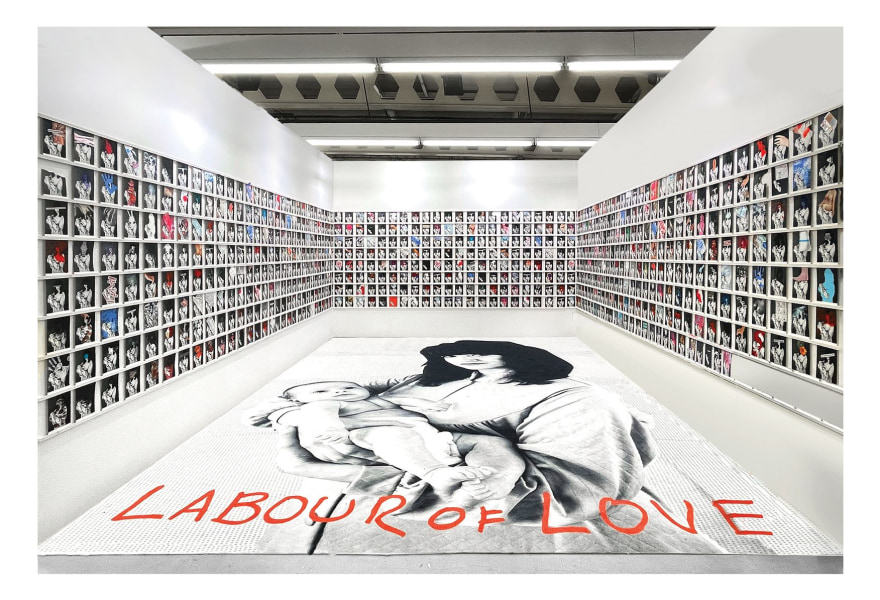
From 24 June, Koch x Bos in Amsterdam will present a powerful installation by Sarah Maple, consisting of 650 screen prints and a rug that feature the artist and her baby. Together, they represent the number of breastfeedings she gave her baby in three months time. Each screen print was personalised: in some cases with newspaper headlines, other times with frustrated strokes and usually with a sharp sense of humour.
If motherhood required a job interview, most people would be scratching their heads. In one of his most recent videos, the Tiktokker Worldshaker proves once again that TikTok is much more than a place for mere cat videos, it is also a place where you can sharpen your mind and views. In a comical yet painfully clear manner, he presents the utterly unreasonable expectations that full-time mothers face. In the video (with 1.4 million views), he shows a job interview for an unpaid job without any days off, that requires you to be on call for 168 hours a week, and in which, in addition to household and parental duties, you also have to deal with the mental load: the endless to-do list that requires you to anticipate everyone's needs and schedule. And even after doing all of that, you will still perpetually feel that you're falling short.
Sarah Maple was also confronted with this deeply-rooted undervaluation of her labour two years ago, when she had a baby. At Art Rotterdam in 2022, the British artist presented her installation 'Labour of Love' for the first time. In doing so, she makes a powerful and feminist statement about motherhood and the (lack of) value that is generally attached to women's unpaid work. This impressive series is now presented in Koch x Bos and has also been published as a photo book that weighs no less than a kilo and measures 6 centimeters in width. Tip: until 24 June, you can buy this book for an early bird rate of 30 euros.
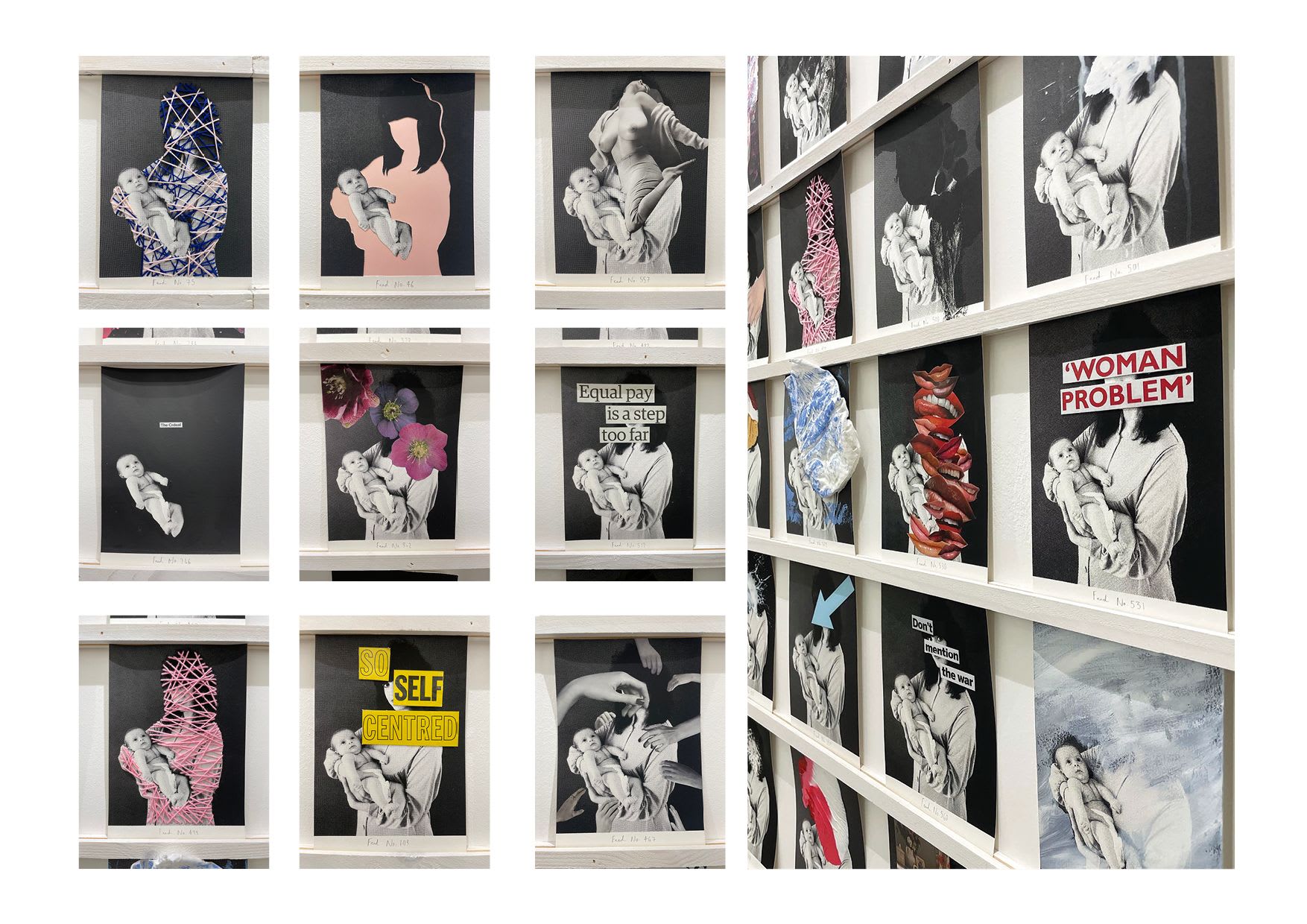
Sarah Maple, Labour of Love, 2022, Koch x Bos
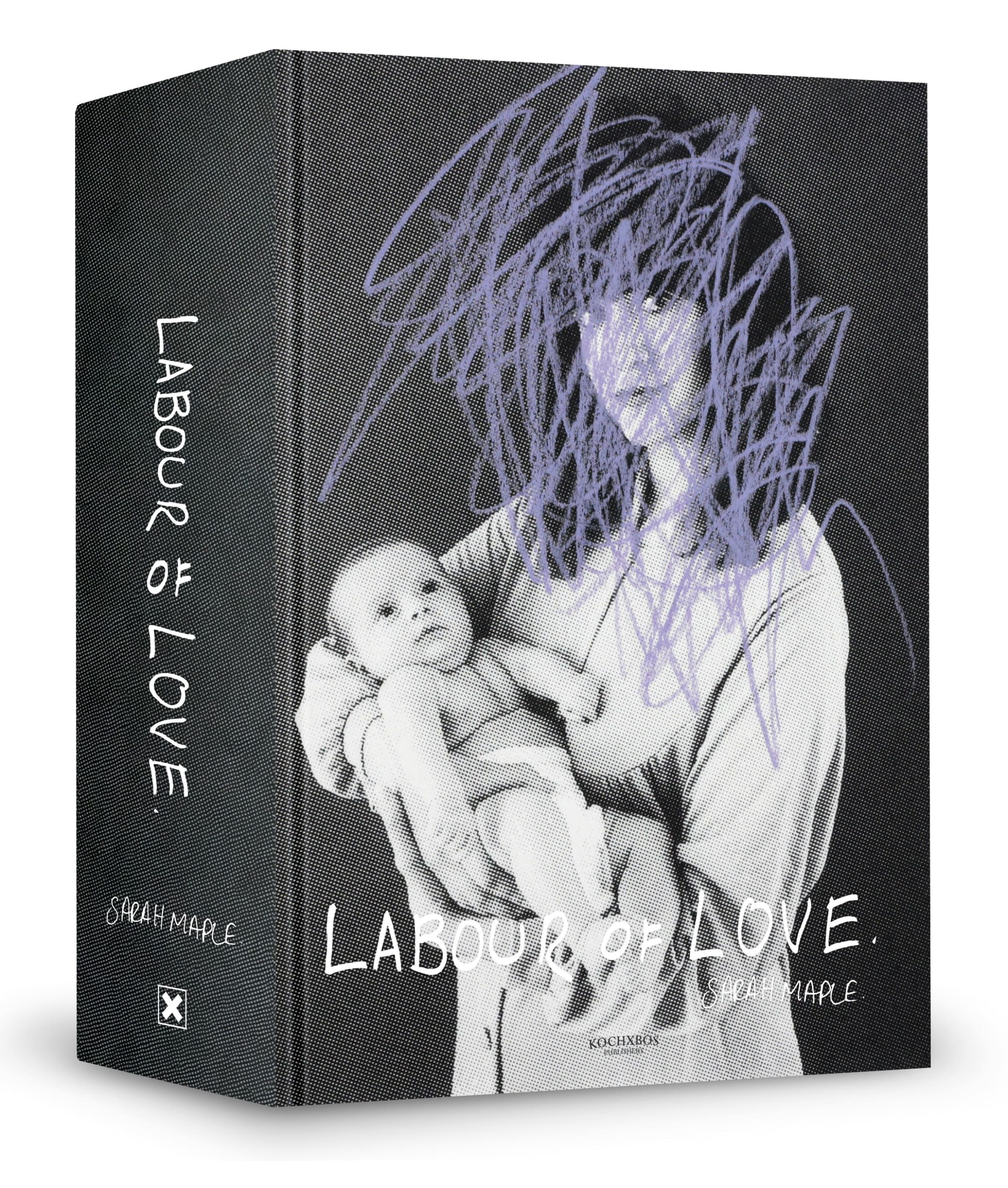
Sarah Maple, Labour of Love, 2023, Koch x Bos
Maple: "Before having my baby, I knew one thing for certain about motherhood: the fact that worldwide, mothers are underpaid, overworked, exploited, overlooked, isolated and perpetually guilty. Something else that I knew before going into parenting: we’re expected to do all this work for free. At my parent and baby classes, one of the mums-to-be spoke about her choice to breastfeed. ‘One obvious benefit is that it’s free!’ she said. Breastfeeding is an on demand, physically exhausting task that Women are told they need to do for at least 6 months. Free? It’s only free if you don’t value Women’s time. Yes - of course - having a baby is a personal ‘choice’. But it’s a choice made by a man as well as a woman. What would happen if all Women one day decided that this ‘choice’ wasn’t worth impacting their careers and earning potential. (...) Why is it that any work predominantly associated as ‘Women’s work’ is considered ‘other’ – it’s unimportant, disregarded and not valued. Not even by women? Since having my baby I decided to log every feed or a nappy change and the time it’s taken. Looking back on the data, I am astounded at the sheer amount of hours I’m putting in to the thankless (as far as society is concerned) task of being a parent. Not to mention all the things I hadn’t logged; the length of my pregnancy, all the doctors appointments, the burping, the holding, the worrying etc, the list goes on… My installation ‘Labour of Love’ is a visual depiction of this data over a three month period. In total our baby was fed 650 times. My installation will be 650 images of myself and my baby, each representing a feed, each with a hand finished element covering my face. The aim is to highlight the sheer volume of work that is expected of mothers and to challenge people to rethink the value of the time spent. (...) Raising a child is seen as a female task, not a real job. Thus unpaid and undervalued. Addressing this and rectifying the situation is the unfinished work of feminism.”
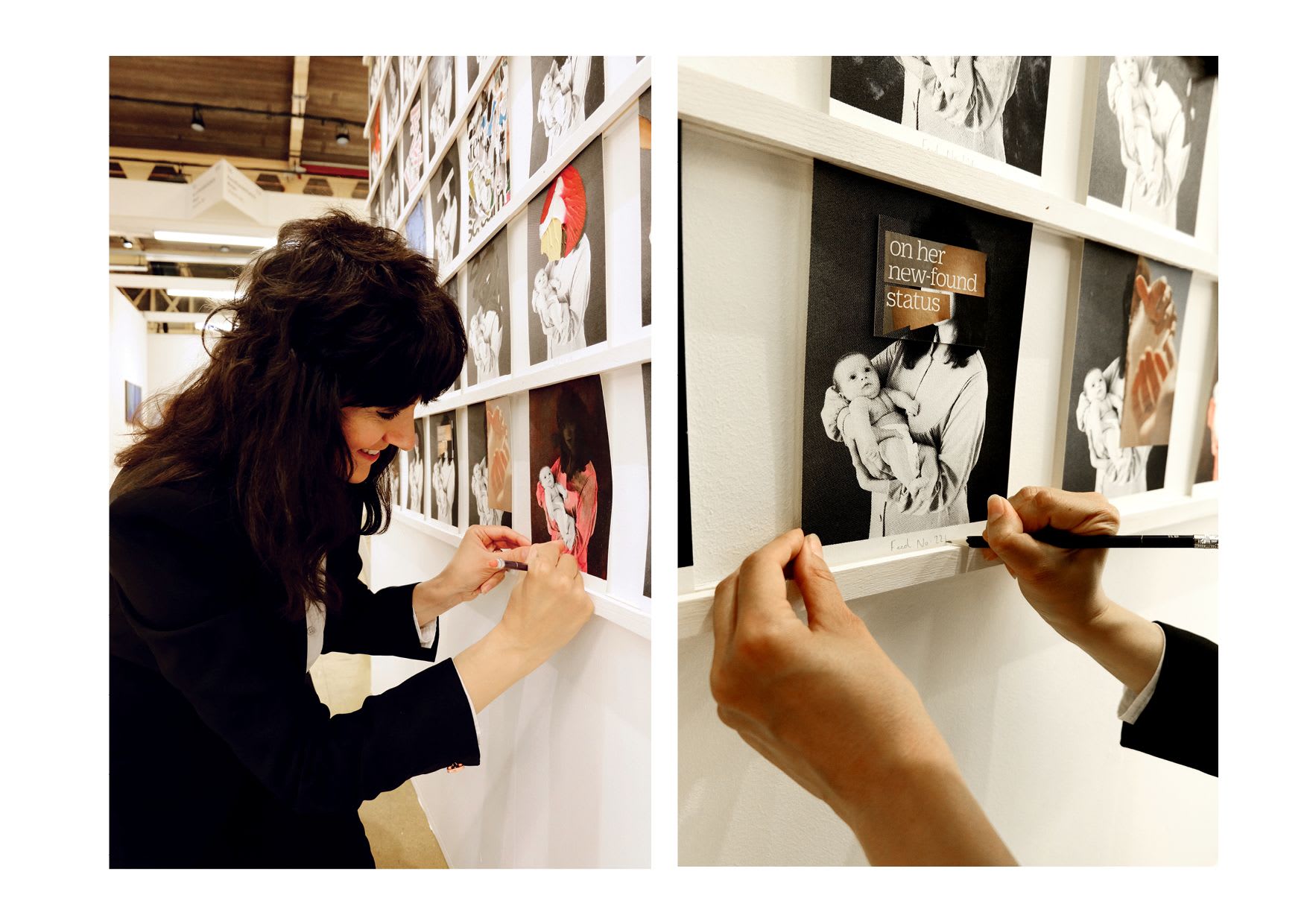
Sarah Maple, Labour of Love, 2022, Koch x Bos
Sarah Maple works in a multitude of art forms: from photography and paintings to performance, video and mixed media. She is known for the humorous ways in which she discusses relevant topics: from identity, gender and religion to sexism, Islamophobia, stereotypes, popular culture, freedom of expression, toxic forms of masculinity and the art world.
