13 july 2026, Flor Linckens
Riccardo Ajossa and the poetry of handmade paper
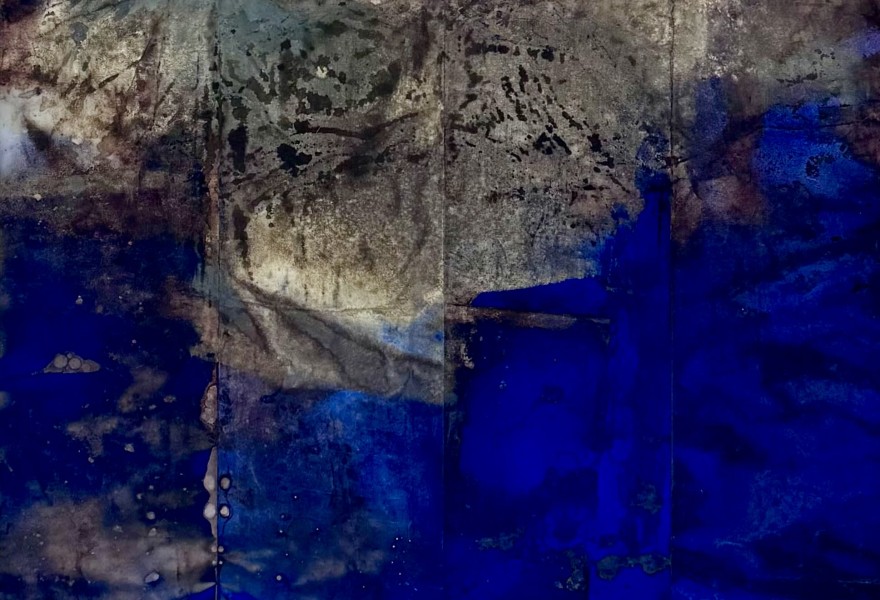
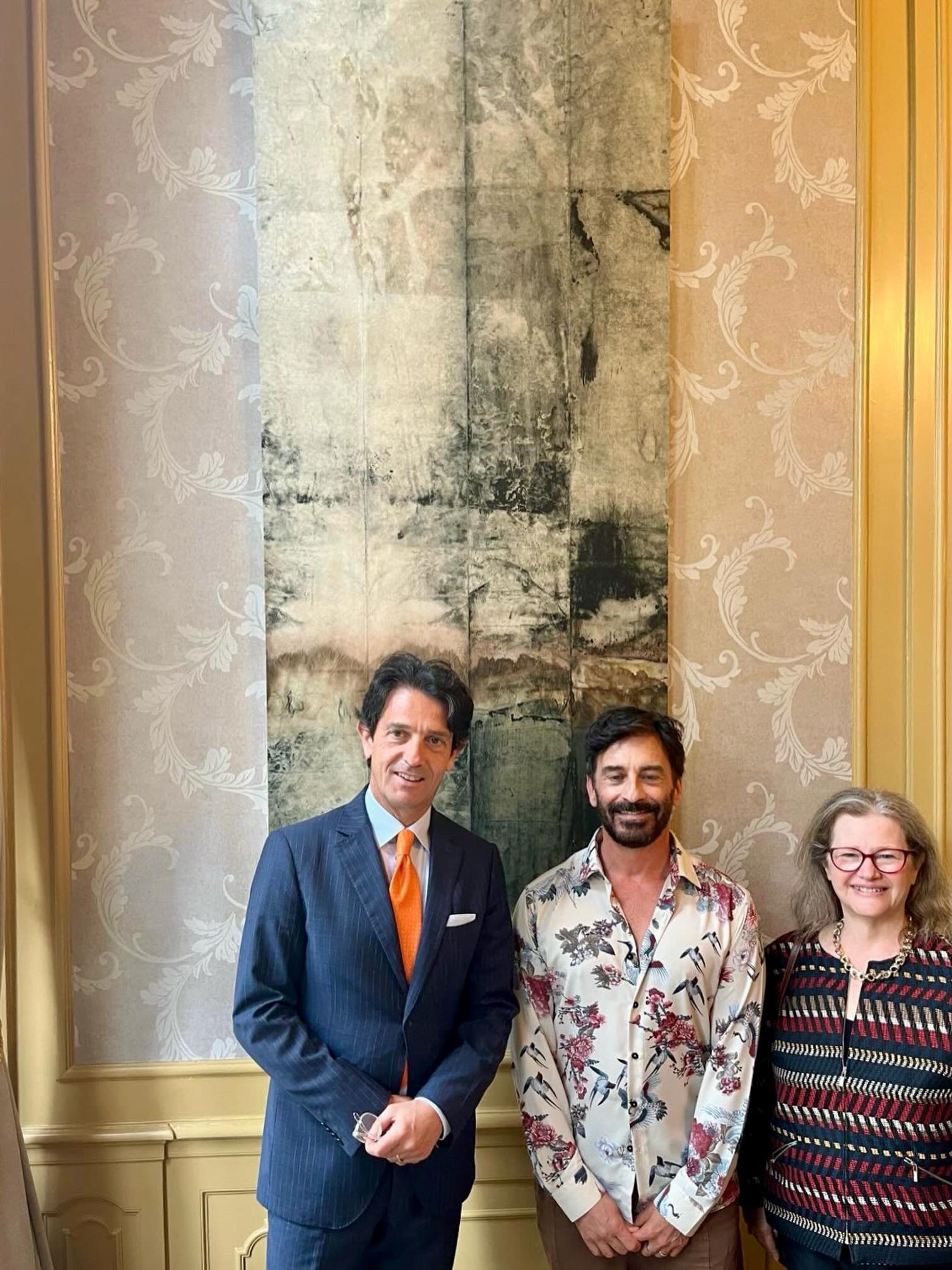
Until 1 August, Spazio Nuovo in Amsterdam presents the exhibition ‘Paper’s Journey: From Ancient Roots to Modern Art’. There, Italian artist Riccardo Ajossa unveils a new body of work that grew out of a research residency with Japanese master papermaker Hiroko Tanino. During this period, Ajossa immersed himself in every stage of the traditional papermaking process, from harvesting mulberry bark and boiling and purifying the fibres to the final formation of each sheet by hand. Once back in Italy, the paper he had produced in Japan became the starting point for a new series of artistic experiments, the results of which are now on view at Spazio Nuovo.
Ajossa’s artistic practice is defined by the interplay between craftsmanship and artistic research. For him, paper is not a neutral surface on which an image is created but the very foundation of the work itself. For more than twenty years, he has explored the cultural, historical and artisanal significance of handmade paper. His research focuses primarily on East Asian traditions, in which paper is valued not merely as a functional material but as the embodiment of knowledge and rituals that have been passed down for generations. Ajossa is also interested in the people behind these traditions and the ways in which they live and work in harmony with their natural environment.

During residencies and exchange projects in countries like Japan, Morocco and Italy, Ajossa has explored how diverse papermaking traditions can be translated into a contemporary visual language. While his work is inspired by ancient techniques, it is unmistakably contemporary. Rather than reproducing historical methods, his practice investigates how traditional knowledge can generate new artistic possibilities. His longstanding fascination with paper also led him to South Korea, where he specialised in the centuries-old hanji tradition. In 2024, he received an award from the South Korean Minister of Culture, Sports and Tourism in recognition of his contribution to promoting Korean culture beyond South Korea.
As Professor of Paper Technologies at the Accademia di Belle Arti di Roma, Ajossa combines artistic practice, teaching and research. He also established Italy’s first studio dedicated to integrating traditional Eastern and Western papermaking techniques into contemporary art, where each new experiment builds upon centuries of accumulated craftsmanship.

Ajossa’s working process is exceptionally meticulous and labour-intensive. He forms each sheet of paper by hand and works exclusively with natural pigments that he extracts from plants, fruits, wood, minerals and other organic materials. The colour, fibre structure, absorption and drying time determine the final work. But the material can never be fully controlled and the paper always retains traces of its handmade production, which means that Ajossa’s work is marked by both control and chance. Although his visual language appears abstract, his works are often closely connected to specific landscapes and places. The pigments often refer to the environments from which they were gathered.
The exhibition at Spazio Nuovo demonstrates how a material that has existed for thousands of years continues to offer new possibilities for experimentation. By bringing together traditional techniques, natural materials and a distinctly contemporary artistic vision, Ajossa shows that paper is a living medium that is constantly capable of reinventing itself.

Riccardo Ajossa was born in Rome in 1974, where he continues to live and work. He studied at Loughborough College of Art and Design in the United Kingdom, specialising in papermaking, before completing a Master's degree in the History of Modern Art at the University of Amsterdam. During the 54th Venice Biennale, he was invited to lead the institution’s second official masterclass at Ca' Giustinian, which was documented on film and preserved in the Biennale Foundation’s archives. His work has also been exhibited at the MACRO Museum in Rome, the United Nations Headquarters in New York and the Phoenix Ancient City Museum in Fenghuang, Hunan, China. His work is held in the collections of Armani, the Vatican Museum (Collection Pontificio Consiglio della Cultura), Museo Carlo Bilotti at Villa Borghese in Rome, the C.A.R.M.E Foundation in Brescia, the National Library of Rome, the Benaki Museum of Contemporary Art in Athens and the São Paulo Biennial Foundation.