30 june 2026, Wouter van den Eijkel
The studio of... Jonas Lutz
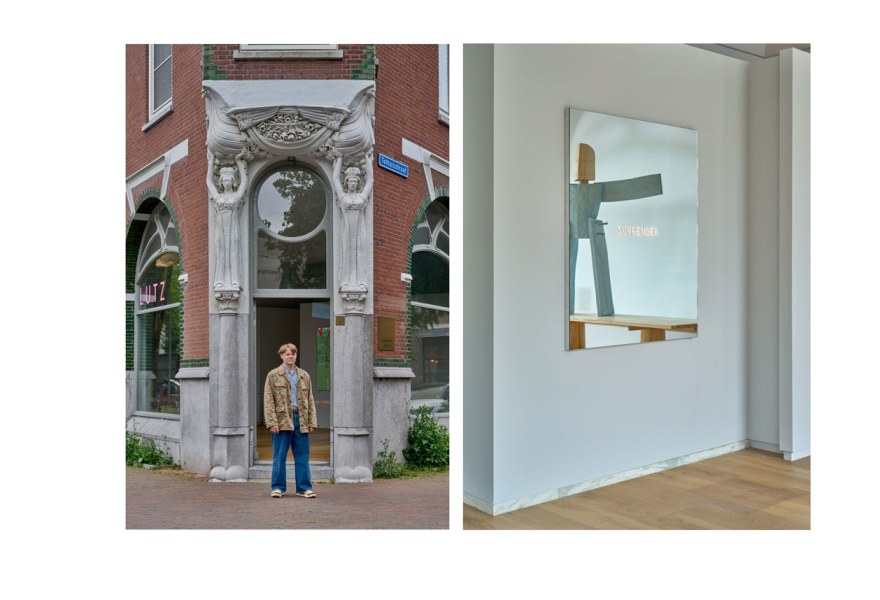
Finnish artist-designer Jonas Lutz moved to the Netherlands almost 20 years ago to study at the Design Academy. Wood is Lutz's primary material. His focus was initially on furniture, but over the years, his practice has become increasingly free and experimental. One result of this evolution is House Party, his exhibition at Van Oosterom Gallery.
Jonas Lutz currently has a studio in Rotterdam West, which he is about to switch for a larger space elsewhere in the city. We spoke with him about House Party, the differences between Dutch and Finnish design and the joy of working with a chainsaw.
Apart from lamps and vases, you primarily make wooden furniture and sculptures. I imagine that when people visit you, they feel as if they've walked into a woodworking shop.
Yes, I can see why you'd think that. My studio is full of woodworking machinery and tools, from band saws, routers and chainsaws to chisels and hand saws. These are the result of years of collecting. In my workshop, I can make everything from large pieces of furniture to rough-hewn sculptures – and anything in between. I also have a separate workspace for computer-based work, which doubles as my showroom.
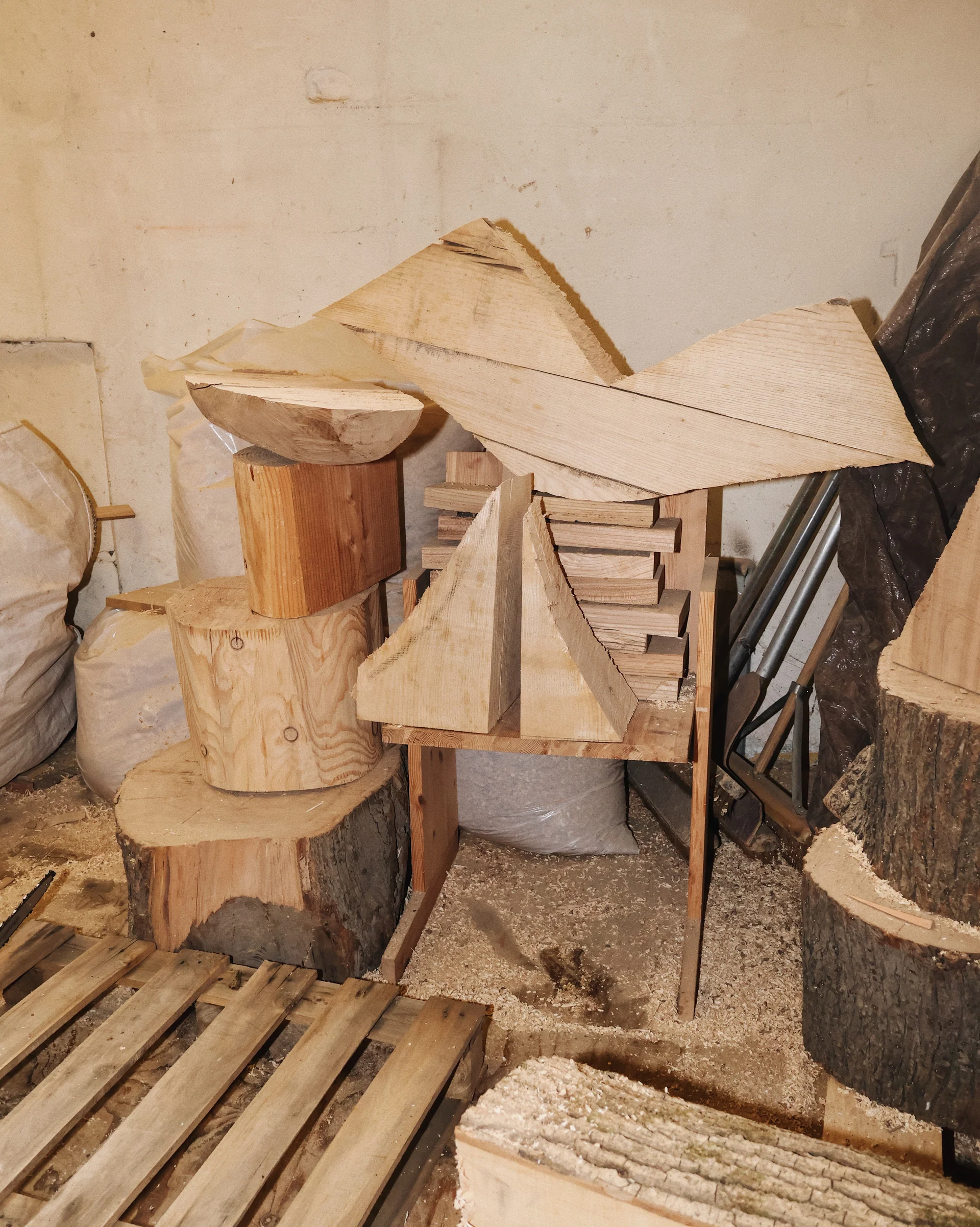
Did you say chainsaws? I mainly associate chainsaws with felling trees and demolition. How do you make something with a chainsaw?
That's right and I have around five different chainsaws. What's great about working with a chainsaw is that it's portable. You can work almost anywhere because you're not dependent on large woodworking machinery.
What is your favourite type of wood to work with?
I love the smell of pine and spruce. If you've been sawing it all day, the workshop smells wonderful. The colour is beautiful, too. Elm is known for being difficult to work with because of its large numbers of knots and uneven colouring. But for a sculptor, it's a fascinating wood to work with. Elm is easy to shape, strong and not overly heavy.
Suppose I were to do an internship with you. What would a typical Monday look like?
I always start my day with coffee. My current studio is in the same building as a coffee roastery, so I'm never short of good coffee. I'm also a bit of a coffee nerd. Interns who don't drink coffee save me money. I try to involve them in the different stages of my work. Most come because they want to learn more about wood and woodworking. I start by determining what they are able to do. Can they make a routing template, for example? How quickly can they solve problems? I also try to give everyone their own project to work on.
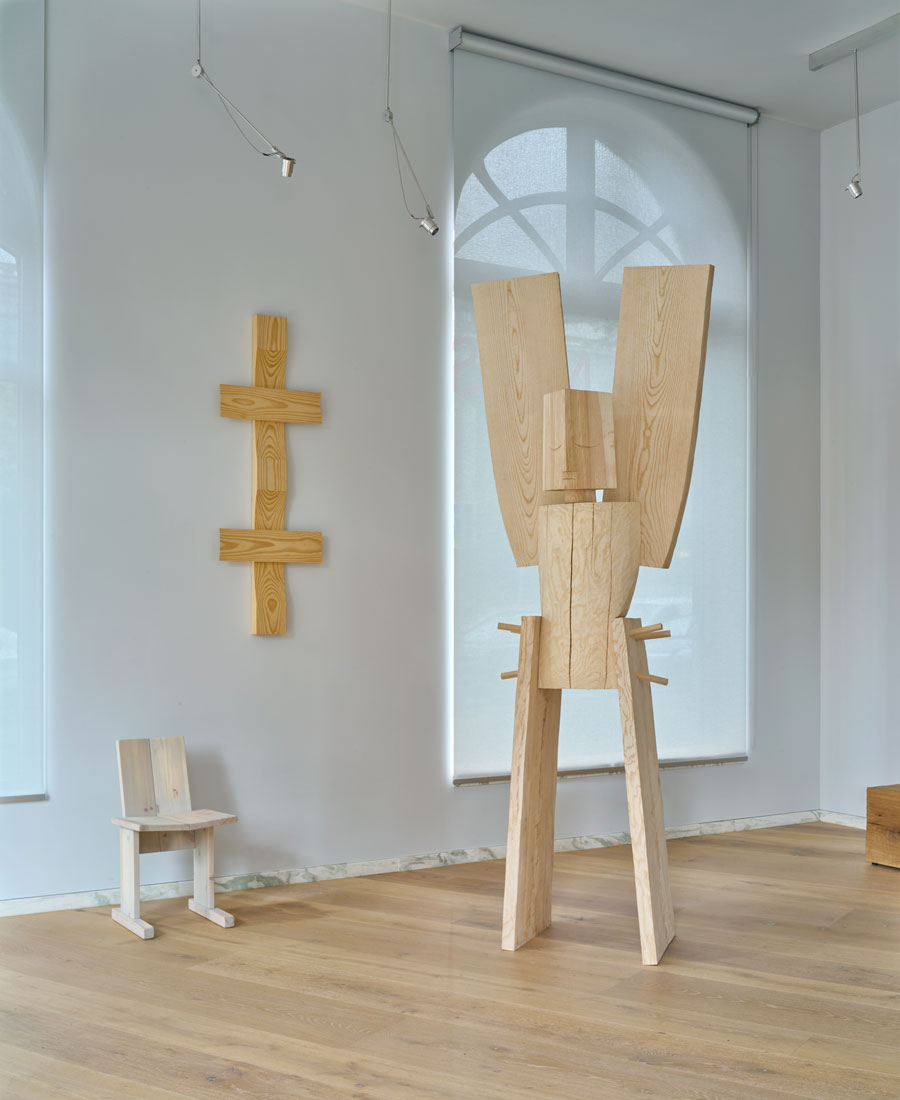 Jonas Lutz, House Party, Van Oosterom Gallery. Photo: Pim Top
You trained as a cabinetmaker in Stockholm and later studied at the Design Academy in Eindhoven. What is the biggest difference between the Scandinavian design tradition and the Dutch one?
Finnish design really took off after World War II. It is above all functional. Alvar Aalto is probably its best-known representative. Personally, I find Kai Frank and Tapio Wirkkala to be particularly inspiring because they didn't just make furniture, but also designed glassware and porcelain. And essentially designed everything themselves.
The Netherlands also had its own modernist movement, of course, but if you look at Dutch Design from the 1990s onwards, which became highly influential, you notice how expressive it is and how closely it approaches art. Finnish design is much more intimate. It is something personal and for your immediate surroundings. The Dutch tradition is more outward-looking and expressive. Perhaps that's because of the large windows that allow people to see inside. Design becomes more of a statement.
How would you describe your own practice? Do you consider yourself primarily an artist or designer? What do you call yourself?
I always find that a difficult question. I describe myself as a designer-sculptor, though the term doesn't describe what I make so much as how I work. In a nutshell, I create shapes that I find interesting.
When I first graduated from the academy, the emphasis was very much on furniture making. Nowadays, I work more freely. My practice is more autonomous and intuitive. At the same time, I want to keep one foot in the furniture world because making furniture is an enjoyable process that presents fascinating challenges and puzzles.
 Jonas Lutz, Table, 2026, Van Oosterom Gallery. Photo: Pim Top
Your exhibition is called House Party. What's the story behind the title?
When I first saw the gallery space, the wooden floor immediately made me think of a living room. The space is also large enough to feel like one. So, I thought, wouldn't it be wonderful to throw a house party here?
I enjoy creating a special ambiance through exhibitions and a house party is exactly that. Alongside functional furniture, there are also sculptures on display. Those sculptures are like party guests. The exhibition is also a tribute to the house parties of my student years. I loved them. Now I'm at an age when everyone has children and house parties have become a rarity.
If you were given carte blanche, what would you work on? What project would you choose?
That's a difficult question. I'd like to continue to make the kind of sculptures I created for this exhibition. I'd also like to develop a good method to protect wooden sculptures outdoors. I recently visited the Kröller-Müller Museum. It has a magnificent sculpture garden, but I noticed there were no wooden sculptures in it. So, I'd like to see more wood used in outdoor public spaces.
What are you working on at the moment?
Right now, I'm in the middle of relocating to a new studio at another site in Rotterdam West. Once the move is over, I'll set up the new studio and start working on several commissions I've recently accepted. This summer, I'm also teaching a workshop on sculpture and printmaking techniques in France.
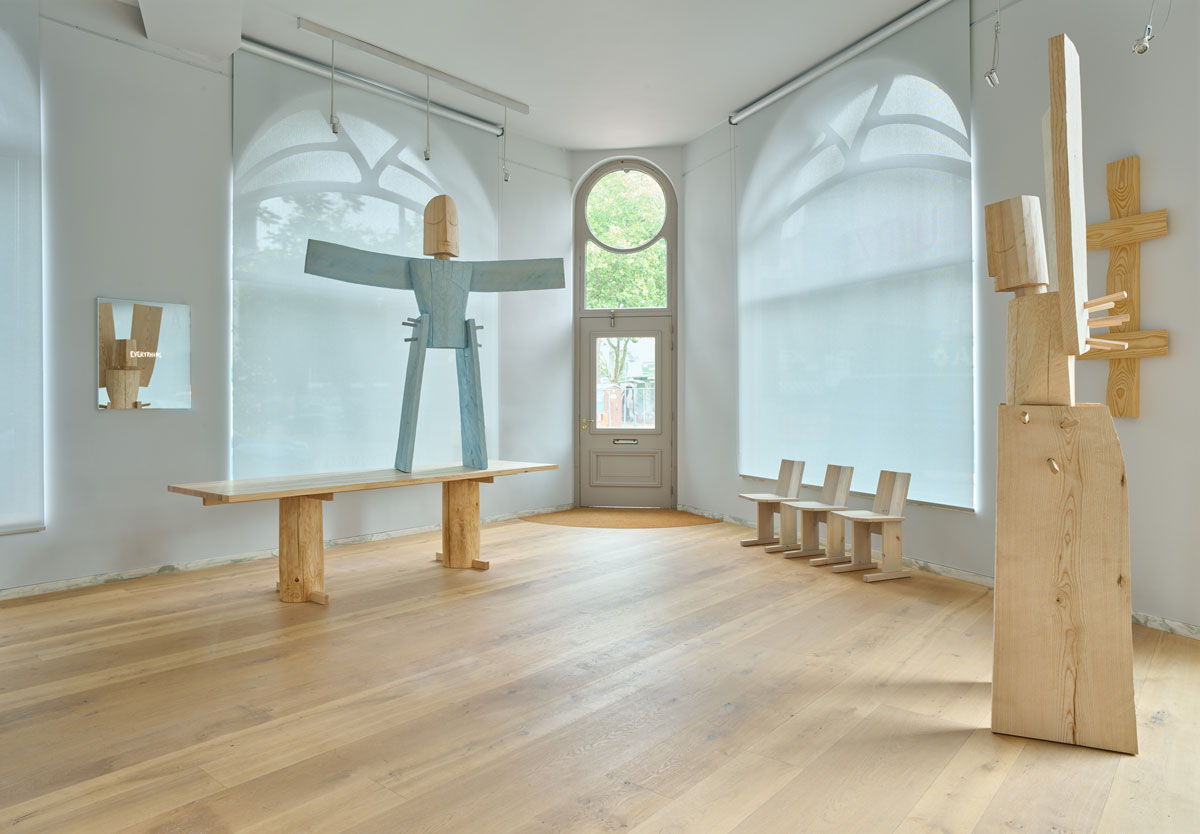
Jonas Lutz, House Party, Van Oosterom Gallery. Photo: Pim Top
