28 may 2026, Emily Van Driessen
Book Launch of Hide & Seek: China’s City Cats, Guangzhou
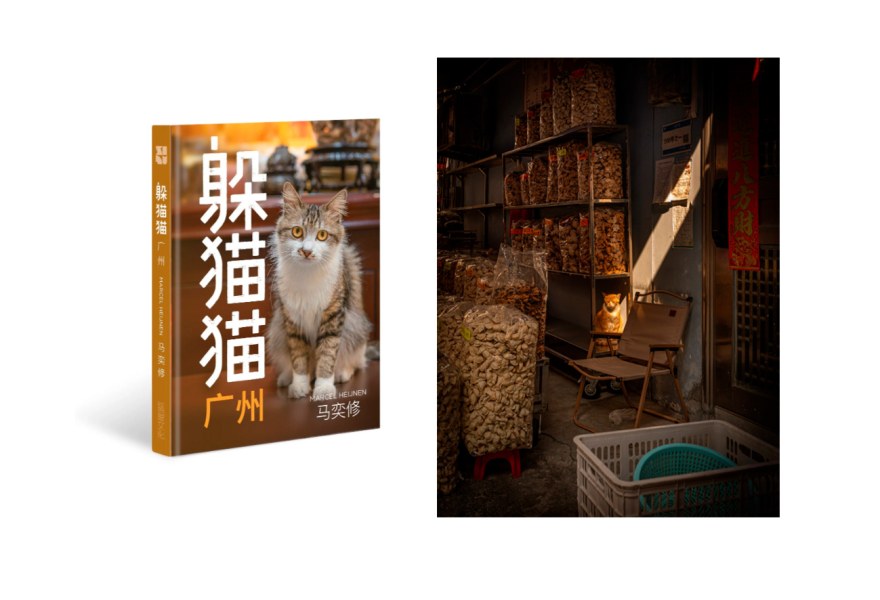
There is always something to discover in a city: new people, museums, hidden alleyways and cosy restaurants. But through the lens of Dutch photographer Marcel Heijnen, even the smallest corners of the city take on a particularly soft, fluffy charm.
Ten years after the viral success of Hong Kong Shop Cats, and following his tribute to the cats of Istanbul in City Cats of Istanbul, a long-awaited sequel has finally arrived. In Hide & Seek: China's City Cats, Guangzhou, Heijnen turns his camera towards urban cats in China.
The title Hide & Seek refers to the playful, yet unpredictable nature of searching for cats — animals that, by nature, are not easily directed. Heijnen often had to return to the same place several times, hoping that a cat would appear again. It felt as though they were playing hide-and-seek with him.
Since 2016, Heijnen has travelled through nearly twenty Chinese cities. He photographed, among other places, the traditional trading districts of Hong Kong, the communal courtyards of Shanghai's shikumen houses, and the old residential neighbourhoods of Guangzhou. He portrays the animals as the dignified kings and queens of the city: enthroned in front of temples, in the middle of active construction sites, in the doorways of small shops, and in the narrow streets that form the heart of local neighbourhoods.
Guangzhou played a special role in this project. Ever since his first visit to the city in 1995, Heijnen has seen Guangzhou change. Yet he always found one constant there: cats. In the old streets and narrow alleyways, he photographed not only the animals he cherishes so deeply, but also the cultural layers of old Canton, the historical name by which Guangzhou was known for centuries among European traders. That name evokes the city's older Cantonese identity, with its trading past, temples, neighbourhood shops, markets and local incense rituals.
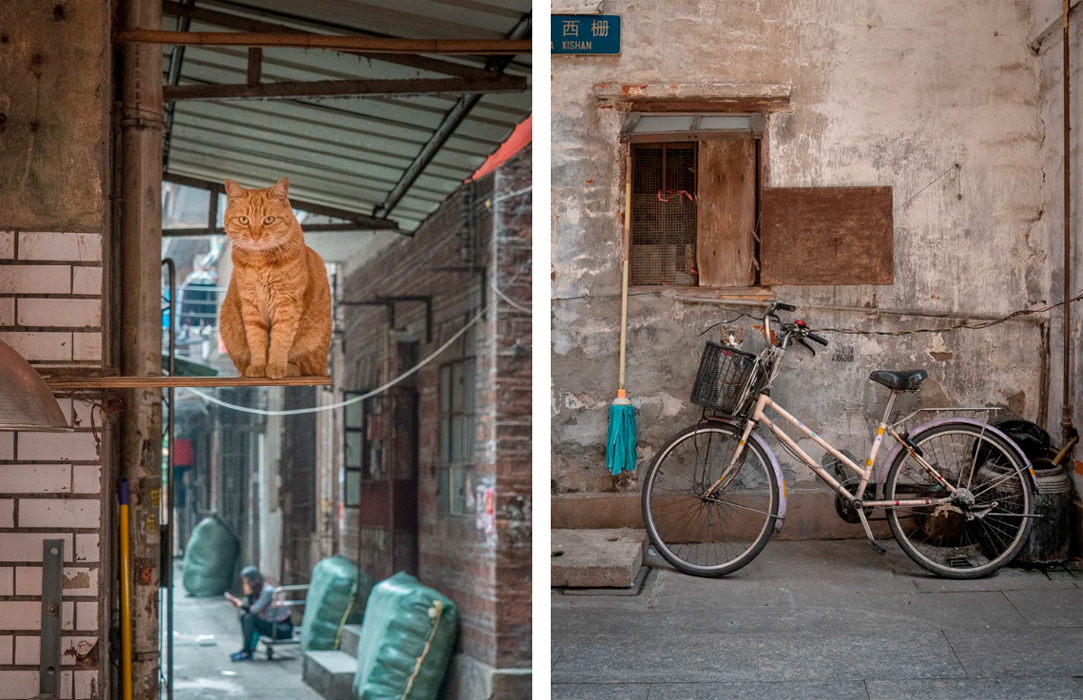 Marcel Heijnen, Hide & Seek: China's City Cats, Guangzhou, Blue Lotus Gallery
In the book, these layers come vividly to the fore. Lingnan architecture appears throughout: the characteristic architectural style of southern China, with sheltered courtyards, shaded passageways, decorative façades and houses adapted to the warm, humid climate. Cantonese lion dances are also part of this setting: colourful ritual dances in which performers in a lion costume summon luck, prosperity and protection to the rhythm of drums and gongs.
But of course, the cats are the true protagonists of the book. At the same time, they often act as icebreakers for human contact. They give the artist a reason to smile at shopkeepers, start a conversation and only then press the shutter. In China, such encounters not infrequently led to a warm invitation for a cup of tea.
Marcel Heijnen lived in Singapore and Hong Kong for more than thirty years and today divides his time between Amsterdam and Hong Kong. With Hide & Seek: China's City Cats, Guangzhou he once again reveals the special, often self-evident symbiosis between humans and animals in urban life — and shows that the city is not only a place made by and for people.
The new book, like the earlier volumes in the series, is available through the website of Blue Lotus Gallery.
