20 february 2026, Flor Linckens
A Love Supreme: a ceramic love letter
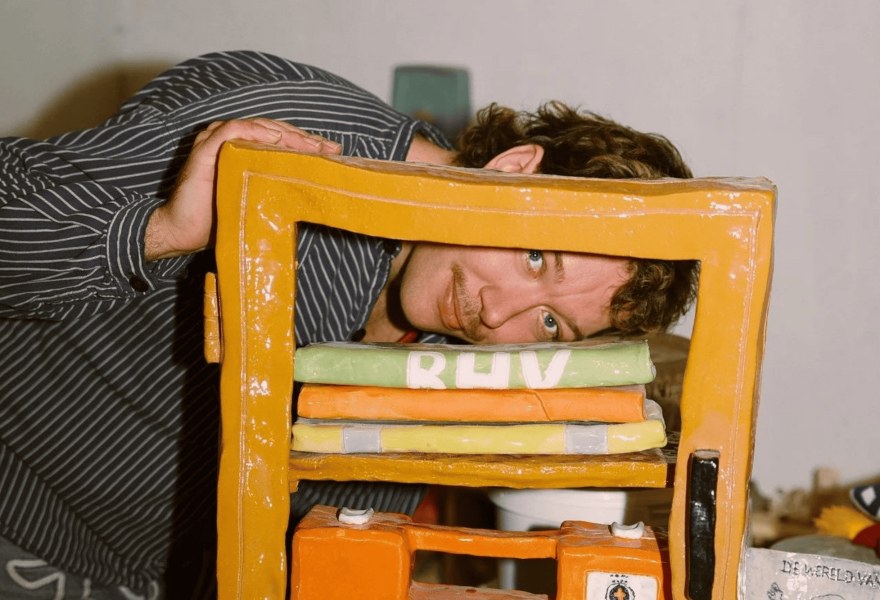
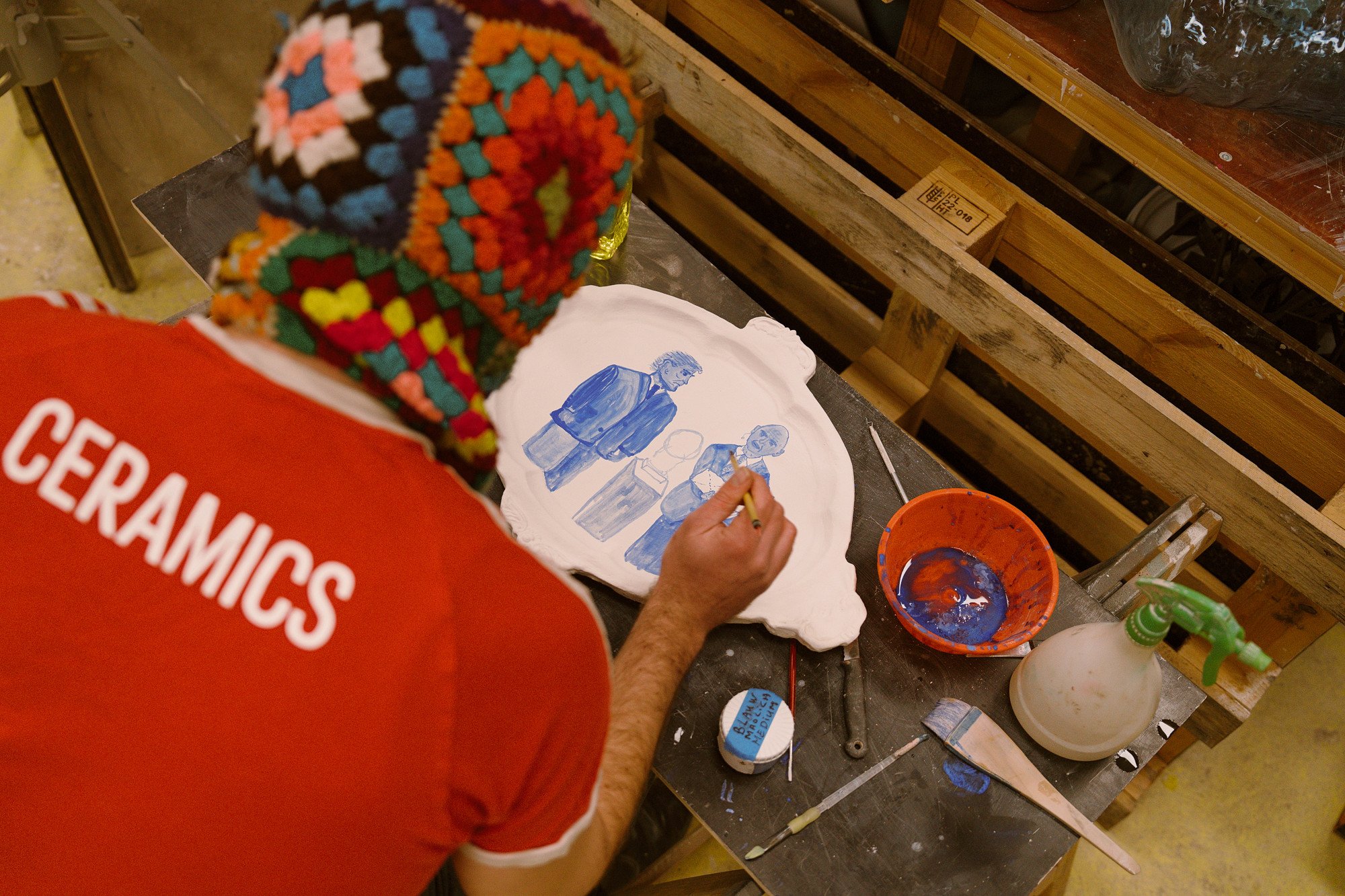
What do you do with things you do not like? Koos Buster turns them into ceramics. In 'A Love Supreme', his solo exhibition that is opening today at Gallery Vriend van Bavink, he presents more than 150 works from his ongoing series 'Decorative plates of everything I don't like': an encyclopaedia of aversions, executed in Delft blue ceramic.
These range from innocent irritations such as risotto, brushing one’s teeth, Burger King, unreadable art jargon and VanMoof bicycles to larger geopolitical issues including Trump’s inauguration, Rutte IV and killer drones that mimic the sound of crying babies to lure people in. By immortalising his irritations in durable materials, Buster transforms annoyance into something precious.
Yet these decorative plates are only part of the story. 'A Love Supreme' is both a declaration of love and an inventory: of what inspires Buster, what he holds dear and what he cannot stand. The title refers to the album of the same name by John Coltrane. Alongside the plates, the exhibition also features a series of ceramic books. Buster has dyslexia, which made reading a lifelong struggle. Every book he nevertheless managed to finish has been recreated in clay. It shows how in his work, vulnerability and humour are often inseparable. The artist loves to play with contrasts, such as seriousness versus absurdity and craftsmanship versus deliberate amateurism. The exhibition also includes cabinets filled with cleaning bottles named after music albums, ceramic security cameras, key cabinets and his now well-known Button for World Peace.
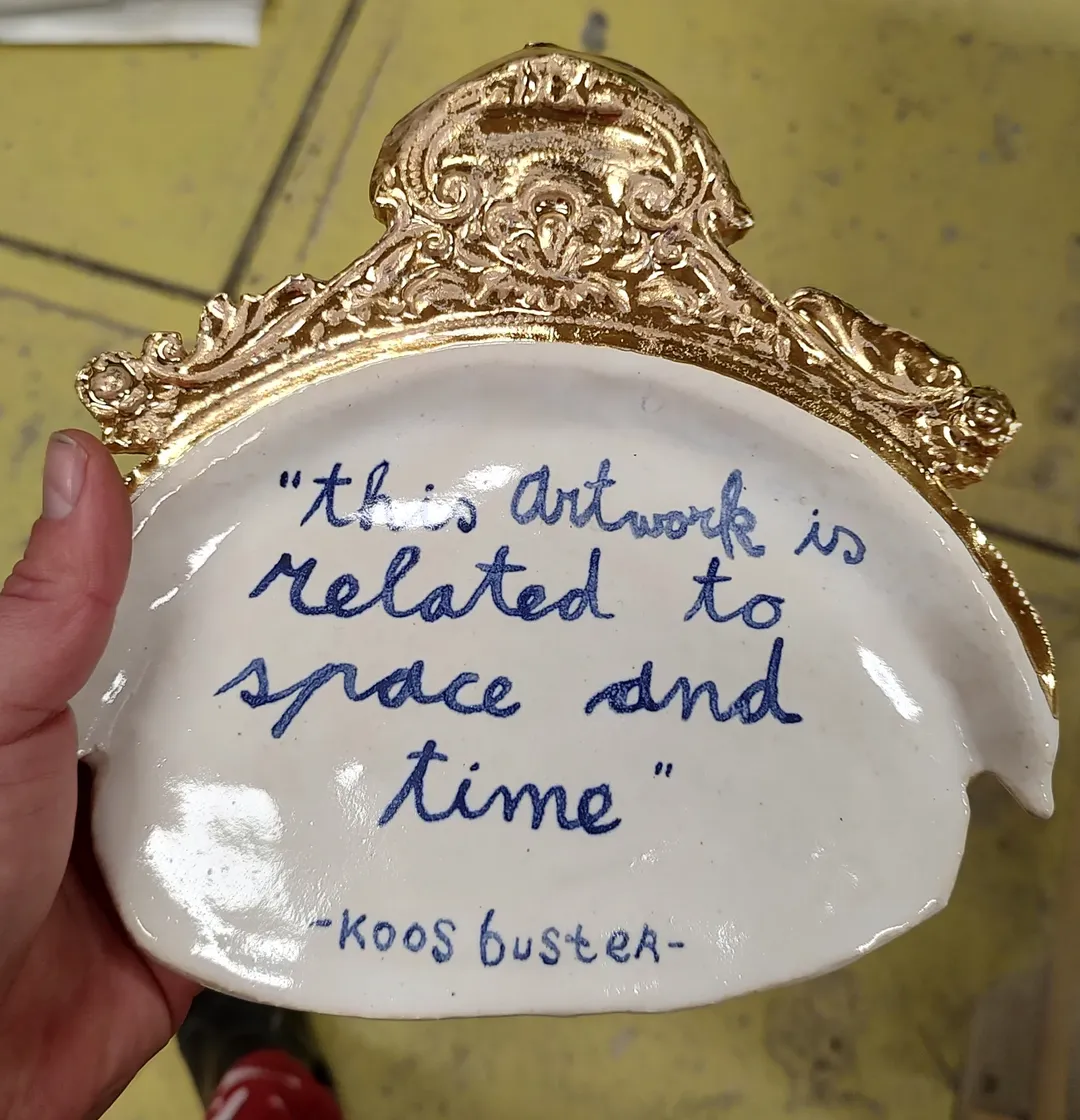
Buster is known for his infectious and idiosyncratic view of ceramics and has played a significant role in what might now be called a ceramic renaissance in the Netherlands. Yet he does not consider himself a ceramicist but rather an artist who happens to work with clay. The self-proclaimed Minister of Ceramic Affairs continually searches for what he calls ‘the perfect silliness’: everyday, banal objects that rarely attract a second glance yet are granted their moment in the spotlight. A fire extinguisher, a cleaning trolley, a power socket, a bottle of energy drink, a security camera, a stubbed-out cigarette, a ladder, a cash machine, a gumball machine. Often rendered at a 1:1 scale. Increasingly he also works with hand-blown glass.
Beneath all the glossy and cheerful chaos lies a rigorous idea of authorship. Buster always starts out with sketches and insists that the quick, awkward line of the drawing remains visible in the final result. Everything is executed in his characteristic wobbly style, full of undulating, crooked lines and visible fingerprints. That imperfection gives the works personality, so they are no longer anonymous mass-produced items. Buster shows how the small can be elevated without being polished smooth. The smile his work provokes is not the end point but the beginning of closer attention. He discovered the medium during his studies, after losing someone dear to him. For Buster making art is like hanging streamers in life, not because it is a party but because you can choose to make it one.
Koos Buster was born in Amsterdam in 1991 and graduated from the Gerrit Rietveld Academie in 2018. He subsequently completed residencies including at the EKWC European Ceramic Workcentre and at de Bijenkorf. His work has been shown at Museum MORE, Museum Villa, Stedelijk Museum Schiedam, Museum Beelden aan Zee, the Frans Hals Museum and the National Glass Museum and is held in collections including the AkzoNobel Art Foundation, ABN AMRO, Museum Voorlinden, the LAM museum and Allen & Overy. In 2025 he also created the trophy for the winner of Dutch TV quiz De Slimste Mens.
Tip: on 6 March the adjacent raam art space will also open 'Koos Buster Presents: The Ministry of Ceramic Affairs, Part II', a group exhibition curated by Buster featuring work by Bas Oussoren, Samuel Sarmiento, Koen Taselaar, Su Melo and Afra Eisma.
