20 january 2026, Redactieteam
What Remains by Armando Mariño at ROOF-A Gallery
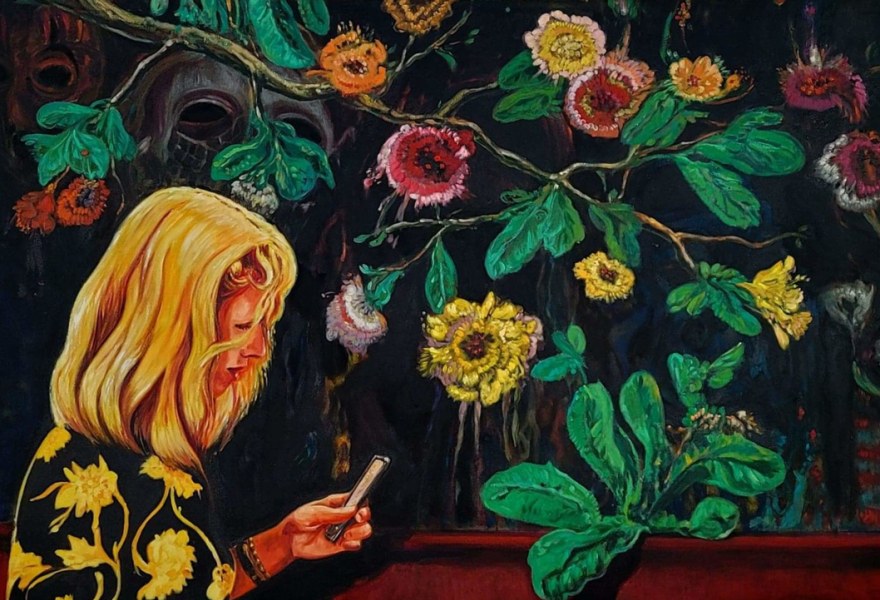
Vivid colours and a warm, glowing light trace faces, rivers, bodily auras and cascading streams of masks, a realm where ancestral powers reign. Armando Mariño’s paintings radiate a magical surrealist energy, imagining a world with natural forces others may have long lost touch with. Yet, underneath this apparent radiancy, does something more imminent linger?
At ROOF-A Gallery in Rotterdam, the exhibition What Remains opens festively on Saturday 24 January at 4 PM. It marks Mariño’s newest solo exhibition and his first collaboration with the gallery.
During the opening of FENIX Museum of Migration in Rotterdam, Mariño’s painting The Mexican (2019), part of the museum’s collection, was on view during All Directions, the museum’s inaugural exhibition bringing together more than one hundred artists from around the world. It was the place that ROOF-A Gallery owner Lobke Broos fell for Mariño’s enigmatic painterly style.

Armando Marino, Twin Souls, ROOF-A
More than twenty works will be on view, all transported from New York to the Netherlands for this solo exhibition. In an interview with GalleryViewer, Armando Mariño shares a few intimate insights, offering a preview of what you can discover in What Remains from Saturday 24 January onwards.
What sits at the core of your practice?
My practice begins in the digital realm. I often scout for imagery online—on Google or social media—saving what 'talks' to me until it's ready to be transformed. In the studio, I translate these fleeting digital sparks into something permanent through my hands. I use multiple layers of oil or watercolor to build a fluorescent, hyper-bright palette that mimics the saturated glow of our screens but possesses a depth only achievable through physical pigment.
In my studio, I treat the canvas as a space for 'pictorial distancing.' I take familiar references from magazines, art history, and the news, and then I distort them. My goal is to strip an image of its original authority and 're-auratize' it through the painting process. It is a constant exercise of manipulating found material to find the 'beautiful image' that masks a more unsettling essential truth, whether it's about race, displacement, or social unrest.
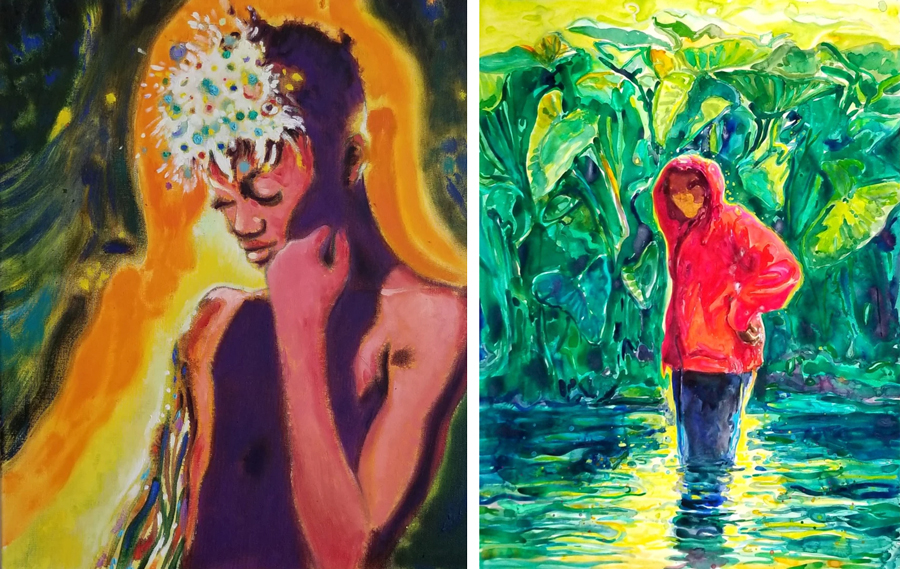
Armando Marino, A head full of doubts, 2026 & Persona, 2018, ROOF-A
Which experiences, contexts or influences have shaped the way you work today?
“My work is deeply defined by the 12 years of rigorous academic training I received in Cuba. While my family came from a scientific background, my teachers gave me a deep awareness of contemporary art theory. That foundation allows me to use traditional techniques like oil and watercolor to tackle very untraditional, modern themes. It taught me that painting is not just an aesthetic act, but a way of thinking through color.”
“Moving between varied landscapes and countries — from the tropical intensity of Santiago de Cuba, many years living in Europe and now in New York— has sharpened my focus on the figure's relationship to its environment. My experience of exile and relocation has turned 'displacement' into my primary creative language. It allows me to explore the tension between memory and reinvention, often using my work to bridge the gap between Western art history and my own non-Western roots.”
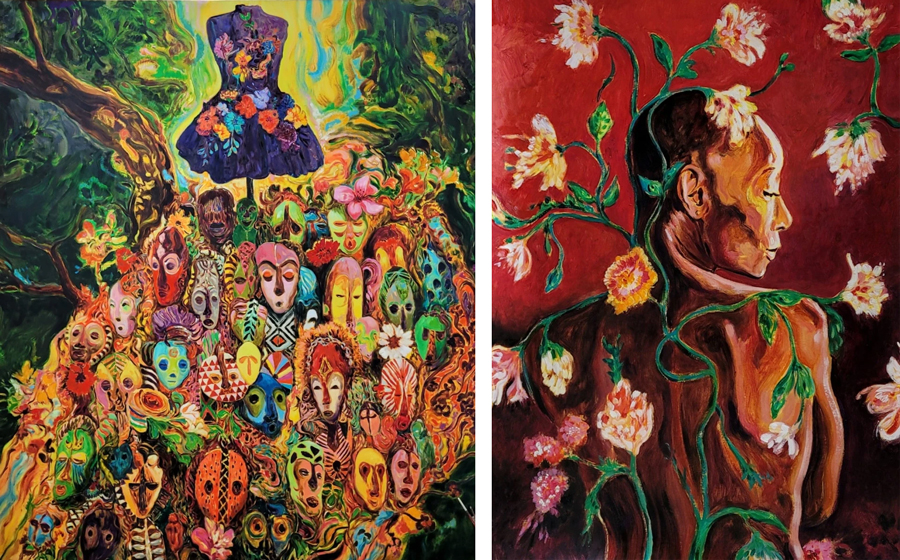
Armando Marino, What Remains, 2025 & Melancholy, 2025, ROOF-A
How did the works in this exhibition come about, and how does the title What Remains relate to their point of departure and underlying focus?
“What remains when the sacred is flattened into decoration? As social media and digital tools indiscriminately mix reality with artifice, the distinction between the genuine and the distorted has vanished? This exhibition explores the banality of meaning in a contemporary society where truth is a casualty of convenience. In an age of AI-generated deepfakes and ‘supplied realities’, sacred icons and ancient myths are stripped of their weight, reduced to mere ornament and digital noise.”
“When the vital becomes irrelevant and the durable becomes disposable, what is left? These paintings examine the distortion of our visual language, capturing the moment where everything loses its place and only the question of "what remains" survives.”
What Remains by Armando Mariño opens festively on Saturday 24 January 2026 and can be visited until Saturday 7 March 2026 at ROOF-A Gallery in Rotterdam.
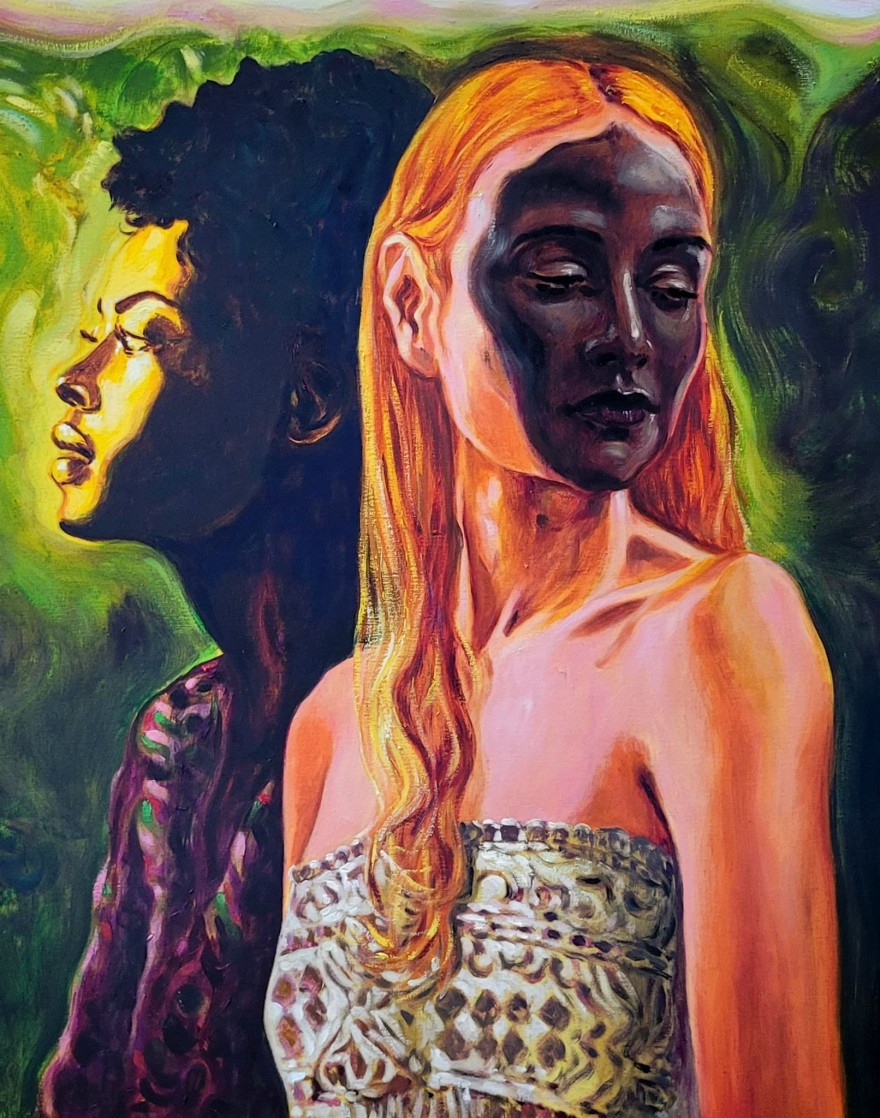
Armando Marino, Coloured, 2025, ROOF-A
Bio
Armando Mariño (°1968, Cuba, lives and works in New York) was trained in Cuba before continuing his artistic development at the Rijksakademie van Beeldende Kunsten in Amsterdam from 2004 until 2005. His work has been presented in solo and group exhibitions at venues including Galerie Anne de Villepoix, Paris (2024, 2021), Faction Art Projects, New York (2019), Galerie Christoffer Egelund, Copenhagen, Fernando Pradilla Gallery, Madrid, and Grusenmeyer Art Gallery, Deurle, and has been included in institutional exhibitions at FENIX Museum of Migration, Kunstmuseum Basel Gegenwart and The Watermill Center, among others.
