21 november 2024, Flor Linckens
The psychological landscapes of Tania Franco Klein
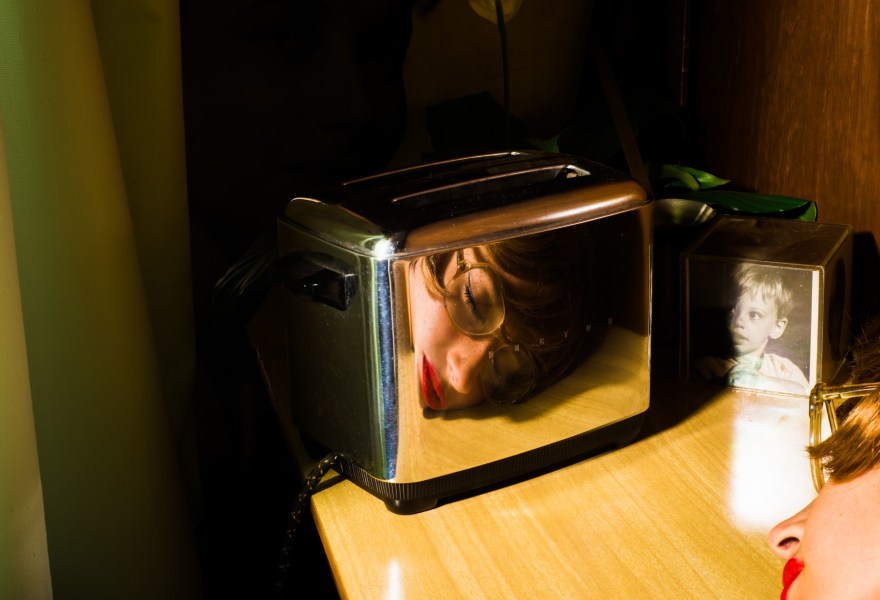
Until 5 January, ROOF-A in Rotterdam is hosting a solo exhibition of Tania Franco Klein. In her often large-scale photography, the Mexican artist explores the tensions and paradoxes of contemporary existence. Her work invites us to reflect on the personal and societal structures that shape our daily lives. Her images create a dialogue about what it means to be human in an era of constant connection ánd isolation. It’s work that momentarily unsettles you. At the gallery, she is showcasing works from her series "Break In Case of Emergency", "Proceed To The Route", and her latest project, "Subject Studies".
Franco Klein’s layered work demonstrates a remarkable sensitivity to both physical and psychological landscapes. Her art is imbued with a cinematic aesthetic and anthropological depth. The photographer has a unique ability to encapsulate complex emotions and societal themes within a single frame — turning intimate moments into universal ones. That means that hr photography occupies a space between the deeply personal and the universal.
These self-portraits and carefully staged scenes invite viewers to reflect on the world we inhabit: a capitalist society marked by excessive media stimulation, emotional detachment, and an obsession with productivity, youth, consumption and the ways we curate ourselves online — and are subsequently perceived. For many, this results in isolation, burnout, anxiety and depression. Franco Klein’s work draws inspiration from thinkers like Byung-Chul Han (author of The Burnout Society) and Marc Augé, as well as filmmakers and artists such as Nan Goldin, Harry Gruyaert, William Eggleston, Cindy Sherman, Bill Viola and Pipilotti Rist.
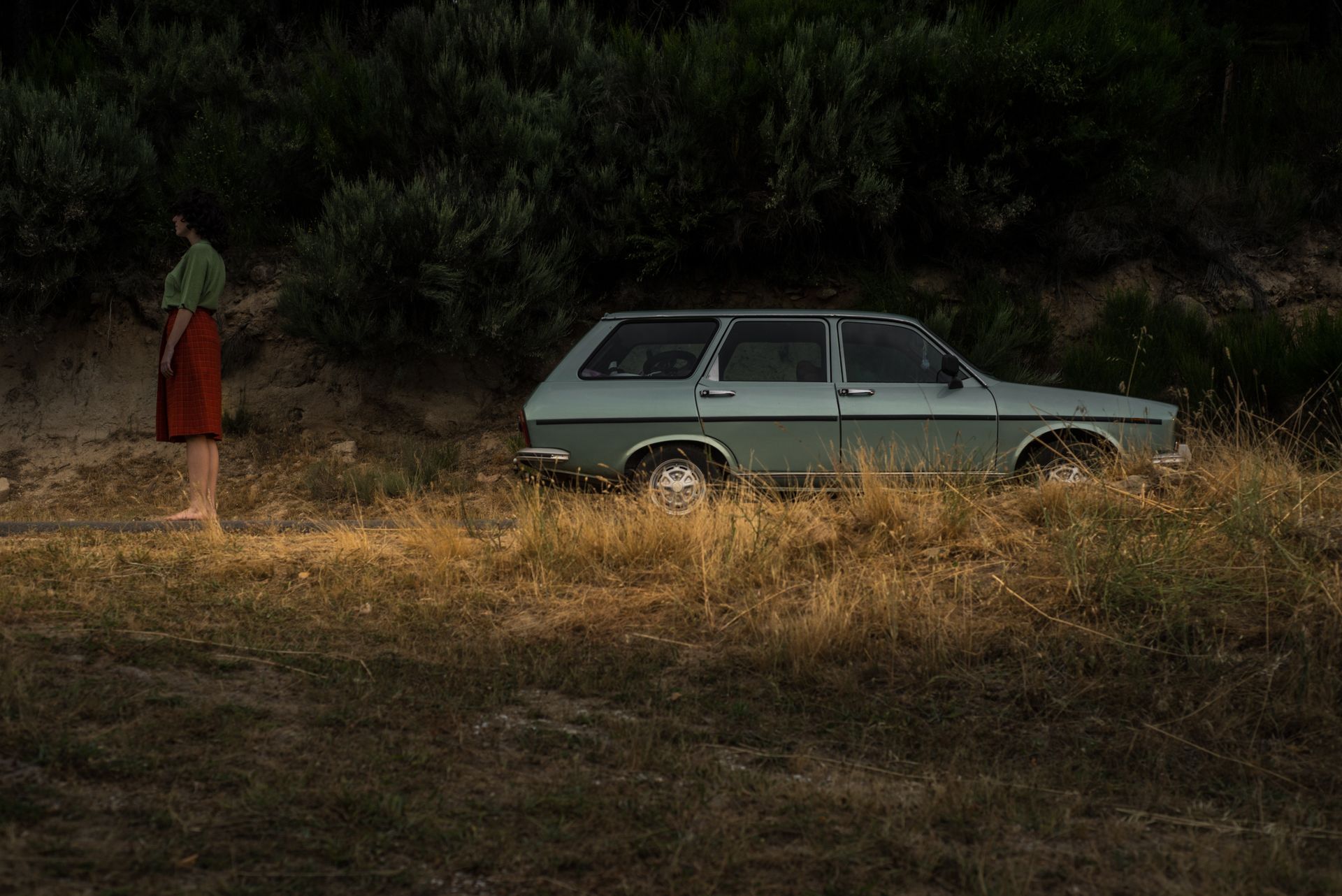
In her series "Proceed To The Route", the artist references the commanding voice of GPS systems as a metaphor for the rigid expectations that define our lives. These works capture the suffocating control and ensuing psychological alienation, while subtly encouraging viewers to embrace the possibility of detours. Many of the photographs in this series resemble pages from a mysterious travel journal. They feature all the hallmarks of a road movie: a slightly grimy motel, a swimming pool, fictional characters in vulnerable poses, a retro bathroom and a desolate country road. In some images, we see the artist herself as her film-star alter ego. The photographs possess a cinematic quality and a self-contained internal logic, yet the characters remain disconnected from the viewer.
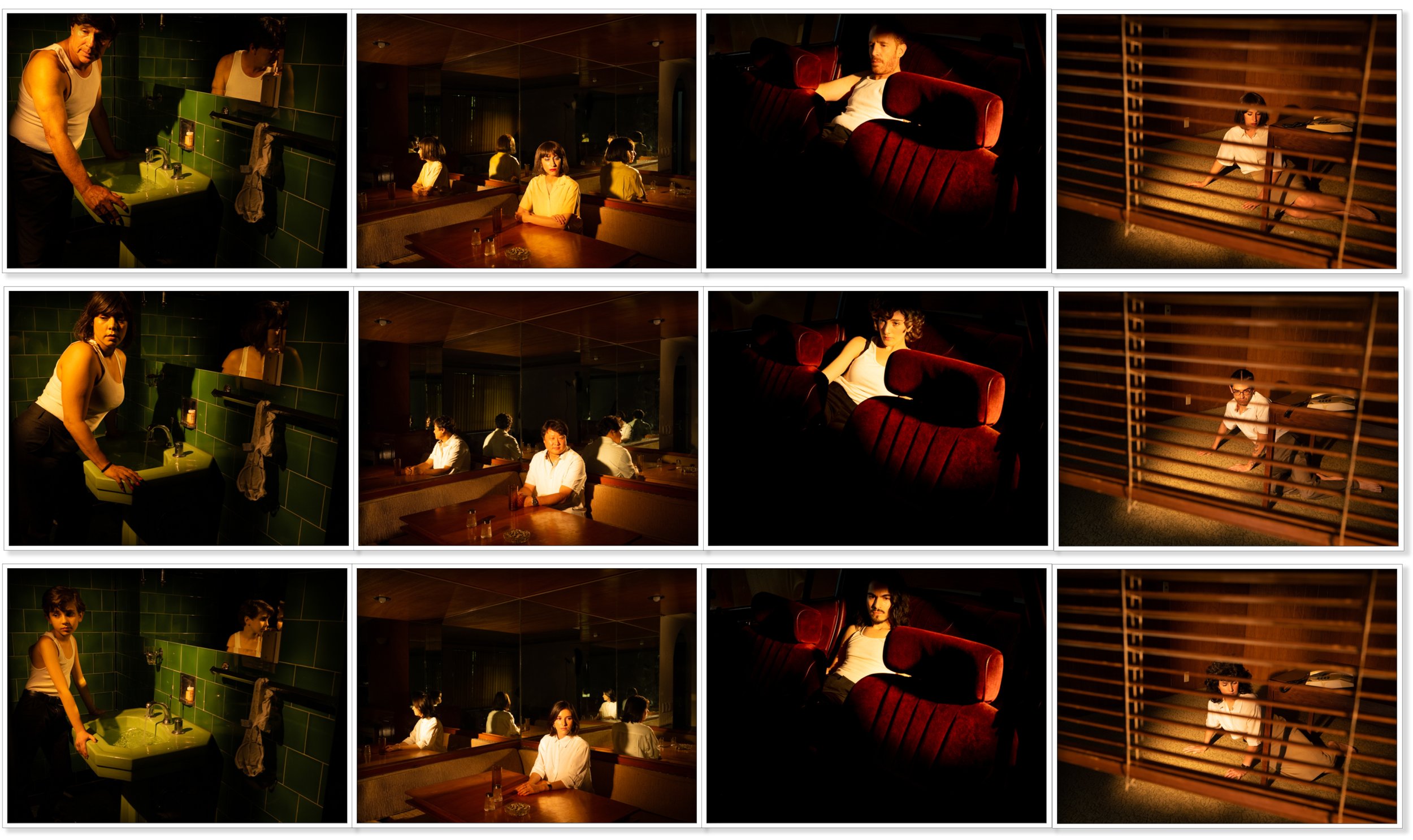
For her project "Subject Studies", Franco Klein employs an anthropological perspective to explore how cultural and personal experiences influence our perceptions. What unfolds when the subject remains constant, while only the surrounding context shifts? In this series, Franco Klein photographs identical scenes with a consistent location, composition and lighting. The only variable is the person standing before the lens. This confronts viewers with their conscious and unconscious biases and the narratives they project onto these characters. As viewers, we instinctively assign meaning, intent and stories to what we see — shaped by our own experiences, traumas or even subtle differences in the body language of these individuals. This reveals quite a bit about how we perceive the world, others, and, by extension, ourselves. Viewing the images as a group forces a confrontation with this reality, fostering an intriguing sense of awareness. With this series, Franco Klein delves into the themes of “othering” and “the gaze” — and the power dynamics inherent within them. Those who capture others wield significant control over how their subjects are represented and, consequently, how they are perceived by others. Consider, for example, “the male gaze” or “the Western gaze.” Through this series, Franco Klein highlights the subjectivity of viewing, adding layers of context and meaning.
Franco Klein’s images are distinguished by their deep jewel tones, striking use of light, and a surreal, ambiguous narrative quality that leaves much unsaid. The result is work that feels both contemporary and timeless, with no clear beginning or end, imparting a fragmented quality. The lack of context piques curiosity but also instills a sense of unease. Whether depicting a woman in an abandoned motel room or an anonymous figure in a desolate landscape, her photography evokes feelings of isolation, voyeurism, melancholy and nostalgia, while simultaneously exposing the absurdity and tragic comedy of everyday life. The anonymous characters in her work allow viewers to project their own interpretations, further deepening the experience.
For these projects, the photographer meticulously crafts staged scenes using props, lighting and often her own body. Her self-portraits create a disquieting yet familiar tension. These conceptual performances in front of the camera often arise spontaneously, lending her work a balance of deliberation and intuition. She holds a special appreciation for photography as a medium, noting that people tend to engage with it on a more personal level than they do with other art forms — making it, in a sense, a less intimidating medium.
Tania Franco Klein was born in Mexico City in 1990. She studied Architecture at the Centro de Diseño, Cine y Televisión in Mexico City and earned a Master’s degree in Photography from the University of the Arts London. Her work was recently acquired by the Museum of Modern Art in New York and The Getty Museum in Los Angeles. In 2022, she photographed Steven Spielberg for the cover of Time Magazine. She has also received accolades including two Sony World Photography Awards, a Lensculture Exposure Award and a FOAM Paul Huf Award. In 2025, her work will be featured in the exhibition 'New Photography 2025: Lines of Belonging' at the MoMA in New York.

