06 september 2024, Flor Linckens
Preview Unseen: Barry Salzman: the landscape as witness
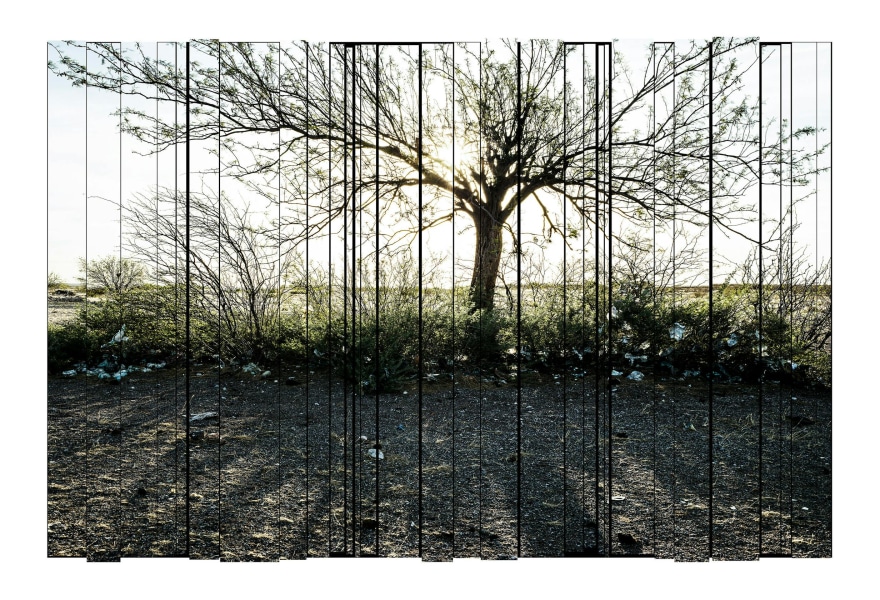
THK Gallery from Cape Town will feature the evocative work of Barry Salzman at Unseen: a photographer who explores the intersection of photography and the ethics of seeing. At first glance, his series “How We See the World” may appear as an abstract homage to landscapes. However, it is captured at locations that bear the scars of 20th-century genocides — places like Rwanda, Poland, Namibia, Bosnia and Herzegovina, and Ukraine. Salzman’s images offer a profound reflection on the impact of these tragedies, exploring humanity's role as witness. He delves into themes of community, heritage, identity, collective trauma, healing, and the complex and varied ways in which we remember.
Born in Zimbabwe, Barry Salzman grew up in both Zimbabwe and South Africa. At the age of 21, he moved to the United States, and today, he divides his time between New York and Cape Town. Although he initially pursued a career in business, with degrees in Business Administration from the University of Cape Town and an MBA from Harvard Business School, Salzman ultimately decided to follow his true passion. In 2014, he earned a master’s degree in Photography, Video and Related Media from the School of Visual Arts in New York and has since fully dedicated himself to his artistic career. Photography, however, had always been a vital part of his life. As a teenager, he documented the racial inequalities and segregation of apartheid, using his camera as a tool to confront and bear witness to the injustices of his time. He also experienced historical atrocities more personally through his mother’s family, who had been directly affected by the Holocaust.
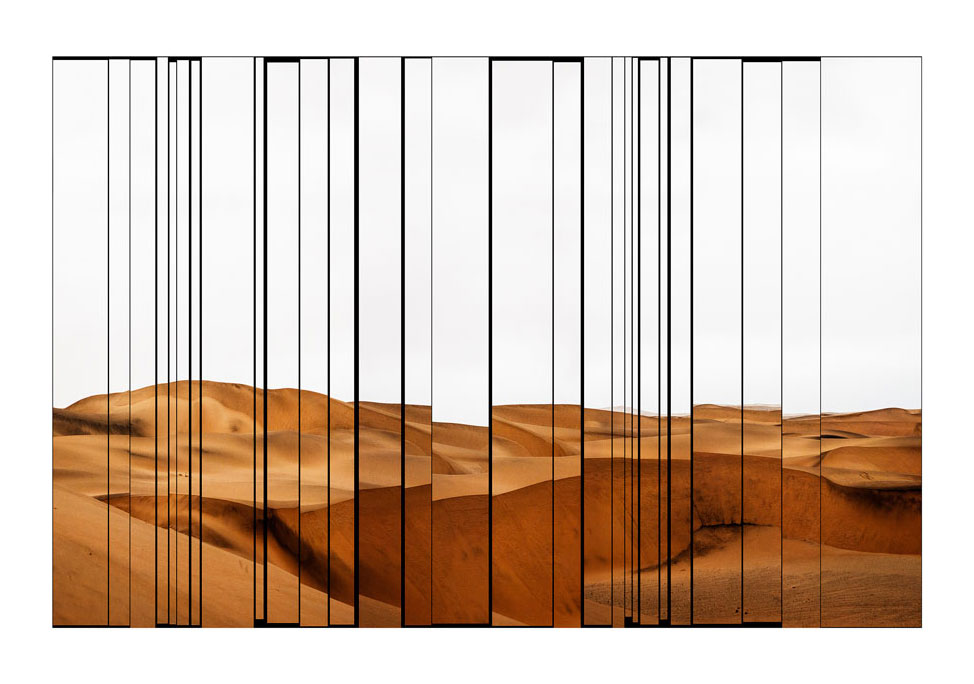
Barry Salzman, Sentinel And Witness, Swakopmund, Namibia. 2023, THK Gallery
Salzman’s abstract landscapes are not created through traditional compositions or digital manipulation. Instead, he employs long exposure times and occasionally vigorous camera movements during a single exposure, creating images where some areas remain sharp while others blur. This technique results in painterly, non-specific landscapes that act as a filter over the harsh realities, offering viewers the space to imagine the unimaginable. On his Instagram, Salzman remarks, “My work comments on our ethical responsibility of bearing witness, but also on the methaphorical veil or filter that we place between evidence and witness."
These abstracted landscapes do not immediately reveal the horrors that took place in these locations, serving instead as a powerful reminder that such tragedies can occur anywhere. Here, the landscape becomes a passive witness to human cruelty, a metaphor for our relationship with genocide and our role in preventing it. While Salzman’s work emphasises the regenerative power of nature, it also raises difficult questions: Why do genocides persist, and why do humans and governments seem incapable of intervening in time? For Salzman, factual and literal accounts alone are insufficient to inspire action in those who have no direct connection to genocides. In a world constantly bombarded with images of violence and human suffering, we often compartmentalise our responses. This is where art plays a crucial role: by opening a new dialogue, reaching people on a different level, and encouraging them to draw new lessons from the past.
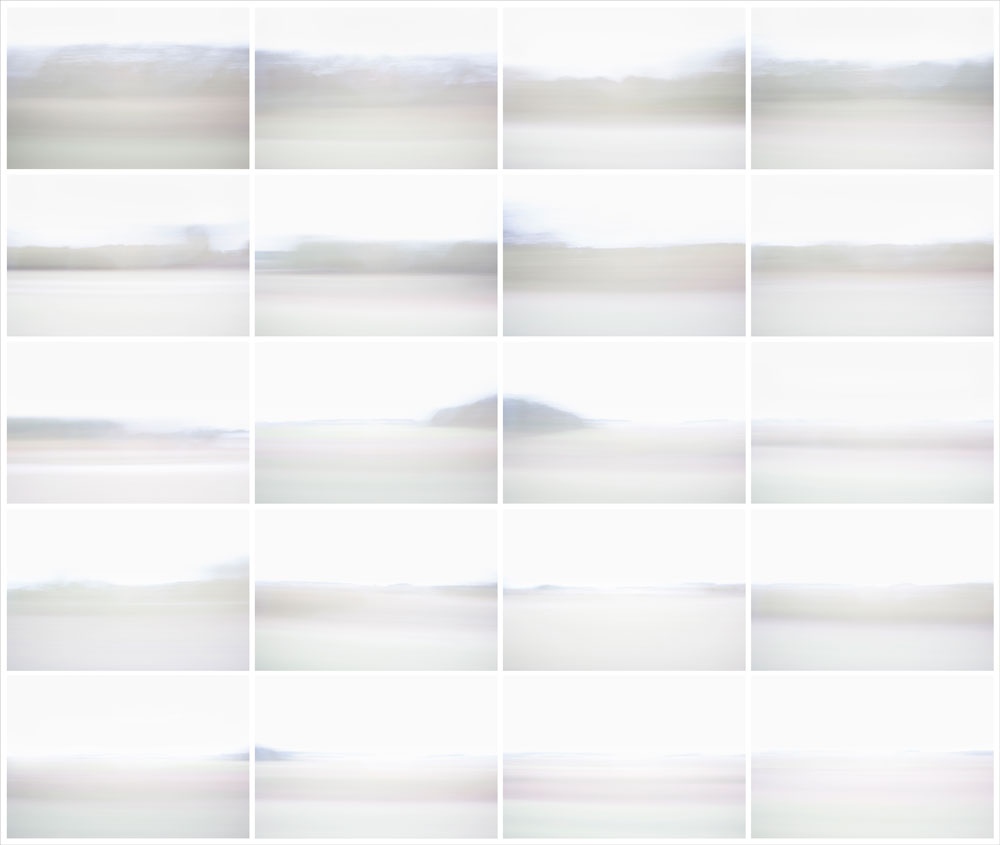
Barry Salzman, Last Mile To Any Place I, Chelm To Sobibor, Poland, 2015, THK Gallery
In an interview with The Art Talk Magazine, Salzman elaborated on this idea: “I think part of the problem is that we are left-brain saturated, i.e. the part of the brain that processes fact-based information. We are not able to fully process more literal accounts of trauma and human suffering disseminated in the same way. Artists can play a role in addressing this problem by activating the right-brain of public consciousness, since the left-brain is close to being saturated. In my work I am preoccupied with making aesthetic images, not documenting brutal facts. Art complements the more linear and didactic ways that we generally consume information and has the potential to be truly transformative. For that to happen, artists have a responsibility to make work that addresses the most complex issues we face as a society. Art can, and should, give us new lenses into the nuanced complexity of subjects that we think we know.”
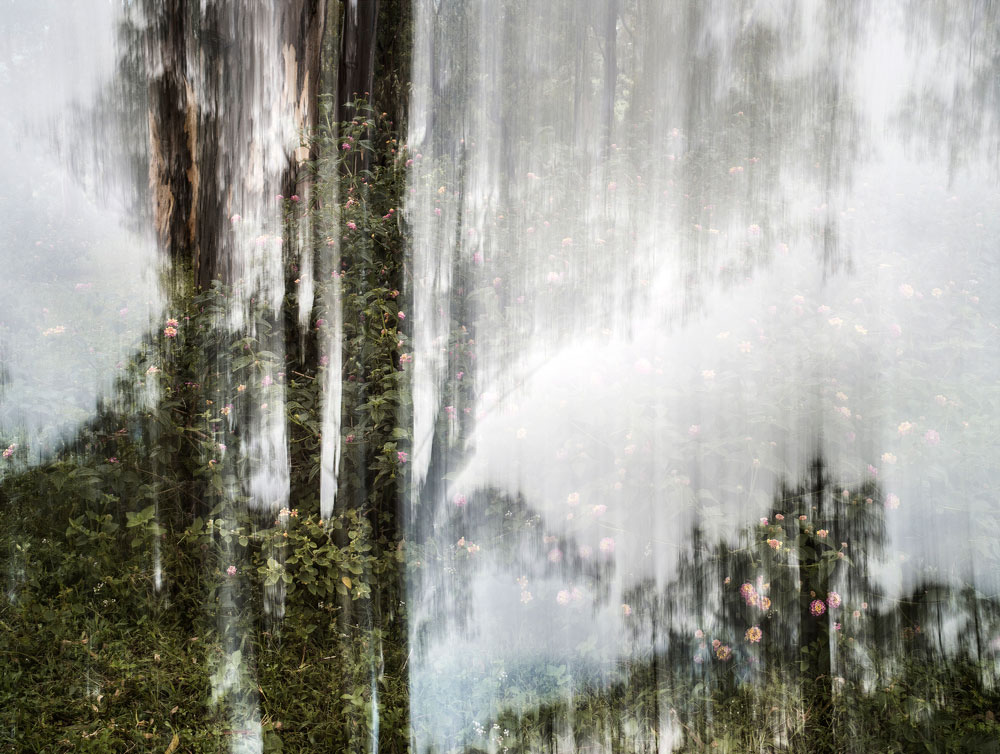
Barry Salzman, Beyond The Pictorial Dimension, Nyamure, Rwanda, 2018, THK Gallery
A poignant example of this is Salzman’s powerful series “The Day I Became Another Genocide Victim”, composed of one hundred indirect and posthumous portraits of victims of the 1994 genocide against the Tutsi in Rwanda, during which an estimated one million people were murdered in just 100 days. For this series, Salzman photographed anonymous garments retrieved from a recently discovered mass grave — clothing worn by victims on the day they were killed. These items ranged from a child’s backpack to a swimsuit, half a blazer and plastic swimming shoes. Rather than seeing them as mere objects, Salzman considers these clothes visual representations of the lives lost. He refers to them as 'portraits' because they offer a personal and humanising lens on the immense losses that occurred during the genocide. The final image in the series features a gray background, like the previous 99, but bears the caption "We Were”, a tribute to the countless victims who may never be identified. Through this work, Salzman reminds us of our moral and collective responsibility to bear witness and learn from the mistakes of the past. For this project, Salzman received an International Photographer of the Year award at the 2018 International Photography Awards (IPA).
Until 17 November, his work will also be on view in the solo exhibition ‘How We See The World’ at Museum Singer Laren, commemorating the 30th anniversary of the genocide against the Tutsi in Rwanda.
At Unseen, Salzman will join the Unseen Talks Program for a conversation with Jan Rudolph de Lorm, Director of Museum Singer Laren, on Saturday 21 September at 11AM.
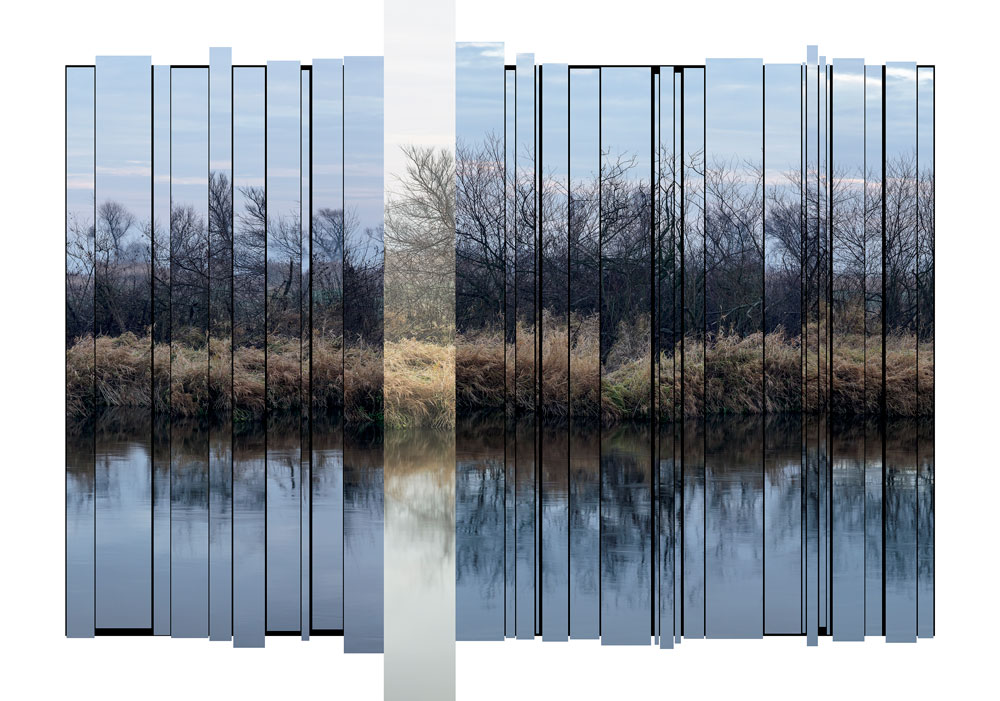
Barry Salzman, Through The Prism Of Time, Chroberz, Poland. 2023, THK Gallery
