13 october 2023, Flor Linckens
Last Chance: The Japanese Spirits of Kiana Girigorie
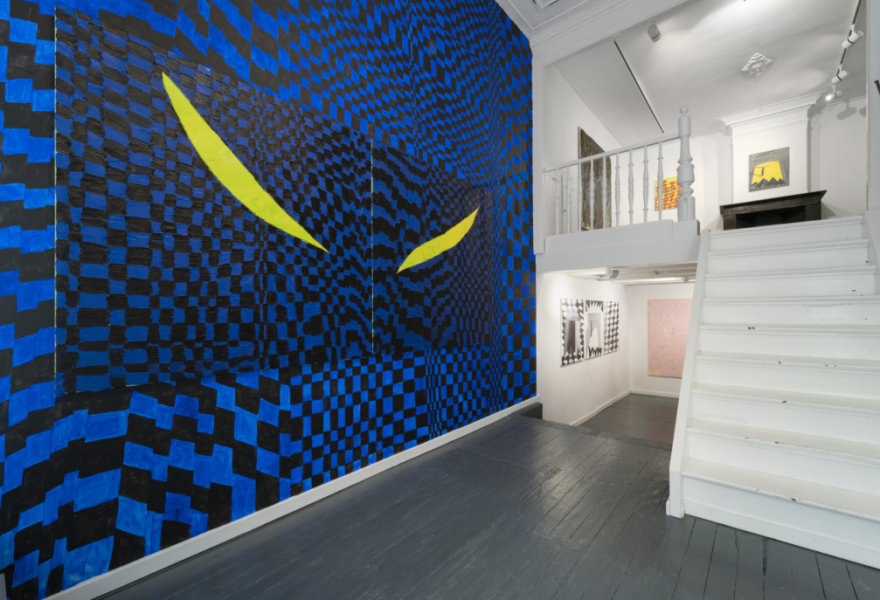
Until 21 October, you can view a solo exhibition by Kiana Girigorie at LANGart in Amsterdam. Although Girigorie was originally known for her large-scale paintings, in recent years she has also embraced smaller formats. Yet, upon entering the exhibition at LANGart, visitors are immediately greeted by a massive and striking blue-black mural.
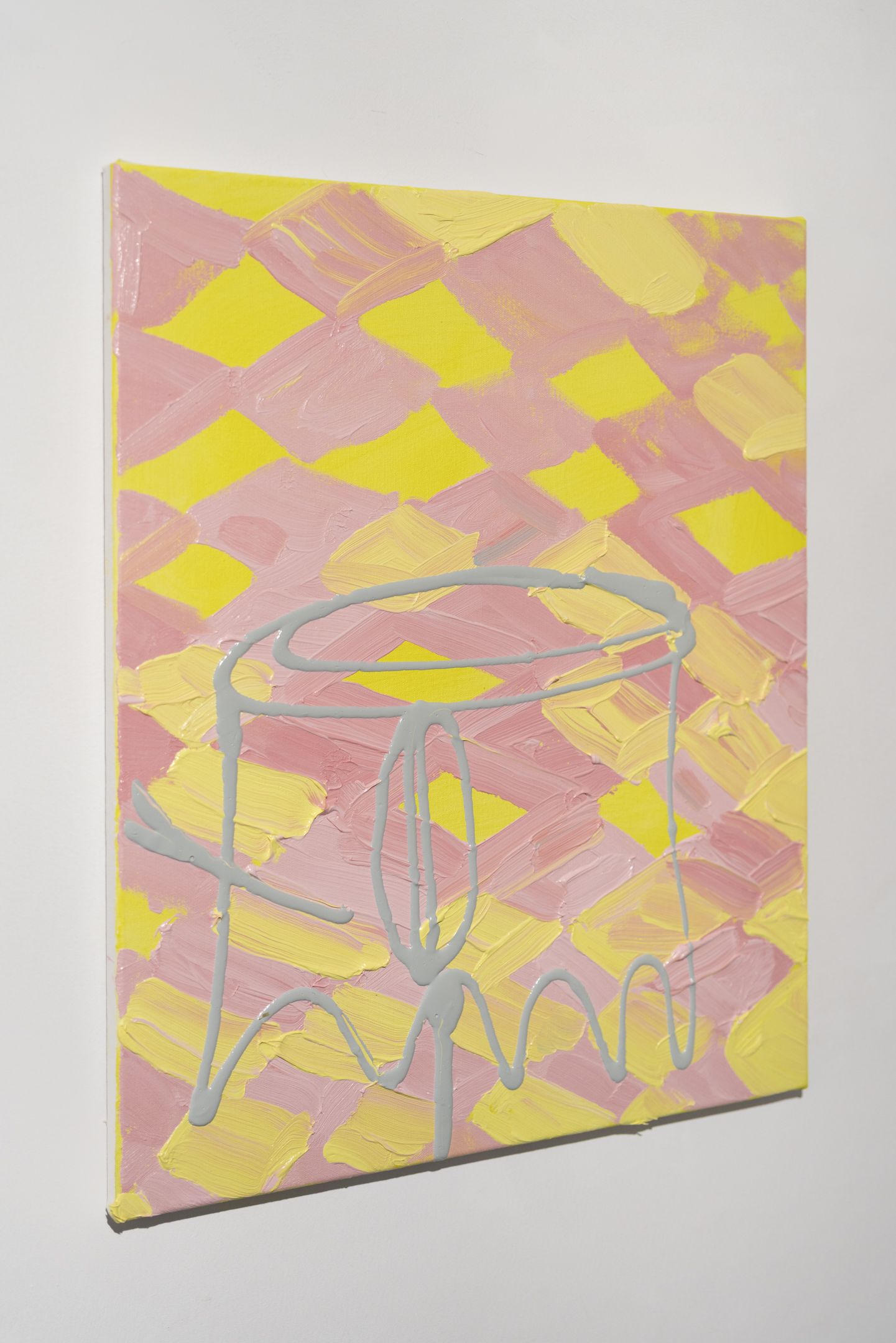
Dreams and reality, magic and realism often intertwine in Girigorie's energetic and frequently colourful works. For the 'Puzzled' exhibition at LANGart, she delves deep into her (partly) Japanese heritage, drawing inspiration from Japanese folklore, films, books, children's programs, and her own childhood memories. Karakasa-obake and Neko-obake, elements from Japanese folklore, take center stage in her most recent pieces. Karakasa-obake is a spirit that animates an old umbrella, often depicted hopping on one foot with a single eye and a long tongue. Neko-obake is a similar spirit, assuming the form of a cat and emerging when a cat is mistreated during its life, resulting in a haunting presence after its death that can severely afflict its former owners. Due to the striking visual patterns in the paintings, these spirits are sometimes not immediately discernible. In a way, the paintings also pay tribute to the artist's own cats, Giallo and Sama — perhaps as a precaution to prevent them from haunting her after their respective deaths.

Girigorie was born in Los Angeles and earned a degree in fine arts from the HKU in Utrecht, graduating cum laude. In 2020, while still a student, she was nominated for the Buning Brongers Prize. Her art has been showcased at various prestigious venues, including Het Hem, De Vishal, the Biënnale van Mol, and the Centraal Museum. Last winter, her work was also exhibited in the gardens of the Centraal Museum, and this summer she was awarded an 'Artist Start' grant by the Mondriaan Fund.
In addition to her practice as an artist, Girigorie is also active as a curator at the non-profit art space 'De Personeelskamer' in Amsterdam and as an activist. During her studies at HKU, she founded the initiative 'Tools.For.The.Times', with the aim of driving institutional change from within, primarily in the area of systemic racism.

