Connexion
S'inscrire
FR
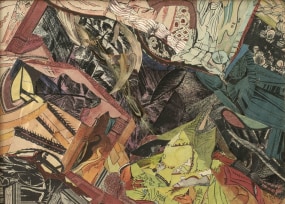
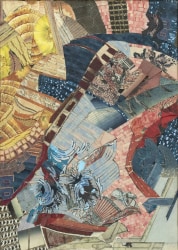
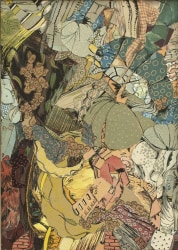
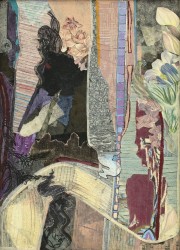
Billie J. Kanter cultivates an abstract practice in which image fragments are woven into a single, cohesive surface. The layers merge with such subtlety that the origin of each element is all but erased. The work remains resolutely abstract and stratified, animated by echoes drawn from ancient texts; not out of spiritual interest, but from a fascination with narratives that have travelled across centuries. In this practice, scriptures, dogmas, chronicles, and pamphlets appear not as sacred objects but as raw narrative architecture, available for dismantling and reconstruction.
Kanter’s academic background in visual art and critical theory fostered an enduring curiosity for complexity: the ways in which images come into being, shift, fracture, disappear, and return. The formative years were shaped as much by argument as by production, a rhythm that gave rise to a working method in which intuition and analytical intent remain inseparably intertwined.
Extended periods of work in regions across Africa and South America deepened an attentiveness to material rhythm and to the subtle ways stories can settle into colour and structure. These experiences did not generate documentary impulses but sharpened a sensitivity to the unseen frameworks beneath each composition; the scaffolding that bears a story rather than the story itself.
In the studio, images accumulate and dissolve in cycles of reordering, integration, and quiet revision. The resulting surfaces present themselves with the self-containment of painting, yet they are built from meticulously assembled fragments whose histories lie dormant beneath the final skin. References to ancient narratives move through the work like faint currents: not guiding, not proclaiming, but offering patterns, tensions, and metaphors that can be folded into a new visual grammar.
Exhibitions unfold as extensions of this process, allowing different stages of the work’s internal evolution to take spatial form. Writing and occasional lectures accompany the practice, exploring abstraction, visual logic, and the mutable life of stories once they are severed from their original purpose. Here, ancient texts become cultural sediment; material that reveals its usefulness precisely when displaced.
Kanter’s academic background in visual art and critical theory fostered an enduring curiosity for complexity: the ways in which images come into being, shift, fracture, disappear, and return. The formative years were shaped as much by argument as by production, a rhythm that gave rise to a working method in which intuition and analytical intent remain inseparably intertwined.
Extended periods of work in regions across Africa and South America deepened an attentiveness to material rhythm and to the subtle ways stories can settle into colour and structure. These experiences did not generate documentary impulses but sharpened a sensitivity to the unseen frameworks beneath each composition; the scaffolding that bears a story rather than the story itself.
In the studio, images accumulate and dissolve in cycles of reordering, integration, and quiet revision. The resulting surfaces present themselves with the self-containment of painting, yet they are built from meticulously assembled fragments whose histories lie dormant beneath the final skin. References to ancient narratives move through the work like faint currents: not guiding, not proclaiming, but offering patterns, tensions, and metaphors that can be folded into a new visual grammar.
Exhibitions unfold as extensions of this process, allowing different stages of the work’s internal evolution to take spatial form. Writing and occasional lectures accompany the practice, exploring abstraction, visual logic, and the mutable life of stories once they are severed from their original purpose. Here, ancient texts become cultural sediment; material that reveals its usefulness precisely when displaced.
Oeuvres d'art
Articles
Médias
Points forts
Recommandations
Collections
Expositions
Position sur le marché
CV
Oeuvres de Billie J Kanter




expositions

CV
Profiel
De abstracte praktijk draait om het samenbrengen van beeldfragmenten tot één coherente huid: lagen die zo subtiel in elkaar overvloeien dat de oorsprong van elk element bijna volledig wordt uitgewist.
Het werk is abstract, gelaagd en doordrongen met bronnen uit oude geïllustreerde verhalenboeken vanuit een fascinatie voor verhalen die eeuwenlang hebben overleefd. In deze praktijk worden bijbels, dogma’s en pamfletten niet als heiligdommen benaderd, maar als verhalende bouwstenen.
Achtergrond & Opleiding
°1964, Antwerpen
De academische vorming in beeldende kunst en theoretische reflectie legde de basis voor een hardnekkige nieuwsgierigheid naar complexiteit: hoe beelden ontstaan, zich gedragen, verschuiven, verdwijnen en opnieuw verschijnen. Tijdens de opleiding werd even vaak gediscussieerd als geproduceerd; een ritueel dat leidde tot een praktijk waarin elk beeld zowel intuïtief als uitgesproken denkend is.
Internationale Ervaring
Intensieve werkperiode's in verschillende Afrikaanse en Zuid-Amerikaanse regio’s bracht nieuwe aandacht voor materiaal, ritme en de manier waarop verhalen zich kunnen nestelen in kleur en structuur. Deze ervaring leidde niet tot documentair werk, maar tot een verfijnde gevoeligheid voor het onzichtbare fundament onder elke compositie: wat een verhaal draagt, niet wat het vertelt.
Artistieke Praktijk
De studio functioneert als onderzoeksruimte waarin beeldlagen worden samengesteld tot een visuele huid die de oorsprong van elk fragment verhult. De collages doen zich voor als schilderijen, maar bestaan uit zorgvuldig geïntegreerde elementen die pas bij aandachtig kijken hun herkomst verraden. Verwijzingen naar bijgeloof, mythes, verhalen en het Oude Testament sluimeren erdoorheen als echo’s van verhalen die ooit richting wilden geven, maar nu voornamelijk dienen als rijke bron van metaforen en contrasten.
De abstracte praktijk draait om het samenbrengen van beeldfragmenten tot één coherente huid: lagen die zo subtiel in elkaar overvloeien dat de oorsprong van elk element bijna volledig wordt uitgewist.
Het werk is abstract, gelaagd en doordrongen met bronnen uit oude geïllustreerde verhalenboeken vanuit een fascinatie voor verhalen die eeuwenlang hebben overleefd. In deze praktijk worden bijbels, dogma’s en pamfletten niet als heiligdommen benaderd, maar als verhalende bouwstenen.
Achtergrond & Opleiding
°1964, Antwerpen
De academische vorming in beeldende kunst en theoretische reflectie legde de basis voor een hardnekkige nieuwsgierigheid naar complexiteit: hoe beelden ontstaan, zich gedragen, verschuiven, verdwijnen en opnieuw verschijnen. Tijdens de opleiding werd even vaak gediscussieerd als geproduceerd; een ritueel dat leidde tot een praktijk waarin elk beeld zowel intuïtief als uitgesproken denkend is.
Internationale Ervaring
Intensieve werkperiode's in verschillende Afrikaanse en Zuid-Amerikaanse regio’s bracht nieuwe aandacht voor materiaal, ritme en de manier waarop verhalen zich kunnen nestelen in kleur en structuur. Deze ervaring leidde niet tot documentair werk, maar tot een verfijnde gevoeligheid voor het onzichtbare fundament onder elke compositie: wat een verhaal draagt, niet wat het vertelt.
Artistieke Praktijk
De studio functioneert als onderzoeksruimte waarin beeldlagen worden samengesteld tot een visuele huid die de oorsprong van elk fragment verhult. De collages doen zich voor als schilderijen, maar bestaan uit zorgvuldig geïntegreerde elementen die pas bij aandachtig kijken hun herkomst verraden. Verwijzingen naar bijgeloof, mythes, verhalen en het Oude Testament sluimeren erdoorheen als echo’s van verhalen die ooit richting wilden geven, maar nu voornamelijk dienen als rijke bron van metaforen en contrasten.
Abonnement gratuit au magazine
Articles, interviews, spectacles et événements. Livré dans votre boîte aux lettres chaque semaine.