27 august 2026, Flor Linckens
A glimpse into the archive of Ed van der Elsken
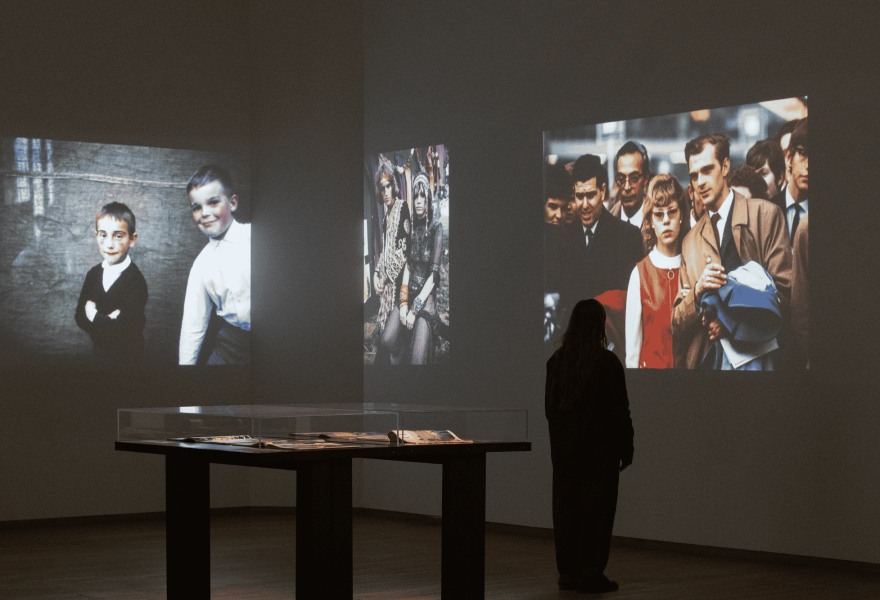
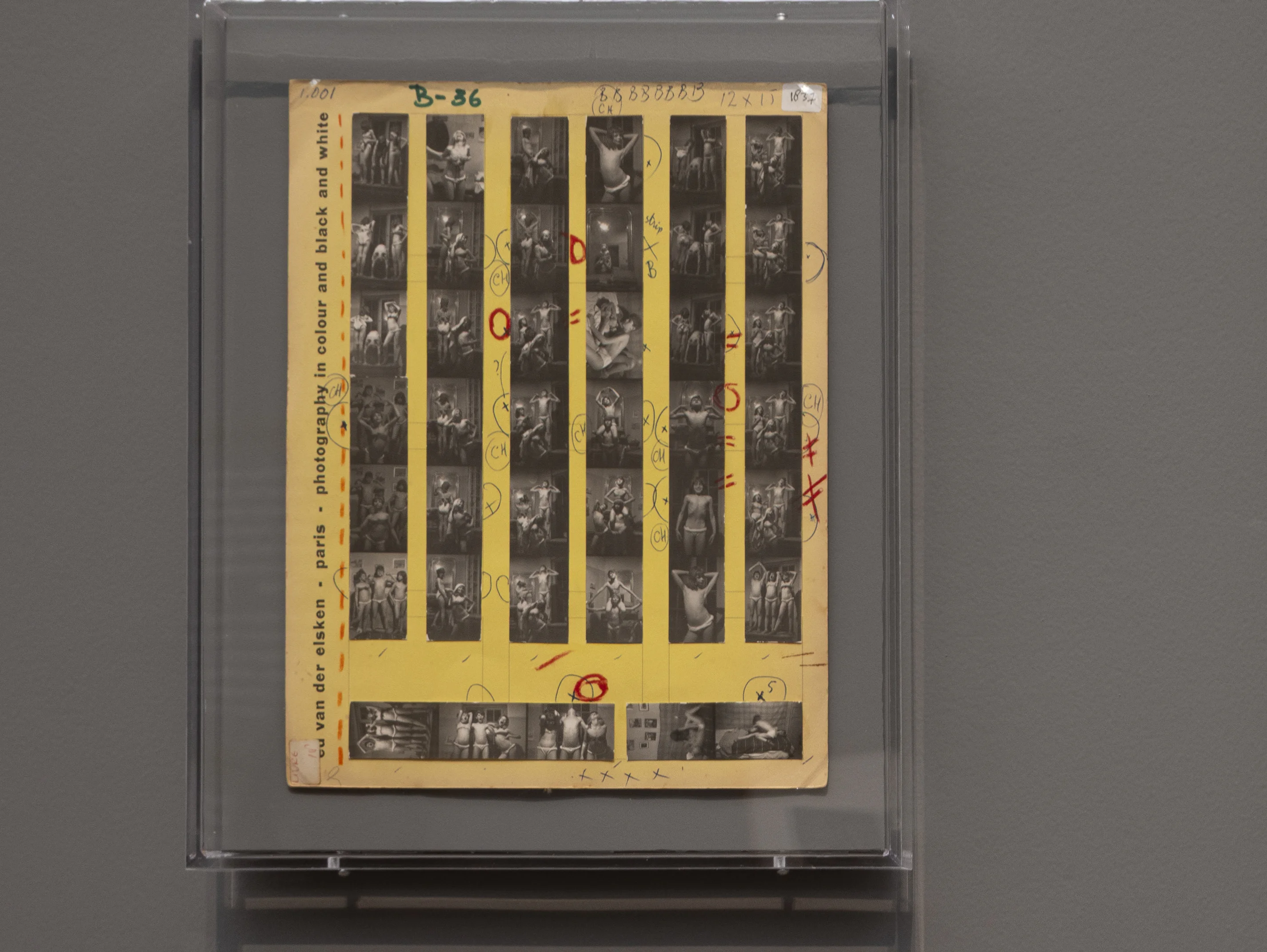
Until 13 September, the Rijksmuseum in Amsterdam presents the exhibition ‘Ed van der Elsken. Up Close’, which brings together not only the photographer’s well-known images, but also offers a glimpse behind the scenes. Contact sheets covered in markings, handwritten notes, darkroom experiments and previously unseen book dummies reveal a remarkably critical maker who was constantly selecting, occasionally sketching out in advance or staging scenes and subsequently using various darkroom techniques to alter his images. These materials are drawn from his extensive private archive, which was transferred to the Rijksmuseum and the Nederlands Fotomuseum by his widow Anneke Hilhorst in 2019. Following seven years of extensive research, they now offer a fascinating insight into his working methods. Ed van der Elsken is represented by Annet Gelink Gallery.
The archival material complicates the familiar image of Van der Elsken as an intuitive street photographer who simply pressed the shutter at exactly the right moment. Of course, many photographs arose spontaneously, aided by his ability to quickly connect with people and shape situations to his advantage. Other images were carefully prepared in notebooks, staged on location or later given a slightly different context or meaning in the darkroom through exposure and cropping, particularly in his black-and-white work. For Van der Elsken, photography was not a neutral registration of a reality that happened to unfold in front of his lens. The exhibition therefore reveals not only what Van der Elsken looked at, but also how he looked and what happened to that gaze afterwards. His private archive makes visible just how much work went into images that feel so uncontrived and immediate.
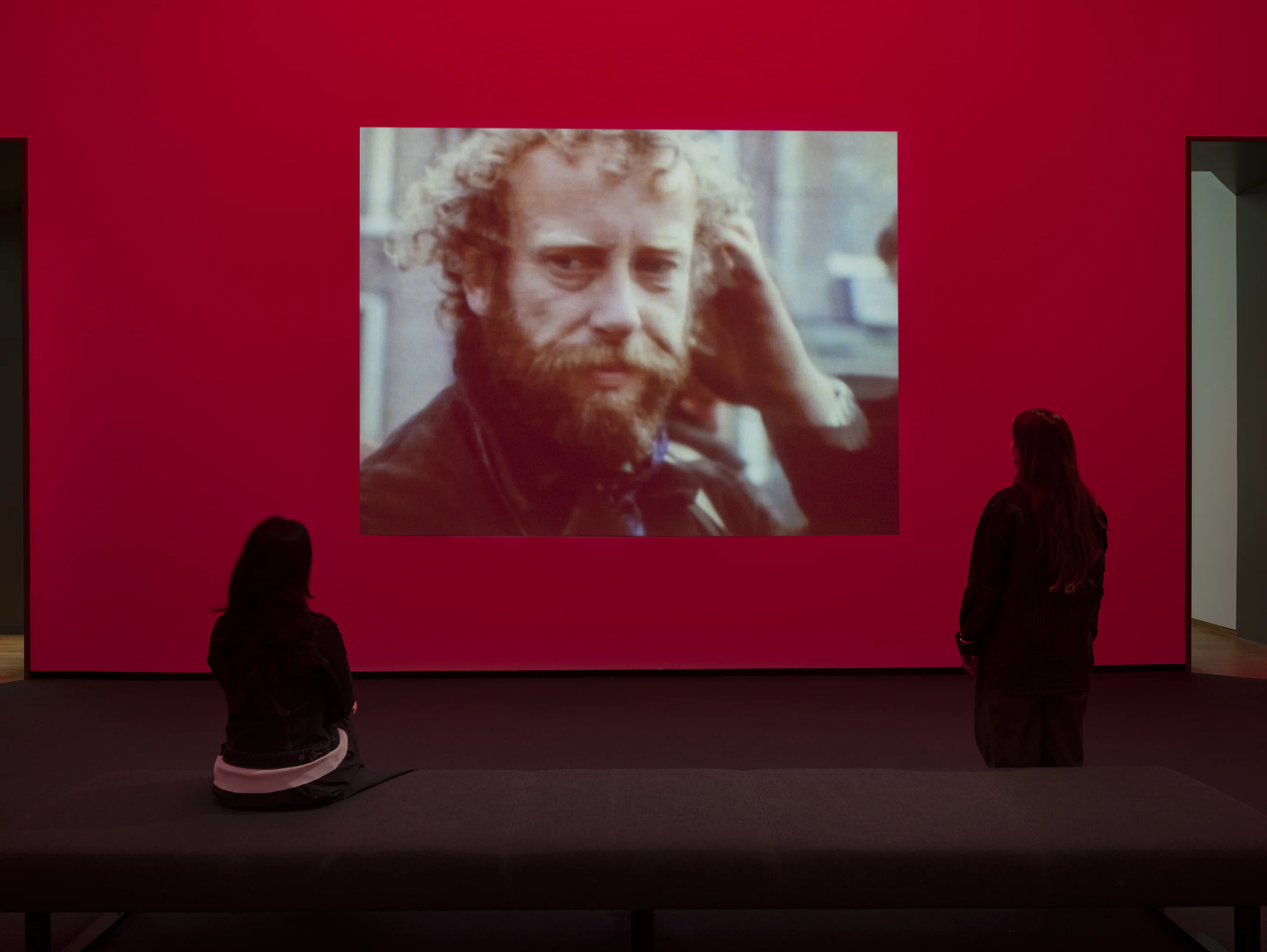
In doing so, the exhibition presents a very different side of a photographer we tend to associate above all with spontaneity. Van der Elsken took to the streets of cities including Amsterdam, Paris, Tokyo and Hong Kong, turning his camera towards the people who caught his attention. Lovers, rebellious youths and other striking characters look back at him, cheekily stick out their tongues or raise a middle finger, pose or otherwise visibly respond to the man behind the camera. Van der Elsken made no attempt to remain detached. He was not an invisible, objective observer and the direct interaction between photographer and subject became one of the most recognisable characteristics of his oeuvre. He approached people, followed them, provoked reactions and directed situations whenever it suited him. This is also evident in his film “Een fotograaf filmt Amsterdam” (1982), which is included in the exhibition. Van der Elsken’s photographs tell us at least as much about his own curiosity, preferences and fascinations as they do about the people and places he captured. Across nine galleries, visitors can follow his development from his earliest photo reports in the 1950s to his final photobook at the end of the 1980s.
Van der Elsken’s archive makes it possible to trace part of this process, including versions and ideas that ultimately did not make the cut. The self-assured, unpolished rawness that seems to characterise his images so effortlessly often turns out to be the result of a remarkably precise process of making and selecting, in which doubt also played a role. Perhaps that is precisely where the photographer’s strength lies: his photographs appear to have emerged in a fraction of a second, even though some were preceded by years of selecting, framing and looking again.
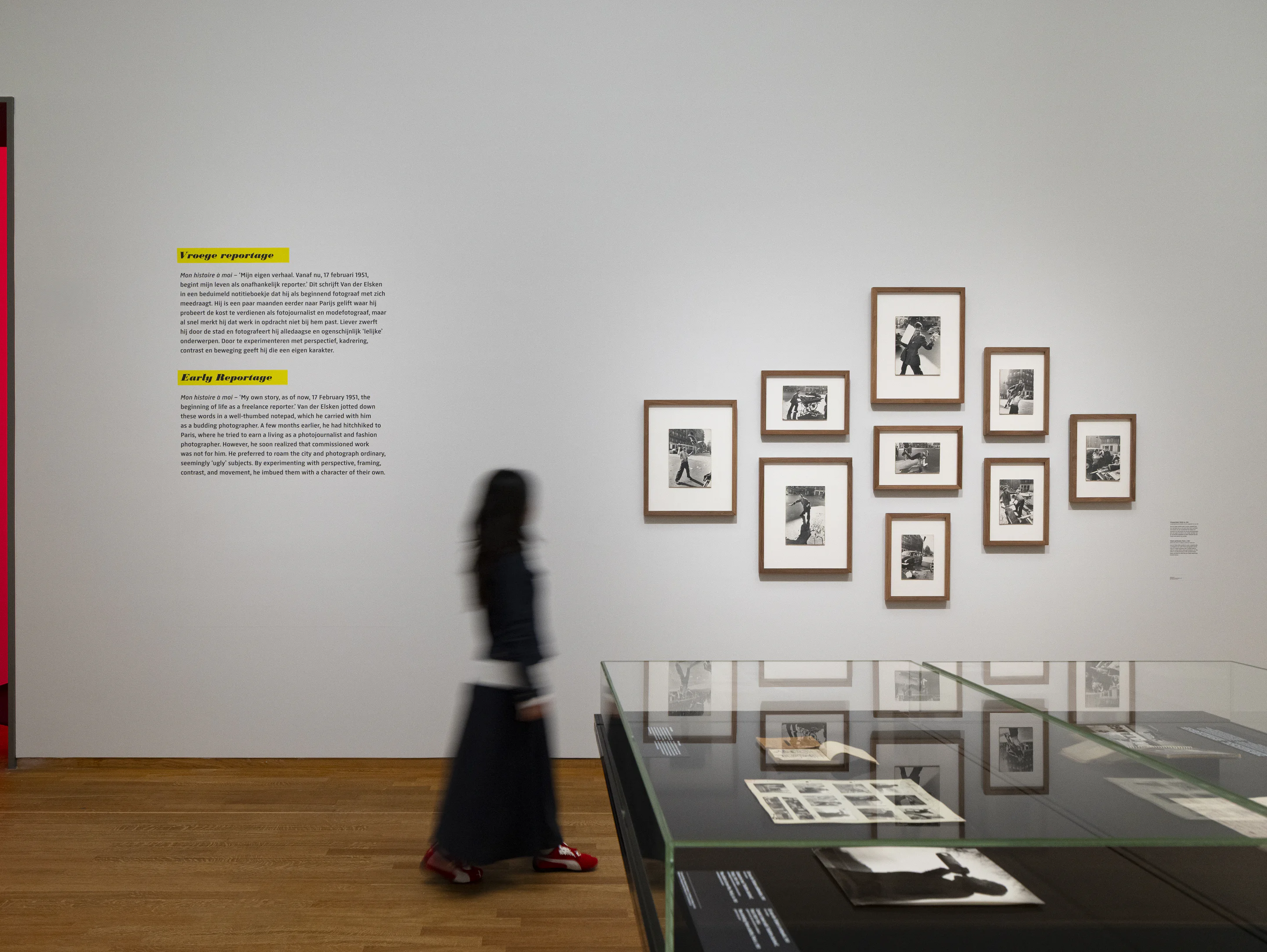
Van der Elsken became one of the most influential and beloved Dutch photographers of the twentieth century. He was born in Amsterdam in 1925 and died in Edam in 1990, at the age of sixty-five. His work is held in the collections of the Rijksmuseum, the Nederlands Fotomuseum, Stedelijk Museum Amsterdam, MoMA, Centre Pompidou, Tokyo Metropolitan Museum of Photography, Louisiana Museum of Modern Art, Museum Voorlinden, ABN AMRO and De Nederlandsche Bank.
