02 october 2026, Wouter van den Eijkel
The AkzoNobel Art Foundation celebrates its 30th anniversary with the survey exhibition "ReflAction"
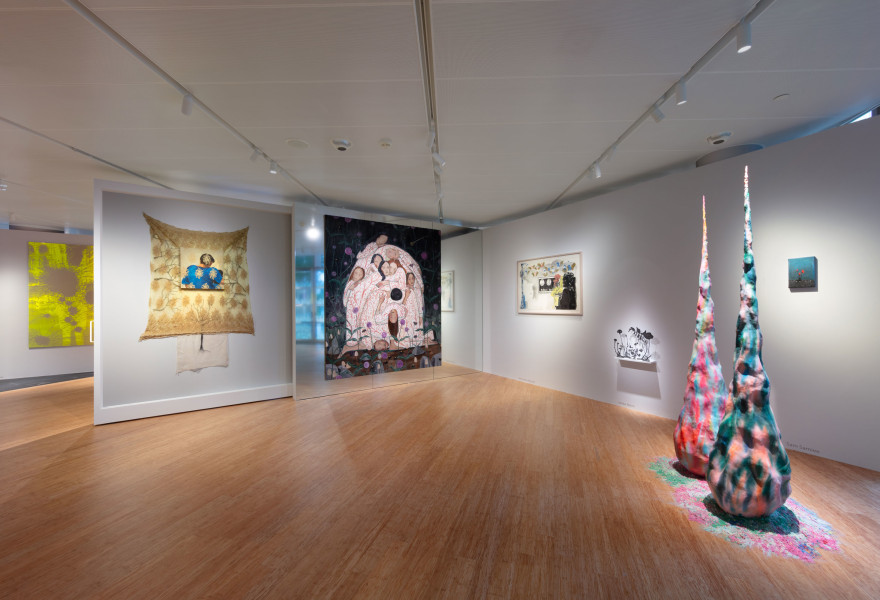
The AkzoNobel Art Foundation is turning 30! And that deserves a celebration. The Art Foundation is marking the occasion with the magnificent survey exhibition ReflAction, featuring work by emerging talent alongside pieces by Karel Appel, Kerry James Marshall and Helen Verhoeven. “Reflection is about looking back, while Action is about the future. Showing only the highlights or the most expensive works of art in the collection quickly becomes dull. The heart of this collection is about discovery, curiosity and innovation.” At the same time, the Art Space is opening a solo presentation by Sikkens Prize winner Otobong Nkanga.
AkzoNobel Art Foundation is also celebrating its anniversary by lending an unusually large number of works to museums. Does this mean that the paint giant’s collection has moved beyond the traditional role of a corporate collection? How do you create a collection of 2,500 works and what principles underlie the acquisitions policy? We asked director Hester Alberdingk Thijm and deputy director Els Drummen.
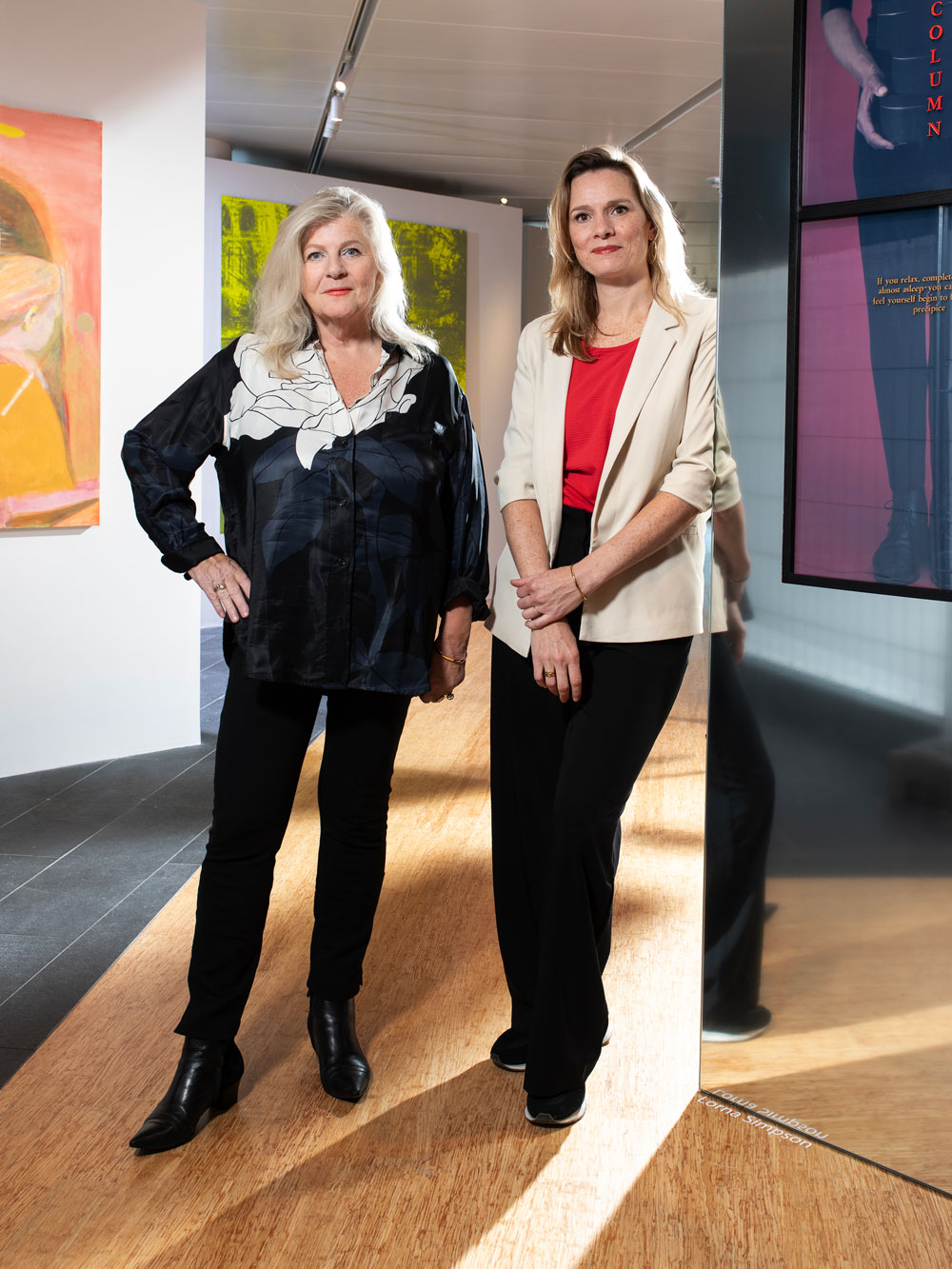 Hester Alberdingk Thijm and Els Drummen. Photo credit: Friso Keuris
One of the first things you notice on first seeing ReflAction is the sheer diversity of the collection, ranging from tapestries by Otobong Nkanga to a mirror work by Navid Nuur, and from an Appel from the early 1960s to work from Sam Samiee’s latest show – made this spring while in a bomb shelter in Tehran.
The latter measures a mere 20x30 cm, yet it does not get lost in the space. The image is remarkably powerful: a single flower against a lead grey background. Nature continues even as the bombs fall is Samiee’s message, whose work consistently points to the similarities between East and West – even when doing so is extremely difficult.
“Half of the works on display contain reflection in a literal sense, like Navid Nuur’s mirror,” says Els Drummen. “The other half have a reflective element because they make you think about our current zeitgeist.”
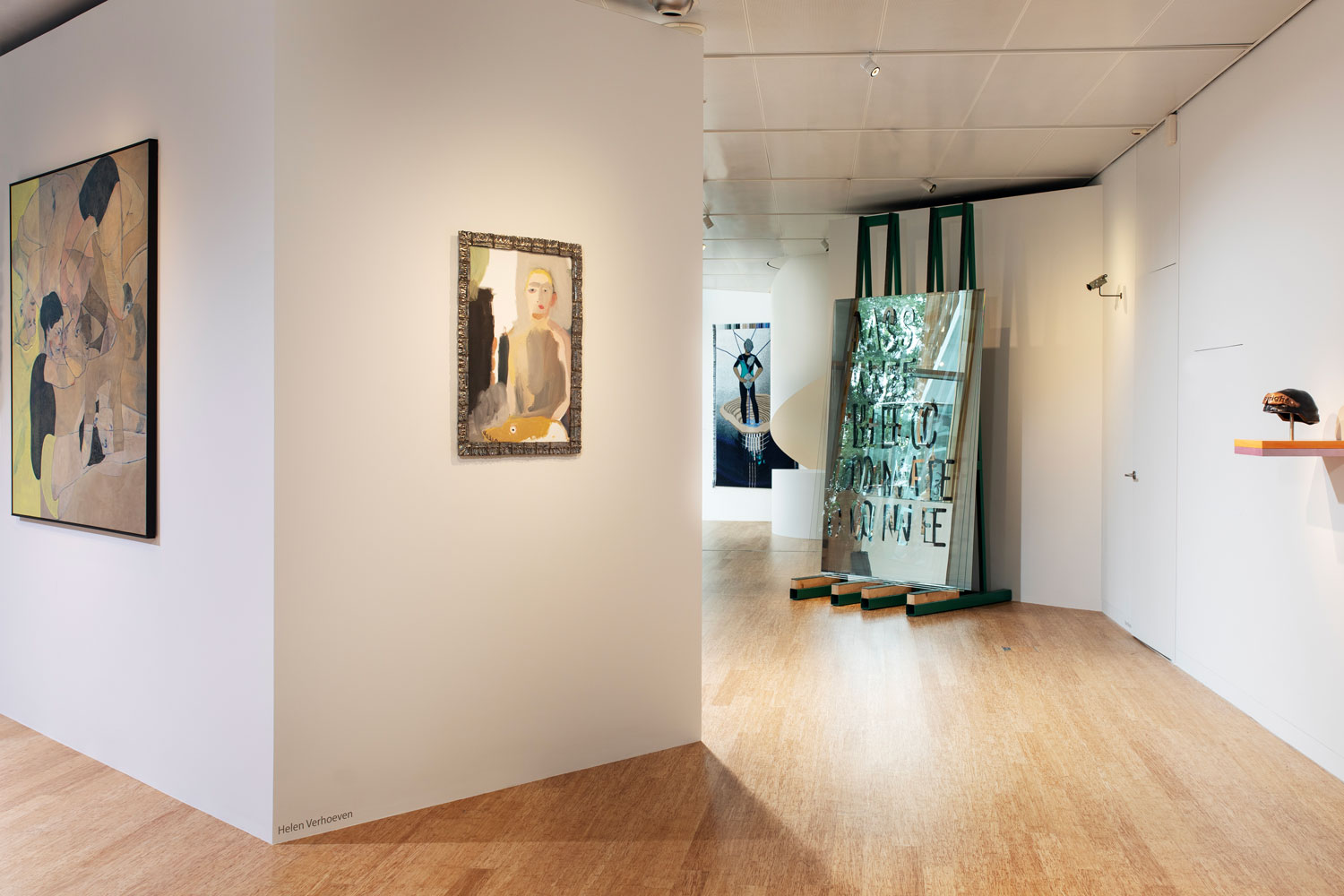 From left to right: André Lundquist, Helen Verhoeven,
Otobong Nkanga, Navid Nuur, Jala Wahid. Work by Otobong Nkanga: Courtesy
Defares Collection. Photo credit: Friso Keuris
From left to right: André Lundquist, Helen Verhoeven,
Otobong Nkanga, Navid Nuur, Jala Wahid. Work by Otobong Nkanga: Courtesy
Defares Collection. Photo credit: Friso KeurisSamiee’s small floral still life hangs in a corner arrangement alongside a drawing by Kerry James Marshall about martyrs of free speech, such as JFK, Martin Luther King and Malcolm X, from 1999, and a recent large canvas by Keetje Mans, which was on display last year at the Bonnefanten Museum.
Mans’s image is hopeful: we see a mountain of bodies holding and embracing one another. The work hangs on a mirrored wall. “The exhibition is also a call to action. It says: look at one another, just as artists have looked at their predecessors.”
Asked about the precise composition of the exhibition, Alberdingk Thijm pulls a piece of paper from her bag. “I came across this quote by George Bernard Shaw this morning and it perfectly captures what we want to say with this exhibition: ‘To see your face, use a mirror. To see your soul, use a work of art.’ Your response says something about what you have already built up in your soul, your likes and dislikes. What is inside you is reflected in the work of art.”
Three pillars
An explanation for the breadth of the collection can be found in the principles underlying its acquisitions policy, which are deliberately broad. “The quality and authenticity of a work always come first,” Drummen explains. “We also consider things like colour and research, the individual and society, and space.”
“When we first got started, I looked into who we actually are,” says Alberdingk Thijm. “I did that because the men upstairs – management – needed some points of reference. They have to be able to explain why they are doing this. In fact, that vision has guided me throughout the past 30 years.”
It helped that the Art Foundation is an independent foundation that is separate from the company. The acquisitions made when the foundation was established were often closely connected to the company’s business activities. Take the work by Karel Appel, for example: it is made with lots and lots of paint. Since the foundation was established, however, acquisitions have increasingly been driven by art itself and by current affairs.
According to Alberdingk Thijm, there is also a risk in translating the company’s activities directly into a collection. When she joined AkzoNobel in the mid-1990s, for example, the company was also active in plastics and chemicals, business divisions that have since been sold. “I always thought that the collection should be good enough for a museum.”
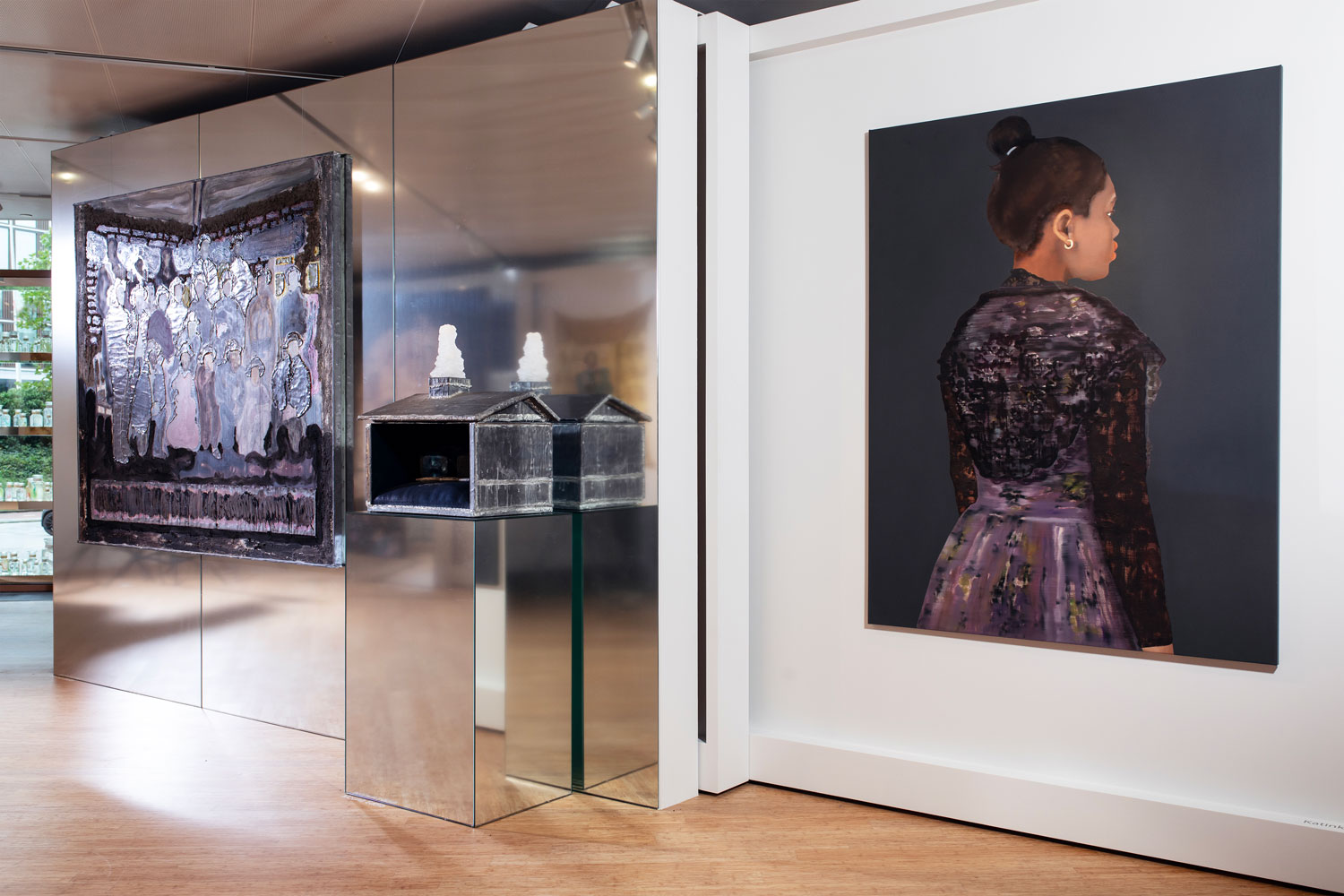 Left: two works by Mounir Eddib. Right: work by Katinka Lampe. Photo credit: Friso Keuris
200 works on loan
In this respect, Alberdingk Thijm and her team have undoubtedly succeeded. In this anniversary year, the AkzoNobel Art Foundation is lending no fewer than 200 works to dozens of museum partners. “It’s a two-way exchange,” Drummen explains. “We promote the museum exhibition through our channels, while our works and artists are given an additional platform.”
Something similar applies to the exhibition space itself. “For this building, we took a sizeable bite out of the Beatrixpark, which left us with the question of how we could give a piece of public space back to the neighbourhood. That is why the Art Space is open to the public. We see that it works and that local residents come here often to look at the art or work. We also notice that the work we show sparks conversations among employees, but also more broadly. Artists, galleries and collectors walk in every day. The Art Space has become a hub,” says Els Drummen.
Alberdingk Thijm and Drummen therefore no longer describe the collection as a corporate collection. Its position within the cultural ecosystem has changed too much over the past 30 years for that. “We are a presenting institution with a public space and intensive collaborations with museums. In a sense, the collection belongs to the artists, the museums and everyone we work with.”
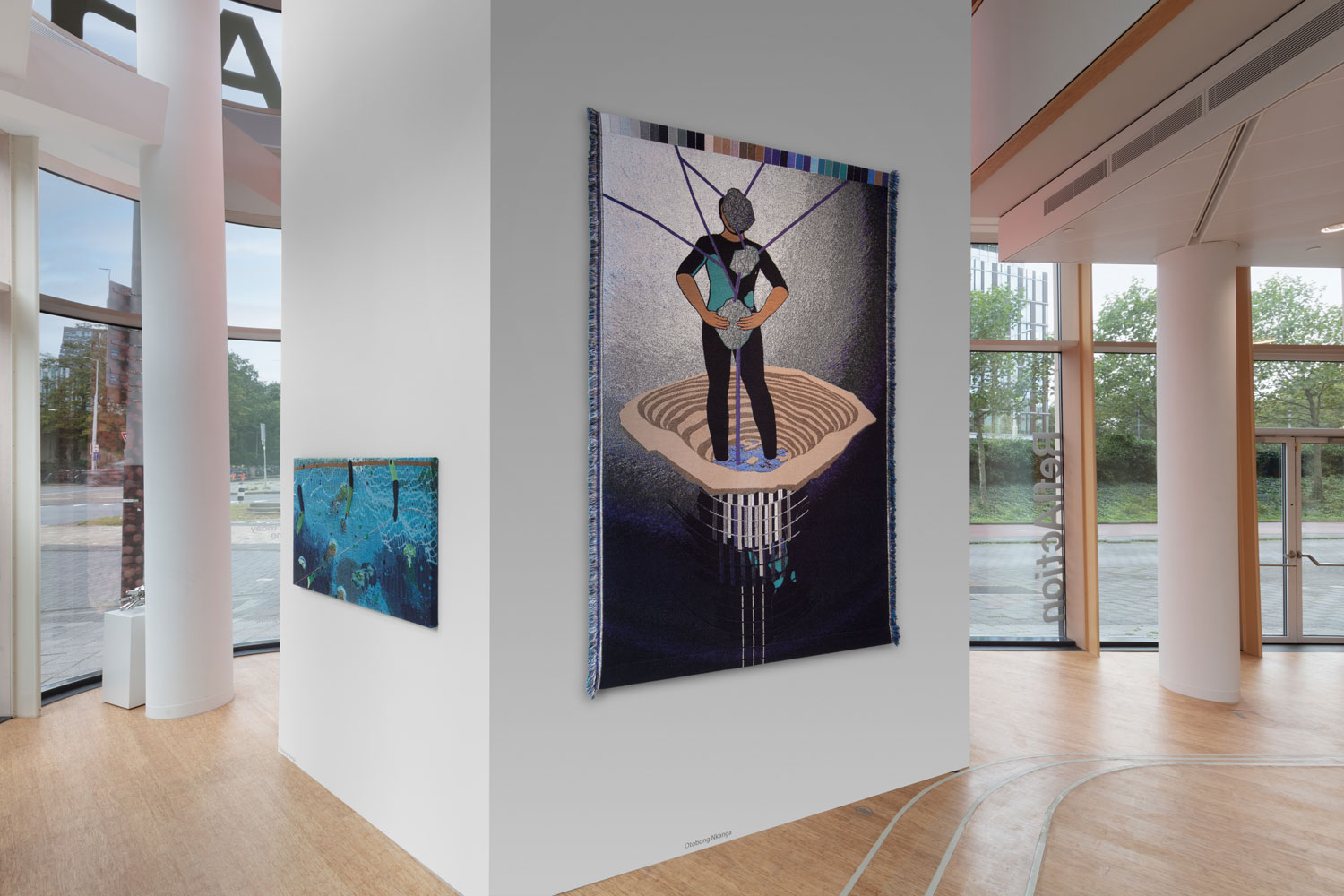 Otobong Nkanga. Work on the right by Otobong Nkanga: Courtesy Defares Collection. Photo credit: Gerrit Schreurs
Twenty works in your head
Which leaves the key question: how do you create a collection of more than 2,500 works? “In the past, you had to make an effort to get into a gallery and corporate collections were not particularly popular. Back then, we regularly bought from Art & Project and that established a certain foundation. The internet and social media have opened up the art world, which means I am constantly tempted online.” But Alberdingk Thijm never buys anything online and almost always purchases through galleries.
“Sometimes, I walk into a gallery and see a work and think: this is fantastic, but does it fit into the collection?” Alberdingk Thijm says enthusiastically. “I always have twenty works or so in my head that a potential acquisition needs to relate to.” As the collection has grown, she explains, the challenge has increasingly become one of combining work. “Essentially, you are the conductor of an orchestra, constantly creating a different sound from the various pieces.”
Looking ahead, Alberdingk Thijm expects the collection to focus increasingly on emerging artists and artists at the top end of the field. “People often forget that once you have made an acquisition, the real work – exhibiting it, promoting it and maintaining it – is just beginning. For our team, that means a huge amount of work that takes place behind the scenes. So, we will always continue to critically consider what we acquire and what fits within the context of the collection as a whole.”
Practical information
ReflAction can be seen at the AkzoNobel Art Space from 1 October.
Opening hours: Mon–Fri, 9 am–6 pm
Address: Christian Neefestraat 2, Amsterdam
Admission: Free
