18 september 2026, Yves Joris
Niqui Van Olphen and Kobe Van den Hauwe on five years of the NQ Gallery
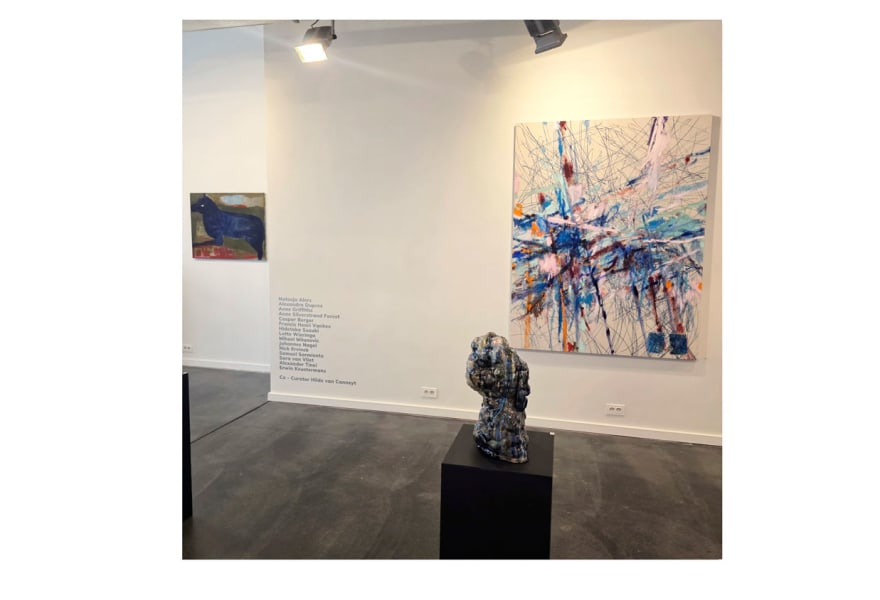
Five years ago, Niqui Van Olphen settled in Antwerp, both professionally and personally. Today, the NQ Gallery is an established name in the Antwerp art world. But Van Olphen does not want to stop at the gallery itself; she wants to bring art into the city, to places where people do not necessarily expect to see art.
Five Corners Up is the perfect expression of this ambition. Twenty locations are temporarily connected: five venues where established artists represented by the NQ Gallery are presented and fifteen locations where young artists are showing their work. Artist Kobe Van den Hauwe is co-curator of the project together with Jan Janssens, while Annick Vroom is the project manager.
The conversation with Niqui Van Olphen and Kobe Van den Hauwe covers five years of running a gallery, young artists, the relationship between art and its surroundings and a gallery world that is continuously evolving.
From a garden in Kapellen to Antwerp
The story of the NQ Gallery does not start in a gallery, but in a garden in Kapellen. Niqui Van Olphen was living in Belgium, but still working in Rotterdam at the Wereldmuseum. Dutch artists she had worked with there asked whether she could organise something for them in Belgium. The answer was literally behind her house: a shed in the garden.
The first exhibition, featuring work by Johan Tahon and Stacii Samidi, was a success. People came to visit on Sunday afternoons, some even cycling from neighbouring municipalities. The mayor of Kapellen subsequently asked whether she would also like to organise projects in the municipality.
Eventually, the garden could no longer accommodate everything. Even her family began to get involved: visitors would turn up on Sundays with packed lunches and the boundary between private life and exhibition space became increasingly blurred.
Van Olphen left her job in Rotterdam and moved to Antwerp. As a result, the NQ Gallery did not have to start entirely from scratch. The collectors who had gotten to know her during that first period essentially moved with her to the city.
That organic launch also characterises her vision for the gallery. Van Olphen describes her approach as authentic, distinctive and often organic. Young artists in particular are given an opportunity – not because they are a young marketing category, but because they are still very much developing.
At the same time, she deliberately looks for combinations with artists who have been active for a longer time and are willing to share their experience. “That group has to want to work together, too,” she says. For her, that willingness to strengthen one another is essential.
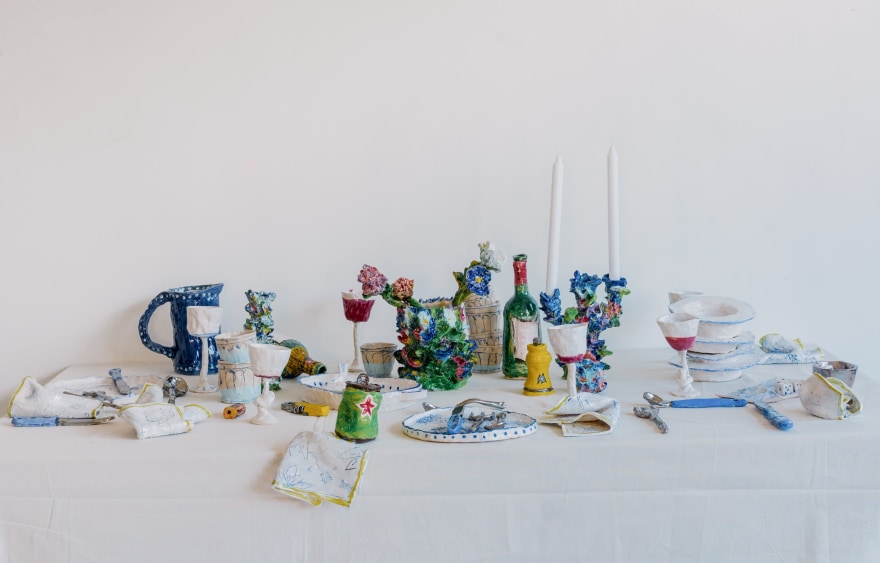 Sara Van Vliet, Cafe de Bedstee (a portrait of the evening), 2026
NQ Gallery
Sara Van Vliet, Cafe de Bedstee (a portrait of the evening), 2026
NQ Gallery“I would be stricter”
Looking back on the past five years, Van Olphen’s answer to what she would do differently is strikingly brief: “I would be stricter.”
She believes you become a gallery owner simply by doing it. You gradually learn which people are right for you, which artists you want to support and equally as important, who you are better off not working with. That is why she no longer simply relies on artists who approach her personally. She prefers to look at degree shows and graduation projects or taps into her network.
“If you have a good group of people around you, you’ll naturally hear about up-and-coming artists.”
She describes that network almost as an informal early-warning system: artists point her towards other artists, someone mentions a young creator who is attracting attention or might win a prize and sometimes she discovers artists before they become widely known.
What motivates her above all is the passion of artists. This passion is often decisive. When an artist genuinely believes in what they are making, she wants to show that work. She hopes that visitors will then feel that same energy.
For Van Olphen, that passion is often decisive. When an artist genuinely believes in what they are doing, she wants to show their work. She hopes that visitors will feel that same energy.
 Mihael Milunovic, Woman in Yellow, 2016, NQ Gallery
Art outside the gallery
The NQ Gallery’s arrival in Antwerp coincided with the pandemic. The first two years in particular were difficult: a gallery that had to reduce its opening hours, working hard while simultaneously trying to establish itself in a new city.
Yet her Dutch background proved no obstacle. On the contrary. Van Olphen speaks appreciatively of the collegiality among Antwerp’s galleries and the support she experienced there.
But simply having a gallery is not enough for her.
“I want to be present in the city.”
She has organised talks at the Maagdenhuis and regularly presents art at the Botanic Sanctuary Hotel. With Five Corners Up, she wants to take that movement further: not only offering art to people who deliberately walk into a gallery, but allowing it to appear in places where people do not expect it.
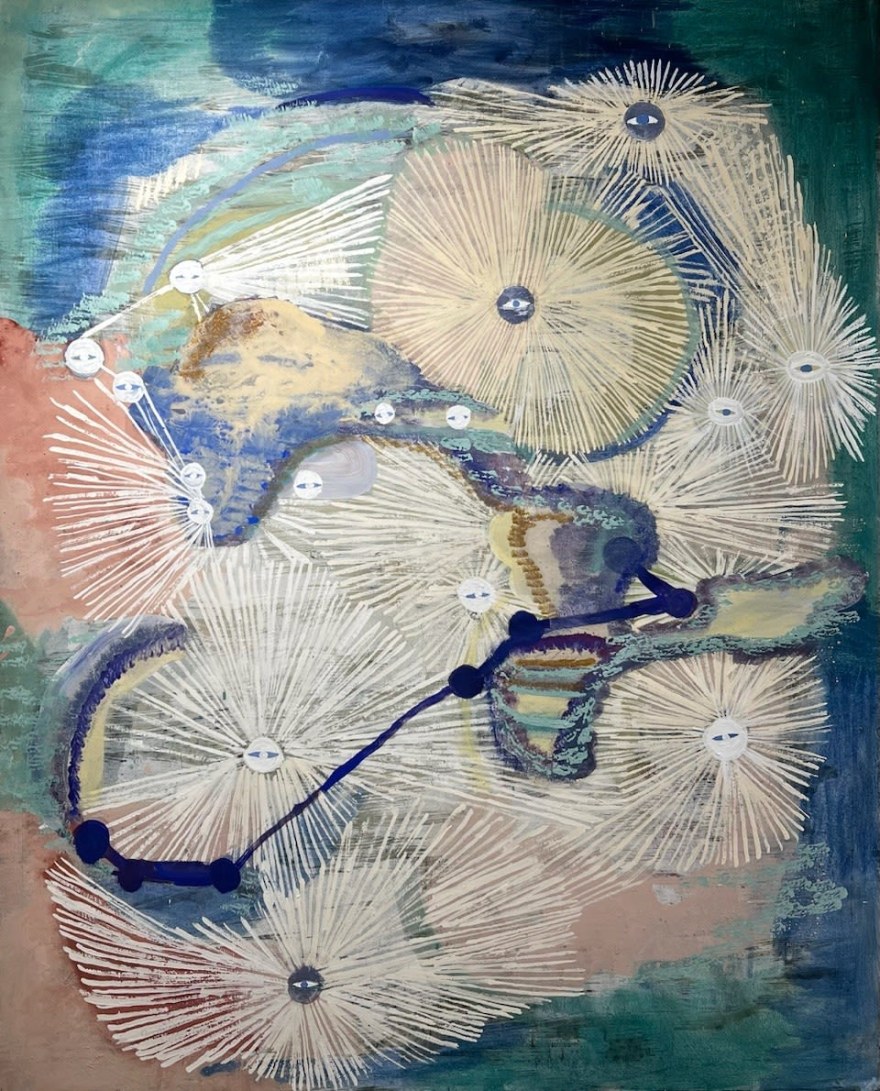 Alexandra Duprez, Constellation, 2024, NQ Gallery
Kobe Van den Hauwe: from artist to curator
Kobe Van den Hauwe first learned about the NQ Gallery through To Be Antwerp, an initiative that gives recent graduates a place to exhibit. Van Olphen saw his work and was immediately enthusiastic, resulting in an exhibition.
Van den Hauwe made an impression with his professional approach. “He was prepared down to the very last detail,” says Van Olphen.
That trust led to a new role. For Five Corners Up, Van den Hauwe became co-curator alongside Jan Janssens.
The combination of a Dutch and Belgian perspective was also deliberate. As an Antwerp native, Van den Hauwe brought a local voice to the project, while Van Olphen and her network also involved Dutch artists in the initiative.
The project immediately appealed to him. Together with Janssens and project manager Vroom, he worked with Van Olphen to pick artists and locations.
In the end, the most interesting challenge turned out not to be selecting artists, but matching artists to locations.
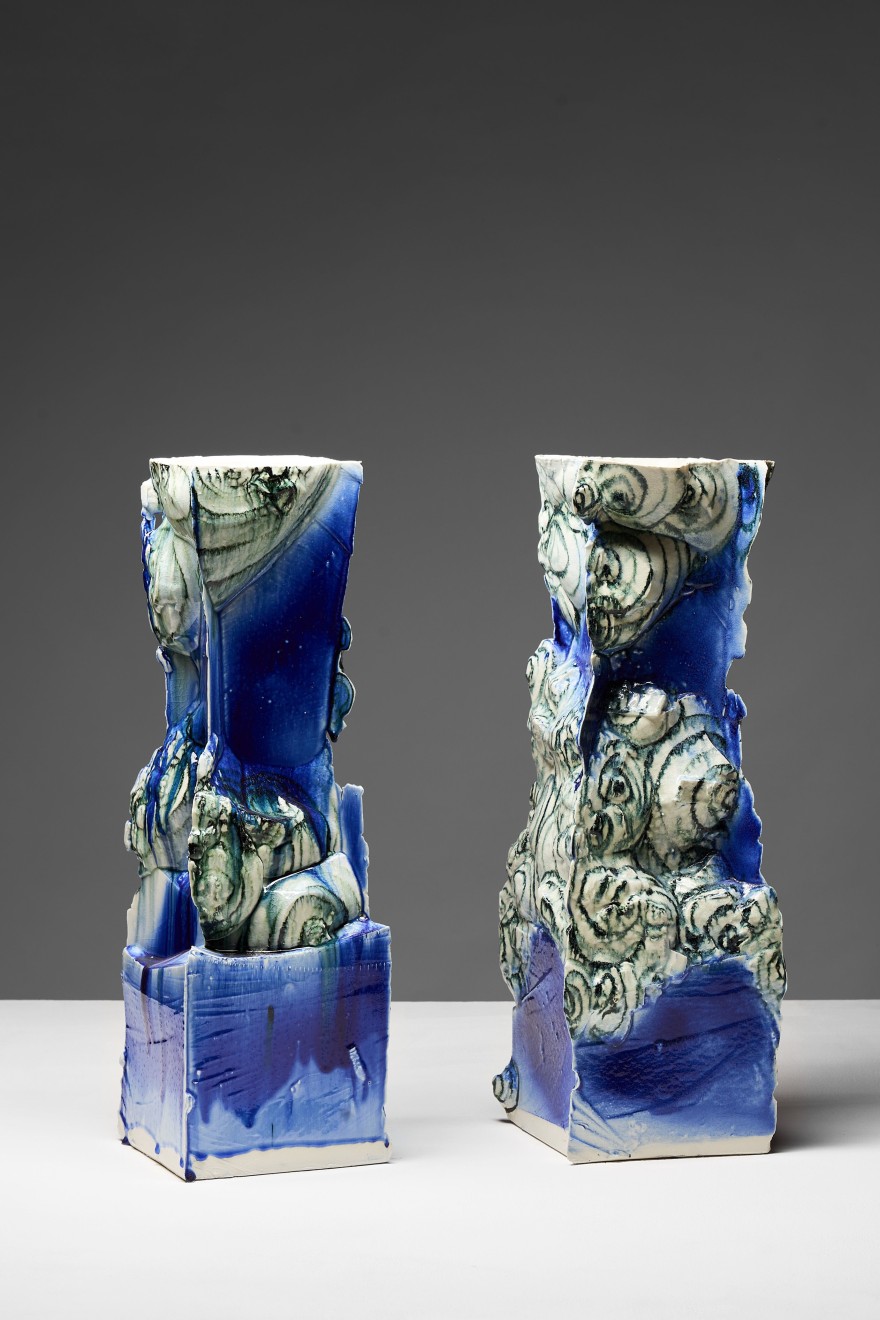 Johannes Nagel, Cuts #95 and Cuts #96 Shells, 2025, NQ Gallery
The art of making connections
The selection of artists and locations took place simultaneously. The curators suggested artists they found interesting, while also visiting different places around the city. It was then time to start putting together the pieces: which work belongs where?
Some combinations were obvious. An artist who works with painting and textiles and whose paintings almost function as three-dimensional spaces was paired with REantwerp, a social project with a sewing workshop where people from different parts of the world can learn new skills.
But according to Van den Hauwe, a good combination does not have to be logical at all. In a shop that sells metal door fittings, for example, an artist who works with metal could easily fade into the background. So, they intentionally looked for a contrast.
For Van den Hauwe, that is precisely where the artistic challenge lies: not simply asking whether art fits somewhere, but exploring what happens when art and its surroundings influence one another.
 Anne Griffiths, Glim, 2025, NQ Gallery
Five corners, twenty locations
The name Five Corners Up refers to the five main points where established artists represented by the NQ Gallery are presented. Around them are fifteen other locations for young artists. The project encompasses a total of twenty venues.
The main locations include the aforementioned Botanic Sanctuary, Maagdenhuis Museum, Bourla Theatre and the gallery itself.
The Bourla Theatre is more than just an exhibition venue. During the five weeks of the project, established artists represented by the NQ Gallery will also give two talks there.
The project received support from District Antwerp, which gave the young artists a budget to create new work specifically for the project.
That is important because Five Corners Up is not simply about moving existing artworks from one location to another.
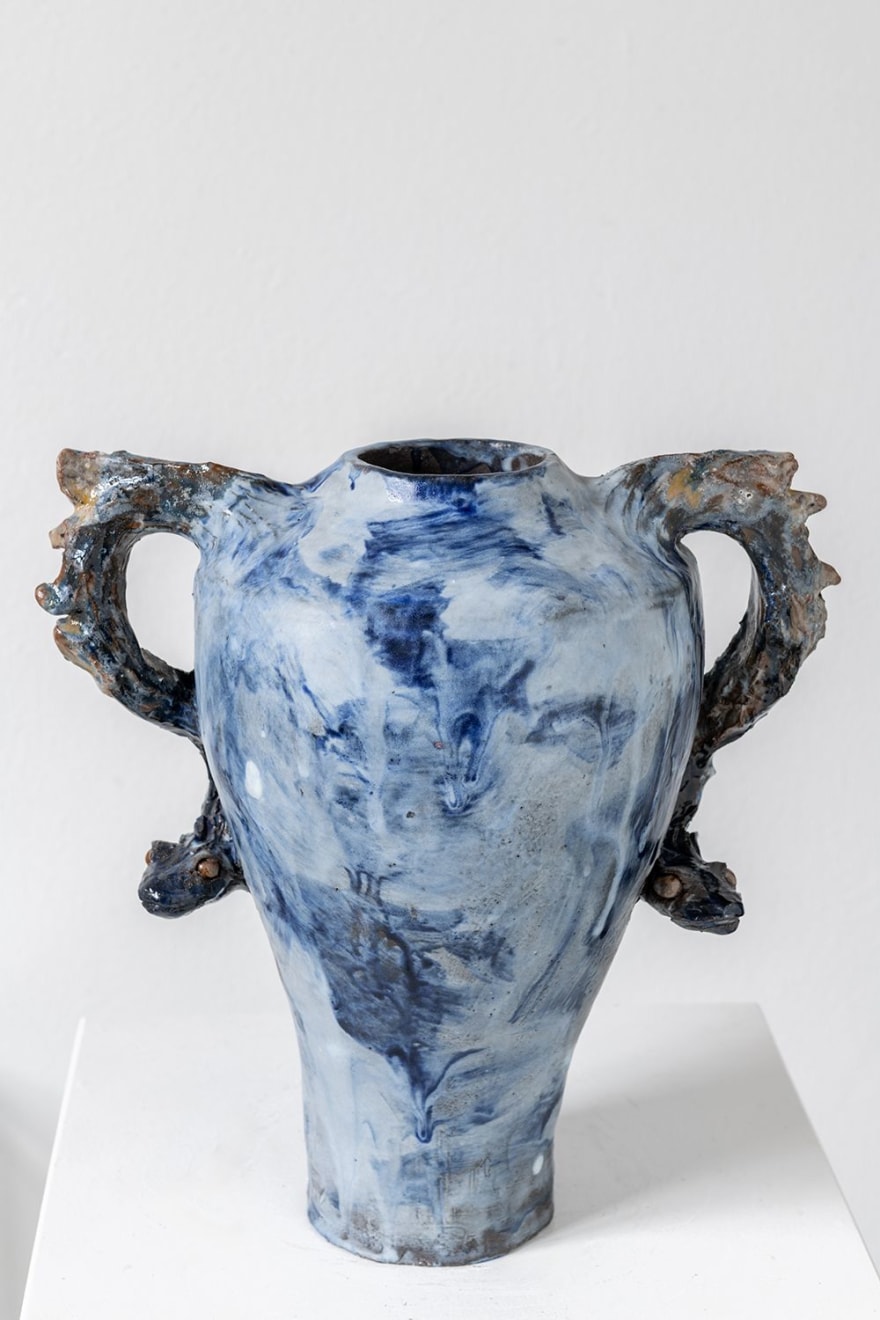 Natasja Alers, Snakevase, 2025, NQ Gallery
One work at one location
The artists were given a specific assignment. They had to visit their location, examine the space, consider its context and then develop a plan.
Van Olphen emphasises that this was backed by an appropriate budget and that time was deliberately set aside for it. The artists received the assignment during the summer holidays and were expected to invest properly in researching their location.
As a result, the artwork does not originate separately from its surroundings, but from the location itself. For Van den Hauwe, this is what distinguishes the project from other initiatives in which art is temporarily displayed in shops or public spaces.
The work is made on site – for that particular place, with a focus on the people and environment. In a sense, the artist is forced to temporarily leave the studio behind and create from within a concrete context.
The shopkeeper as co-star
For shopkeepers, this was not always self-evident. For many business owners, a shop is more than a commercial space; it is a place to which they are attached and have often fostered over many years.
Van den Hauwe noticed that some shopkeepers were therefore initially hesitant. They had to get used to the idea that someone else would be making changes to their shop. He compares it to protecting a child.
Yet that very involvement has proven to be a strength. The artists were encouraged not to treat the shop as a neutral backdrop, but as part of their work.
According to the organisers, the result is that “fantastic artworks” have emerged, work that has not simply been placed somewhere, but has grown out of a dialogue with the location.
The shopkeepers themselves also became increasingly involved.
As an anecdote, Niqui recalls that some shopkeepers would message her in the evenings after seeing the result at another participating venue.
A second network therefore emerged: alongside artists and the public, the shopkeepers are also connected with one another.
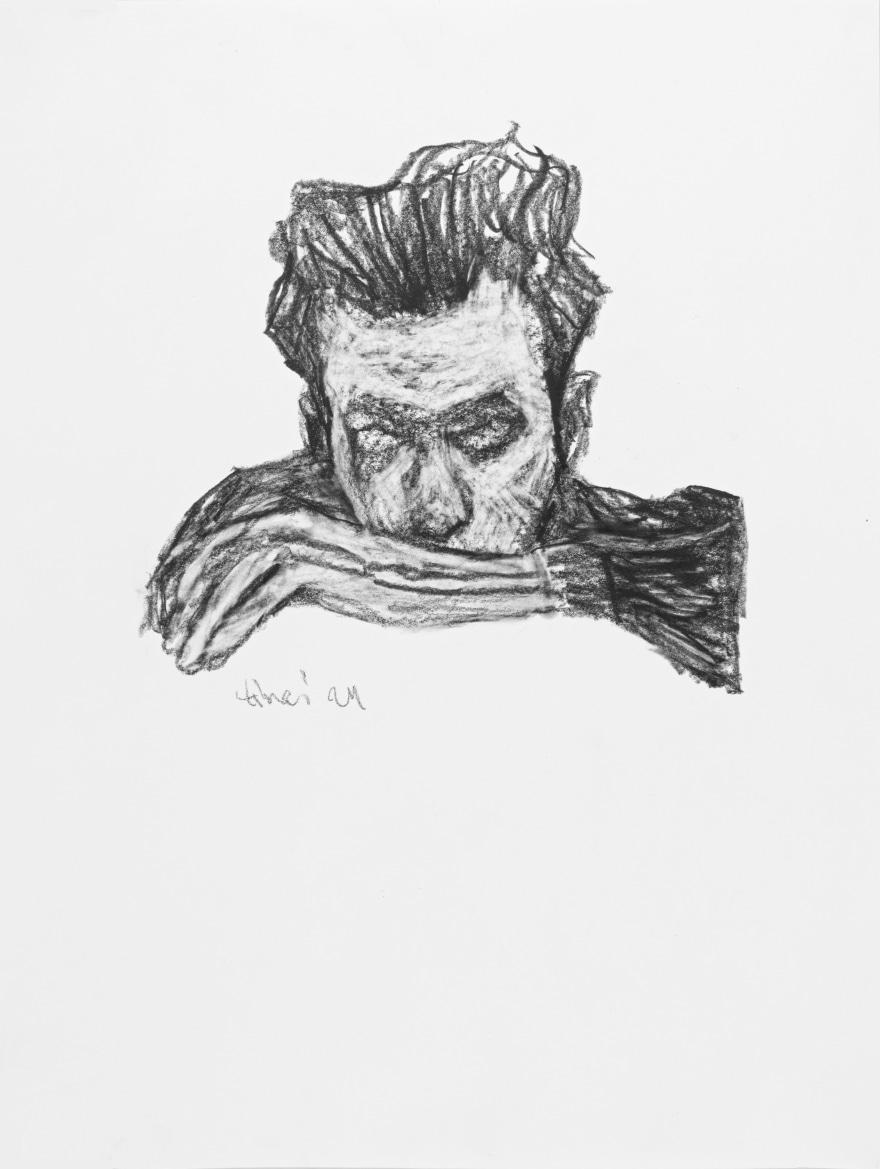 Alexander Tinei, Father, 2024, NQ Gallery
Making art more accessible
Van Olphen sees Five Corners Up primarily as a way to give back to the city. For some people, a gallery can still seem like a closed world. A brick-and-mortar shop is something entirely different.
You walk in because you need something or happen to be passing by. And suddenly see art on the walls.
That makes it much more accessible.
Van den Hauwe finds it interesting that art can function in different contexts in this way. He hopes people will be surprised, without feeling that the art is being imposed on them. The close collaboration with the shops, he believes, is precisely what makes the difference.
Art does not necessarily have to be loud or demanding, but can also be a discovery.
More work than expected
The ambition of Five Corners Up also has a downside. Organising this first edition has required far more work than initially anticipated.
Artists had to be brought together, locations found, work selected and plans developed. The website and practical organisation also took a great deal of time.
The walking route has deliberately been kept to around two hours, allowing visitors to take their time and complete the route on foot.
The gallery of tomorrow
Looking ahead, Van Olphen’s main hope is that the artists she works with will continue to grow: towards museums, exhibitions, international art fairs and contacts abroad.
And when artists grow, the gallery grows with them.
According to Van Olphen, that professionalisation has already begun. With the hiring of Hannah De Roo, she now has a Flemish assistant who works two days a week and knows the Antwerp and Flemish art scene well.
Van Olphen also sees this as a positive aspect of collaboration between the Dutch and Flemish. “A Dutchman throws the door open, while a Fleming makes sure everything runs smoothly.” (laughs)
This can also be said of her vision for the gallery: taking initiative, opening doors, while paying attention to relationships and context.
 Lotte Wieringa, Back on the wind, 2025, NQ Gallery
Is there a future for galleries?
Young artists can now present their work directly through social media, their own websites and international networks. So, why would they still need a gallery?
Kobe Van den Hauwe does not consider this problematic. He believes it is important to take responsibility for your own career. If something does not happen by itself, you take matters into your own hands.
But he has also experienced what a gallery can offer. The people who come here come for a reason. There is a network, knowledge and an audience that deliberately comes to look at art.
For a young artist, he believes, that can provide a significant boost.
Van Olphen also recognises that the traditional gallery world is changing. She points out that there are now far more ways to see and buy art. A gallery therefore needs to offer more than simply a space in which art is displayed.
New opportunities, new initiatives, fairs and projects. And above all, connection.
According to Van Olphen, the gallery owner is increasingly a connecting figure – not only between artist and collector, but between artists, audiences, institutions, other galleries and the city.
Perhaps that is why Five Corners Up is more than just an anniversary project for the NQ Gallery; it is also a demonstration of how Van Olphen and Van den Hauwe view the future: the gallery as starting point, not end point. Art taking to the streets, entering shops and creating new encounters. The gallery no longer has to wait for someone to walk through its doors. Sometimes, it has to step outside.
More information: https://5cornersup.be/
