14 august 2026, Flor Linckens
Woody van Amen at Kunsthal Rotterdam: curiosity as material
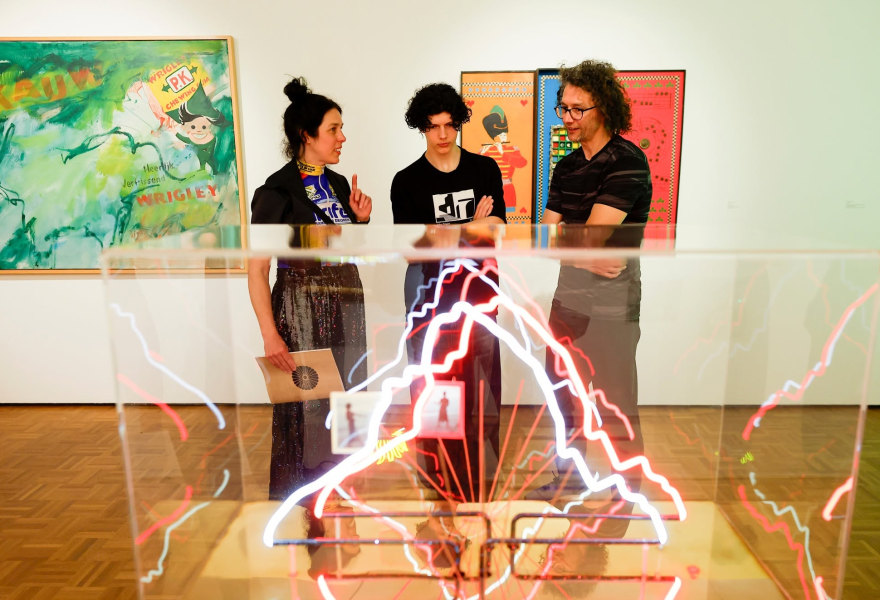
On 26 August, one of the most iconic Dutch artists will celebrate his ninetieth birthday. To mark the occasion, Kunsthal Rotterdam is presenting the exhibition ‘Woody van Amen. The Best of’ until 4 October 2026. It may be tempting to describe Van Amen as the father of Dutch Pop Art, but this retrospective clearly demonstrates that such a label falls short. Although the two years he spent in New York in the early 1960s would profoundly shape his artistic development, Van Amen never allowed himself to be confined to a single style, movement or category.
Perhaps the defining characteristic of his oeuvre is an insatiable curiosity about the world around him. After returning to the Netherlands in the 1960s, he developed a distinctive visual language while continuously experimenting with various techniques, materials and ideas. Van Amen often seeks to unsettle the viewer ever so slightly, encouraging them to question entrenched assumptions about art and society. To do so, he draws extensively on elements and symbols from visual culture, spirituality and technology. Pinball machines, mannequins, bowler hats, typewriters, advertisements, telephones, neon lights, slimming devices and cooling elements all appear in his work, alongside logos and religious and political symbols. Above all, he seems fascinated by the ways in which images acquire meaning, invariably adding a generous dose of humour along the way.
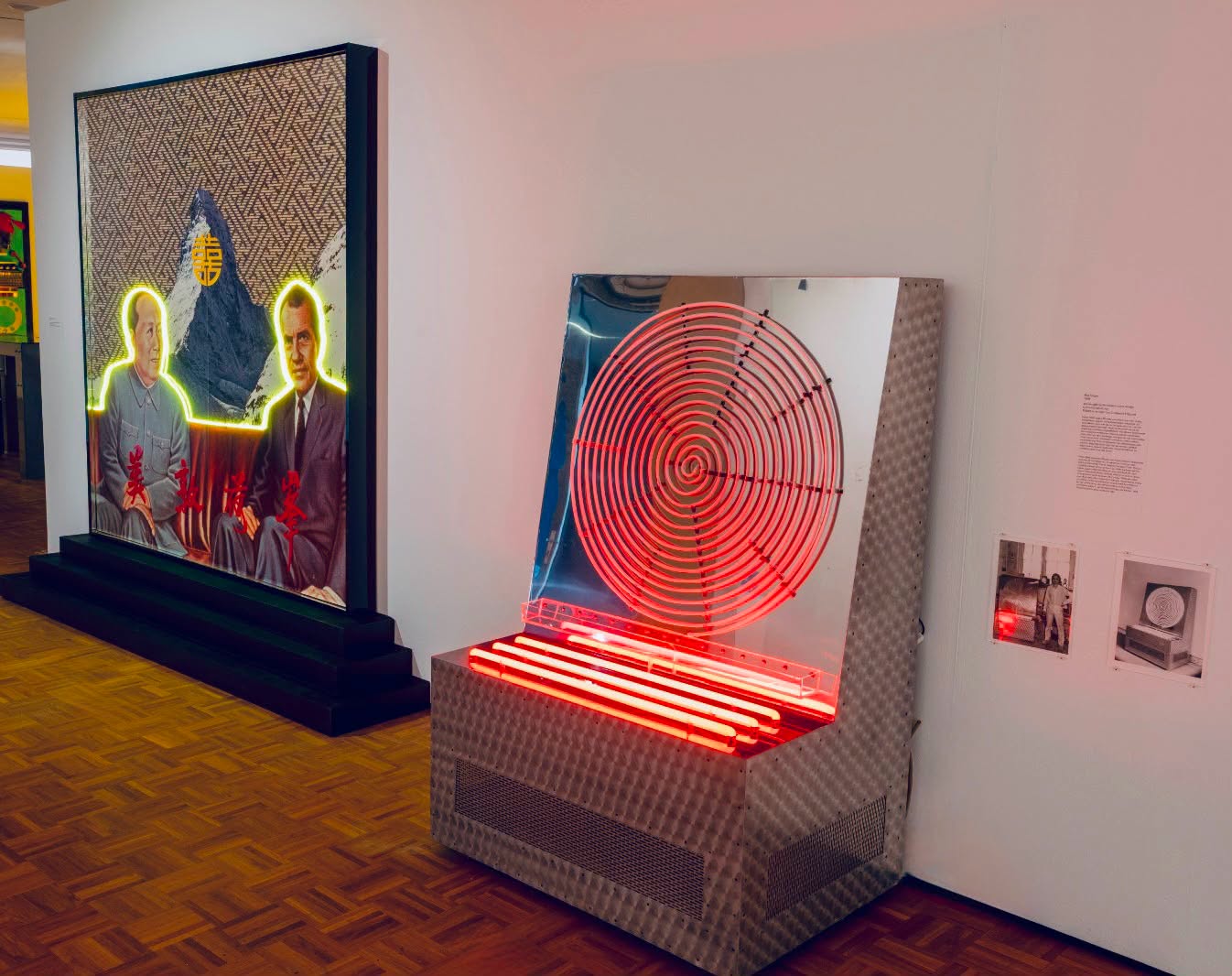
The exhibition at Kunsthal Rotterdam traces his artistic development from the 1960s onwards. It reveals the remarkable breadth of his practice, bringing together everything from Pop Art paintings and assemblages made from found objects to vibrating sculptures, ice machines and works in which symbolism plays an increasingly prominent role.
Two motifs recur throughout his work. The first is the Matterhorn, the famous mountain peak on the Swiss-Italian border that also became immortalised through the Toblerone chocolate bar. The second is the so-called taxat, a three-dimensional form composed of two stacked crosses. Van Amen first encountered this geometric shape in the upholstery of a taxi in Singapore, hence its name, and continued to explore it for decades in paintings, drawings and sculptures. A monumental version of the taxat can be found in the public space along Rotterdam’s Mariniersweg.
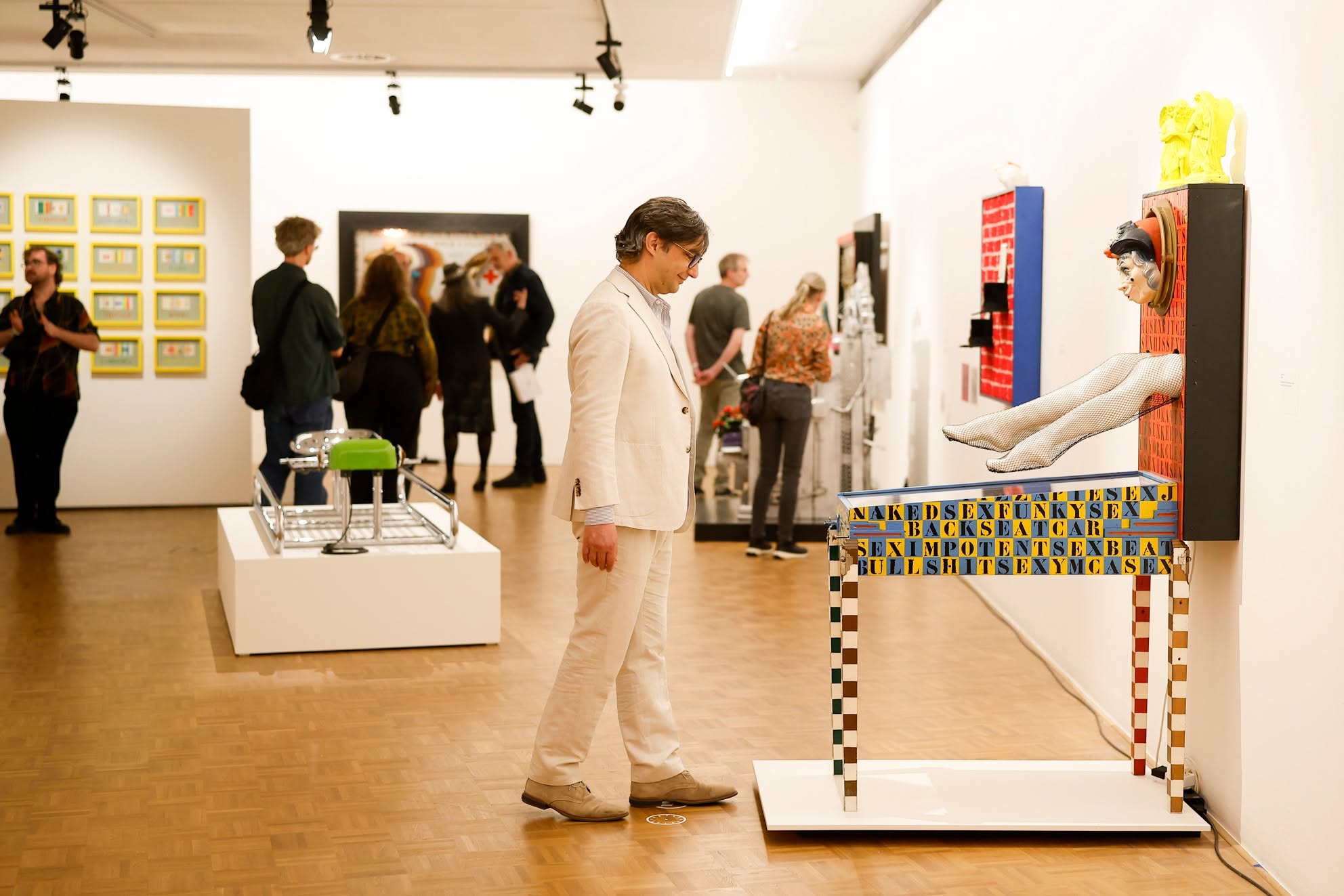
Around 1960, Van Amen created what was then considered the longest painting in the world: a thirteen-metre-long painted organ roll that is now on view at Kunsthal Rotterdam. The exhibition also features an electric chair from 1964, which, isolated as a sculptural object, offers a striking reflection on a darker aspect of American culture. The work was inspired by a death sentence that deeply affected Van Amen during his time in the United States.
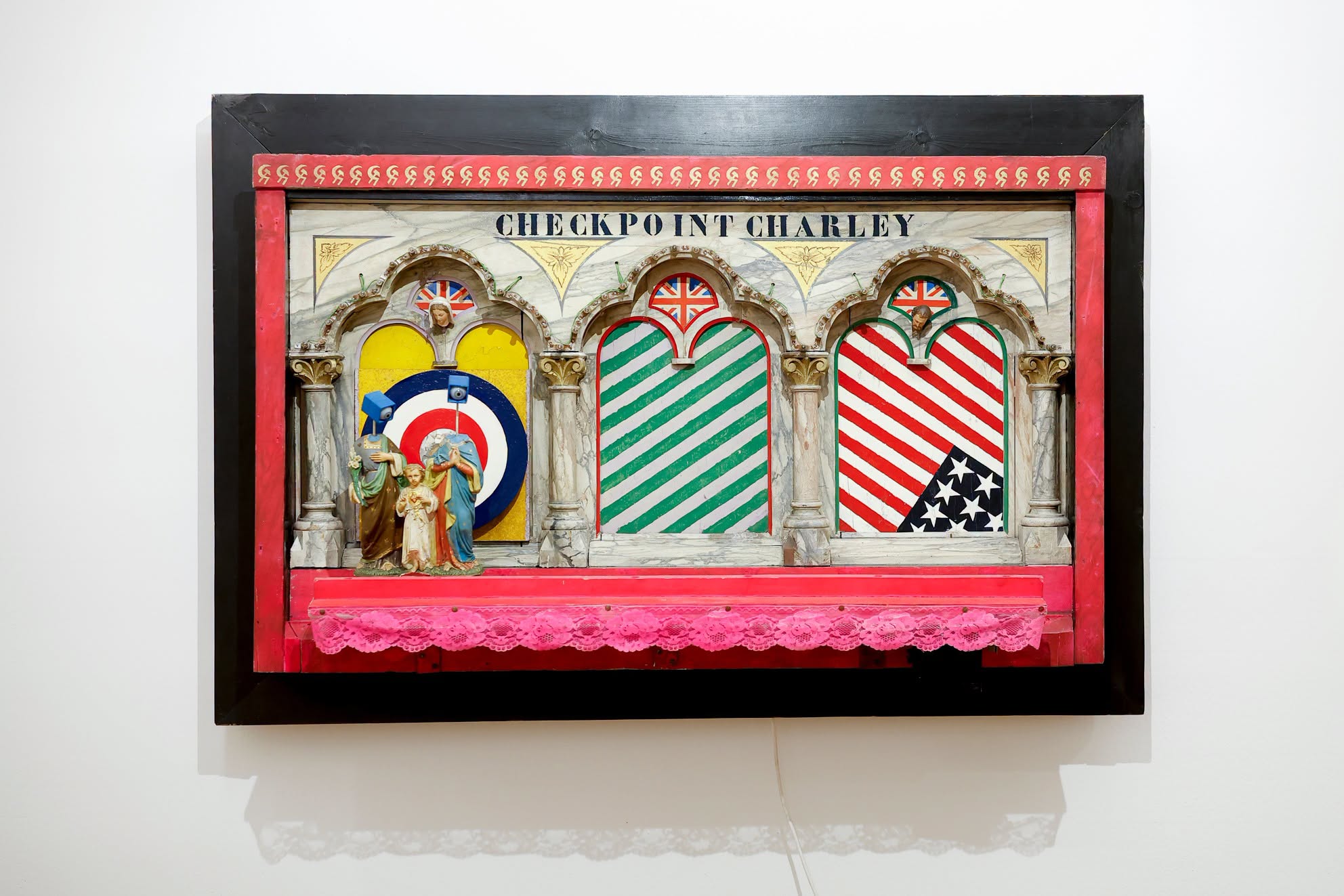
Also on display is “Checkpoint Charlie” (1964), created shortly after the artist visited Berlin, where the infamous Wall had only recently been erected. Here, flags and political symbols visualise the competing interests, while two religious figures appear with surveillance cameras in place of heads...
From the 1970s onwards, Van Amen increasingly incorporated visual impressions that he gathered during his travels. These journeys brought him into contact with new symbols and visual traditions, including Nepalese prayer flags, Chinese characters and Indonesian wayang figures.
Woody van Amen was born in Eindhoven in 1936 but grew up in Rotterdam. He studied at (what is now) the Willem de Kooning Academy, where he later taught for many years. His work has entered the collections of Stedelijk Museum Amsterdam, Museum Boijmans Van Beuningen, the Centraal Museum, S.M.A.K. in Ghent, Museum Het Valkhof and the National Museum of Singapore. In 1993, he received the Hendrik Chabot Prize awarded by the Prins Bernhard Fund.
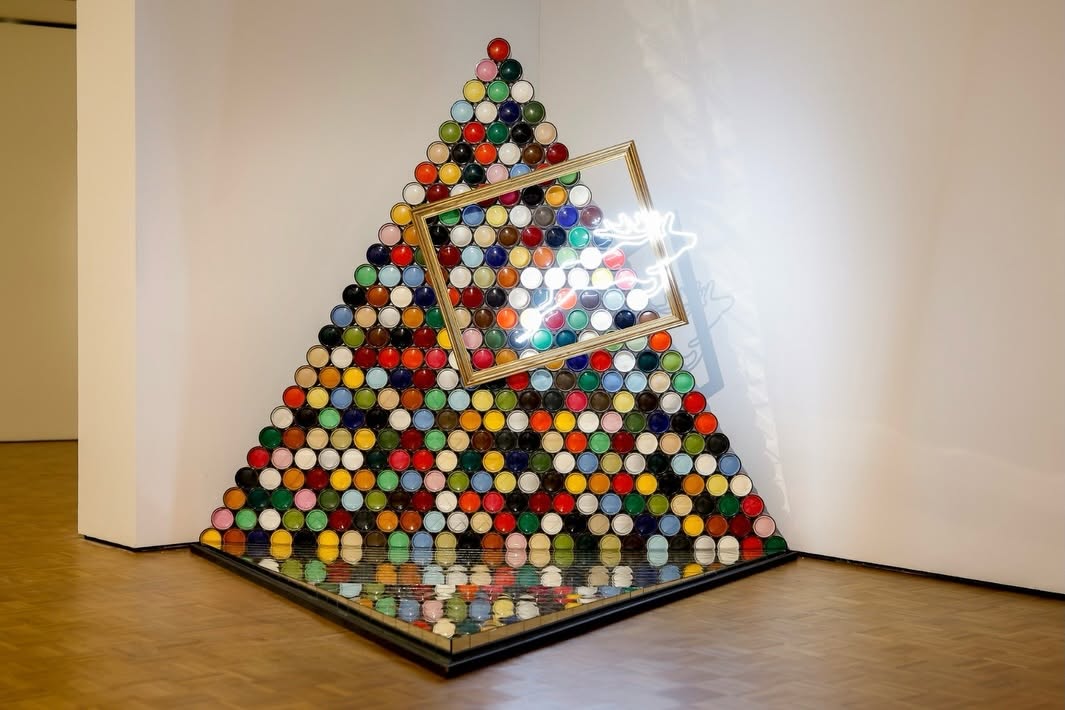
‘Woody van Amen. The Best of’ is a collaboration between Kunsthal Rotterdam and Woody van Amen, initiated by EENWERK founder Julius Vermeulen, with Irma Boom as guest curator. On GalleryViewer, the artist is represented by TORCH Gallery, where he presented his first exhibition in 2024.
