04 august 2026, Flor Linckens
David Bade in Stedelijk Museum Breda: an immersive total work of art
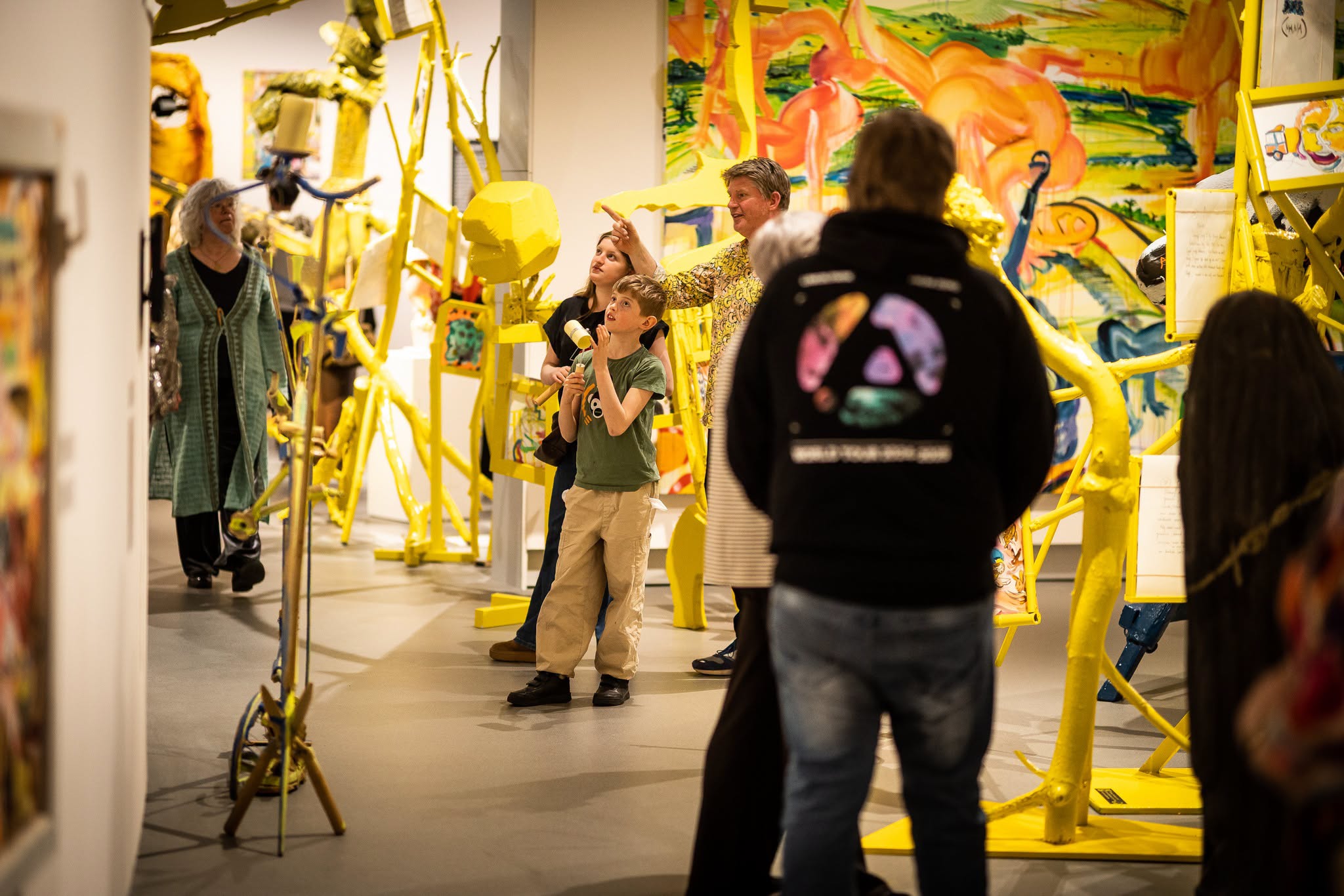
The moment you step into David Bade's exhibition 'We OK!' at Stedelijk Museum Breda, it becomes clear that there is no point in searching for a logical beginning or end. Monumental paintings, expressive sculptures, hundreds of drawings, found objects and bright yellow structures fill the galleries with colour and energy. Rather than feeling like a chronological survey of Bade's thirty-year career, the exhibition unfolds as a spatial manifestation of how the artist thinks and creates, often in collaboration with others. Bade is represented by KERSGALLERY & Galerie Maurits van de Laar.
This sense of abundance is characteristic of his practice. Bade is a versatile and socially engaged artist who works across a wide range of disciplines, including sculpture, painting, drawing and installation. Experimentation lies at the heart of his work and he is interested in themes such as transience, (art) history and contemporary society. His works are intuitive, associative, chaotic, playful, contradictory, critical and vibrant, often assembled from found objects and natural materials. His choice of materials ranges from old sofas and rubber to expanding foam. Bade creates complex assemblages that cast a critical and at times cynical eye on the world while never losing his sense of humour.
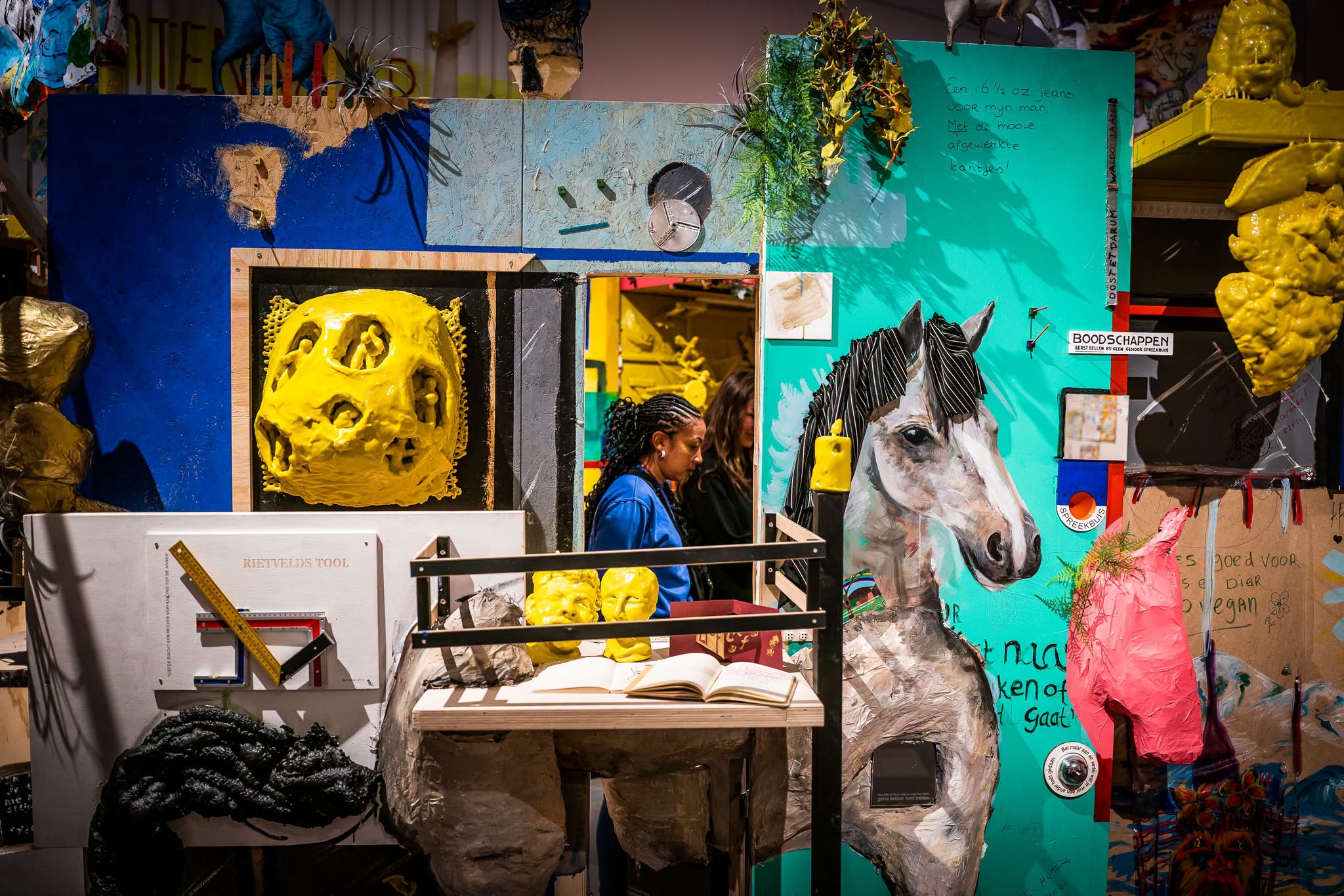
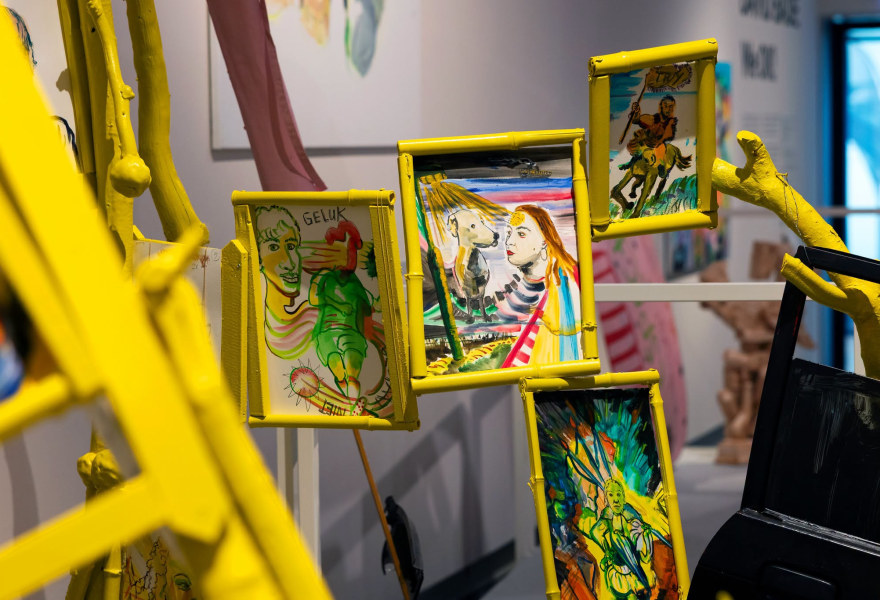
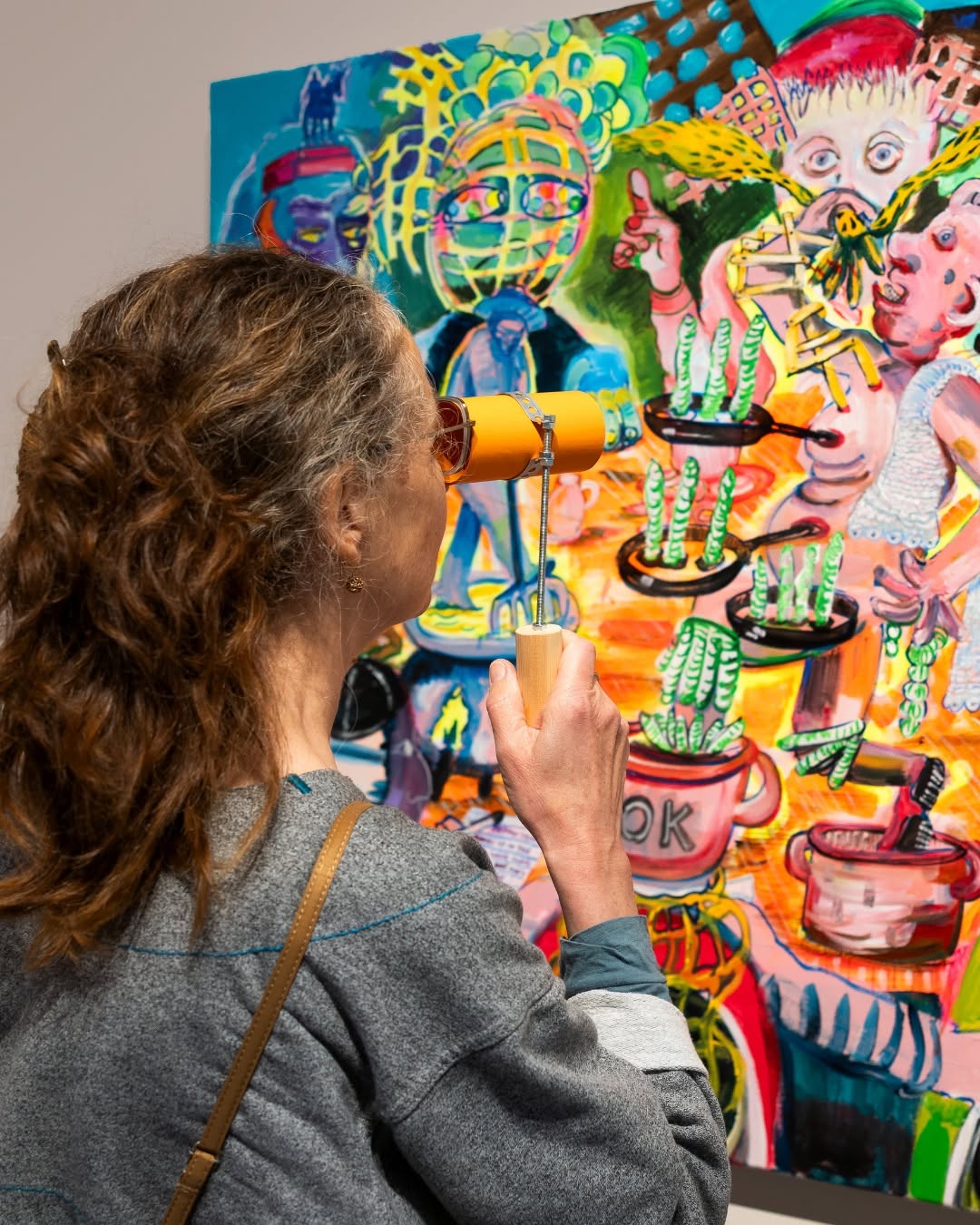
This open-ended approach is clearly visible in Breda. You see monumental, colourful canvases alongside intimate drawings and multimedia assemblages. A bright yellow sculptural structure functions simultaneously as a support, a piece of furniture, an architectural element and an artwork in its own right. Paintings, drawings and small objects hang from it as though they have grown organically from the structure itself. The result is an exhibition that feels less like a collection of individual works than one large immersive installation.
Yet the exhibition is not made up solely of Bade's own work. At its core of the exhibition lies his recent project 'We OK!'. Over the past two years, the artist worked with around forty young people from the Breda neighbourhoods of Haagse Beemden, Hoge Vucht and Heuvel. They are part of the Grote Broer Grote Zus (Big Brother Big Sister) initiative, which works with young people aged 14 to 23 to improve the quality of life in their communities. Many young people still perceive art and museums as inaccessible and the makers hope to lower those barriers by demonstrating that art can also reflect their own experiences. They were supported by seven emerging artists: Floor Snels, Daan van Bommel, Bas Steens, Bobbi Cleij, Jan Janssens and Stijn Ros & Jesse Paauwe. Together, they created a series of new works that explore themes such as play, faith, generosity, enjoyment and resistance, using virtually any material imaginable, from discarded cabinets to abandoned cars.
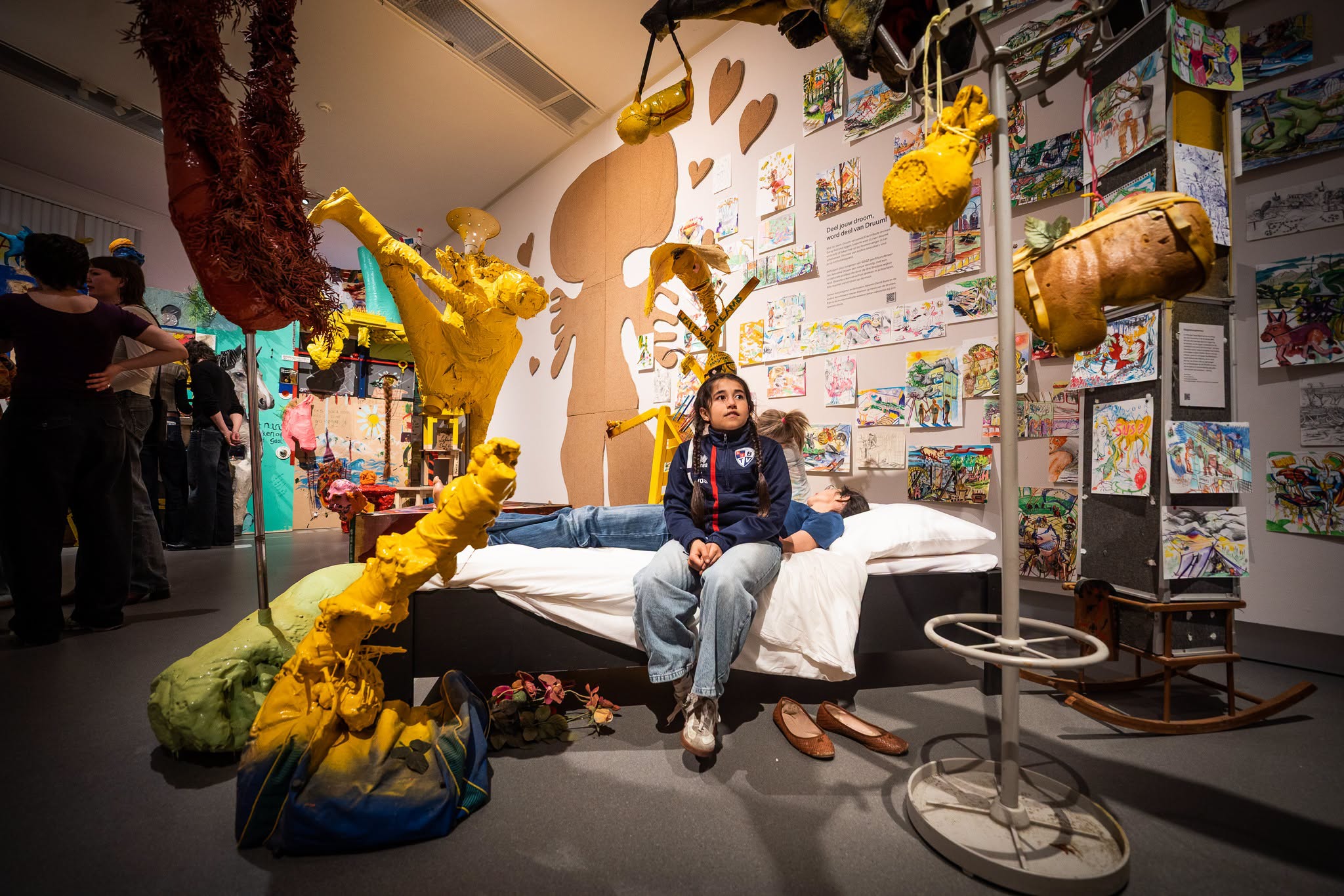
The exhibition does not only present the finished works, but also reveals the creative process behind them. Bade believes that everyone possesses imagination, even if it has faded into the background over the course of life. By drawing, building, talking and experimenting together, he seeks to reignite that creativity and bring people together. Visitors are invited to participate as well. During a series of live drawing sessions, personal dreams are transformed into new artworks and dozens of portraits of the participating young people are displayed throughout the exhibition. Because all of these images are presented alongside Bade's own work without any clear hierarchy, the boundaries between artist, participant and audience momentarily dissolve. In doing so, the exhibition suggests that authorship is ultimately less important than the collective creative process.
Collaboration has long been a defining element of Bade's practice. In 2006, he founded Instituto Buena Bista (IBB) with artist Tirzo Martha, a centre for contemporary art that supports emerging artists and connects art with education, healthcare and social engagement. The initiative grew out of ArteSwa, a foundation established by Bade in 2004. Both artists believe that art can be a catalyst for social change and greater awareness. IBB offers a preparatory programme for young artists while also organising artist residencies and a wide range of cultural projects. Bade and Martha have collaborated on numerous exhibitions and long-term artistic initiatives, including 'All You Can Art' in partnership with Kunsthal Rotterdam. Together, they also created the project 'Look at me now', which formed part of the exhibition 'Slavery' at the Rijksmuseum in Amsterdam.
David Bade was born in Willemstad, Curaçao, in 1970. After studying at the NLO teacher training college in Diemen and Ateliers '63 in Haarlem, he received the prestigious Prix de Rome in 1993, followed by the Sikkens Prize in 2010. His work has been exhibited at Kunstmuseum Den Haag, Stedelijk Museum Amsterdam, the Centraal Museum in Utrecht, De Hallen Haarlem, S.M.A.K. in Ghent, the Lustwarande and the Venice Biennale. He has also created numerous works for public spaces, including his iconic sculpture "Anita" on the Eendrachtsplein in Rotterdam. His work is held in the collections of Stedelijk Museum Amsterdam, the Bonnefanten Museum, the Centraal Museum, Museum Voorlinden, S.M.A.K., the Musée d'Art Moderne et d'Art Contemporain in Nice, Kunstmuseum Den Haag, the AkzoNobel Art Foundation, ABN AMRO, DSM, KPMG and the Embassy of the Kingdom of the Netherlands in Buenos Aires.